WHAT IS ALLERGIC CONTACT DERMATOID?Eczema is the collective name for skin conditions where the skin is red, flaky, and itchy. Eczema can also develop small bumps and blisters filled with fluid. Fluid can leak from the skin (oozing eczema) and the skin can break out.
There are many different types of eczema. For example, eczema can be congenital ( atopic eczema , also called constitutional eczema). Or it can be a reaction to yeasts on the skin ( seborrheic eczema and dandruff ). Eczema can also be caused by contact with irritants (irritation eczema, ortho-ergic eczema), or with substances that trigger an allergic reaction (contact-allergic eczema).
Contact eczema can be divided into allergic and non-allergic.
Allergic contact eczema develops in people who have developed an allergy to a specific substance. There are many substances (chemical products, cosmetic ingredients, plant-based substances, metals such as nickel) to which one can become allergic. Substances that can cause an allergy are also called allergens. A contact allergy to a particular substance doesn't develop immediately; one must first come into contact with the substance for a period of time before an allergy develops. Sometimes this happens very quickly, within a few weeks, and sometimes it takes years. For example, one can use a certain day cream for years without any problems, and then suddenly become allergic to it. An allergy test (patch testing) can be used to determine whether a contact allergy exists. A patch with a low concentration of the suspected substance is applied to the skin, and after 2 or 3 days, it is checked whether this has caused eczema.
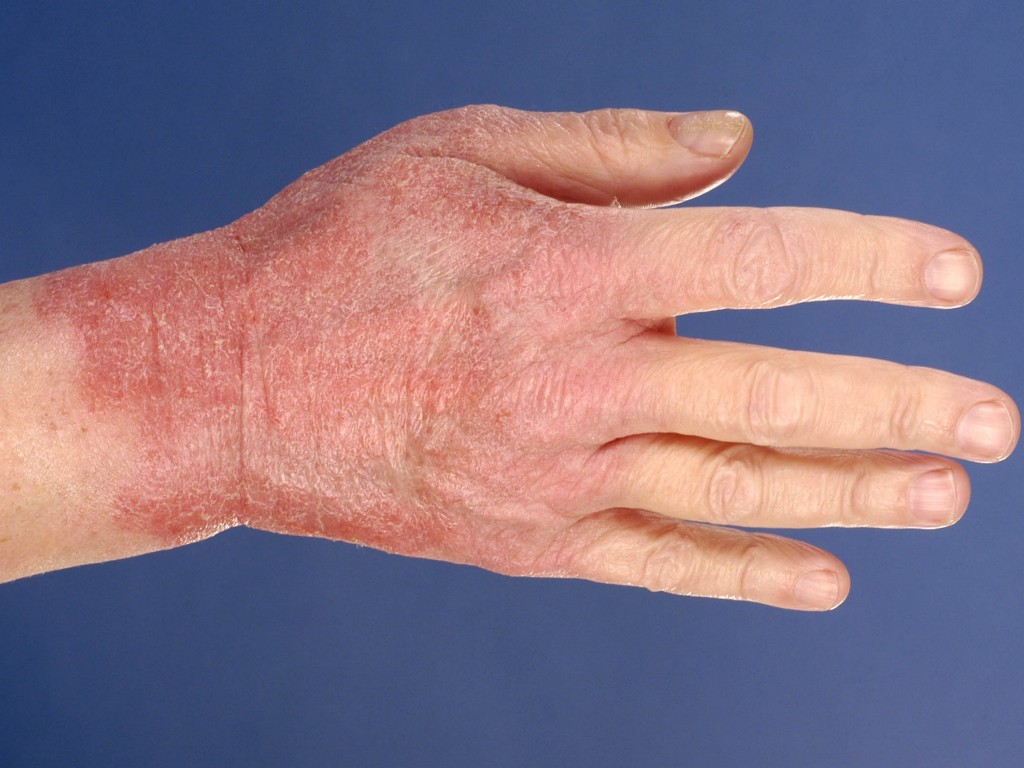
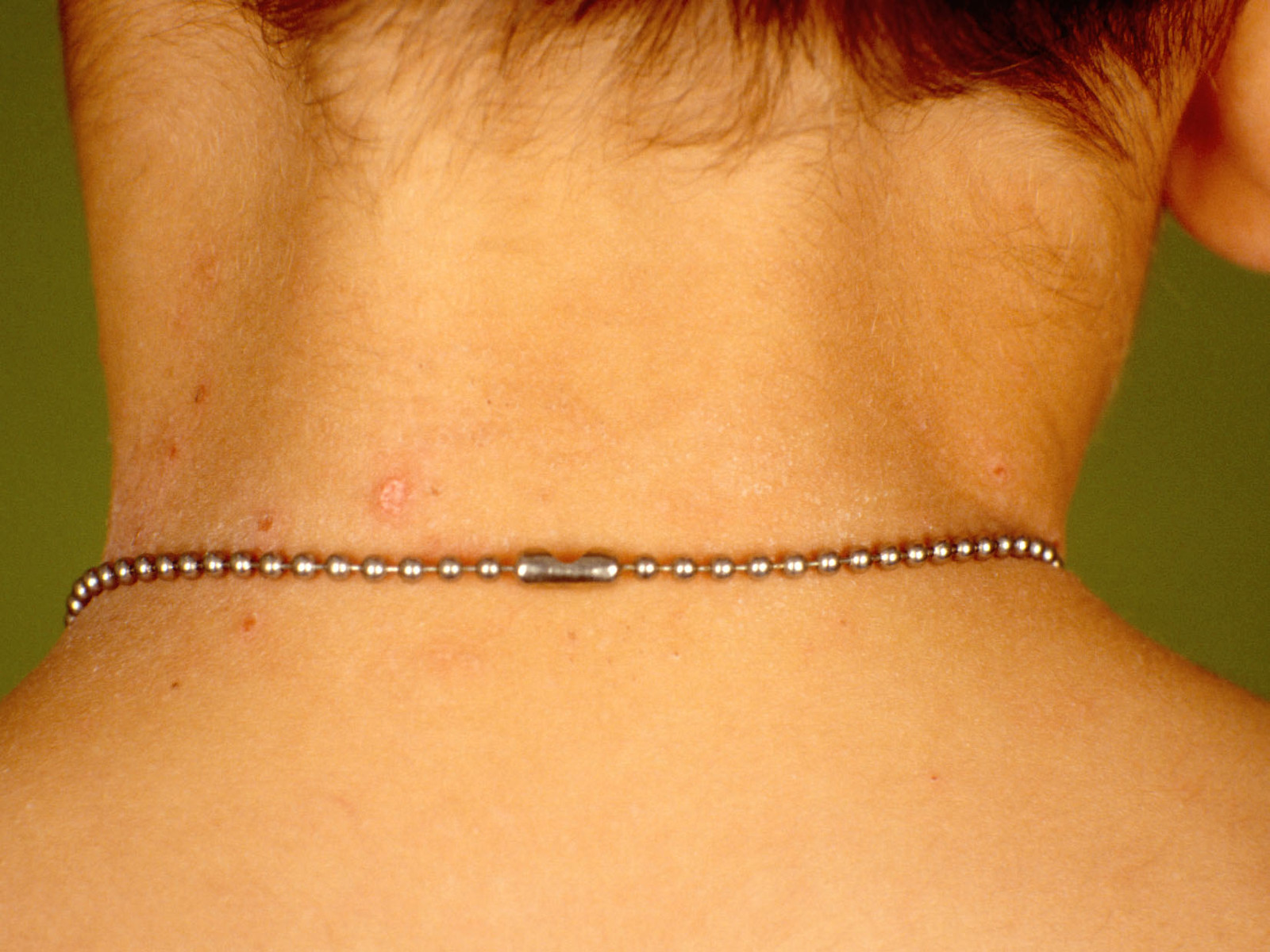
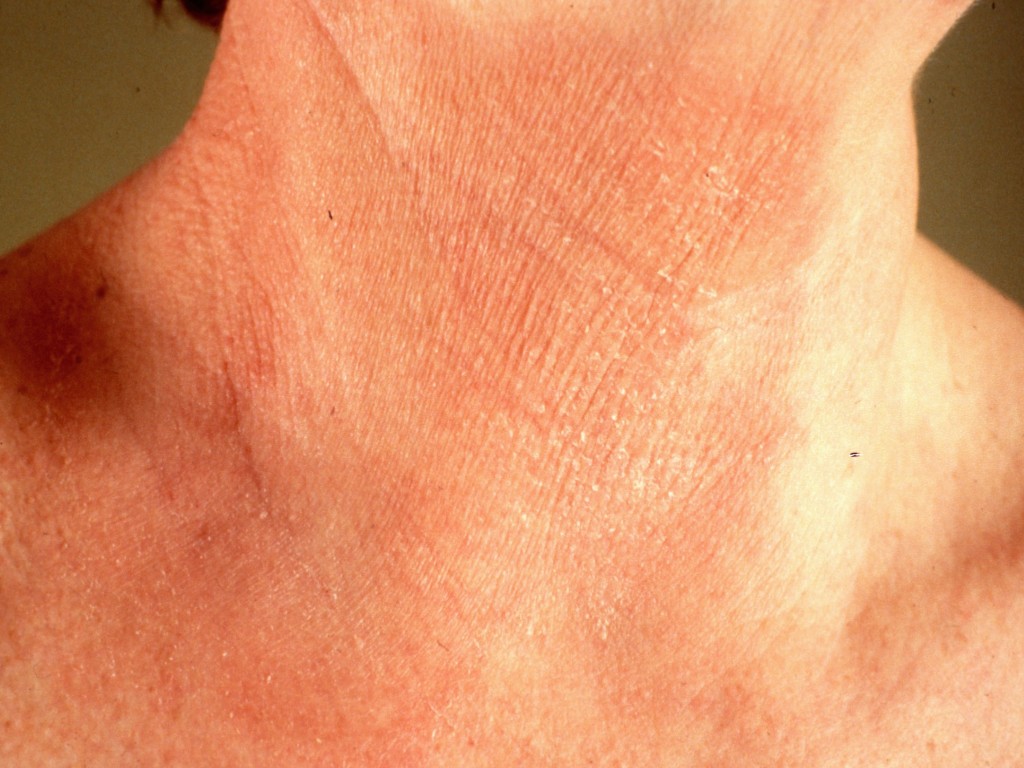
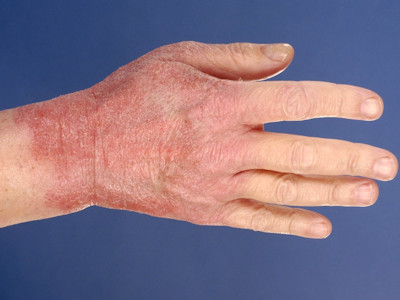
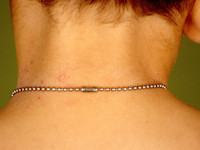
The non-allergic form is called orthoergic eczema or irritation eczema. This is caused by irritants such as cleaning agents, soap, solvents (such as turpentine), and DIY products. Anyone can develop eczema from these types of products; you don't have to be allergic to them. These are aggressive substances that directly damage the skin, without causing an allergy. The damage to the skin depends on the duration of exposure and the concentration of the product. There are no tests for orthoergic eczema; there's no point in applying irritating substances to the skin as a test, as they always cause a reaction in everyone.WHAT DOES ALLERGIC CONTACT ECZEMA LOOK LIKE?The most characteristic feature is that the eczema is located where there has been contact with the allergen. So, with a nickel allergy, you often see eczema on the abdomen where a jeans button touches, or on the earlobe where an earring is worn, or under a watch strap. Otherwise, the eczema looks like any other eczema: red, flaky, with bumps and blisters. Sometimes large blisters can develop. And it's itchy.
 |
 |
| contact dermatitis |
contact dermatitis (nickel) |
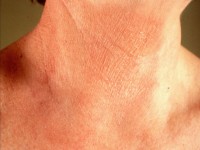 |
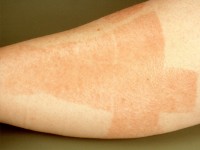 |
| contact dermatitis (cosmetics) |
contact dermatitis (patches) |
HOW DOES ALLERGIC CONTACT DERMATOGRAPHY OCCUR?Allergic contact dermatitis can develop when an allergen penetrates the skin. Only small molecules can penetrate; large molecules cannot penetrate the skin. Once the allergen penetrates the skin, it is picked up by specialized cells of our immune system, Langerhans cells. These are located in the skin. The Langerhans cells, with the allergen attached, leave the skin and travel via the lymphatic vessels to the lymph nodes. There, other immune system cells, lymphocytes, are located. After some time, lymphocytes specialized in clearing this particular allergen develop in the lymph node. These lymphocytes eventually return to the skin, and upon contact with the allergen, they release various substances that trigger an inflammatory response and attract more immune system cells to fight and clear the "intruder."
In patients with atopic eczema, certain lipids are often missing from the upper layer of the skin, meaning the skin is less well protected against allergens. Therefore, atopic eczema patients have a higher risk of developing contact dermatitis.WHICH PRODUCTS CAN CAUSE A CONTACT ALLERGY?There are too many to list, as it involves thousands of substances. The most common contact allergens are:
- base metals, such as nickel, chromium, and cobalt, found in cheap jewelry, cement (mason's eczema), and leather, among other places;
- fragrances, such as those used in perfumes and most toiletries, but also in industrial products to mask unpleasant odors
; - preservatives, found in perishable products, such as cosmetics, toiletries, hand creams, and numerous industrial products
; - rubber components
; - adhesives
; - medicines in creams and ointments
; - plants and flowers (e.g., chrysanthemums and alstroemeria)
; - occupational substances, such as components of hair dye and permanent wave solutions used by hairdressers
(hairdresser's eczema).
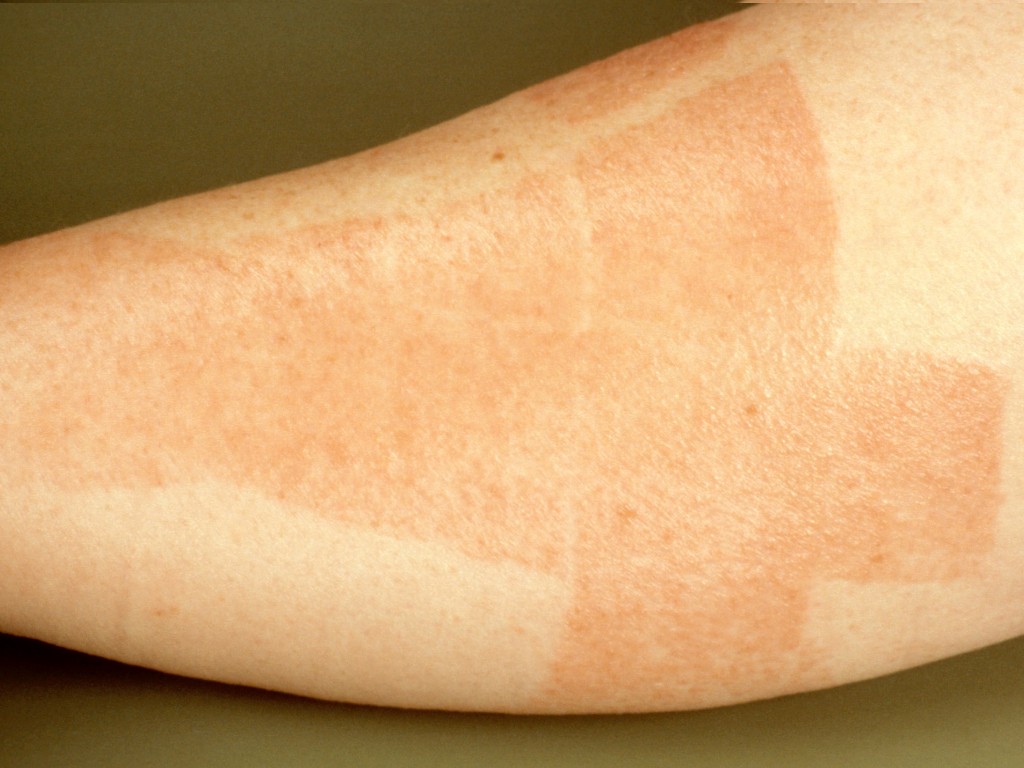
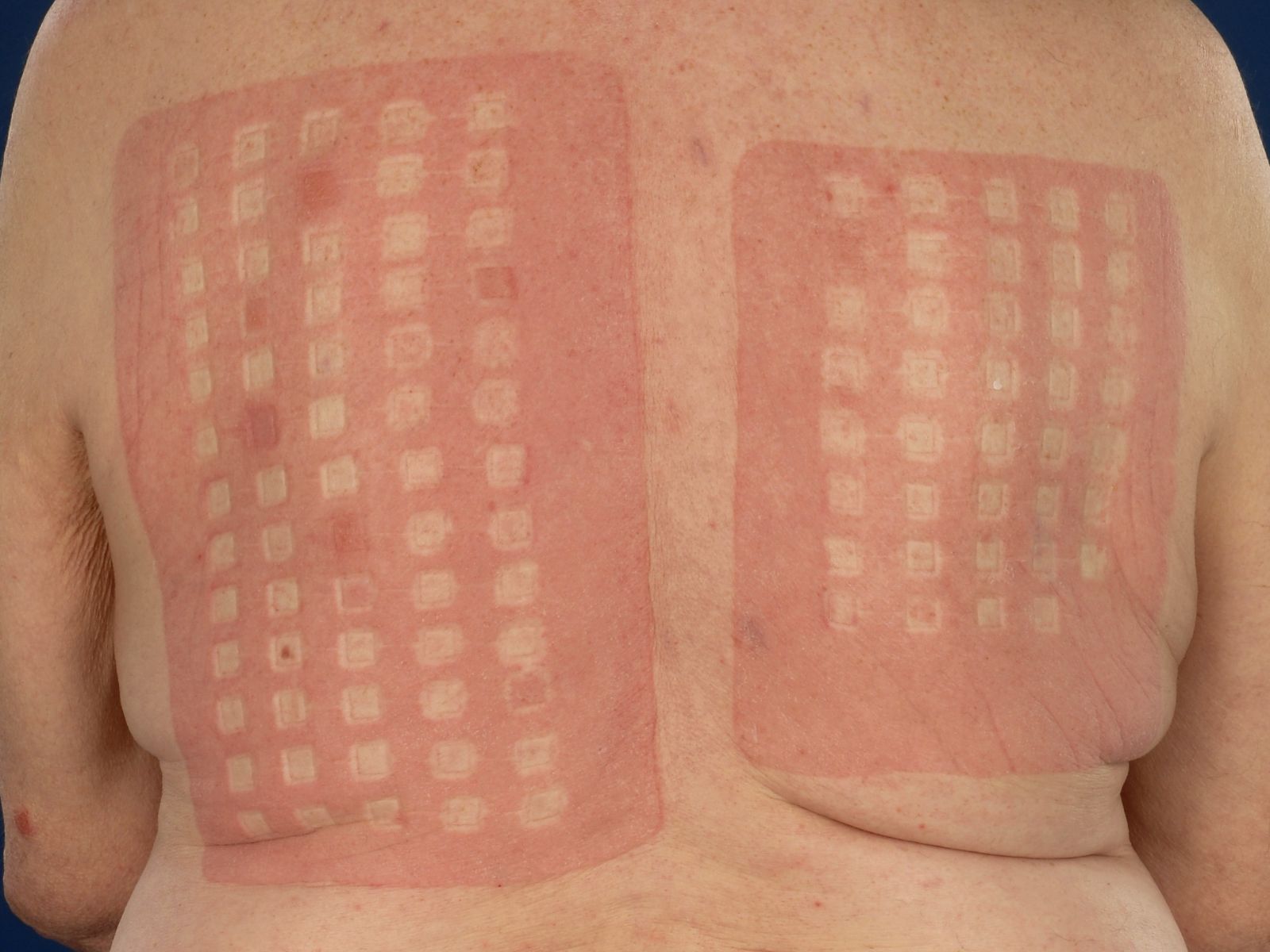
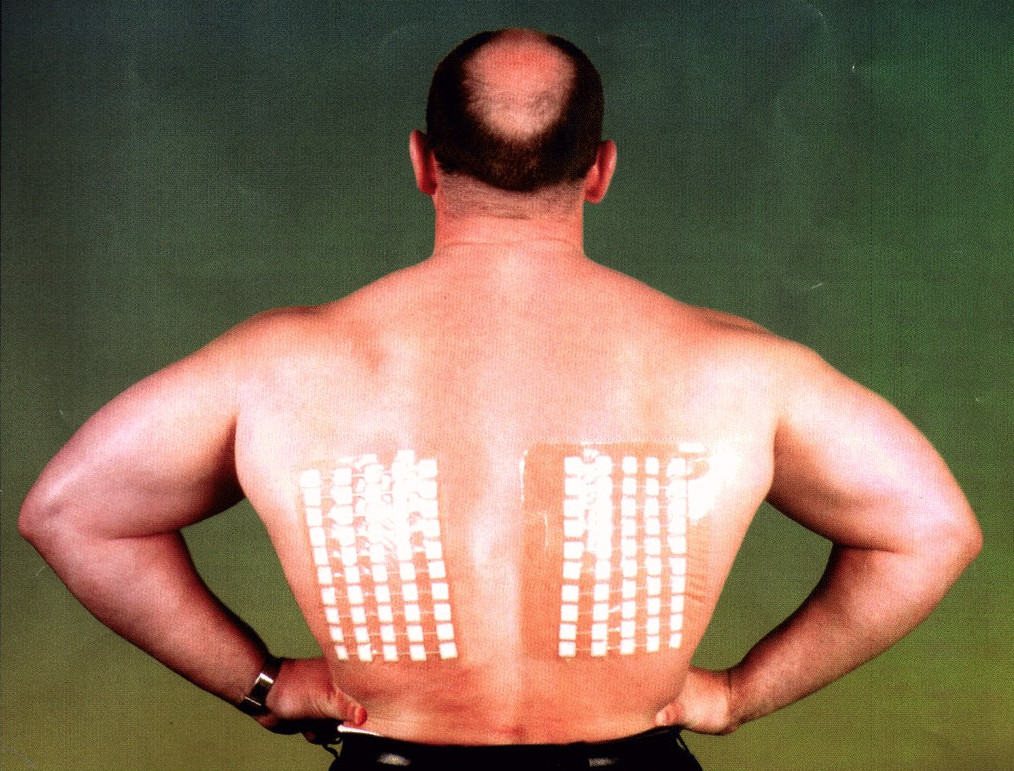
There are also substances that, in combination with exposure to sunlight, can cause eczema. The eczema only occurs when the skin to which the product has been applied is exposed to the sun. This occurs, among other things, in sunscreens and perfumes, but also in the sap of certain plants. This is called photoallergic contact dermatitis.HOW IS THE DIAGNOSIS MADE?The diagnosis is based on the typical clinical picture, in which the eczema corresponds to the contact sites. It's not always so clear-cut; sometimes the eczema develops in other, more distant locations. Suspected contact allergy can be confirmed by allergic examination using patch tests.Allergy Test for Contact Allergy (Pattern Tests)In a patch test, the substances to be tested are applied to the back in small test chambers secured with adhesive tape. This must remain in place for two days. The test is then read after two and three days. The test is considered positive if eczema has developed directly beneath the test chamber containing the allergen. The number of patches depends on the suspected allergen. Usually, everyone is given a standard set containing the most notorious allergens (the European standard series), as well as additional suspect substances. There are also test series for specific professions or suspect products, such as a hairdressing series with substances that hairdressers often react to, a cosmetics series, or a metal series.
Before you can be tested, you must first have a consultation in which the test procedure is explained and, together with you, we will determine which products, if any, need to be tested. Sometimes you will be asked to bring all the products you use (cosmetics, suspect products you use at work) to see what they contain.
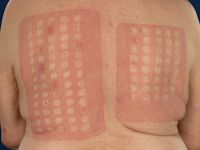 |
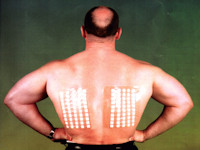 |
| patch test |
patch test |
HOW IS CONTACT ECZEMA TREATED?The most important step in treatment is to identify your allergy and avoid it from now on. This isn't always possible or easy to do. In addition, the eczema must be treated with strong anti-eczema creams or ointments (topical corticosteroids). For very severe forms of contact dermatitis, short-term use of prednisone is sometimes necessary to calm the eczema.WHAT CAN YOU STILL DO YOURSELF?If you've been diagnosed with an allergy to a particular substance, be very careful not to come into contact with it again. Brochures are available for various allergens, listing which products contain this substance. Also check online. When you buy a cosmetic or personal care product, carefully examine its ingredients. The packaging should clearly state the ingredients. Don't rely on claims such as "hypoallergenic," "dermatologically tested," "pH neutral," "skin-friendly," "contains only natural products," etc. These terms don't tell you anything. It's still possible that it contains an ingredient to which you are allergic.CONSEQUENCES FOR WORKIf you've become allergic to a product you use at work, you may need to change jobs. Such a decision is usually made in consultation with your occupational health physician and dermatologist.WHAT ARE THE OUTLOOK?Eczema can be persistent and remain chronic. If it is possible to avoid the suspected substance, the symptoms will disappear or significantly reduce.
For more information, see other leaflets such as:
Hand eczema
Benzocaine
Chromium (chromate)
Clioquinol
Cocamidopropyl betaine
Colophony
Composites
Preservatives
Corticosteroids
Epoxy resins
Formaldehyde and formaldehyde-releasing preservatives
Cobalt (cobalt chloride)
Latex allergy
Neomycin
Nickel
P-Phenylenediamine
Para-tertiary-butylphenol formaldehyde resin
Perfume (perfume blend, fragrances, Lyral)
Balsam of Peru
Primine
Rubber
Shoes
Turpentine
Textile dye mix
Wool grease, wool alcohols, lanolin
Other: see list of chemicals that can cause contact dermatitis |