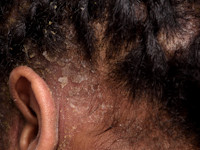
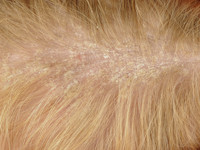
WHAT IS IT?Dandruffis a mild form of eczema on the scalp, causing small flakes. This flaking is bothersome, especially when it drifts down onto dark clothing. Other symptoms of dandruff can include itching and a greasy scalp.
 |
 |
 |
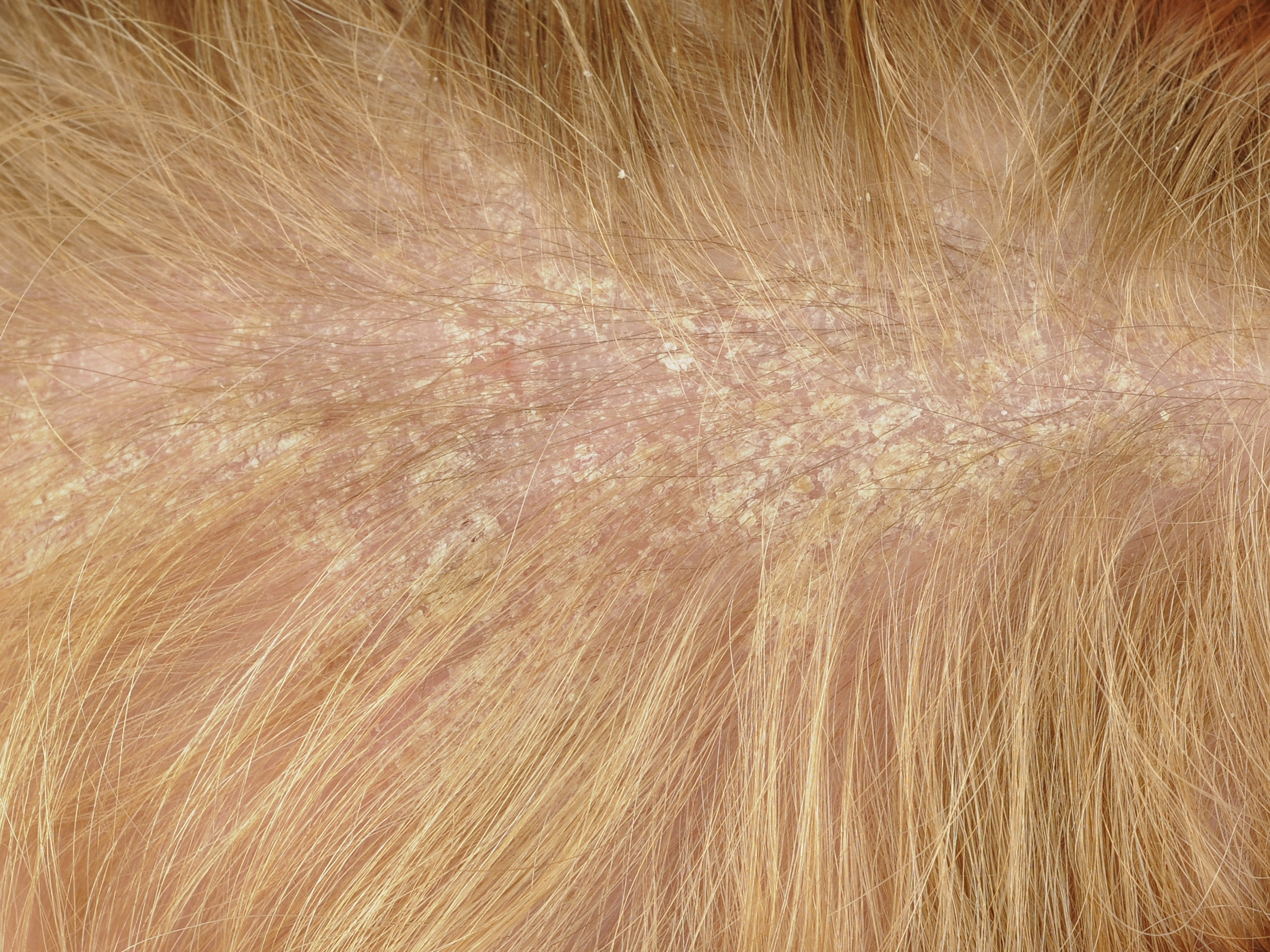
| dandruff |
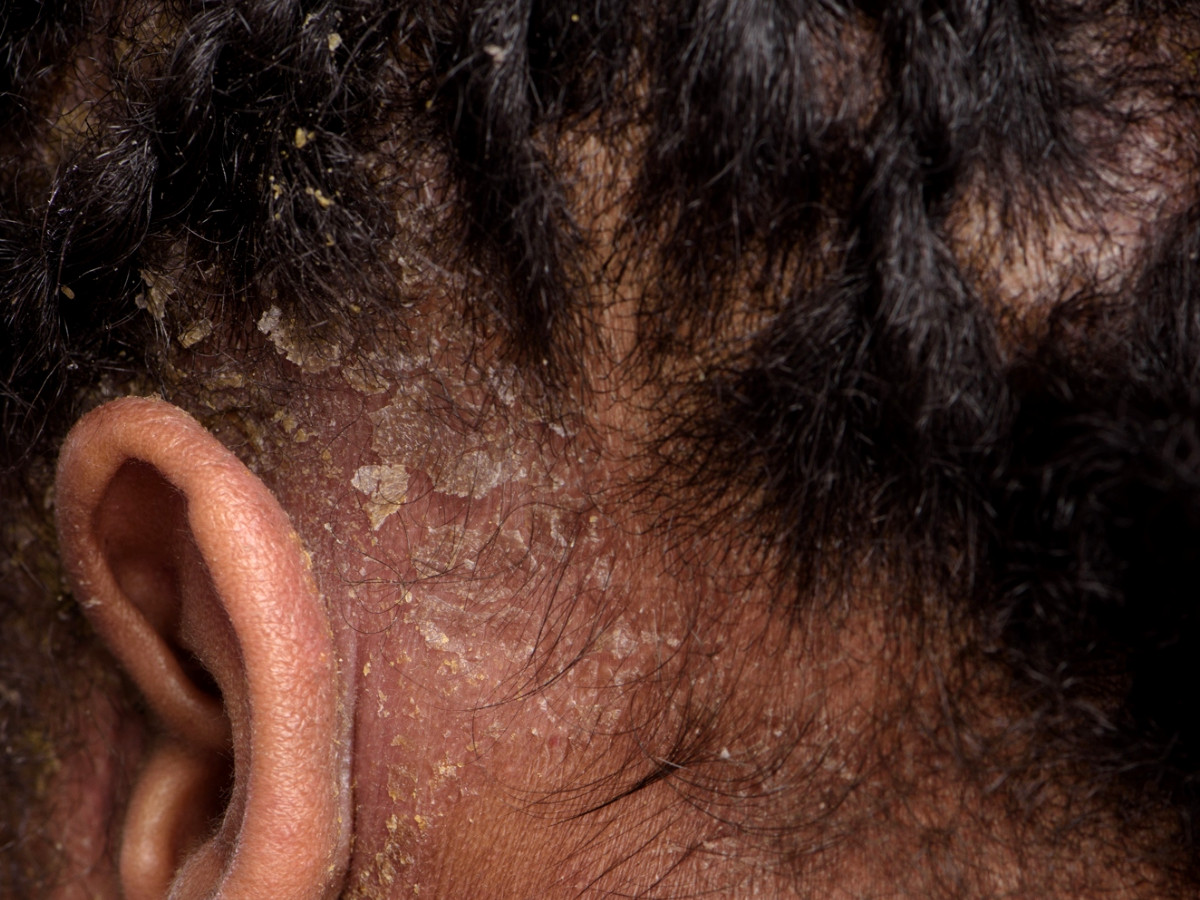
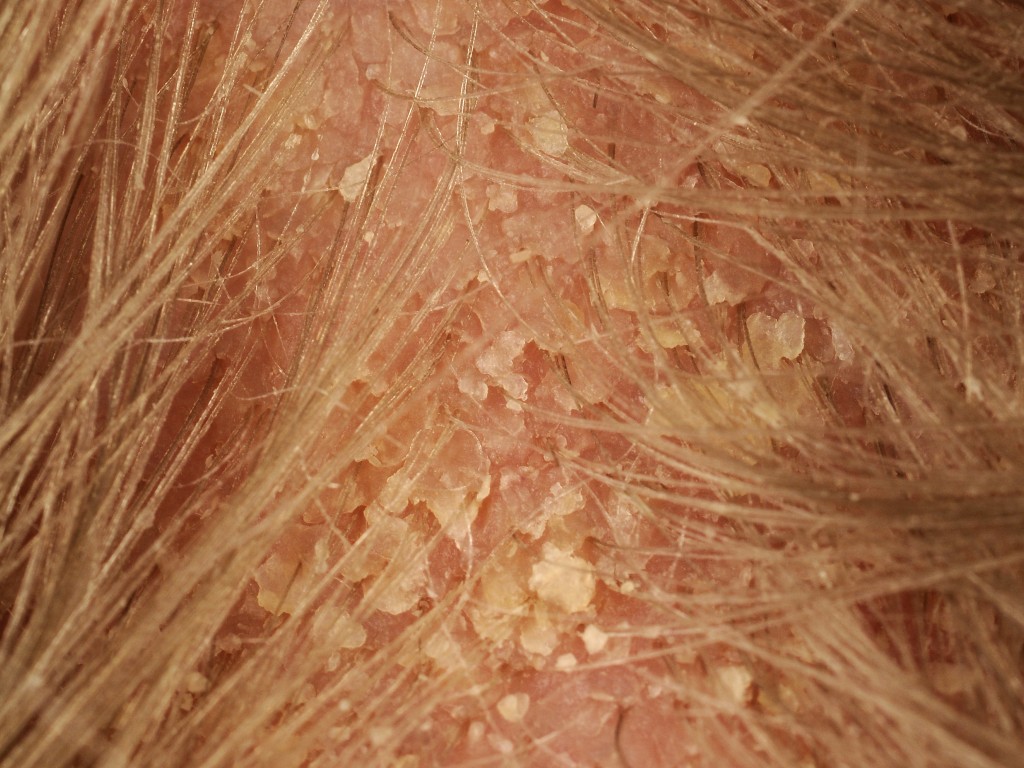
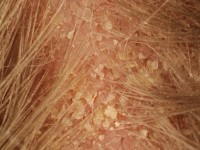
severe form of dandruff |
severe form of dandruff |
The flakes are old skin cells that shed from the skin. The scalp cells are constantly renewing themselves; in about three weeks, the skin is completely renewed. New cells are formed on the underside, while old cells are shed on the top in the form of flakes. These flakes are small and invisible in normal skin. With eczema of the scalp, the renewal process is faster than normal, and therefore more flakes are formed. In addition, the old skin cells clump together, making the flakes larger and more visible.
The term eczema is used for all kinds of skin conditions that cause irritation, redness, flaking, and itching. The form of eczema that causes dandruff is also called seborrheic dermatitis . Another name for dandruff is seborrheic dermatitis of the scalp. The official medical term is pityriasis capitis ; the English term is dandruff .WHAT IS THE CAUSE?It is not known exactly why one person suffers more from dandruff than another.
Three factors play a role in the development of dandruff:
1. the oiliness of the skin (determined by the amount of sebum produced by the sebaceous glands)
2. the presence of certain yeasts ( Pityrosporum , also called Malassezia ) on the scalp
3. a predisposition, susceptibility to developing dandruff
Sebum production
The skin is kept oily by sebum, produced by the sebaceous glands. The amount of sebum produced is not the same for everyone. Some have oily skin, others have dry skin. Patients with dandruff often have increased sebum production and an oilier scalp.
Yeasts
Yeasts are found on the skin of everyone, which is normal. But in people with dandruff, the yeasts are present in much larger numbers. These yeasts, of which there are several variants such as Malassezia furfur , Malassezia globosa and Malassezia restricta , live off the fatty layer on the skin. They produce enzymes that break down the oil from the sebum into saturated and unsaturated fatty acids. The yeasts absorb the saturated fatty acids, leaving the unsaturated fatty acids on the skin. These fatty acids irritate the skin and cause eczema. This eczema (seborrheic eczema) occurs on the scalp in the case of dandruff, but seborrheic eczema can also occur in other areas, such as the face, eyebrows, next to the nose, behind the ears, or on the chest.
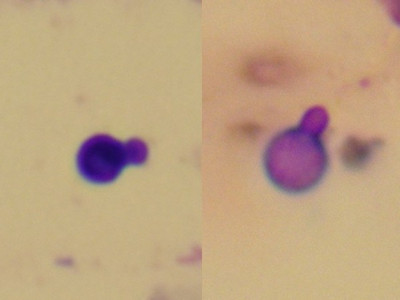 |
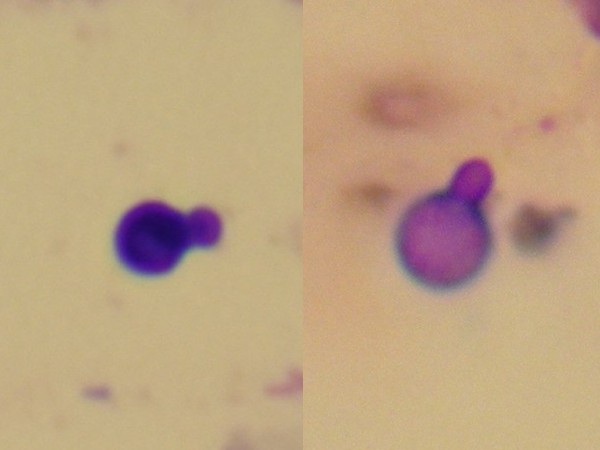
| the yeast Malassezia furfur |
Although
the presence of yeasts on the skin clearly plays a role in the development of dandruff, it is not the only factor. After all, yeasts are present in everyone, but not everyone suffers from dandruff. Therefore, one must be susceptible to it.
Other factors
Scalp flaking can also be caused by dehydration due to shampoos for oily hair, irritation from shampoos or other hair care products, or an overly dry (indoor) climate.WHO GETS IT?Dandruff is common, and men and women of all ages can get it. It often begins during puberty. About half of twenty-year-olds experience it, with men slightly more often than women. It usually subsides after the age of fifty. Babies sometimes develop greasy, yellow flakes on their heads during the first few months of life. This form of dandruff is called cradle cap.IS IT CONTAGIOUS?Dandruff is not contagious. The yeast involved is normally present on everyone's skin, but only increases in numbers under exceptional circumstances and only causes problems in those susceptible to it.WILL THIS MAKE ME GO BALD?It won't make you bald. It may seem like you're losing more hair, though sometimes hairs are taken along with the flakes that come off, but they're always replaced by new hairs. Dandruff doesn't damage the hair follicles.HOW IS DANDRUFF TREATED?Dandruff can be effectively treated and controlled with special anti-dandruff shampoos. These shampoos are available at drugstores, pharmacies, or by prescription from your doctor or dermatologist. There are different types of shampoos, each with different effects. Some focus on combating yeast, others on inhibiting skin inflammation and itching, or reducing flaking. Combating the yeast can significantly improve eczema, causing dandruff to (almost) disappear completely.WHAT PRODUCTS ARE THERE FOR THE TREATMENT OF DANDRUFF?Anti-dandruff shampoos with zinc pyrithione or
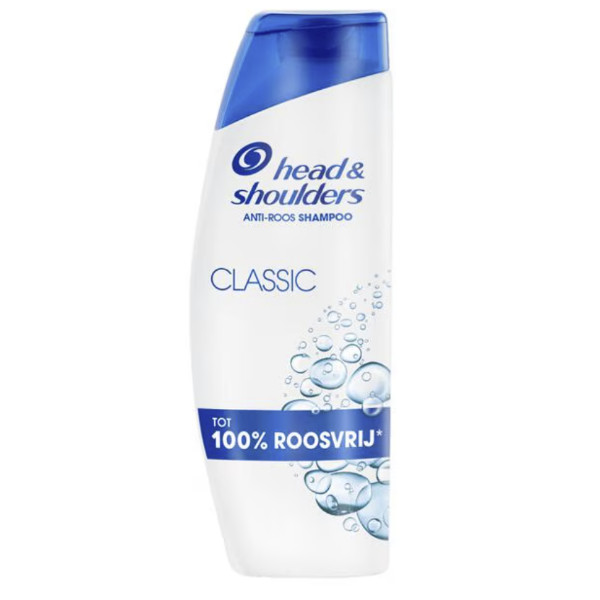
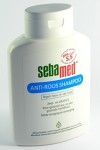
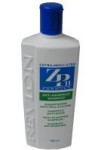
selenium sulfide reduce increased sebum production and inhibit increased flaking of the scalp. The flakes, scabs, and itching will decrease or disappear. Zinc pyrithione also reduces the number of yeast cells on the skin. These shampoos are available over the counter at drugstores and pharmacies. Examples include Head & Shoulders, Selsun, Resdan, Guhl anti-dandruff shampoo, Sebamed anti-dandruff shampoo, and Revlon ZP11. These shampoos can often solve the problem. Wash your hair every few days with the anti-dandruff shampoo. Massage the shampoo in vigorously and leave it on for five to ten minutes.
Ketoconazole gel or shampoo.
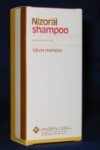
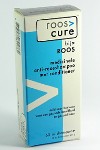
Ketoconazole is a medication that treats fungal or yeast infections (antifungal). By reducing the number of yeasts on the scalp, irritation decreases and dandruff can recover. Examples include Nizoral scalp gel (ketoconazole scalp gel) and Rooscure (shampoo with 1% ketoconazole). Nizoral scalp gel is only available by prescription and is also covered by insurance. Rooscure is available over the counter at drugstores or pharmacies and is not covered by insurance.
Ketoconazole is suitable for adults and children aged twelve and older. If you are pregnant, consult your doctor before using this shampoo. First, wash your hair with a shampoo of your choice, then apply a small amount of Nizoral scalp gel to wet hair and massage gently. Leave it on for five minutes. Then rinse thoroughly with warm water and dry (using a hairdryer if necessary). Do this at least twice a week for four weeks, then once a week until the symptoms disappear. On the other days, you can simply wash your hair with a different mild or pH-neutral shampoo. Be aware that this will wash out the ketoconazole. If you wash your hair daily, it's better to apply the ketoconazole gel four times a week. Side effects are uncommon. Skin irritation, itching, oilier or drier hair, and hair loss may occur. Discoloration may occur in chemically damaged and gray hair.
Nizoral (ketoconazole) is also available as a cream, which is applied to non-hairy areas for seborrheic dermatitis.
Corticosteroids:
Topical corticosteroids are used for all types of eczema and are also very effective in combating the more severe forms of dandruff. They inhibit skin inflammation, thus calming the eczema. Any redness and itching also decrease, and flaking disappears. They are available in various strengths, classified into classes 1 through 4. For the scalp, a class 2 or 3 lotion is usually prescribed. They are available by prescription only. Examples include triamcinolone acetonide lotion, Locoid scalp lotion (hydrocortisone butyrate), and Topicorte lotion (desoxymethasone).
Salicylic acid:
Salicylic acid has an emollient and moisturizing effect on the top layer of the skin. Using products containing salicylic acid removes flakes, including thick layers, from the scalp. Salicylic acid is available in lotion form but can also be added as an ingredient to other anti-dandruff products, such as corticosteroids.
Coal Tar-Containing Products:
Coal tar has mild anti-inflammatory properties and is an old and proven remedy for treating dandruff. It is used when conventional anti-dandruff shampoos containing zinc pyrithione, selenium sulfide, or ketoconazole are insufficiently effective. Coal tar can also be added to other anti-dandruff products.
Tips:
Dandruff often worsens at low temperatures and low humidity. You may experience it more during cold winter weather and with the central heating on. Sunlight (UVB rays) can improve the condition. Therefore, take advantage of sunny days.
Wash your hair daily or a few times a week with a mild or pH-neutral shampoo if you suffer from dandruff. Massaging your scalp reduces flaking. Always rinse the shampoo thoroughly. If soap residue remains, it can irritate the scalp. Hair care products such as gel, mousse, or hairspray do not affect dandruff. You can continue using them.WHAT ARE THE OUTLOOK?Using various anti-dandruff products can help the dandruff disappear completely or almost completely. Unfortunately, it's not possible to eradicate the yeast forever. Often, the dandruff gradually returns some time after discontinuing the treatment. It's therefore a matter of careful monitoring.
If the dandruff doesn't respond at all after six weeks of treatment as prescribed with a medicated shampoo, it may not be dandruff but something else, such as a different type of eczema, psoriasis, or a fungal infection. It's wise to make an appointment with your GP or dermatologist to have this assessed. Other reasons to see your GP or dermatologist include inflamed or painful skin, thick, silvery scales, or hair loss. |