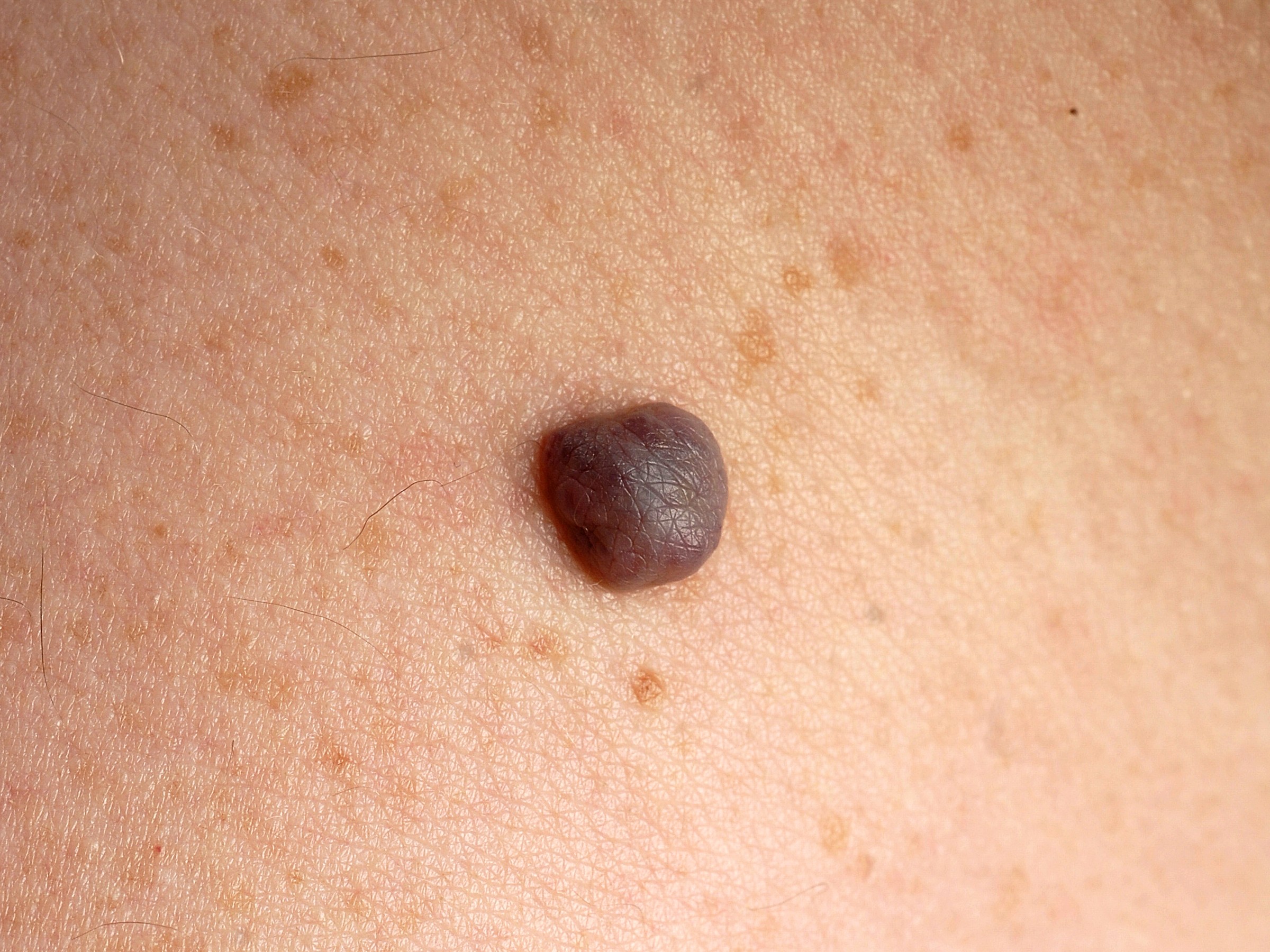
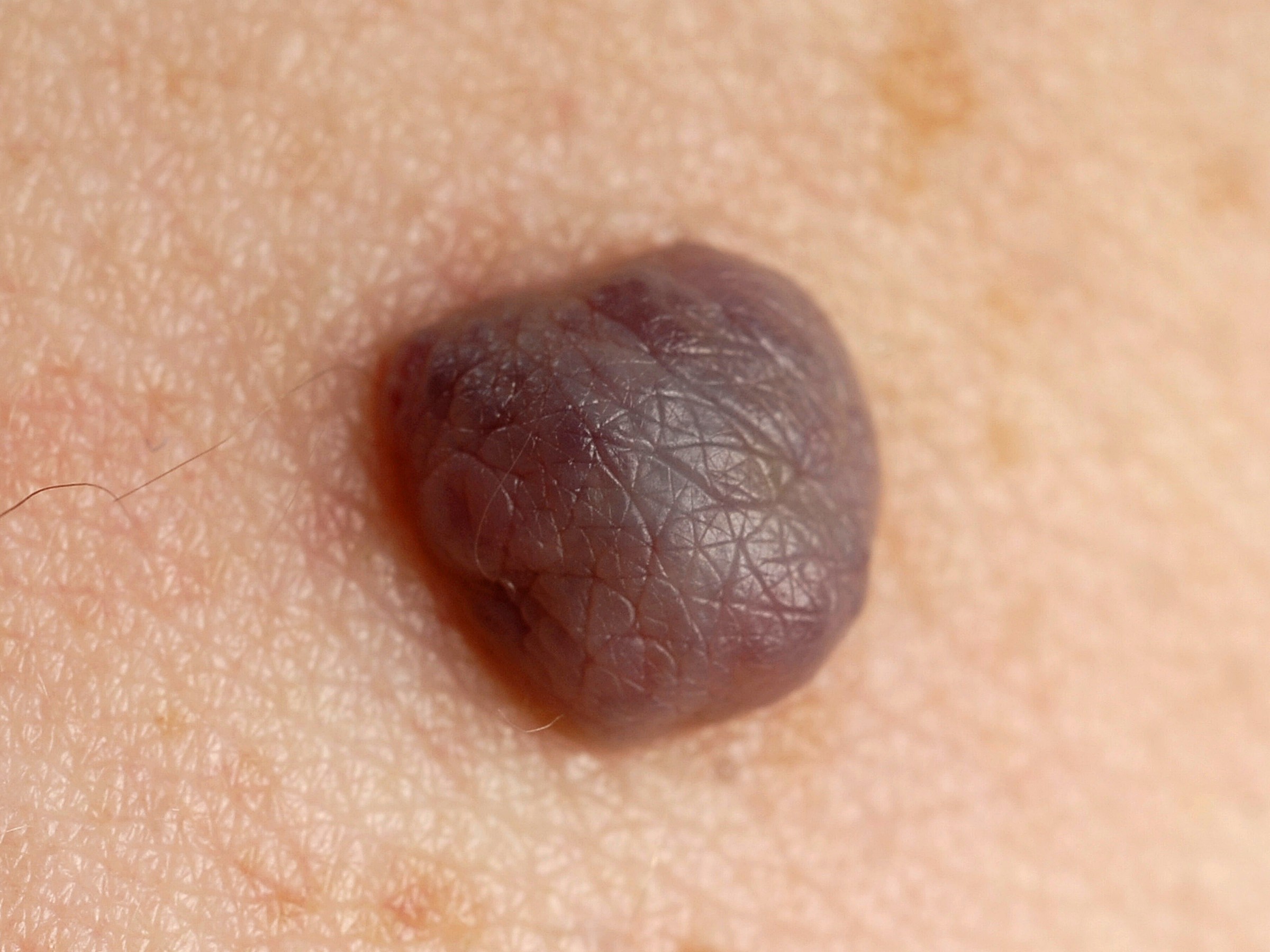
Een
epithelioid hemangioma is een zeldzame, benigne reactieve vasculaire tumor. Histologisch gekenmerkt door een proliferatie van bloedvaten bekleed met epithelioide endotheelcellen, met ruim cytoplasma, en aanwezigheid van een infiltraat met veel eosinofiele cellen en lymfocyten. Epithelioide hemangiomen komen vooral voor in de huid, met name op het hoofd, maar kunnen ook elders op het lichaam voorkomen, en op andere locaties zoals in botten. Het komt vooral voor op 20-40 jarige leeftijd, maar het kan ook bij kinderen voorkomen. De laesies kunnen solitair of multipel voorkomen en kunnen klachten zoals jeuk of pijn veroorzaken. De laesies kunnen recidiveren na excisie.
Klinisch en histologisch lijken de laesies op
angiolymphoid hyperplasia with eosinophilia (
ALHE), en in de laatste WHO indeling van tumoren wordt er van uitgegaan dat het gaat om dezelfde entiteit. In de meest recente artikelen worden de termen als synoniemen gebruikt (
epithelioid hemangioma /
angiolymphoid hyperplasia with eosinophilia). Waarschijnlijk is ook
CEAN (
cutaneous epithelioid angiomatous nodule) geen aparte entiteit maar ook een epithelioid hemangioma.
 |
 |
|
epithelioid hemangioma / CEAN |
epithelioid hemangioma / CEAN |
De oorzaak is niet bekend, er wordt gedacht dat de hemangiomen getriggerd worden door trauma of infectie, of een verhoogd oestrogeengehalte, net als bij
granuloma pyogenicum. Het is een echte
vasculaire tumor, Wilms tumor 1 (WT-1) positief. FOS of FOSB gen rearrangements kunnen worden gevonden in circa de helft van de laesies, vooral bij diep gelokaliseerde laesies of bot-laesies. Een oudere hypothese is dat epithelioid hemangioma / ALHE een lymfoproliferatieve aandoening is met een reactieve angiogene response, net als
Kimura's disease (
eosinophilic hyperplastic lymphogranuloma). In het verleden werden ALHE en
Kimura’s disease als 1 entiteit gezien. In de
ISSVA classificatie is epithelioid hemangioma opgenomen onder de benigne vasculaire tumoren.
DD:
Kimura’s disease,
granuloma pyogenicum,
epithelioid hemangioendothelioma,
epithelioid angiosarcoma,
Kaposi sarcoma,
Kaposiform
hemangioendothelioma,
syringocystadenoma papilliferum,
amelanotisch melanoma,
cutaneous epithelioid angiomatous nodule (waarschijnlijk hetzelfde).
PA:Vaatproliferatie, opeenhoping van onregelmatig gevormde vaatjes omgeven door een infiltraat van eosinofielen en lymfocyten. De vaatwanden zijn gevormd door plompe epithelioid uitziende endotheelcellen. Soms losse klompjes epithelioide endotheelcellen met kleine lumina. De histopathologische DD omvat Kimura's disease, epithelioid angiosarcoma, epithelioid hemangioendothelioma, en Kaposi sarcoma. Bij Kimura's disease zijn er lymfoïde follikels en kiemcentra en ontbreken de onregelmatige gevormde vaatjes met uitpuilende endotheelcellen. Bij epithelioid hemangioendothelioma zijn er nodi van abnormaal vaatweefsel hoog en midden dermaal, met een infitratief groeipatroon en ronde of enigszins spoelvormige epithelioide cellen met veel bleek cytoplasma, ingebed in een myxoid, myxochondroid tot hyalien stroma.
Therapie:Gaat zelden vanzelf over, maar als er weinig klachten zijn is een expectatief beleid mogelijk.

Chirurgische excisie. Recidieven komen vaak voor (30-40%). Neigt vooral tot recidiveren als het niet radicaal is verwijderd inclusief de aanvoerende bloedvaten in de basis van de laesies.
Cryotherapie
Curettage en elektrocoagulatie
Pulsed dye laser
Ablatieve laser (CO2 laser)
Radiotherapie
R/ Intralesionale corticosteroïden.
Case reports beschrijven effectiviteit van tacrolimus, imiquimod, sirolimus, intralesionaal interferon alfa-2a, scleroseren, PDT, mepolizumab, thalidomide, en systemische corticosteroïden.
Referenties
| 1. |
Brenn T, Fletcher CDM. Cutaneous epithelioid
angiomatous nodule: a distinct lesion in the morphologic spectrum of
epithelioid vascular tumors. Am J Dermatopathol 2004;26:14-21. |
| 2. |
Sarkar N, Dash S, Behera B, Sethy M, Ayyanar
P. Exophytic proliferative nodule on the scalp of a child. Pediatr
Dermatol 2024;41(5):918-920. |
| 3. |
Adler BL, Krausz AE, Minuti A, Silverberg JI,
Lev-Tov H. Epidemiology and treatment of angiolymphoid hyperplasia
with eosinophilia (ALHE): A systematic review. J Am Acad Dermatol
2016;74(3):506-512. |
| 4. |
Goto K, Ogawa K, Fukai T, Miura K, Yanagihara
S, Honma K, Motoi T. Categorization of cutaneous epithelioid
angiomatous nodule as epithelioid hemangioma or angiolymphoid
hyperplasia with eosinophilia: Clinicopathologic,
immunohistochemical, and molecular analyses of seven lesions. J
Cutan Pathol 2022;49(9):765-771. |
| 5. |
Ishii A, Watanabe S, Nishihara C, Kakiuchi M,
Akaike Y, Itakura J, Uchino K, Manabe T, Notohara K. Previously
unreported permanent tattoo-associated angiolymphoid hyperplasia
with eosinophilia/epithelioid hemangioma. Pathol Int
2021;71(3):219-221. |
| 6. |
Ortins-Pina A, Llamas-Velasco M, Turpin S,
Soares-de-Almeida L, Filipe P, Kutzner H. FOSB immunoreactivity in
endothelia of epithelioid hemangioma (angiolymphoid hyperplasia with
eosinophilia). J Cutan Pathol 2018;45(6):395-402. |
| 7. |
Khurana A, Savitha B. Refractory
angiolymphoid hyperplasia with eosinophilia: Complete resolution
with low dose thalidomide. Pediatr Dermatol 2022;39(6):995-996. |
| 8. |
Xu SX, Ni XH, Wang CL, Zheng HW. Epithelioid
hemangioma in the male breast: a rare case report and review of the
literature. Am J Transl Res 2025;17(11):8838-8842. |
| 9. |
Savvidou O, Korkolopoulou P, Lakiotaki E, Sioutis S, Vottis C, Gavriil P, Melissaridou D, Papagelopoulos P. Epithelioid Hemangioma of Bone: A Rare Vascular Neoplasm. A Case Report and Literature Review. J Long Term Eff Med Implants 2022;32(4):47-55. |
Author(s):dr. Jan R. Mekkes. Dermatologist, Amsterdam UMC.
 ICD10:
D18.0
ICD10:
D18.0