1. WHAT IS INFLIXIMAB AND HOW DOES IT WORK?Infliximab(anti-TNF-α, brand names Remicade , Remsima , or Inflectra ) is a man-made antibody that binds to the substance TNF-alpha found in the body . TNF-alpha is a protein that plays a role in various inflammatory processes. Infliximab (anti-TNF-α) inhibits these inflammatory processes by binding to TNF-alpha.
TNF-alpha is produced in the body by cells that are part of our immune system. It is released where something is wrong, for example, a bacterial infection, an inflammation, or an injury. The release of TNF-alpha strengthens the inflammatory response: white blood cells (leukocytes) are attracted and activated, causing even more inflammation. This causes local redness, warmth, swelling, and pain.
This inflammatory response is a normal mechanism in the body, intended to clear away bacteria, for example. However, there are diseases in which the inflammatory response gets out of control and causes damage to the surrounding tissues. This is the case with, among others, Crohn's disease (inflammation of the bowel), rheumatoid arthritis (inflammation of the joints), and psoriasis (inflammation of the skin). In all these conditions, the inflammation can be inhibited with infliximab (anti-TNF-α).
2. WHAT IS INFLIXIMAB USED FOR? Infliximab is currently registered in the Netherlands for the following conditions:
- bowel diseases: Crohn's disease and ulcerative colitis
- joint complaints: rheumatoid arthritis , ankylosing spondylitis and psoriatic arthritis
- skin diseases: psoriasis
Within dermatology, the drug is used not only for psoriasis but also for a number of special and rare inflammatory diseases of the skin such as sarcoidosis , pyoderma gangrenosum and severe forms of hidradenitis suppurativa . The drug is not registered for these rare conditions. This is called off-label use.
The fact that infliximab also works for hidradenitis suppurativa was discovered by chance. Over the past 20 years, thousands of patients with Crohn's disease (inflammatory bowel disease) have been treated with infliximab. Some of them also had hidradenitis suppurativa. This is no coincidence; these conditions occur together. During the treatment of Crohn's with infliximab, it was noted that the hidradenitis suppurativa also improved. Subsequently, from around 2003, patients with only hidradenitis suppurativa (without Crohn's) were also treated. Very favorable results with infliximab were also observed in these patients.
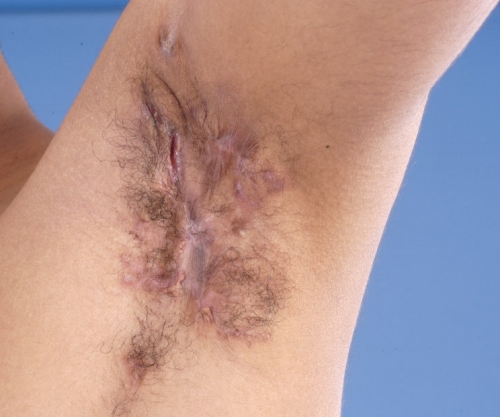
3. WHAT IS HIDRADENITIS SUPPURATIVA? Hidradenitis suppurativa , also called acne inversa or acne ectopica, is a chronic inflammation of the hair follicles and sebaceous glands, primarily in the groin and/or armpits. Hidradenitis suppurativa means suppurative sweat gland inflammation, acne inversa means acne of the folds, and acne ectopica means acne in places other than normal acne. The term "sweat gland inflammation" is actually incorrect, because it is now known that hidradenitis does not originate in the sweat glands, but in the hair follicles.
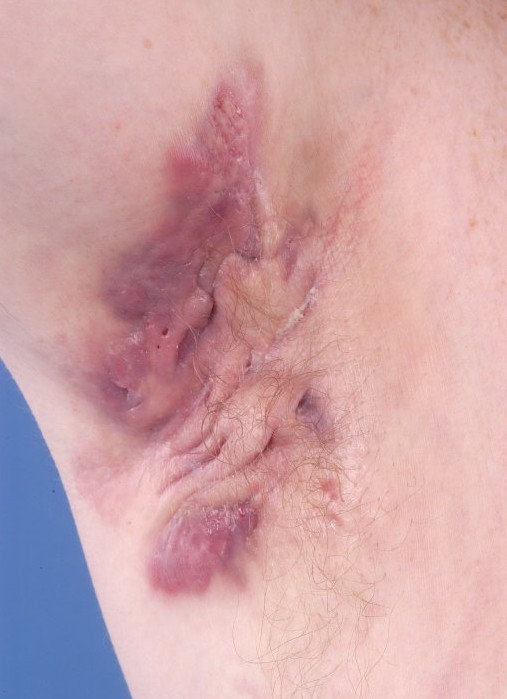
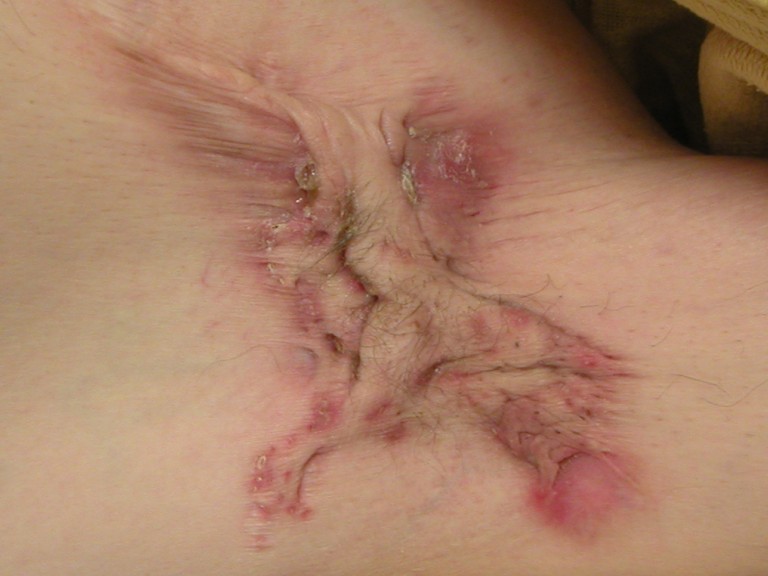
Unlike normal acne (acne vulgaris), hidradenitis suppurativa causes extensive and deep inflammation in and around the hair follicles, resulting in painful swelling. Sometimes dilated ducts and pus heads are visible externally. Large and painful pus-filled abscesses can develop, which eventually rupture. Large cavities ( cysts ) can develop deep inside the skin. Sometimes the pus seeks an escape route other than the original duct, creating ducts and tunnels ( fistulas ) under the skin, which sometimes resurface several centimeters away. See also the brochure "Fistulas under the skin ." Abscess cavities can be connected by ducts. Abscesses can recur repeatedly in the same location. In the most severe cases, hidradenitis suppurativa is a highly debilitating condition due to the pain and the continuous discharge of sebum, fluid, and pus from the inflamed areas.
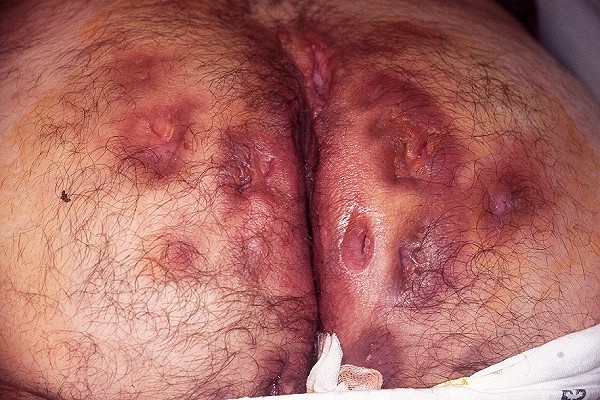
Besides the well-known predilections of the groin and armpits, hidradenitis suppurativa can also occur in other areas, such as the buttocks, around the anus, under the breasts, on the neck, or elsewhere on the torso.
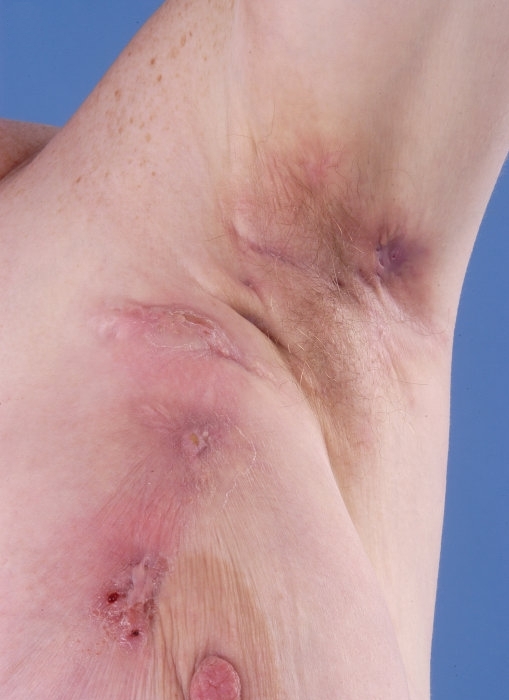
Hidradenitis suppurativa of the axilla, severe variants
Hidradenitis suppurativa of the buttocks, severe variant with many inflammatory symptoms
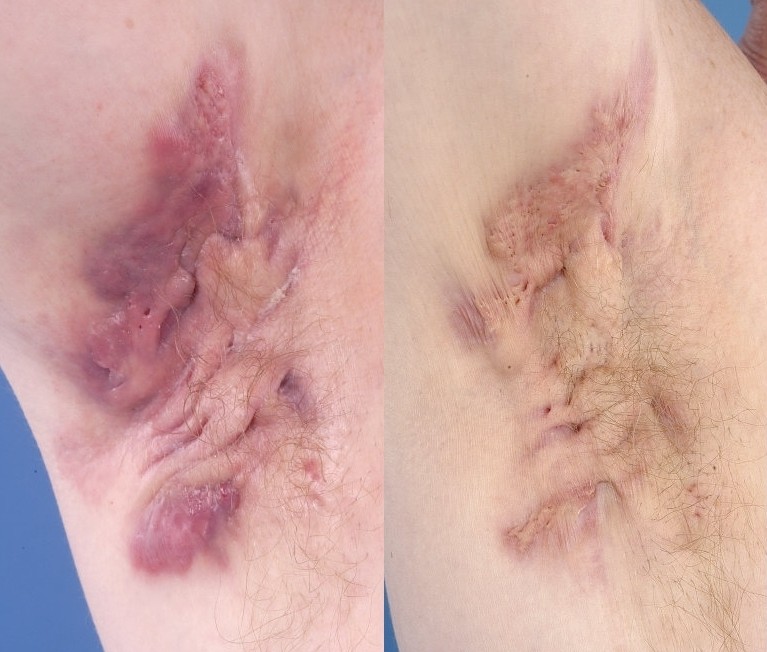
4. WHAT IS THE EFFECT OF INFLIXIMAB FOR HIDRADENITIS SUPPURATIVA? Treatment with infliximab reduces the inflammation around abscesses and fistulas. Swelling, pain, and pus drainage decrease. Some areas disappear completely. Scarring and fluid retention also decrease, increasing freedom of movement. Most patients feel better within a short time (from 2 weeks after starting treatment) and are able to do things, such as cycling, that were previously impossible. Quality of life improves significantly.
The photo above clearly shows the effects of infliximab. The left image shows the situation before starting infliximab. The patient's armpit is severely inflamed, as evidenced by the purple color and swelling. The photo on the right was taken two weeks later, after the patient had received one infusion of infliximab. After one dose of infliximab, both the purple color and the swelling had disappeared. The inflammation had subsided.
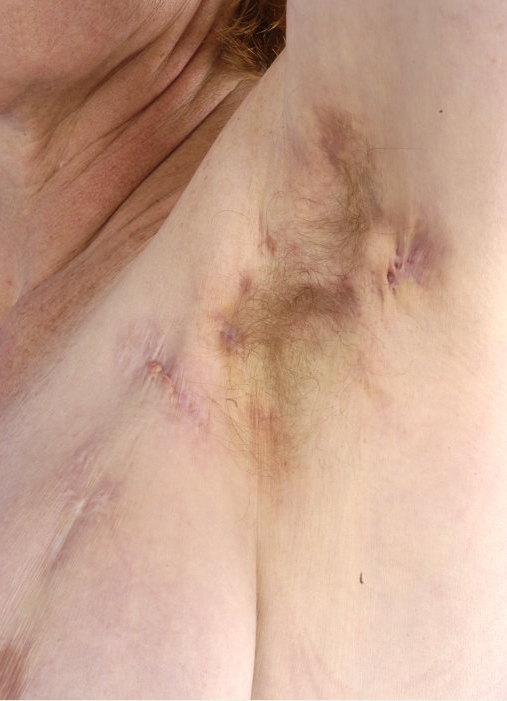
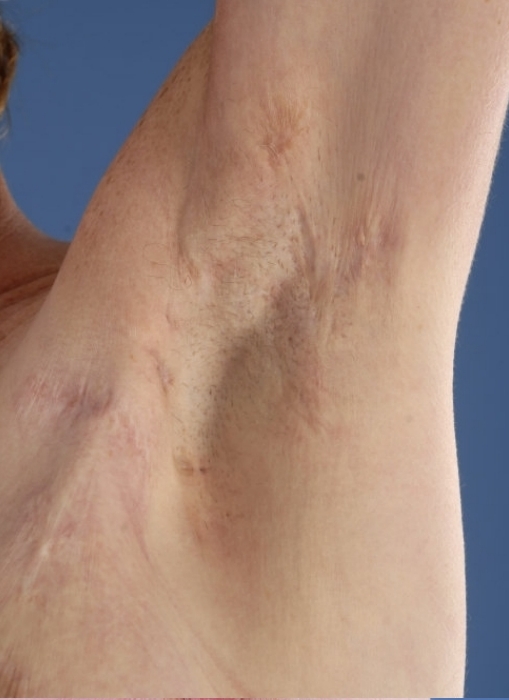
The effect of infliximab can last for a very long time. The left photo was taken before starting infliximab. Purple inflammation is visible, as well as fistula openings and cords under the skin. The patient cannot move her armpit properly. Due to the scarring, the breast is pulled upward when the arm is raised. Infliximab was then started. The middle photo was taken after three doses of infliximab. The inflammation has subsided, the swelling and cords have disappeared, and the mobility of the armpit has returned to normal. Infliximab treatment could be discontinued. The right photo was taken after three years. The armpit is still calm, and no new lesions have developed.
Blood tests also show that the inflammation is disappearing from the body. The erythrocyte sedimentation rate (ESR) decreases, indicating improvement.
As the inflammation subsides, it becomes easier to identify any remaining fistulas or abscesses under the skin. These can then be surgically removed to prevent the condition from recurring. Once all the lesions are gone, infliximab treatment can be discontinued.
5. CAN I BE COMPLETELY CURE WITH INFLIXIMAB? Complete recovery is achievable for some patients if the IV treatment is combined with other treatments, such as surgery. A significant improvement can be expected for most patients. The effect of infliximab also depends on the type of hidradenitis. Hidradenitis suppurativa is a generic term for all kinds of inflammation originating in the hair follicles, but there are different types that respond differently to infliximab.
Infliximab and other TNF inhibitors such as adalimumab are primarily administered to patients with classic hidradenitis suppurativa of the armpits and groin who experience significant inflammation (purple discoloration) around the hidradenitis patches. TNF inhibitors suppress the inflammation. Because the inflammation decreases, the symptoms subside. There is less pus formation, less redness, less purple discoloration, less swelling, and less pain. This significantly improves the condition of patients with this type of hidradenitis. Some patches disappear completely. However, after discontinuing infliximab, the patches can return.Fistulas and abscess cavitiesBoils that recur in the same location usually do not respond, or do not respond sufficiently, to TNF inhibitors and must be surgically removed.
There are also patients who have only fistulas , sometimes just one or a few, with little surrounding inflammation . These patients expect little benefit from infliximab: surgical removal of the lesions is a much better treatment.
There are also patients who primarily have boils and abscesses in the folds of the body, who are overweight . These boils and abscesses develop due to sweating and sweltering in body folds that overlap, for example, under the breasts or in the abdominal folds or groin. Sometimes these patients also have diabetes, also related to being overweight. This form is sometimes called hidradenitis because fistulas can also develop locally, but the correct medical name is furunculosis in cases of obesity . Infliximab is not the first-choice treatment for this type either. Losing weight is the most important. Short or long courses of antibiotics can also be used.
Sometimes patients (especially men) have fistula openings on the buttocks that strongly resemble hidradenitis suppurativa, but upon closer inspection, they are actually fistulas connected to the anus ( perianal fistulas ). These fistulas can be centimeters long and radiate across the entire buttock. This type of fistula also requires surgical treatment. This variant should be treated by surgeons experienced in operating around the anus.
Fistulas in the gluteal cleft can be associated with another condition called pilonidal sinus (pilonidal cyst). This form of fistula can also only be treated surgically.
Several patients have also been described in whom infliximab is ineffective or ineffective. In some of these patients, it is ineffective without any known explanation. And in some of these patients, it does work somewhat, but the inflammation and fistula formation have progressed to the point that they cannot be controlled even with infliximab.
There are also patients who initially respond well to infliximab but later fail. This is often because the body produces antibodiesdevelops antibodies against infliximab. These antibodies block the drug, making it ineffective. Blood tests can determine whether antibodies are present. They can also determine how much infliximab remains in the blood. If antibodies have formed (>12 U) and if the amount of infliximab in the blood is low, there is little point in continuing treatment. The risk of antibody formation increases if the interval between two infusions becomes too long (longer than 4 months).
Some patients recover completely. Most patients who ultimately recover completely received a combination treatment of infliximab, antibiotics, and surgery. Initially, infliximab was administered for as long as necessary. Then, surgical removal of any remaining lesions was initiated. In approximately 1 in 3 patients, this approach successfully cures hidradenitis. Complete recovery means: all lesions have disappeared and further treatment is no longer necessary.
Infliximab has been used to treat hidradenitis suppurativa since 2003, and hundreds of patients worldwide have now been treated. The results are good. Much is also known about the side effects, as thousands of patients with Crohn's disease, rheumatoid arthritis, or psoriasis have been treated with infliximab. The side effects are mild; the most important are listed below; see the infliximab package insert for further details.
6. HOW LONG DOES THE EFFECT LASTS? Studies on this subject provide mixed results. In some patients, the effect lasts for months to years after discontinuation. However, in most patients, infliximab remains effective as long as it is given, but after discontinuation, the inflammation gradually returns. Therefore, it is important to begin surgical removal of any remnants during the period when the condition has subsided.
7. CAN I HAVE SURGERY IF I USE INFLIXIMAB? Surgery creates a wound that needs to heal, and wound infections can sometimes occur. TNF-alpha is involved in both processes, so theoretically, wound healing or infection clearance could be impaired in patients taking infliximab. Therefore, the package insert states that you must inform the patient that you are taking infliximab if surgery is required, and that in some cases, infliximab should be stopped well in advance, for example, in planned major or major surgeries.
Patients with hidradenitis suppurativa often undergo minor or major skin procedures. In practice, there are no known examples of hidradenitis patients experiencing additional problems with wound healing or wound infection due to infliximab use during these types of procedures.
So you are eligible for surgery. For the special category of patients with hidradenitis suppurativa, infliximab is often given specifically to enable surgery without problems. Therefore, it is not necessary to discontinue infliximab or postpone a procedure. However, you must inform the surgeon that you are taking infliximab. For surgeries other than those on the skin, you must consult your doctor.
8. HOW DO I BECOME ELIGIBLE FOR TREATMENT WITH INFLIXIMAB? The first step is to be referred to a dermatologist with experience in treating hidradenitis suppurativa with infliximab. The most important requirement for eligibility is that you have a very severe form of hidradenitis suppurativa that cannot be controlled with other medications or surgical intervention.
Infliximab has also been shown to be particularly effective for those forms of hidradenitis with significant inflammation, recognizable by purple discoloration, swelling, and hardening of the skin around abscesses and fistulas. Your dermatologist will assess this and advise you on the expected success of infliximab treatment.
Some patients have a form of hidradenitis that benefits more from antibiotic treatment and/or a series of minor procedures to clear the fistulas. If this is the case, your dermatologist will inform you honestly. You should then be confident that infliximab treatment is not the right choice for you at this time.
9. IS ANY SPECIAL INVESTIGATION REQUIRED? Before starting infliximab, you must be certain that you do not have any underlying infections such as tuberculosis (TB) or hepatitis (liver inflammation). These can flare up with infliximab use. Therefore, blood tests are performed before treatment. To rule out tuberculosis, a lung x-ray is also taken, and a Mantoux test is administered in the arm. This is a skin prick that tests whether you have ever been exposed to the tuberculosis bacteria. The Mantoux test is read after 3 to 5 days; no lump should be visible at the injection site. If a lump does appear (positive Mantoux), you should see a pulmonologist to determine whether you have a history of tuberculosis.
To document the severity, x-rays are usually taken before and during treatment. Blood tests are also performed occasionally during treatment to monitor the reduction of the inflammation. Sometimes, health questionnaires are distributed to assess your condition before and after treatment.
10. WHAT CAN I EXPECT FROM TREATMENT WITH INFLIXIMAB? The result you can expect from treatment with infliximab is that the inflammation will become calmer. The pain and swelling will decrease. The amount of pus that comes out will also decrease. Some spots disappear completely, and fistulas can also disappear entirely. Blood tests (blood tests) show that the inflammation is disappearing from the body. The erythrocyte sedimentation rate (ESR) decreases, a sign of improvement.
As the inflammation subsides, it will also become more visible where there are still passages (fistulas) or cavities (abscesses) under the skin. These can then be surgically removed to prevent the condition from recurring.
Surgical intervention is not always necessary, but often is. If hidradenitis suppurativa persists for a long time, large cavities and deep fistula passages can develop, completely lined with ingrown skin. Fistulas can resolve spontaneously with infliximab, but this doesn't happen in all cases. Any remaining lesions require surgical removal.
Ideally, treatment with TNF inhibitors is part of a comprehensive approach to the problem:
1) if you benefit from antibiotics, continue taking them;
2) the inflammation is calmed with TNF inhibitors;
3) fistulas and abscesses are drained through multiple minor and major procedures;
4) you try to quit smoking;
5) you try to lose weight if you are overweight.
![Combination therapy for hidradenitis suppurativa (click on photo to enlarge) [source: www.huidziekten.nl]](../../images/figures/combinatietherapiew.jpg "Combination therapy for hidradenitis suppurativa (click on photo to enlarge) [source: www.huidziekten.nl]")
11. WHERE DOES INFLIXIMAB TREATMENT TAKE PLACE? Infliximab can only be administered via an IV in the arm. Therefore, you must be admitted to the hospital (day hospitalization) or a day clinic for treatment.
12. IS INFLIXIMAB REIMBURSED? Infliximab is an expensive medication. Treatment costs tens of thousands of euros per year. The reimbursement regulations for expensive medications are constantly changing; they are different almost every year. Infliximab is not registered for hidradenitis suppurativa, but currently (2017), it can still be prescribed for hidradenitis suppurativa.
As it is currently regulated, hospitals must cover the costs of these expensive medications themselves from their hospital budget. Not all hospitals have sufficient budgets to offer this expensive treatment. More and more expensive medications are being added, and departmental budgets are not increasing accordingly due to healthcare cuts. In practice, this means that only the most severe cases can be treated.
13. WHAT ABOUT THE FLU? DO I NEED TO GET VACCINATED? Infliximab is a drug that suppresses the immune system. This means that as soon as you use this drug, you fall into the category of "patients with reduced resistance to infections" and are eligible for the flu shot. The current recommendation is: get vaccinated as soon as the vaccine is available.
It is also wise to contact your GP now to inquire whether their records indicate that you fall into the category of "patients with reduced resistance" who are eligible for the flu shot.
14. WHAT CAN I STILL DO? The most important advice is: quit smoking! It has been shown that most patients with severe hidradenitis smoke. While in the Netherlands the percentage of smokers has dropped below 30%, it appears that 95% to 100% of patients with severe hidradenitis smoke. This is a very significant and compelling difference. There's a theory that the sebaceous ducts become clogged by chemicals in cigarette smoke, such as tar and dioxins.
It's very difficult to quit smoking, and patients don't like this advice and sometimes become very frustrated by it. But it is necessary that you try. Quitting smoking is also wise for other reasons. Existing deep abscesses and fistulas won't disappear if you stop smoking, but it's about limiting future damage.
Overweight patients need to lose weight . This is also difficult. A dietitian can be helpful.
15. WHAT YOU NEED TO KNOW BEFORE YOU USE INFLIXIMABDo not use infliximab:- if you are hypersensitive (allergic) to infliximab, to any of the other ingredients of infliximab, or to mouse (mouse and rat) proteins.
- if you have a serious infection, including tuberculosis (see: 'Take special care with infliximab'). It is important that you tell your doctor if you have any symptoms of infection, e.g. fever, feeling unwell, wounds, dental problems.
- if you have moderate or severe heart failure. It is important that you tell your doctor if you have or have had a serious heart condition.
If you think you have any of the above, it is important that you talk to your doctor.Take special care with infliximab:Some patients experienced allergic reactions within 2 hours of receiving infliximab. These reactions were generally mild to moderate; however, in rare cases they were severe. Symptoms of such reactions usually included rash, hives, fatigue, wheezing or difficulty breathing, and/or low blood pressure. If you experience any of these symptoms, tell your doctor.
If these symptoms occur during the infusion, your doctor may reduce the infusion rate. Your doctor may also stop administering the medication until the symptoms disappear and then restart it. Your doctor may also treat your symptoms with other medications (paracetamol, antihistamines, corticosteroids, bronchodilators, and/or adrenaline).
In most cases, you can still receive infliximab even if these symptoms occur. However, in some cases, your doctor may decide that it is best to discontinue infliximab.
There is an increased risk of hypersensitivity reactions if you are re-treated after an interval of more than 16 weeks. Therefore, it is not recommended to restart infliximab after a period of more than 16 weeks without medication.
An allergic reaction may occur up to 12 days after the infusion. This reaction can be severe. Signs and symptoms include muscle weakness or pain, rash, fever, joint or jaw pain, swelling of the hands or face, difficulty swallowing, itching, sore throat, and/or headache. Tell your doctor immediately if you notice any of these symptoms.
You may be more likely to get an infection. It is important to tell your doctor if you have any symptoms of infection, such as fever, feeling generally unwell, wounds, or dental problems.
If you have purulent fistulas, tell your doctor.
Because cases of tuberculosis have been reported in patients treated with infliximab, you will be tested for tuberculosis before starting infliximab. The test consists of a detailed medical history, and it is very important that you tell your doctor if you have ever had tuberculosis or been in contact with someone who has had tuberculosis. You will also undergo a tuberculin skin test and a chest X-ray. Your doctor should record on your patient record when these tests were performed.
If symptoms of tuberculosis (persistent cough, weight loss, listlessness, fever) or another infection occur during treatment, consult your doctor immediately.
If you have recently received a vaccine or are due to receive one soon, tell your doctor.
If you are due to have surgery or dental work, tell your doctor or dentist that you are taking infliximab.
If you have mild heart failure and are being treated with infliximab, your doctor should closely monitor your heart failure. If you develop new or worsening symptoms of heart failure (for example, shortness of breath or swelling of the feet), you should contact your doctor immediately.
In rare cases, you may develop signs and symptoms of lupus (persistent rash, fever, joint pain, and fatigue). If these symptoms occur, contact your doctor.
Before taking infliximab, tell your doctor if you have had lymphoma (a type of blood cancer) or any other cancer. Taking infliximab may increase your risk of developing lymphoma or other cancer. You should also tell your doctor if you develop lymphoma or other cancers while taking infliximab.
Reports of lymphoma in patients treated with infliximab are rare, but occur more frequently than expected in the general population. A patient with more severe rheumatoid arthritis who has had the disease for a long time may be more likely to develop lymphoma.
In rare cases, a specific and serious form of lymphoma has been reported in young people or adolescents with Crohn's disease treated with infliximab plus azathioprine or 6-mercaptopurine.
Cancers other than lymphoma have also been reported in patients with a specific type of lung disease called chronic obstructive pulmonary disease (COPD). Patients with COPD and/or heavy smokers may have an increased risk of cancer during treatment with infliximab. If you have COPD or are a heavy smoker, you should discuss with your doctor whether infliximab is suitable for you.
Pregnancy:
You will not be given infliximab if you are pregnant.
If you are given infliximab, you must avoid becoming pregnant by using appropriate contraception during your treatment and for at least six months after the last infusion of infliximab
.
It is not known whether infliximab is excreted in breast milk. If you are breastfeeding, you should stop when you are due to receive infliximab. Before starting breastfeeding, it should have been at least 6 months since your last treatment with infliximab.
Special patient groups:
Infliximab has not been studied in children (0-17 years) with rheumatoid arthritis or Crohn's disease. As long as no safety and efficacy data are available in children, treatment with infliximab should be avoided.
Specific studies of infliximab have not been conducted in elderly patients or in patients with liver or kidney problems.
Driving and using machines:
It is not known whether infliximab affects your ability to drive or use machines. If you feel tired or unwell after taking infliximab, do not drive or operate machinery.
Taking infliximab with other medicines:
In general, patients with rheumatoid arthritis, Crohn's disease, ulcerative colitis, ankylosing spondylitis, psoriatic arthritis or psoriasis are already taking several medicines to treat their disease, such as methotrexate, azathioprine or 6-mercaptopurine. These medicines may themselves cause side effects.
Tell your doctor if you are taking or have recently taken any other medicines, even those not prescribed. If you experience additional side effects or any other new symptoms, tell your doctor.
16. HOW IS INFLIXIMAB USED? Infliximab is available as a powder for concentrate for solution for infusion. This means that infliximab must first be mixed with water for injections before being given to you. The resulting solution is then further diluted with sodium chloride 9 mg/ml (0.9%) solution for infusion.
Infliximab is available in packs containing 1, 2 or 3 vials. Not all pack sizes may be marketed. Each infliximab vial (glass bottle) contains 100 mg of the active ingredient infliximab.
Infliximab will be administered to you as an infusion into a vein, usually in your arm, over a period of 2 hours in a healthcare facility. Your doctor or healthcare professional will monitor you during the administration of your infliximab dose and for 1 to 2 hours afterward.
Depending on your condition and how you respond, your doctor will determine your individual dose and dose interval. This may include additional doses 2 and 6 weeks after your first dose. Treatment may also be continued after this time. The total amount of infliximab you receive is based on the dose and your body weight. Your doctor will advise you on any other medications you should continue taking while you are receiving infliximab.Rheumatoid arthritis:The recommended dose is 3 mg infliximab per kg body weight.Crohn's disease:The recommended dose for severe, active Crohn's disease is 5 mg infliximab per kg body weight. For the closure of enterocutaneous fistulas, the recommended dose is 5 mg infliximab per kg body weight.Ankylosing spondylitis:The recommended dose is 5 mg infliximab per kg body weight.Psoriatic arthritis:The recommended dose is 5 mg infliximab per kg body weight.Ulcerative colitis:The recommended dose is 5 mg infliximab per kg body weight.Psoriasis:The recommended dose is 5 mg infliximab per kg body weight.
Schedule: weeks 0, 2, 6, and then every 8 weeks (adjustable if necessary).Pyoderma gangrenosum and hidradenitis suppurativa:The recommended dose is 5 mg infliximab per kg body weight.
Schedule: weeks 0, 2, 6, and then every 8 weeks (adjustable if necessary).
17. WHAT ARE THE SIDE EFFECTS OF INFLIXIMAB? Like all medicines, infliximab can have side effects. Most side effects are mild to moderate and transient. However, some can be more serious and may be a reason to discontinue treatment. Side effects can occur up to six months after the last infusion. All side effects that have occurred so far are listed in the package leaflet. When reading all the information in the package leaflet, it is important to realize that these drugs have now been used in thousands of patients with bowel diseases, rheumatism, or psoriasis without any major problems. Therefore, you are not being treated with a completely new and experimental drug. Infliximab is not new, what is new is its use in hidradenitis suppurativa.Consult your doctor immediately if you notice any of the following:- pain or weakness in the chest, muscles, joints or jaw
- swollen hands, feet, ankles, face, lips, mouth or throat, which may
make breathing or swallowing difficult
- hives or other signs of an allergic reaction
- fever
- rash -
itching
- shortness of breath during exercise or when lying down, or swollen feetConsult your doctor as soon as possible if you notice any of the following:- signs of infection
- difficulty breathing and dry cough
- problems urinating
- changes in the way your heart beats, for example, you notice it beating faster
- feeling light-headed
- tiredness
- hoarseness
- cough
- headache -
tingling -
numbness to touch
- double vision or other problems with your eyes
- floppy arms or legs
- signs of liver or spleen problems: yellowing eyes or skin, dark
brown urine, upper abdominal pain
- weight loss
- night sweats
- painful joints
The symptoms described above may be signs of the side effects seen with infliximab classified below.
Common: headache, dizziness, nausea, abdominal symptoms, allergic reactions, rash, hives, viral infections (for example, herpes), respiratory infections (colds, sinus infections, bronchitis, pneumonia).
Patients with hidradenitis suppurativa treated with infliximab may experience joint problems even if they have never had them before. This is common, occurring in approximately 15% of patients. It is not listed in the package insert because it has not previously been reported (or is very rare) in patients with other conditions treated with infliximab. The joint pain can be severe and warrants discontinuation of infliximab, and strong painkillers and anti-inflammatory drugs must also be administered. After discontinuing infliximab, the pain subsides completely, within a few days to a few weeks.
Uncommon: Depression, agitation, sleep disorders, poor wound healing, bacterial infections (for example tuberculosis, urinary tract infections, deep skin infections, sepsis), fungal infections, asthma, abnormal liver function, low blood cell counts including anaemia, worsening demyelinating nerve disease, activation of autoimmune diseases (SLE, lupus), joint disorders, muscle pain, worsening heart failure, hair loss, bleeding, allergic anaphylactic reactions, injection site reactions.
Rare: Gastrointestinal bleeding or perforation, circulatory disorders, multiple sclerosis, lymphoma.
Your doctor may also perform tests to check your liver function and/or blood values.
If you notice any side effects not mentioned in this leaflet, please inform your doctor.
More information about hidradenitis suppurativa (other treatments, surgery):
hidradenitis suppurativa (brochure about the clinical picture)
fistulas under the skin (brochure about fistulas)
surgery for hidradenitis suppurativa (brochure about the procedures)
See also www.hidradenitis.eu (website with photos) |

![Combination therapy for hidradenitis suppurativa (click on photo to enlarge) [source: www.huidziekten.nl]](../../images/figures/combinatietherapie.jpg "Combination therapy for hidradenitis suppurativa (click on photo to enlarge) [source: www.huidziekten.nl]")