WHAT DOES HIDRADENITIS SUPPURATIVA MEAN?Hidradenitis suppurativaHidradenitis suppurativa , also called acne inversa or acne ectopica , is a chronic inflammation of the hair follicles, primarily in the groin and/or armpits. Hidradenitis suppurativa means purulent sweat gland inflammation , acne inversa means acne of the folds, and acne ectopica means acne in places other than regular acne.
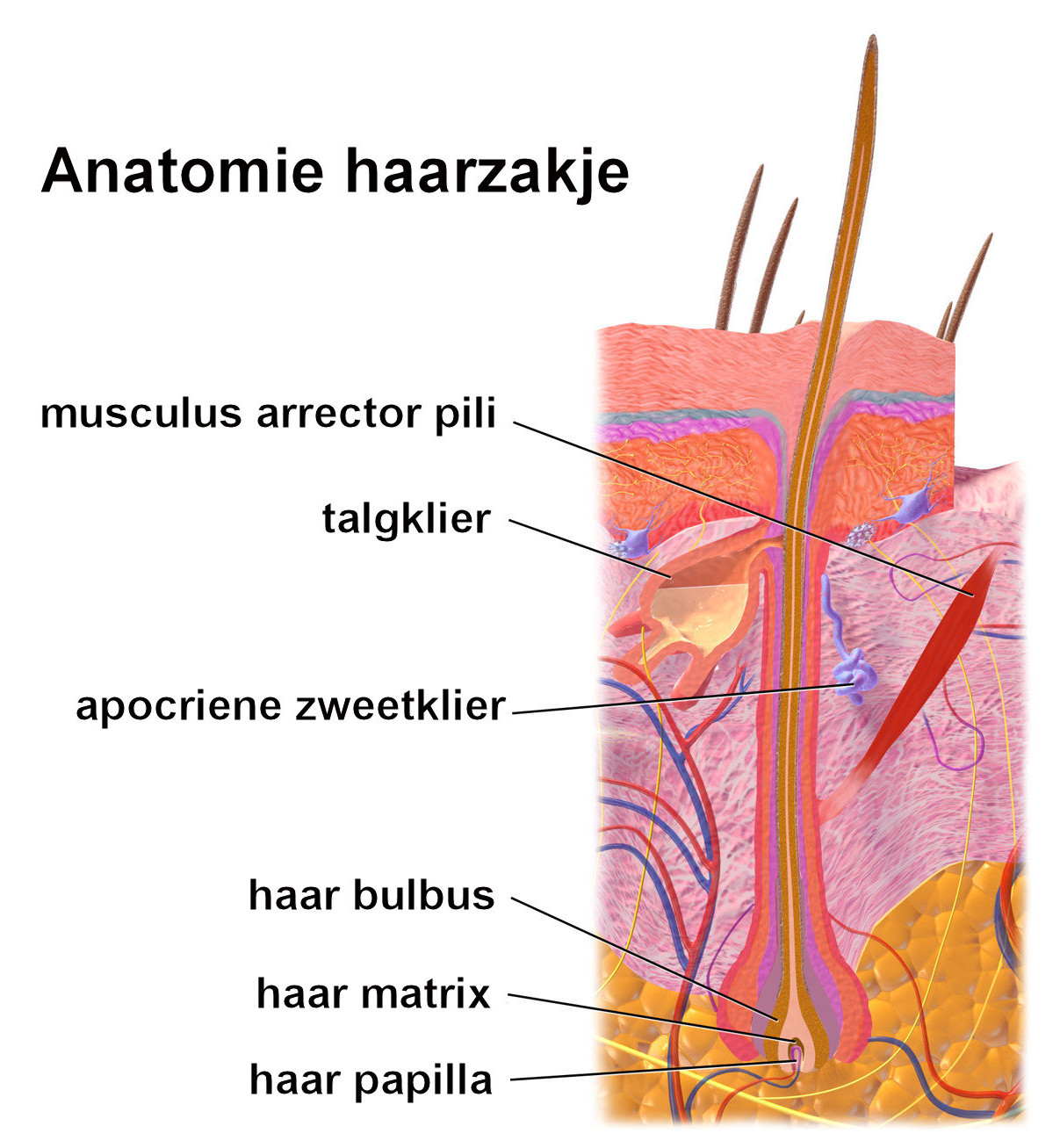
Despite the name, it is not the sweat glands that become inflamed, but the hair follicles . Hidradenitis suppurativa is actually a misnomer, but because everyone around the world has become so accustomed to it, the name is still used.
With hidradenitis suppurativa, the opening of the hair follicle, where the hair emerges, becomes blocked. The opening is blocked by a keratin plug or by swelling in the surrounding area. The inside of the hair follicle is lined with skin cells. These skin cells continue to divide and eventually die in the form of skin flakes. All these skin flakes accumulate in the hair follicle, which eventually bursts. Then its contents, a mixture of skin flakes containing a lot of keratin (horn material), sebum, living and dead skin cells, and bacteria, end up under the skin.
This causes inflammation, creating a cavity filled with keratin, living and dead skin cells, pus, and bacteria (an abscess). This debris seeks an escape and breaks through into the skin. At that point, a tunnel-like connection (a fistula ) forms between the inflamed cavity deep within and the skin on the outside.
Various bacteria can begin to multiply in the deep cavities and passages. Inflammatory cells are attracted to these passages, attempting to clear the bacteria and the remains of the ruptured hair follicle, but are only partially successful. Among all these inflammatory cells, the original cells of the hair follicle wall are still present. These cells form new cavities and tubular structures. A whole network of passages can develop under the skin.
A major cause of a hair follicle plug is smoking. Smokers often have multiple clogged hair follicles and sebaceous glands, recognizable by blackheads (also called comedones).COMPLAINTSUnlike regular acne (acne vulgaris), acne inversa causes extensive inflammation in and around the hair follicles, resulting in painful swelling. Sometimes dilated ducts and pus heads are visible externally. Large and painful pus-filled abscesses can develop, which eventually rupture. Large cavities (cysts) can form deep inside the skin. Sometimes the pus seeks an escape route other than the original duct, creating passages and tunnels (fistulas) under the skin, which sometimes resurface several centimeters away. Abscess cavities can be connected by ducts. Abscesses can recur repeatedly in the same location. In the most severe cases, acne inversa is a highly debilitating condition due to the pain and the continuous discharge of sebum, fluid, and pus from the inflamed glands. It can lead to social isolation and feelings of depression.
Besides the well-known predilection areas of the groin and armpits, acne inversa can also occur in other places, such as the buttocks, around the anus, under the breasts, on the neck, or elsewhere on the trunk.
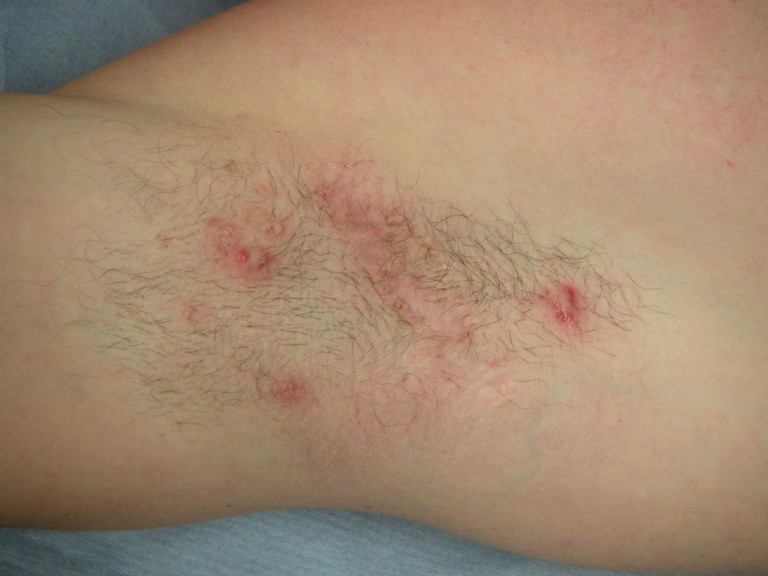
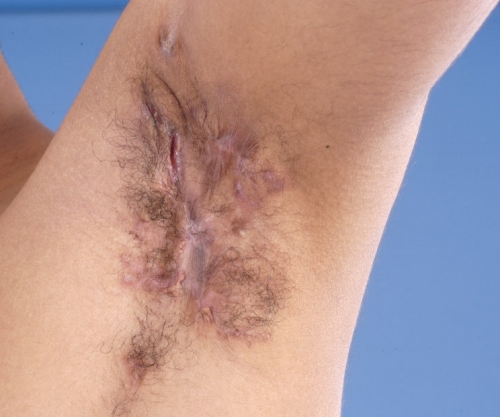
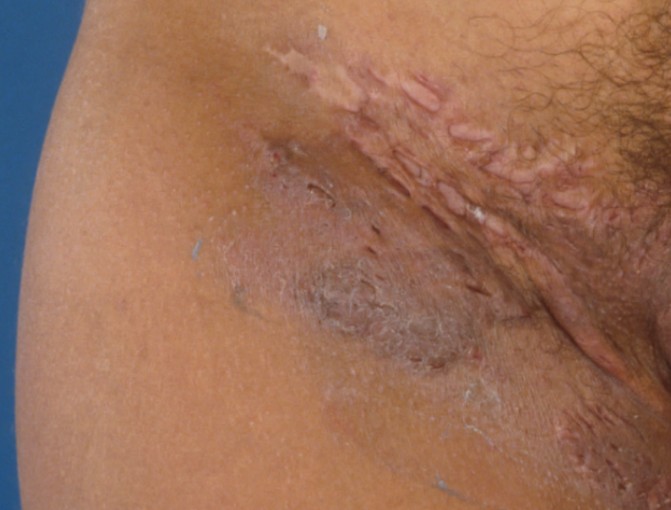
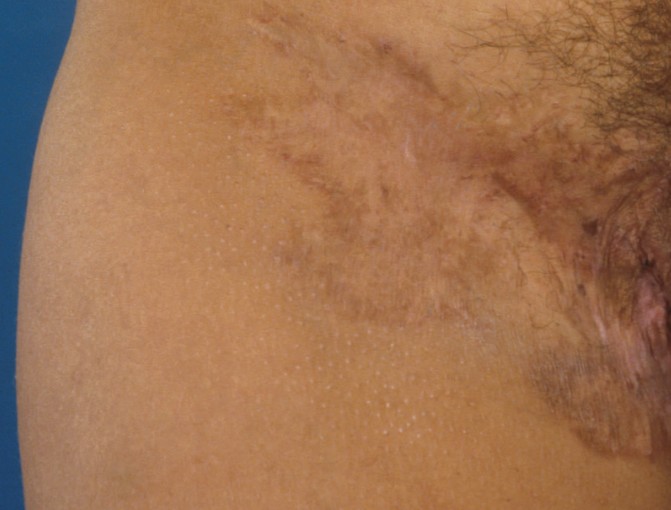
Hidradenitis suppurativa of the armpit, mild variants
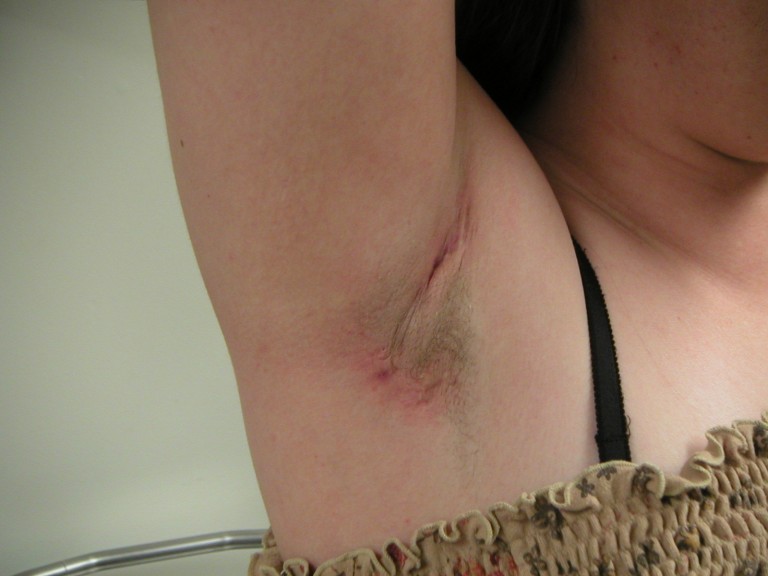
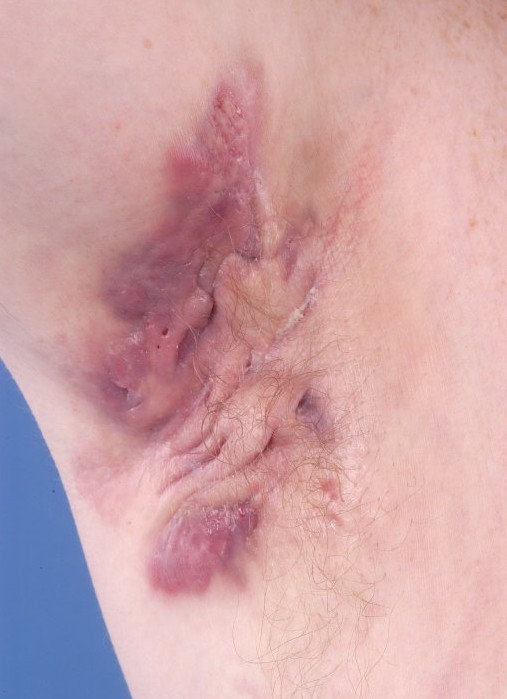
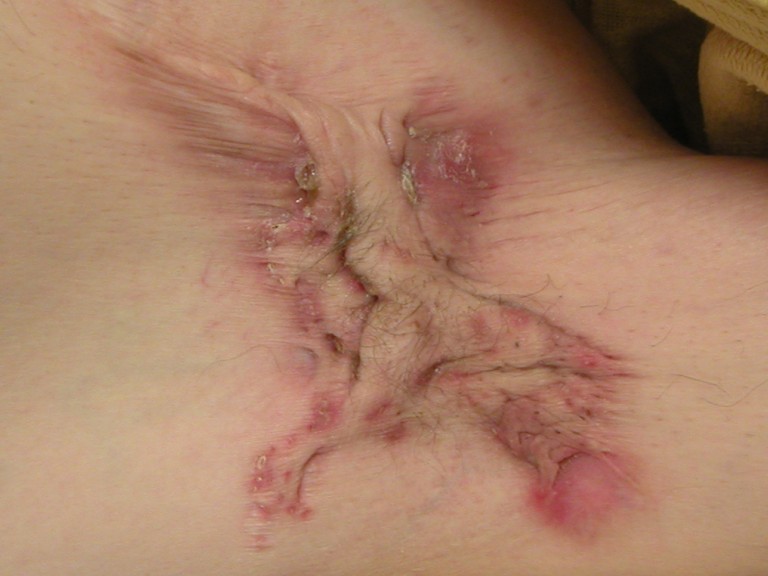
Hidradenitis suppurativa of the axilla, severe variants
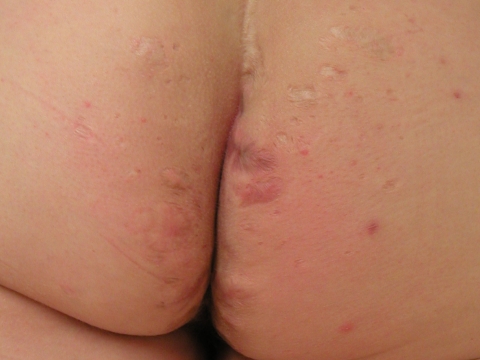
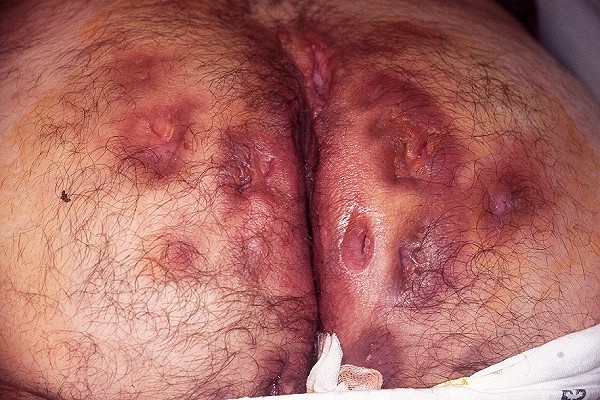
Hidradenitis suppurativa of the buttocks, severe variant with many inflammatory symptoms
CAUSEThe exact cause is unknown. The condition usually begins during puberty (when the underarm hair and glands fully develop) but can also develop later in life. It occurs primarily in women (70-80% of the population is female). Heredity plays a role; it occurs more frequently in certain families and races (white and black) than in others. Hormonal influences also play a role; in some women, the inflammation worsens around menstruation, and pregnancy and menopause can also contribute to the symptoms. Obesity, smoking, sweating, heat, and possibly stress also have an adverse effect.
Furthermore, there is a correlation with certain medical conditions; acne inversa is somewhat more common in patients with diabetes, Crohn's disease (inflammation of the colon), some forms of rheumatoid arthritis, thyroid disorders, lupus erythematosus, and psoriasis.TREATMENTInverse acne is difficult to treat. There are a few lifestyle changes you can follow. Some medications can prevent and reduce inflammation, but they have little effect on existing abscess cavities and ducts. Chronic inflammation can be treated surgically.RULES OF LIFEGiven the influence of obesity and smoking (50-80% of patients with acne inversa are overweight, and 80% smoke or have smoked), losing weight and quitting smoking are important. Good local hygiene is also important. Clean your armpits and groin areas thoroughly every day, and if necessary, use an antibacterial soap such as Unicura or Hibiscrub. Wear clean, dry, and absorbent underwear. Tight-fitting clothing and chafing underwear can damage hair follicles.MEDICINESAntiseptics and local antibioticsThese products (e.g., betadine iodine soap, Hibiscrub, Dalacin-T, erythromycin application solution) can reduce the number of bacteria on the skin and thus make a small contribution, especially to preventing new infections. Existing abscesses and deeper infections do not respond to them.Local anti-acne preparationsThese products (e.g., benzoyl peroxide gel or salicylic acid-containing creams) are designed to keep the sebaceous glands open. They are slightly irritating and therefore less suitable for the sensitive skin of the folds. Resorcinol cream 15% also reopens the ducts by thinning the upper layers of skin. The product can be slightly irritating, visible as flaking of the skin, and may discolor the skin and underwear. It is also used to speed up the rupture of abscesses (boils).AntibioticsThe inflammatory component can be calmed by long-term antibiotic treatment. The antibiotics used for this are tetracycline, minocycline, doxycycline, and erythromycin. This group of antibiotics, in addition to their usual antibacterial effect, has a second property: they inhibit the white blood cells that are attracted to the inflamed sebaceous glands, thus directly calming the inflammatory process. Antibiotics are normally given for short periods, but this is not the case with these antibiotics: they are given for months if necessary.
Antibiotics can also be used for short periods (1-2 weeks) to combat severe infections with abscess formation. Generally, a strong antibiotic (e.g., Augmentin or clindamycin) is chosen, which is effective against most bacteria found in the inflammation.
Another combination, prescribed for severe hidradenitis for a longer period (2-4 months), is clindamycin 300 mg twice daily plus rifampicin 300 mg twice daily. Clindamycin alone, in a low dose of 300 mg twice daily, is also effective and often well tolerated.
All antibiotics only temporarily suppress the inflammation process. While this may temporarily reduce redness, pain, and swelling, it can prevent new infections, but it will not eliminate existing abscesses and fistulas, and the problem will recur after discontinuation.Agents that inhibit sebum gland productionWomen can be prescribed a special contraceptive pill (Diane-35), possibly with the addition of Androcur (cyproterone acetate) for the first 10 days of the pack. The side effects are comparable to those of a regular birth control pill. It takes several months for the effect to become noticeable, and its effectiveness for acne inversa is less than for regular acne.
Other medications that affect the sebaceous glands are the vitamin A acid-derived preparations isotretinoin and Neotigason (acitretin). Isotretinoin works well for regular acne, but its effectiveness for acne inversa is minimal. This is likely because the problem with acne inversa is not sebaceous gland production, but rather the blockages in the glandular ducts. Neotigason works slightly better because it inhibits skin keratinization and also has anti-inflammatory properties. Both medications can cause significant side effects.Anti-inflammatory agentsInflammatory reactions (redness, swelling, pain) can be temporarily suppressed with corticosteroids (adrenal cortex hormones). Corticosteroids can be administered in tablet form or injected directly into swellings and abscesses. Corticosteroids suppress the immune system and thus calm the inflammation. The disadvantage is that the immune system is needed to keep bacteria under control. Bacterial infections can therefore be more severe in someone taking corticosteroids. This can be prevented by taking antibiotics simultaneously.
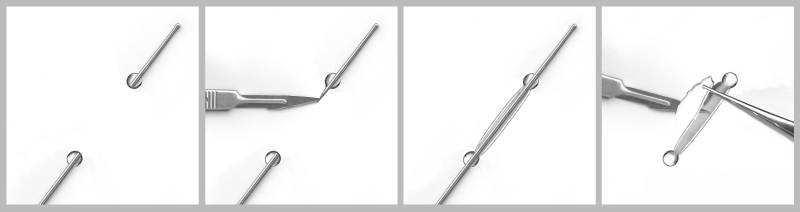
Since 2002, several new and powerful anti-inflammatory drugs have been introduced, the so-called TNF-alpha inhibitors . These are effective in patients with severe hidradenitis suppurativa, especially in those with severe inflammatory reactions around abscesses and fistulas. There are two medications available in the Netherlands that can be prescribed for hidradenitis suppurativa: infliximab (brand names Remicade, Remsima, Inflectra), which can only be administered intravenously, and adalimumab (brand name Humira) injections. Infliximab has been used the longest. It is not registered for hidradenitis suppurativa (this is called off-label use). This is because no large-scale registration studies have been conducted. The patent on infliximab has since expired, meaning other companies also offer it at a lower price. Humira is also effective, especially in the high dose of 40 mg once a week, and can be administered on an outpatient basis (injections at home by the patient). Treatment with adalimumab is more expensive than treatment with infliximab, and the dose is generally lower than with infliximab. This is because the infliximab dose is adjusted to the patient's weight. The cost of TNF-alpha inhibitors must currently be covered by hospital budgets. Due to budget cuts in healthcare, not every hospital has sufficient budget to offer these expensive medications. More and more expensive medications are being added, but the budget is not increasing accordingly.SURGICAL TREATMENTDischarging an abscessA tense abscess causing acute pain can be opened by making an incision with a surgical knife. A small amount of anesthetic is usually injected at the incision site. The pus can drain through the incision. However, not every swelling will have a pus-filled space; sometimes no cavity has formed yet, and there is nothing to drain. An alternative method is to puncture and drain the abscess with a large needle attached to a syringe; alternatively, a corticosteroid solution can be injected into the cavity through the same needle. This reduces the inflammation.DeroofingDeroofing (removing the roof) can be performed if there are cavities and/or ducts under the skin that continually produce sebum and become inflamed. In a calm phase, when there is little inflammation (or if the inflammation has been controlled by taking antibiotics for a while prior to the procedure), the tissue above the cavities and ducts can be removed (removing the roof). The lining of the cavities and ducts also consists of a type of skin. This lining is not removed and, after a few months, transforms into relatively normal-looking skin.
During the deroofing procedure, a probe (a thin metal rod) is first used to examine the skin for ducts that connect to deeper cavities or to each other. If so, deroofing is possible. The skin above and next to the ducts is then locally anesthetized. The probe is then inserted. The skin above the probe is then excised. The ducts beneath are then exposed. The base of the ducts is left as intact as possible; this will later form the new skin. The edges are smoothed to create a smooth transition to the surrounding skin.
After the procedure, a wound remains open, which will heal naturally from the edges and the remaining bits of skin lining in approximately 2-4 weeks. The anesthetic wears off after about 2 hours, but the pain is usually bearable. Paracetamol can be taken if necessary. The wound may bleed for the first 2 days. You can shower normally; it is even beneficial to rinse the wound daily with a shower head (gentle, lukewarm jets). Then gently pat dry and bandage it with dry gauze, optionally with a piece of gauze in between to prevent the bandage from sticking to the wound.
Removal of inflamed areas.
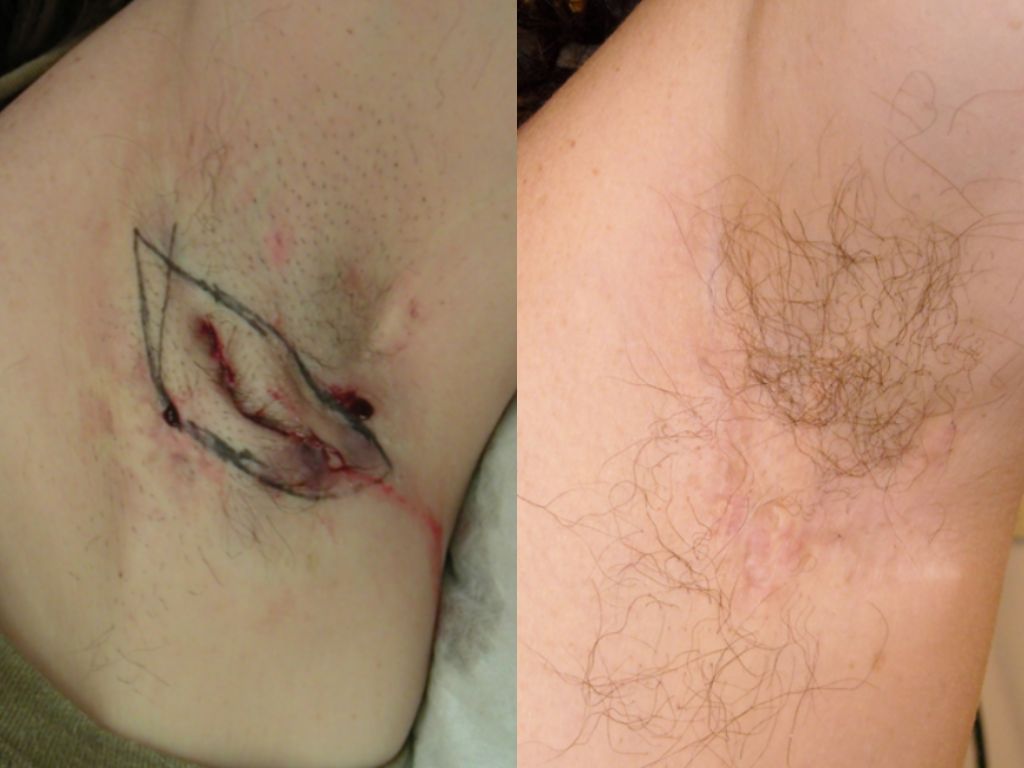
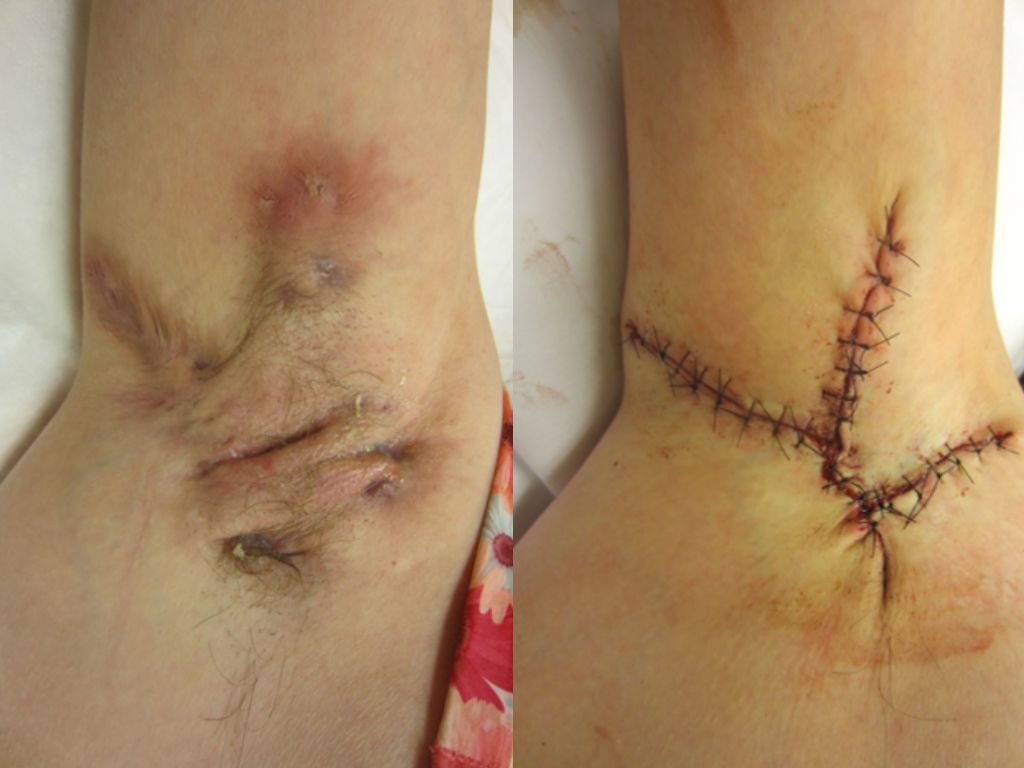
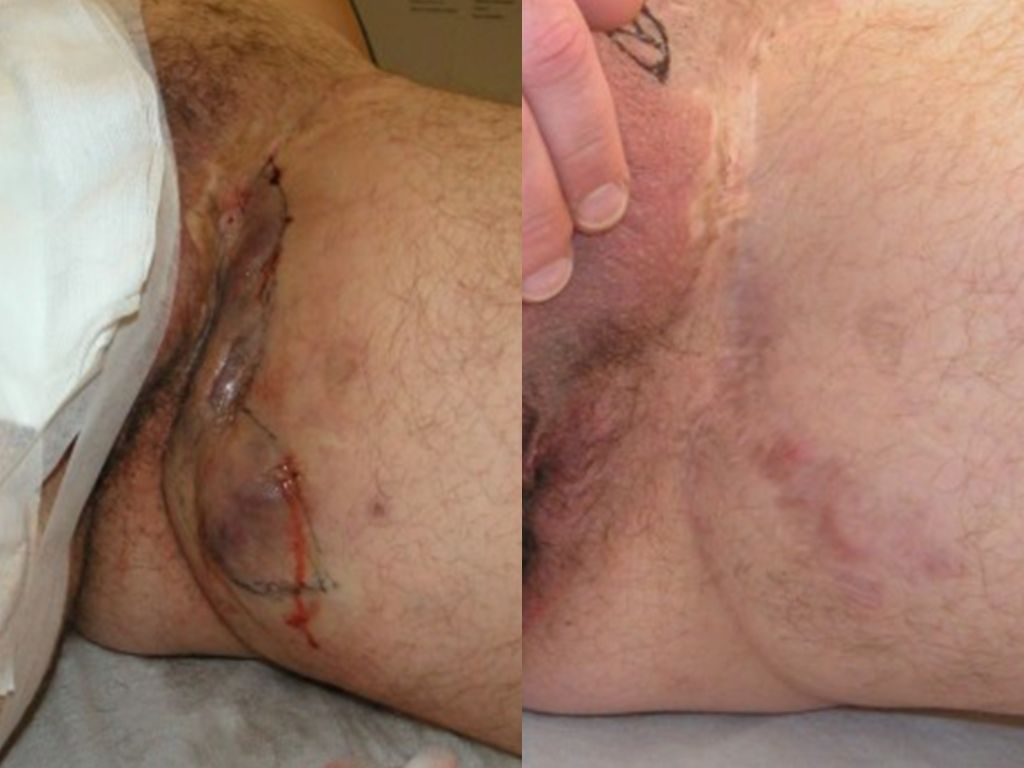
Areas that are causing ongoing problems can also be removed entirely. In this case, a large portion of the affected skin is excised, usually in the shape of an oval. This is done under local anesthesia. The skin is removed completely, down to the level of the subcutaneous fat. The entire layer containing the hair follicles and sebaceous glands, and any abscess cavities, is removed. Then, if technically possible, the wound is closed with sutures. Sometimes it's not possible to bring the edges together completely. In that case, the wound can be reduced with a few stitches, leaving a small section open, or the wound can be left completely open. Healing will always occur eventually, even if the wound is left open, but it will take longer and the scar will be less attractive. This procedure always carries a risk of problems such as wound infection, dehiscence, or the accumulation of blood, fluid, and/or pus under the stitches. Infection is difficult to prevent, the area is difficult to sterilize, and during the procedure, deep cavities containing bacteria are often incised. Antibiotics may be prescribed before and after the procedure to limit infection. After the procedure, the wound may be painful for a long time, and it can take one to two months for the wound to heal completely. If large sections of the armpit are removed, you will experience limited movement for at least two weeks and should take it easy. The aftercare is the same as described above for deroofing. The sutures are removed after 7-14 days. If you experience any complications, please contact your doctor. Swimming is not recommended.
If the wound is closed with sutures, the skin will initially be tight because a section has been removed. Over time (about six months), the skin will become more relaxed, and the procedure can be repeated if necessary, so that ultimately, in a series of phases, the entire problem area is removed.
What do the scars look like?
The scars generally don't look good. They involve areas in folds that are prone to infection, and incisions are made to remove abscesses and fistulas teeming with bacteria. The wound is under considerable tension because these are typically large areas that need to be removed. Furthermore, the area is constantly in flux. Given the challenges involved in wound healing, a careful assessment of the pros and cons must always be made. Incision is advisable if a problem area, with abscesses, ducts, and pus-producing fistulas, has been present in the exact same spot for a long time. Once skin-lined ducts have developed, the area will no longer heal on its own. The choice then is between living with an area that regularly becomes inflamed and leaks pus daily and requires dressings, or a scar. Most patients who have undergone this procedure find the scar less bothersome than the inflammation. There is no guarantee that an intervention will completely resolve the problem. It is not always possible to completely excise the area with abscesses and ducts down to healthy tissue. New areas can also develop in the skin adjacent to the scar. Below are some photos of patients who have undergone the procedure, as an example of what you can expect. See also the brochure:
Fistula
removal for hidradenitis suppurativa .
Removal of entire armpit skin or groin skinIn very severe cases, removal of the entire armpit or groin area may be considered, either by covering the area with a skin graft or by leaving it open. This major procedure is rarely necessary. The surgery is usually performed by a plastic surgeon or general surgeon, in a day clinic or during a short hospital stay, and usually under general anesthesia.PATIENT ASSOCIATIONHidradenitis, especially the severe form, is a very debilitating condition that significantly impacts daily life in all its aspects. Few people are aware of this disease and realize how many problems it can cause. Some patients find it helpful to connect with others who also have the disease, to exchange information or find mutual support. There is a hidradenitis suppurativa patient association with its own website ( www.hidradenitis.nl ).MORE INFORMATION ABOUT HIDRADENITIS SUPPURATIVAFor additional information on the treatment of HS (surgical intervention, antibiotics, photos of procedures, information on expensive drugs (TNF-alpha inhibitors), guidelines for doctors):
See the website: www.hidradenitis.eu |