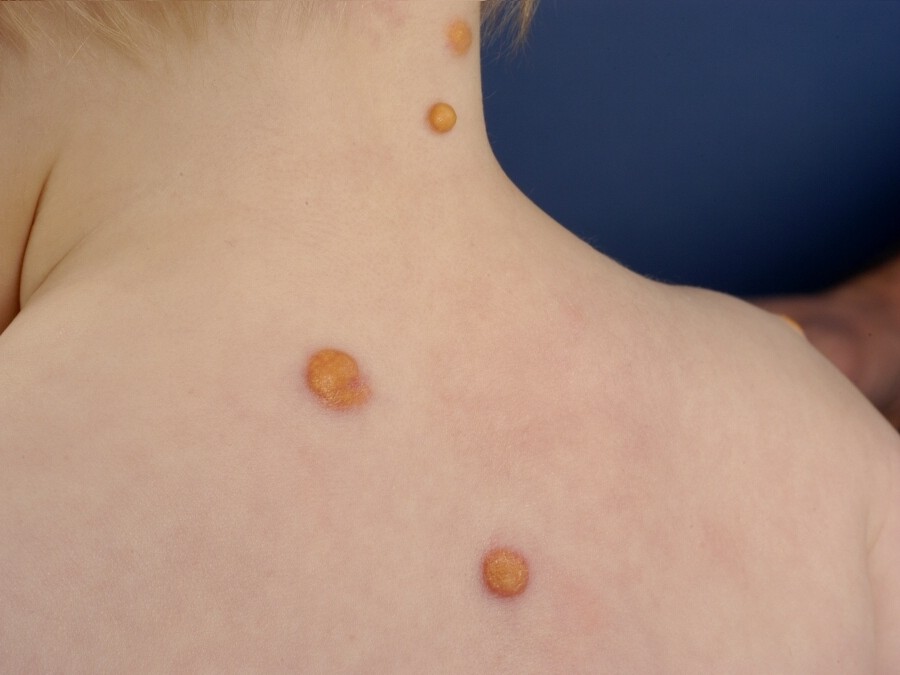
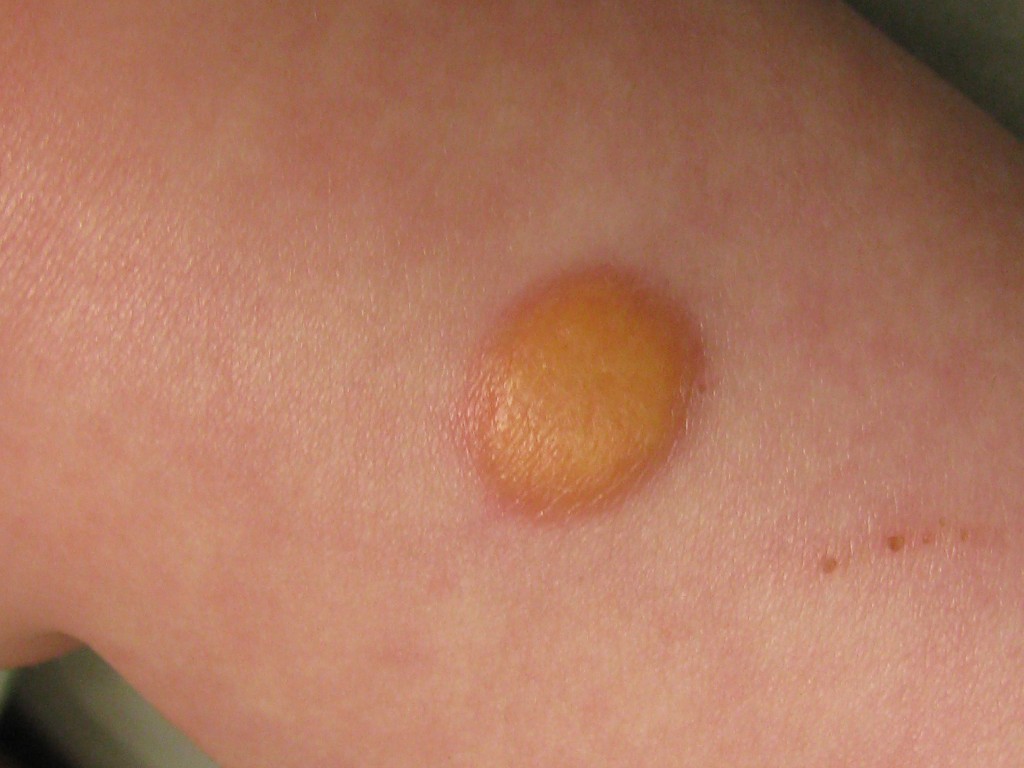
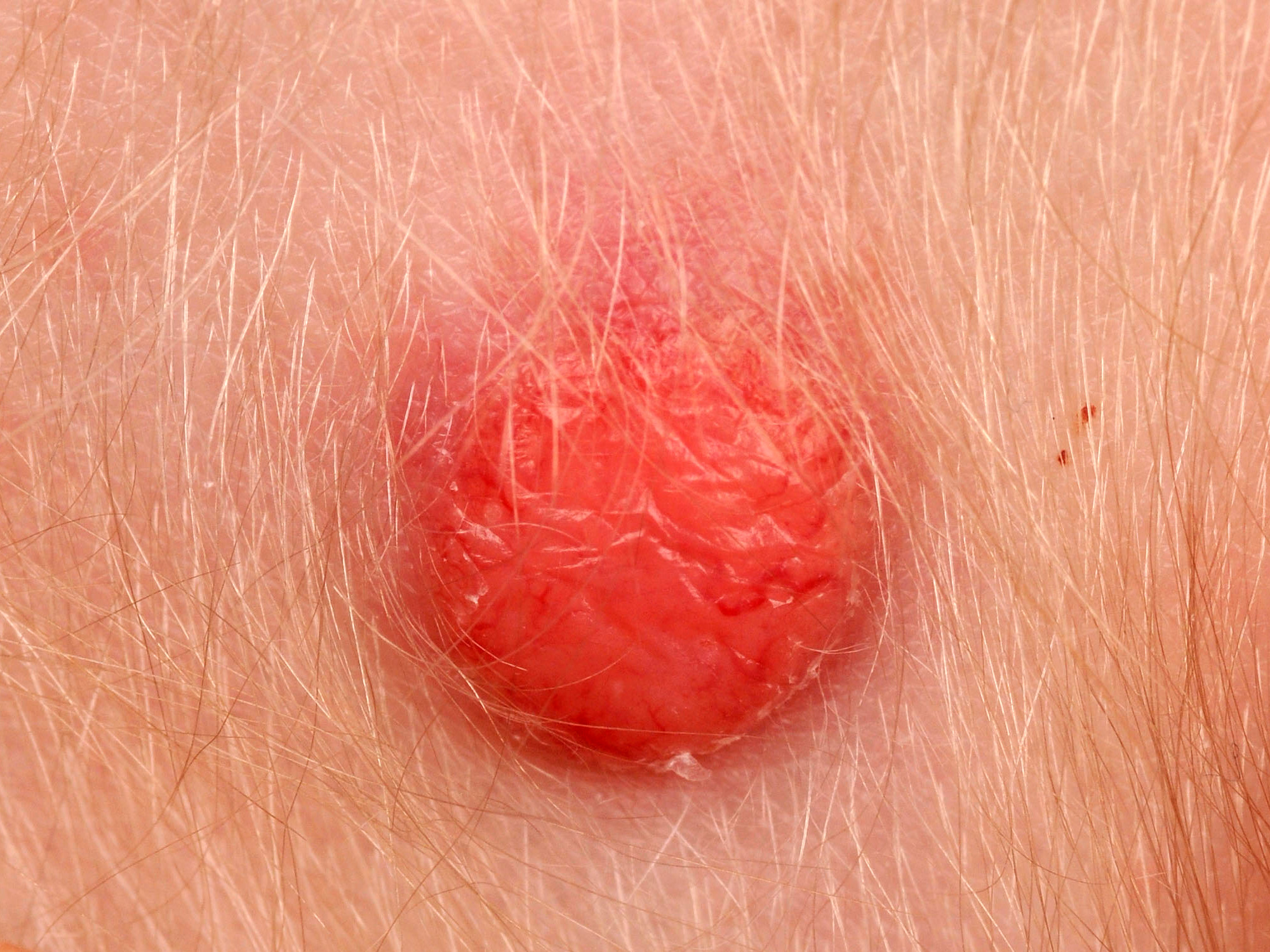
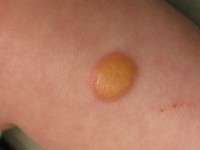
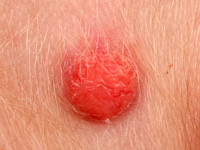
WHAT IS JUVENILE XANTHOGRANULOMA?Juvenile xanthogranulomas are yellowish bumps that develop in young children, often on the face and sometimes on the body. They resemble a buildup of fat under the skin. These bumps often appear in the first year of life. In about a third of children, they are present from birth. It is a benign condition and resolves spontaneously.WHAT DOES IT LOOK LIKE?As mentioned, they are usually yellowish bumps. They can also be pink, yellow-brown, orange-yellow, or red. They can be small (a few millimeters) or large (1.5 to 2 cm). There can be one or several. They are usually found on the face, sometimes on the trunk.
 |
 |
 |
| juvenile xanthogranuloma |
juvenile xanthogranuloma |
juvenile xanthogranuloma |
HOW DOES A JUVENILE XANTHOGRANULOMA DEVELOP?It's unknown how it develops. The yellowish material in the bumps is formed by a buildup of immune system cells. These cells are called histiocytes or macrophages. These cells specialize in clearing away all sorts of debris in the body. They swallow bacteria and bits of tissue and break them down inside the cell. In a xanthogranuloma, many of them are clustered together. No one knows why they got there. Perhaps there was a bacterium or a virus. The cells do what they do best: break things down. The cells process the connective tissue and fat into a yellowish material.HOW IS THE DIAGNOSIS MADE?The diagnosis can be made based on the clinical picture, i.e., the appearance. However, it's also common for a small piece of skin to be removed for further examination (a skin biopsy ).IS IT DANGEROUS?No. It is juvenile xanthogranuloma of the skin, is benign and will go away on its own.RARE VARIANTS OF XANTHOGRANULOMAThere are forms of juvenile xanthogranuloma that are not limited to the skin. They can also occur in the eye, lungs, liver, and other organs. This form is extremely rare. If a xanthogranuloma is in the eye, it can cause increased intraocular pressure. This is called glaucoma.
Juvenile xanthogranuloma can also occur together with another skin condition called neurofibromatosis. With neurofibromatosis, coffee-colored spots on the skin are seen, called café-au-lait spots (coffee with milk). Children who have both juvenile xanthogranuloma and neurofibromatosis have a slightly increased risk of developing a blood disorder (leukemia). This is also very rare, with only a few cases known worldwide. However, anyone who searches online will find a lot of information about these rare forms and become concerned. That is the disadvantage of websites: much attention is focused on the patients who had unusual forms and developed serious symptoms. And little is read about the most common form, which resolves spontaneously.
How should you handle this information? It's good to be informed and know it exists. This way, you can be alert to unusual symptoms: if your child has eye problems, you should see an ophthalmologist. If your child is persistently lethargic, tired, or pale, you should see a general practitioner or pediatrician. But otherwise, these variants of xanthogranuloma are so rare that there's no need to worry about them.HOW IS IT TREATED?It doesn't need to be treated. It goes away on its own. Follow-up appointments are usually scheduled to monitor progress and how long it takes for the bumps to disappear.WHAT ARE THE OUTLOOK?The outlook is good. The spots disappear on their own after 1 to 6 years. Afterward, a scar, a small dent, or discoloration may remain. If the bump was on a hairy scalp, a bald spot may remain. |