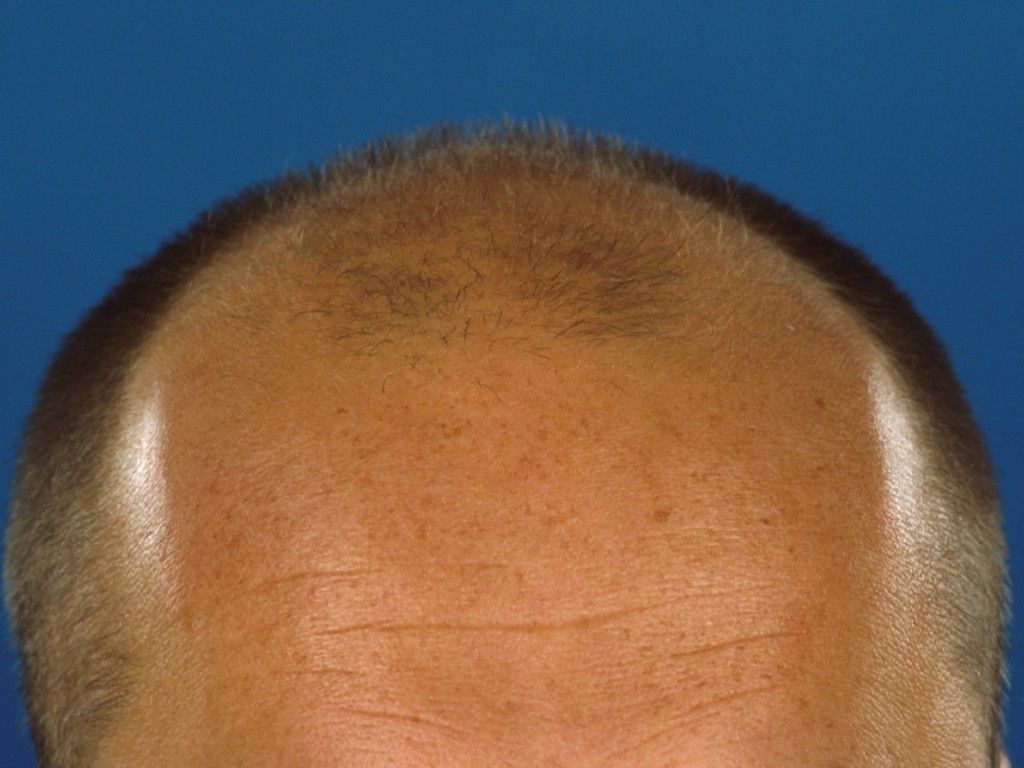
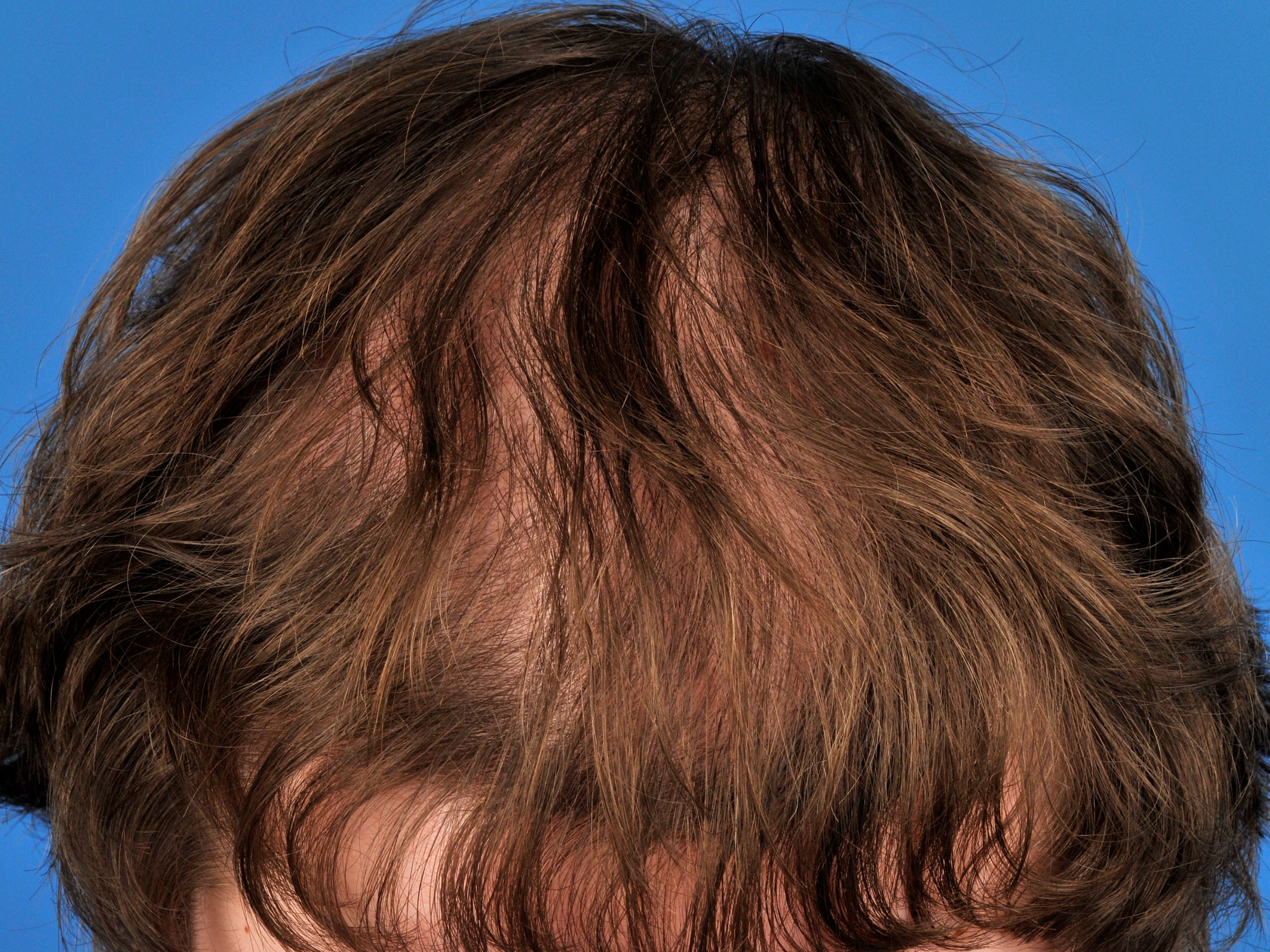
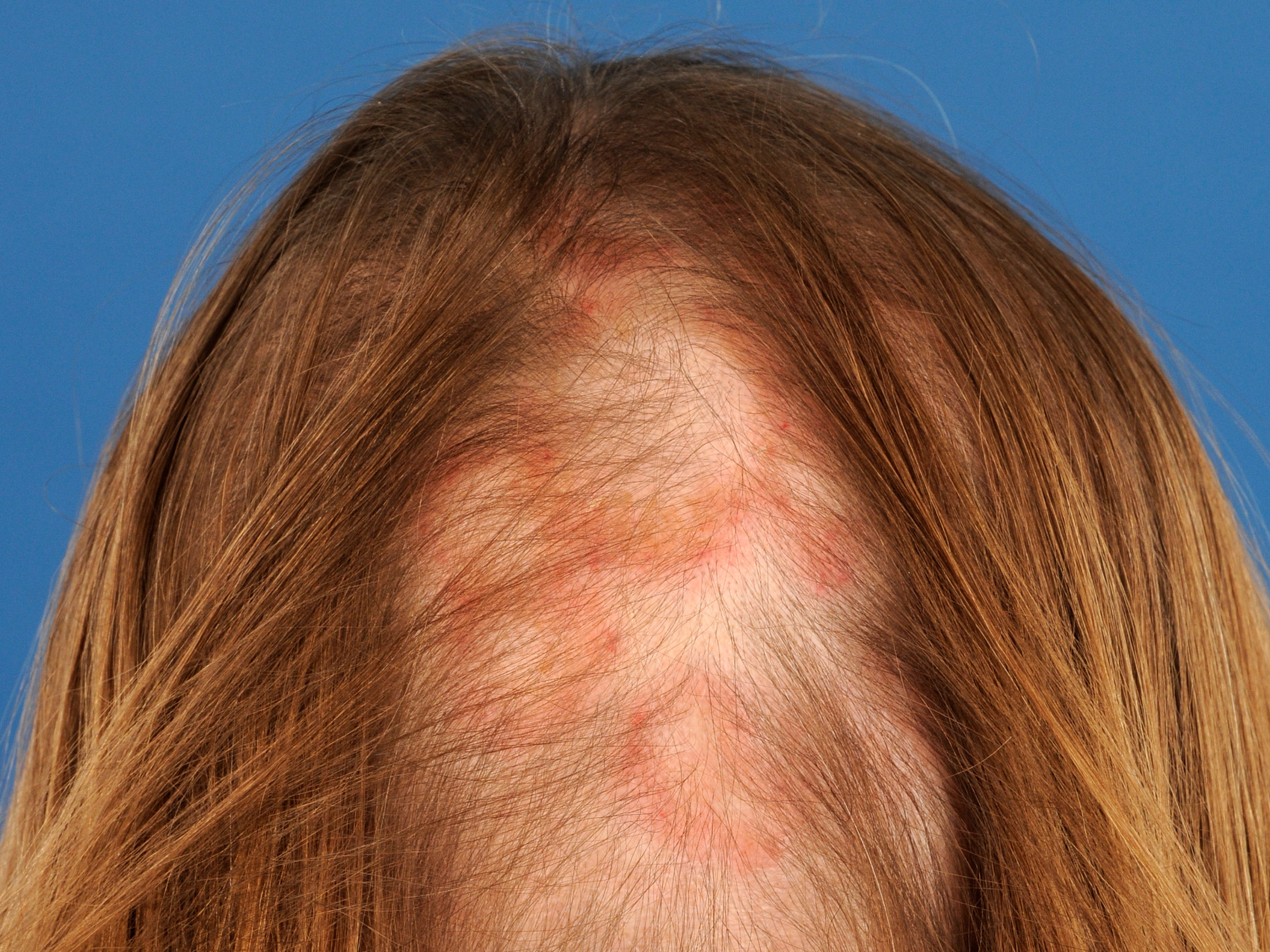
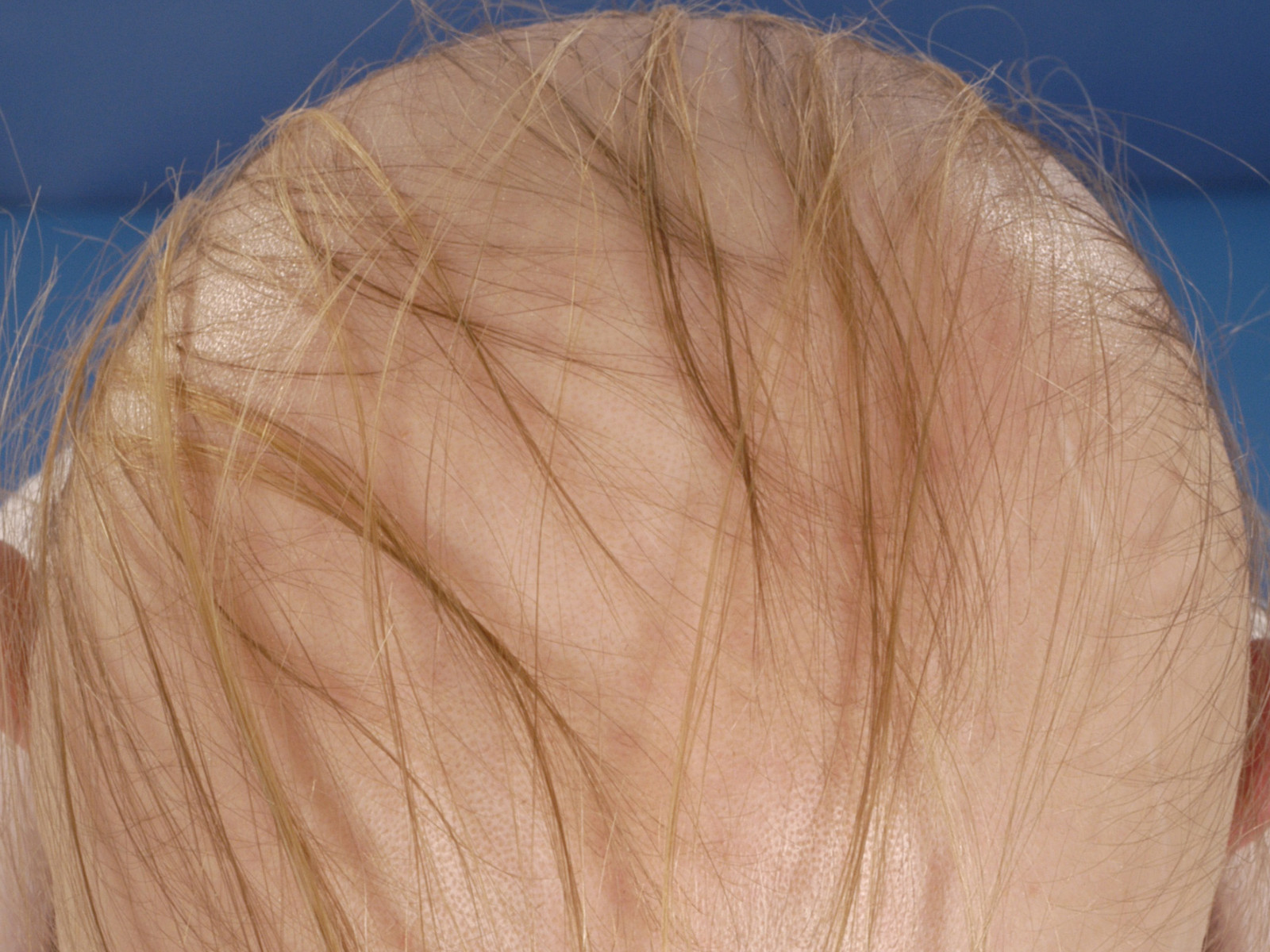
WHAT CAUSES HAIR LOSS?The most common causes of hair loss are discussed belowMALE PATTERN BALANCEThere are several types of hair loss and baldness. The most common is male-pattern baldness , which some men develop as they age. The medical term for this is androgenetic alopecia ; in English, it's called male-type alopecia or male-pattern baldness. For more information, see the brochure on androgenetic alopecia .
 |
| androgenetic alopecia |
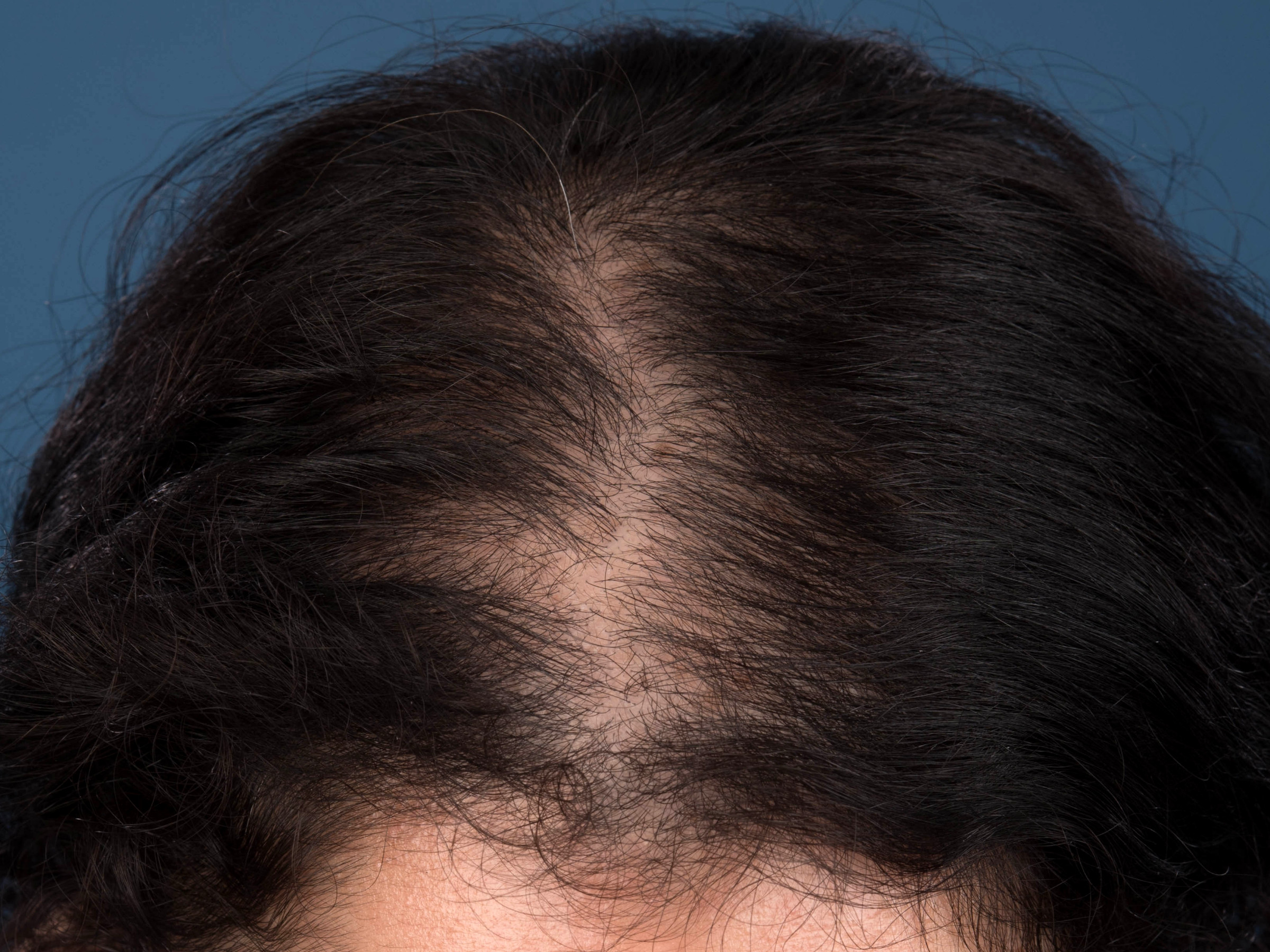
This form of baldness is hormonally determined. The male hormone testosterone, which is produced in greater quantities after puberty, has an inhibitory effect on hair growth on the top of the head.Male-type alopecia in womenWomen can also develop androgenetic alopecia . Women also have testosterone in their blood, but the amount is much lower than in men. This type of baldness in women, where the hair on the top of the head is thinner, is also called " male-type alopecia in women " or " female pattern hair loss ." For more information, see the brochure "androgenetic alopecia in women."
 |
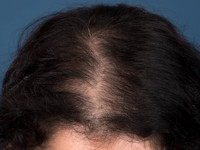 |
| androgenetic alopecia |
androgenetic alopecia |
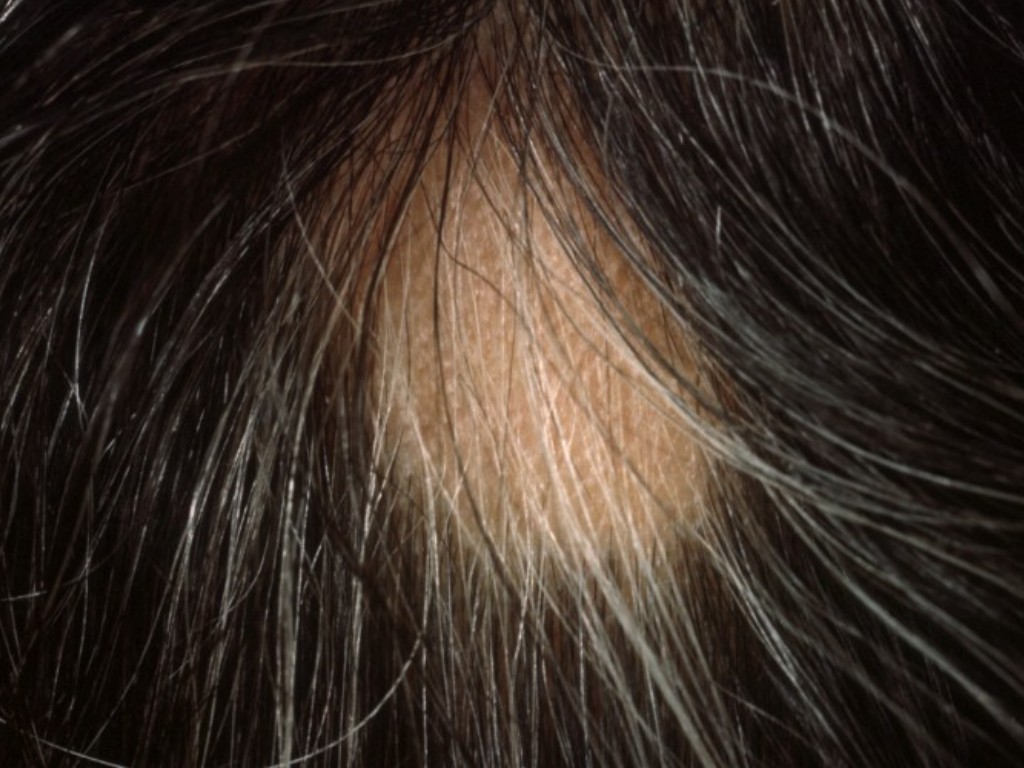
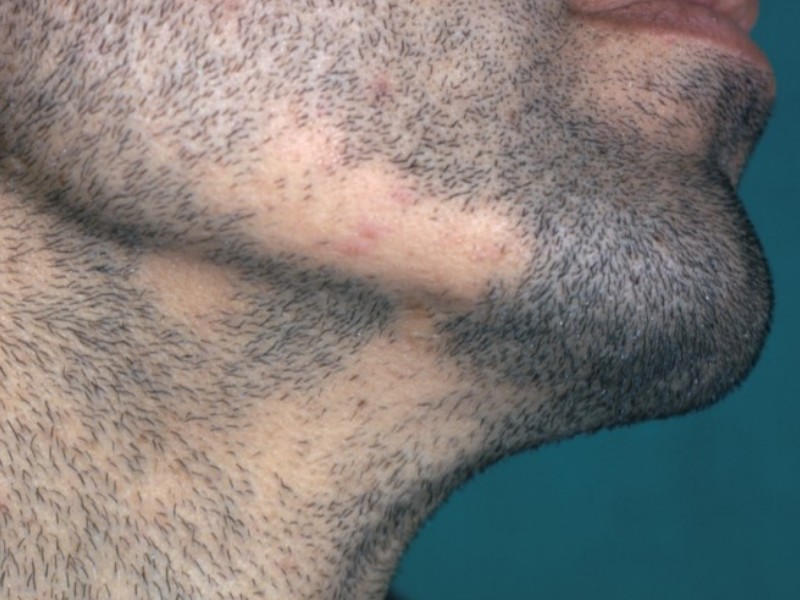
Women don't usually go completely bald like men, but the remaining hair has a thinner texture, is less strong, and therefore breaks off more easily. The front hairline doesn't fall out as it does in men.ALOPECIA AREATA (SPOT BALANCE)Another specific form of baldness is alopecia areata (patchy baldness). Bald patches appear randomly on the head. The scalp is otherwise undetectable. The hair usually grows back on its own, but sometimes the hair loss is permanent. Eyebrows, beard hair, and armpit hair can also fall out. The cause is unknown. It is a type of autoimmune disease in which the body's immune system attacks hair follicles. For more information, see the alopecia areata brochure .
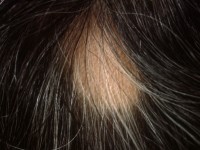 |
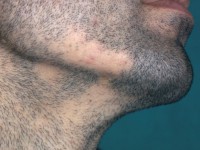 |
| alopecia areata |
alopecia areata |
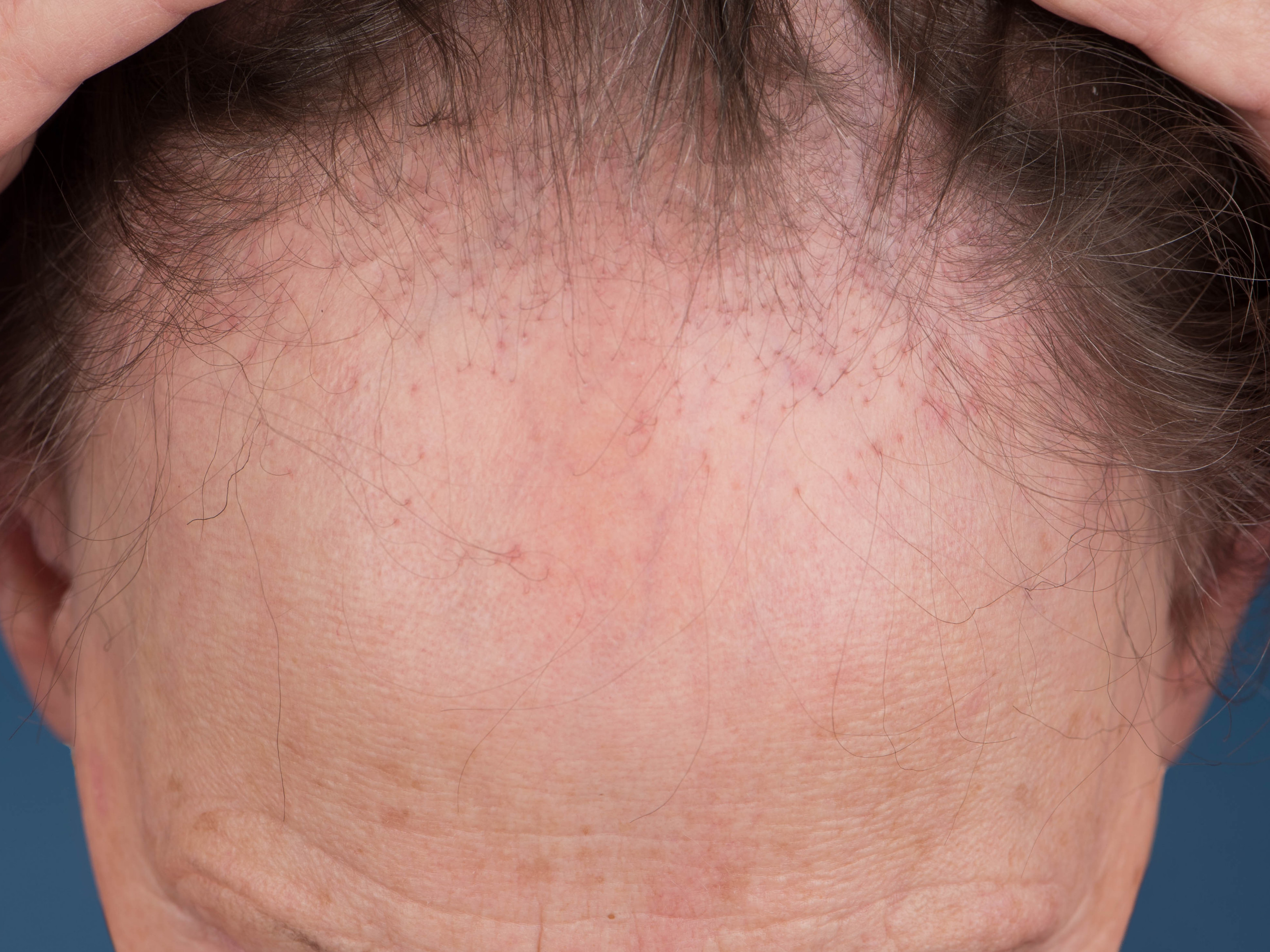
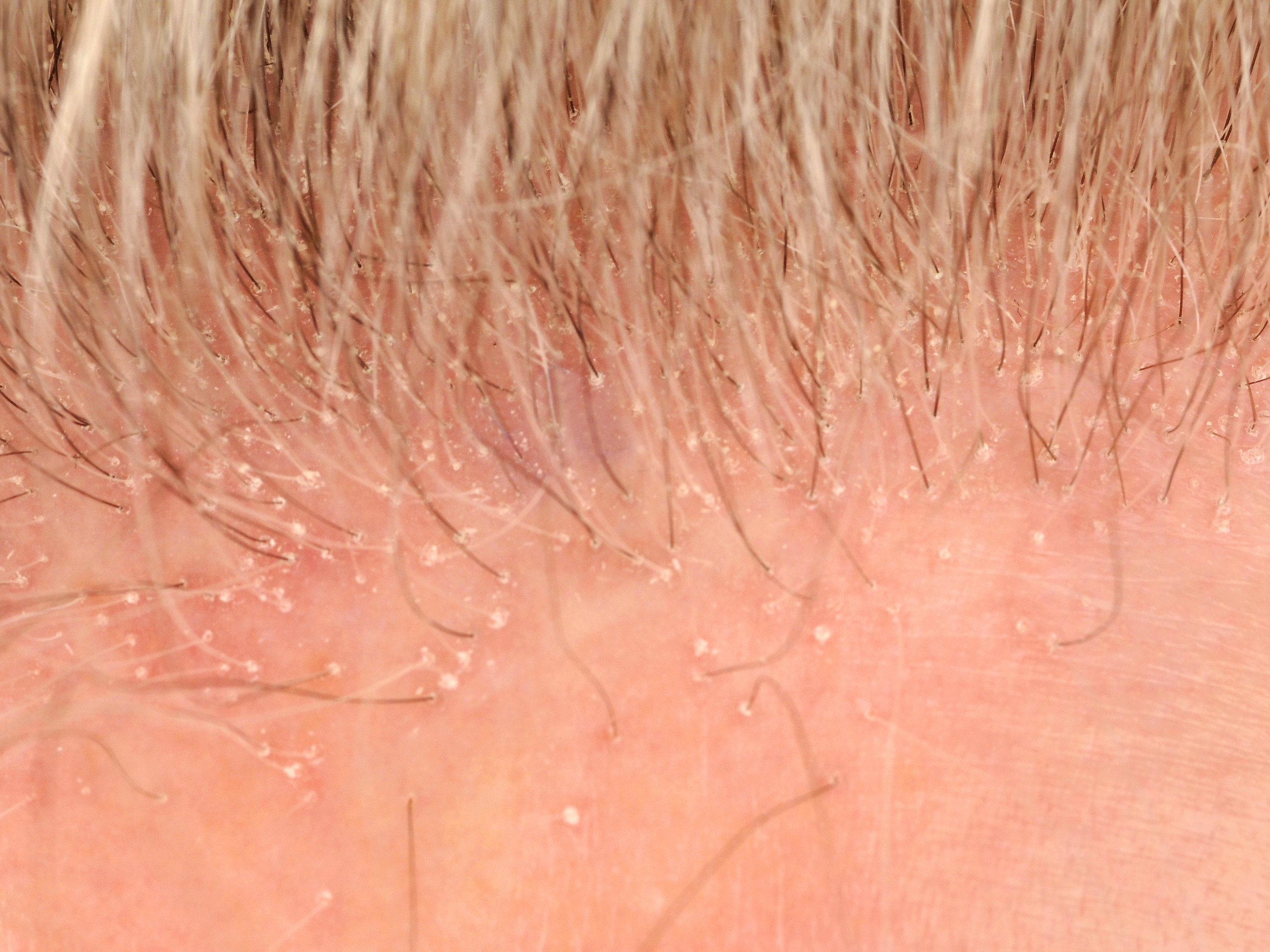
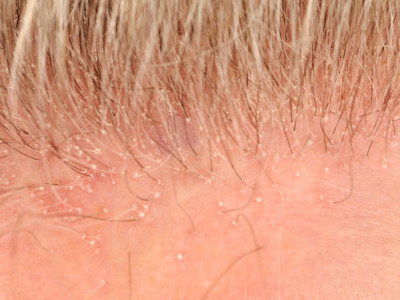
Frontal Fibrosis AlopeciaThere is also a variant of baldness that affects only the front hairline. This is called frontal fibrosing alopecia . The hairline recedes progressively. This is a specific form of baldness that occurs primarily in women. It is rare, and the cause is unknown. For more information, see the brochure " Frontal fibrosing alopecia ."
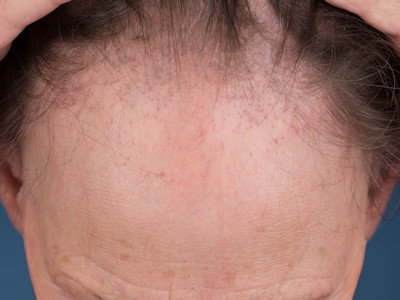 |
 |
| frontal fibrosing alopecia |
frontal fibrosing alopecia |
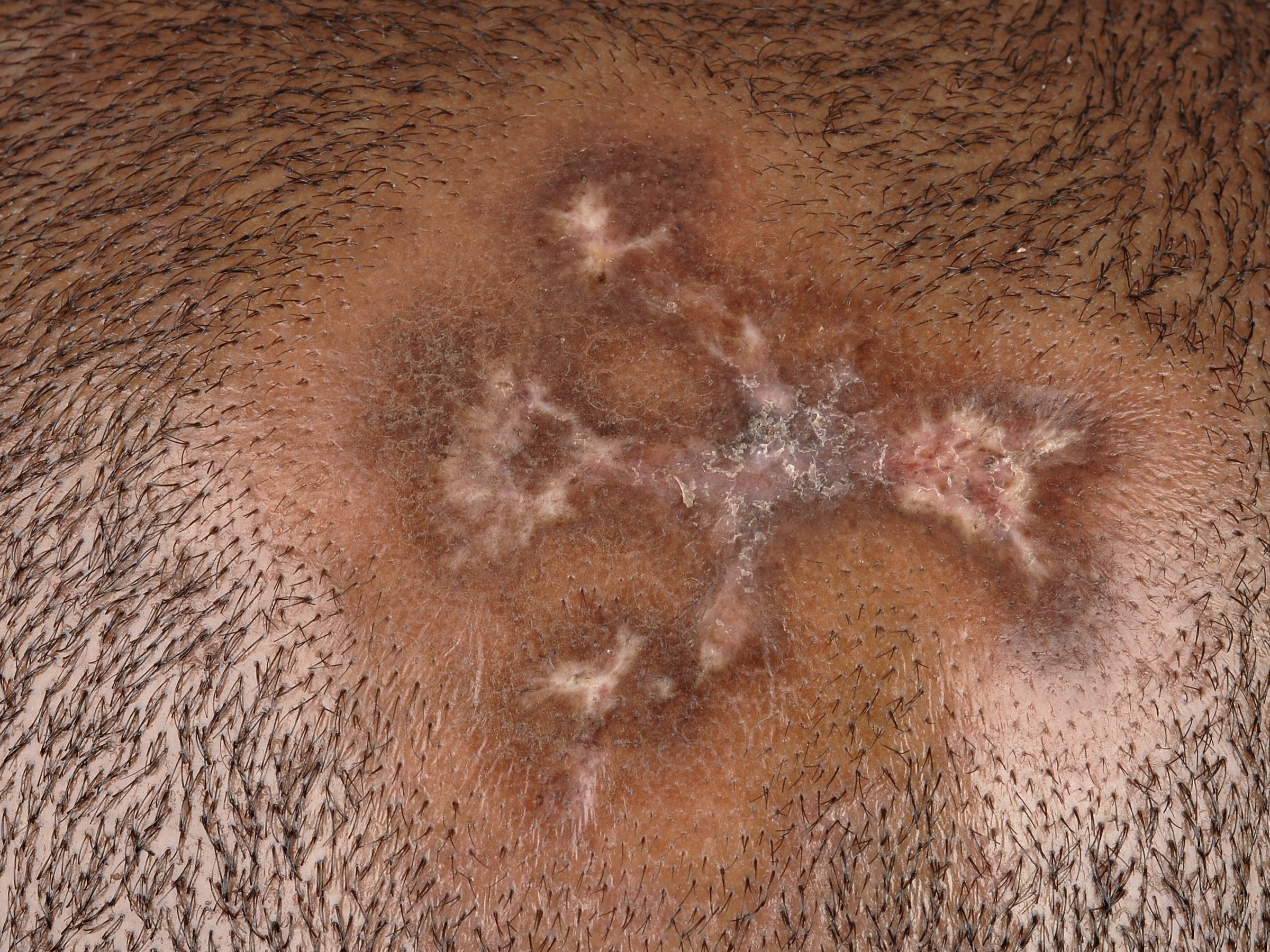
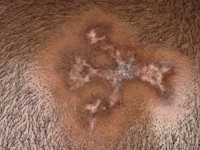
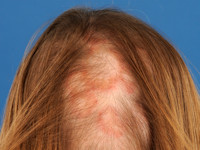
CICATRICIAL ALOPECIA (baldness with scarring)Yet another type of baldness is scarring baldness ( cicatricial alopecia ). In this case, the hair follicles are destroyed by an inflammatory process. This usually doesn't heal. This type of permanent baldness can occur with autoimmune diseases such as lupus erythematosus (LE), but also with hair diseases like lichen planopilaris .
 |
 |
| cicatricial alopecia |
cicatricial alopecia |
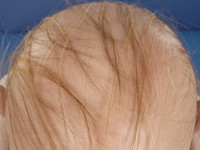
There are many other conditions that can cause patchy hair loss. In children, for example, a fungal infection of the scalp can cause this. But there are also various skin conditions that can cause bald patches. These will not be discussed further here.DIFFUSE HAIR LOSS (ALOPECIA DIFFUSA, TELOGEN HAIR LOSS)Finally, there is another more common form of hair loss: diffuse hair loss . In this case, the hair falls out evenly, without developing bald patches. Thinning hair is noticeable. However, a significant amount of hair has to be lost before this becomes noticeable. This type of hair loss is particularly noticeable because large amounts of hair remain in the brush when combing. It is also called telogen effluvium . There are many causes for this type of hair loss. It is often seen after an episode of something unusual, such as pregnancy, illness, or medication. For more information, see the brochure on telogen hair loss .
 |
| diffuse alopecia |
Patient association
There is a patient association for patients with different forms of baldness: www.alopecia-vereniging.nl |