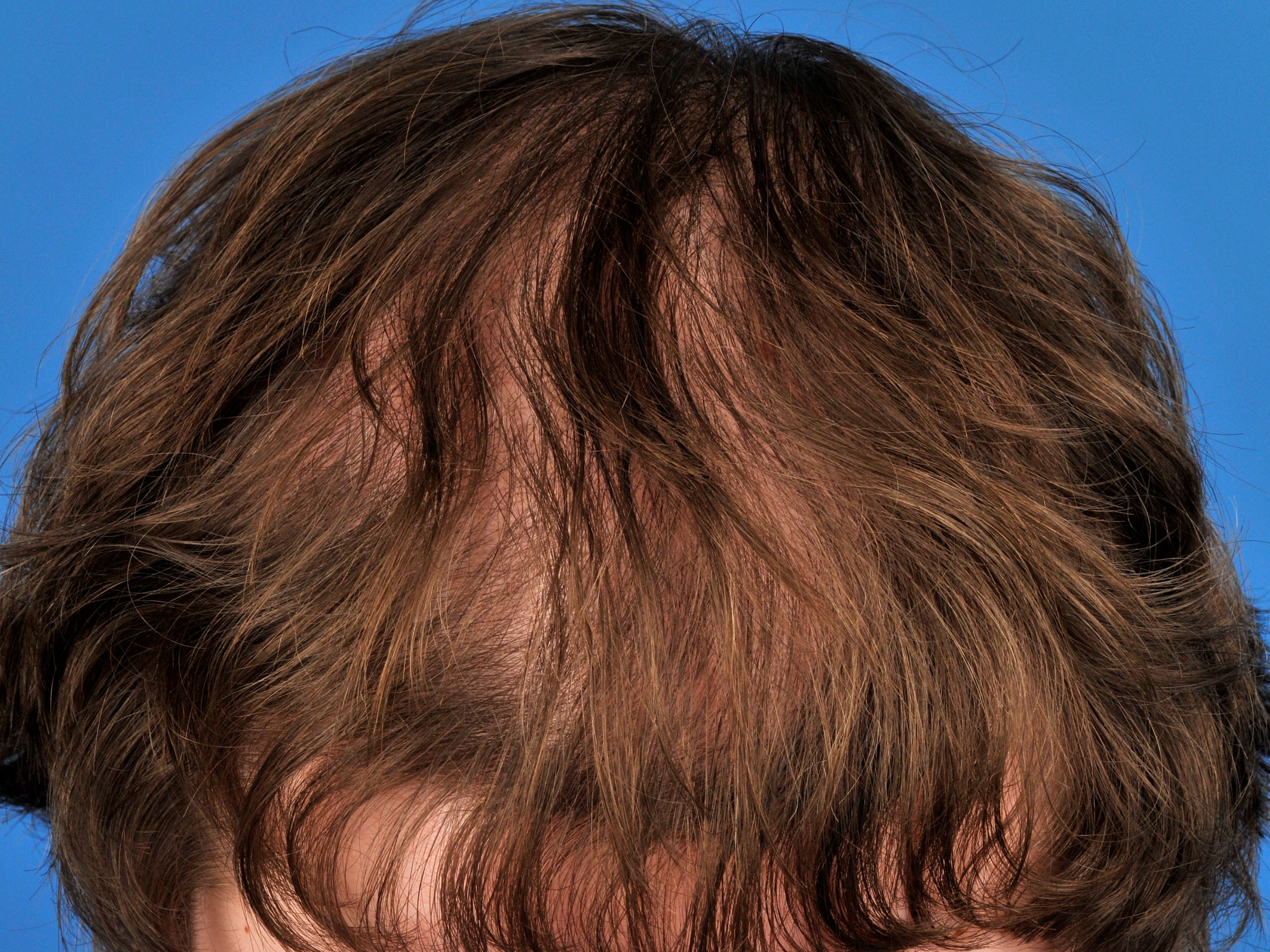
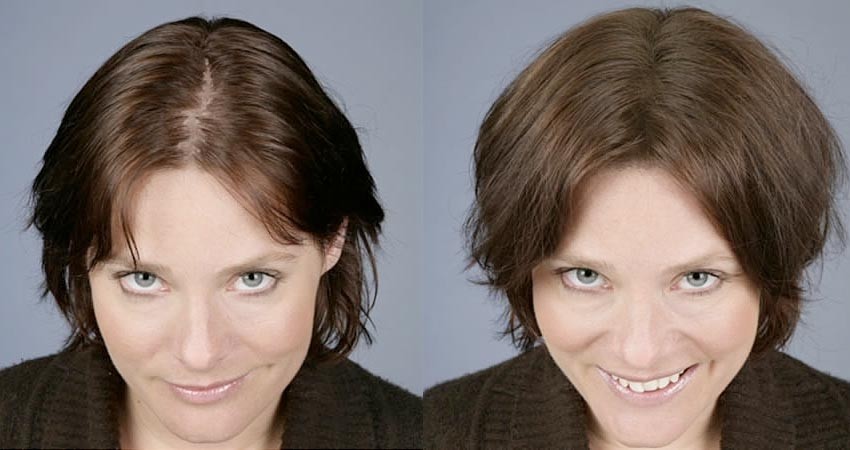
WHAT IS ALOPECIA ANDROGENETICS?There are different types of hair loss and baldness (see the brochure on causes of hair loss ). The most common is male-pattern baldness , which some men develop as they age. The medical term for this is androgenetic alopecia ; in English, it's called " male-type alopecia " or " male-pattern baldness ." Hair loss is caused by the male hormone testosterone. Women also have testosterone in their blood, but the amount is much lower than in men. In men, androgenetic alopecia begins at the front of the head, where receding hairlines can develop, and later, affected men become bald on top of their heads (see the brochure on male-type alopecia ).
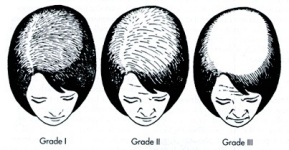
Women can also develop androgenetic alopecia , but this doesn't happen often. This type of baldness in women, where the hair on top of the head is thinner, is sometimes called " male-type alopecia in women ," but it is also called " female-type alopecia ," " female pattern hair loss ," or "female androgenetic alopecia." Women usually don't go completely bald like men, but the remaining hair has a thinner texture, is less strong, and therefore breaks off more easily. The front hairline doesn't fall out as it does in men.
 |
 |
 |
| androgenetic alopecia |
androgenetic alopecia |
feminine pattern |
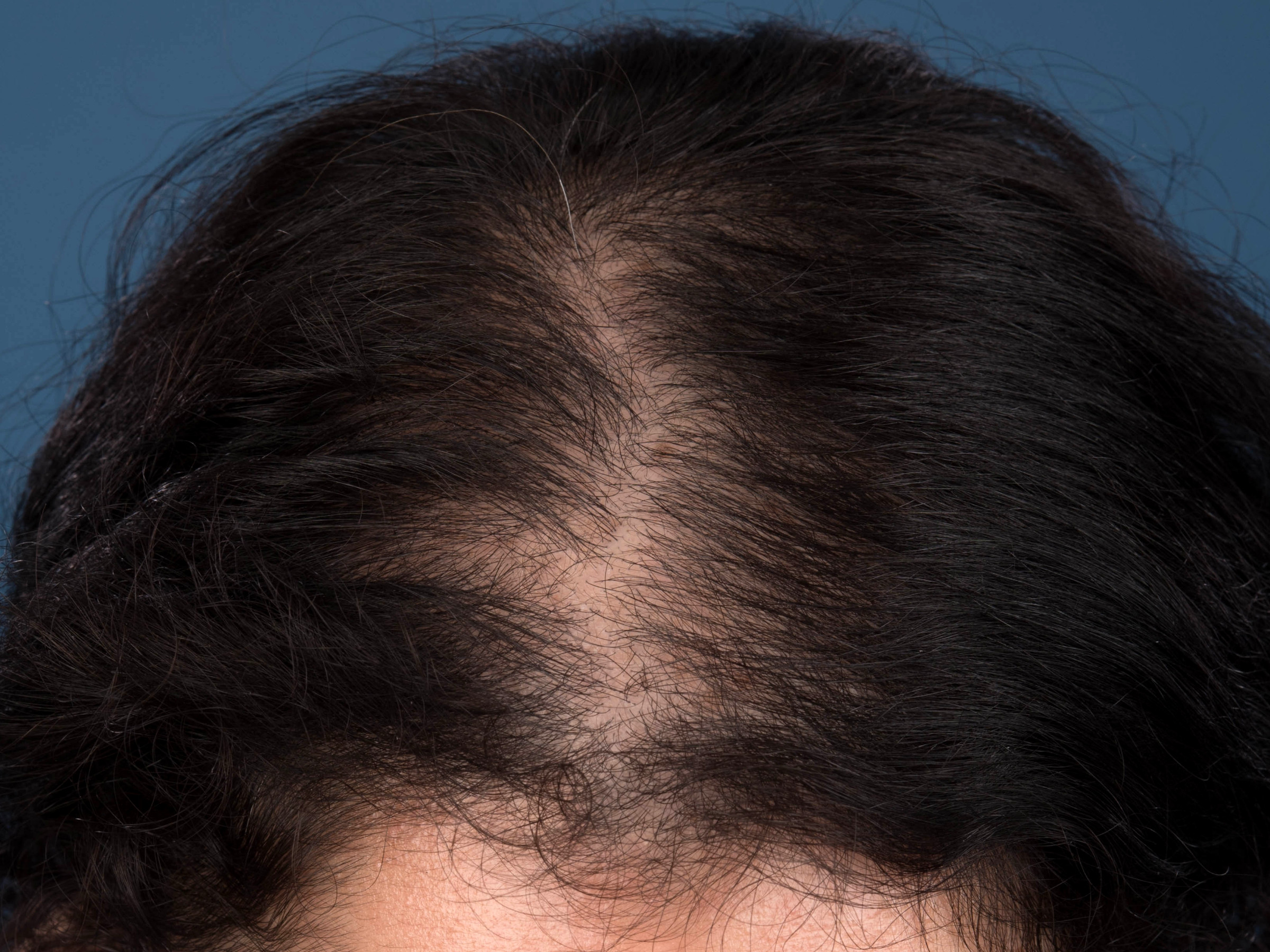
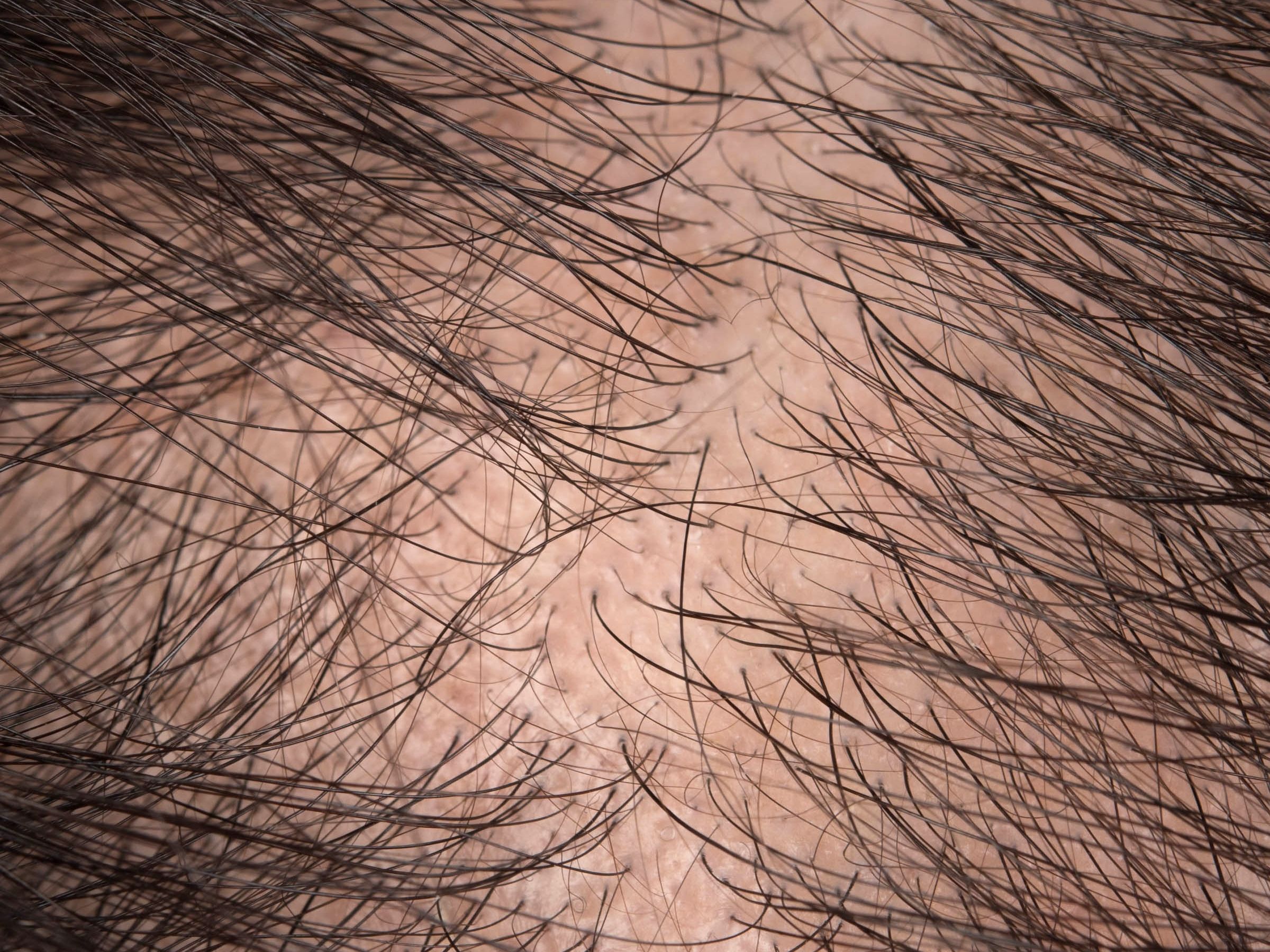
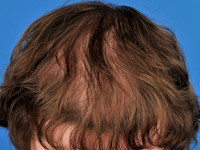
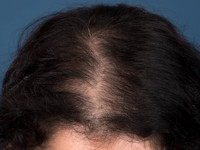
Androgenetic alopecia in womenWHAT IS FEMALE PATTERN HAIR LOSS?Female pattern hair loss (FPH) is a hereditary form of hair loss in which the hair on the top of the head thins. FPH occurs at any age, starting from puberty. It is estimated that 3-6% of all women under 30 suffer from it; at least 1 in 3 women over 70 have hair thinning to a greater or lesser extent due to FPH. The condition is completely harmless and is usually not a sign of a disease. With FPH, the thinning of the hair on the head usually worsens over the years. The younger the age at which the hair loss begins, the more severe the progression generally is. However, women almost never become completely bald, as is often the case with men!HOW DOES HAIR GROWTH NORMALLY PROCEED?Hair grows in what are known as hair follicles. At birth, the (hairy) scalp contains approximately 100,000 hair follicles. Over the course of a person's life, this number gradually decreases. Each hair follicle can produce a single hair approximately 10-30 times in succession. Each of these hair cycles has three phases: anagen, catagen, and telogen. The anagen phase is the growth phase and lasts approximately three years. Next, the hair enters the catagen phase (a transition from growth to resting phase), which lasts approximately four weeks. After that, a hair enters the telogen phase, or resting phase. At the end of this final phase, which typically lasts four months, the hair falls out. By then, the new, anagen hair has already been formed in the follicle, and the cycle repeats. In an adult, approximately 85-90% of the hair on the head is in the anagen growth phase. Hair grows approximately one centimeter per month. On average, a person loses 50 to a maximum of 100 hairs per day.HOW DOES HAIR LOSS OCCUR IN THE FEMALE PATTERN?With female-pattern hair loss, the hair follicles become progressively smaller. These follicles then produce hairs that are thinner and shorter. Furthermore, the number of hairs in the growth phase decreases. As a result, the scalp can no longer be adequately covered, and the hair therefore appears thinner. Significant hair loss is not common with HVP.
The exact cause of the changes described above is unknown. Hereditary factors likely play a role; the predisposition can be inherited from both the mother's and the father's side. Until recently, it was thought that HVP was caused by male sex hormones (all women naturally have these hormones), and the condition was called Alopecia Androgenetica (alopecia = baldness after hair loss, androgenetica = caused by male hormones). This name is still widely used today.
It is known that women with excessive male sex hormones can indeed develop this type of hair loss. However, the vast majority of women are otherwise healthy and have normal levels of male sex hormones, and the role of these hormones is not entirely clear. That's why we now prefer to call this condition "female pattern hair loss."WHAT ARE THE PHENOMENA?Most women with HVP experience gradual thinning of the hair on their scalp, often over several years. The thinning is usually first noticeable at the front of the head, where the scalp gradually becomes more visible. Over time, the balding area spreads back over the scalp. The hair on the back of the head remains normal. A characteristic of HVP is that the front hairline is usually spared. Women rarely become completely bald, as men do.HOW IS THE DIAGNOSIS MADE?Sometimes, the dermatologist can make a diagnosis based on the symptoms and after assessing the hair. The dermatologist may pluck a few hairs from your head (a so-called hair pull test), scan the hair with a device (a trichoscan), or examine two hair strands under a microscope (a trichogram). In rare cases, a small piece of skin is removed under local anesthesia (a biopsy). Blood tests for hormonal abnormalities are only necessary when there are indications that an excess of male sex hormones is playing a role. This is the case, for example, in cases of irregular menstrual patterns, infertility, severe acne ("pimples") later in life, or hair growth on the chin or upper lip. Sometimes, blood tests can also be performed to rule out other causes of hair loss.WHAT IS THE TREATMENT?Some women are content with the reassurance that their hair loss isn't a sign of a serious illness and that they likely won't go completely bald.
For those who want treatment, there are several options. However, it's absolutely impossible to permanently solve the problem—that the hair will grow back completely and that it will never thin again. If more hair grows back as a result of the treatment, that's a bonus, but most women with HVP will have to be satisfied if the thinning doesn't worsen. Even that doesn't work for everyone, and treatment usually requires prolonged treatment. If the therapy is stopped, there's a good chance the hair will thin again.
Minoxidil lotion.
For HVP, treatment with minoxidil lotion reduces or prevents further thinning of the scalp hair in approximately 60% of women, and sometimes a few more hairs grow back. However, this increase is modest. That is, the number of new hairs is small, and they are often relatively small and not immediately noticeable. Minoxidil lotion should be applied to the dry scalp twice daily and massaged in. This treatment is safe, but sometimes causes some scalp irritation. An allergic reaction to minoxidil also occurs occasionally. Approximately 3-5% of women who apply minoxidil to their scalp experience increased facial hair growth. Fortunately, this usually disappears after stopping treatment.
Minoxidil lotion is not covered by insurance. Approximately 60 ml is needed per month for extensive HVP. There is also a lotion containing 5% minoxidil. The 5% solution appears to be more effective than the 2% lotion.
Tablets for male sex hormones
Many women with HVP are treated with the Diane-35® pill. This pill contains the anti-male hormone cyproterone acetate. Often, additional cyproterone acetate (50-100 mg per day; the Diane-35® pill only contains 2 mg per day) is given with the Diane-35® pill. This additional pill is called cyproterone acetate and is taken during the first 10 days of the Diane-35® pack. It is possible that this slows the thinning process somewhat and stimulates hair growth in most women, although this has never been definitively proven. The effect of other tablets that counteract the (effect of) male sex hormones, such as spironolactone and flutamide, has not been sufficiently studied. Finasteride is a drug that is effective in men with hair loss, but research has not conclusively demonstrated its effectiveness in women. Nevertheless, some dermatologists do see good results with this drug in their patients. Women who become pregnant while using these tablets have a very high risk of birth defects in the child. Anyone who wants to become pregnant or may become pregnant should therefore not use this medication.
Other treatment options:
Some hair cosmetics can make hair appear fuller. Hair loss will not occur as a result of using these, or from washing, for example. Hair transplantation can improve the appearance somewhat and is useful for women with mild HVP who do not respond to other treatments. However, it is an expensive and invasive procedure that must be performed by an experienced dermatologist or surgeon.
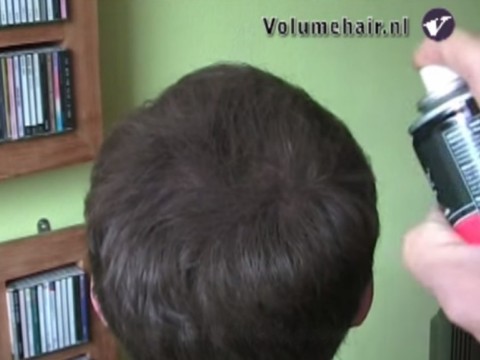
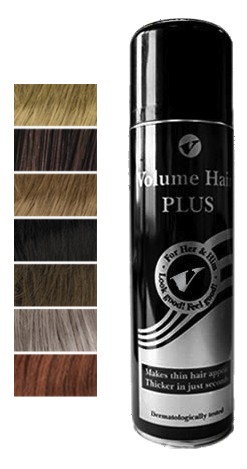
For women with hair so thin that the scalp is visible, there are also products that dye the scalp the same color as the hair, creating the illusion of thicker hair.
For many women with severe HVP, wearing a wig or hairpiece is a good solution. A wig can be worn over existing hair, and the hairpiece can be woven into it. Health insurance companies usually partially reimburse the costs.
Examples of color sprays that adhere to the scalp and hair:
Patient association
There is a patient association for patients with alopecia androgenetica and other forms of baldness: www.alopecia-vereniging.nl |