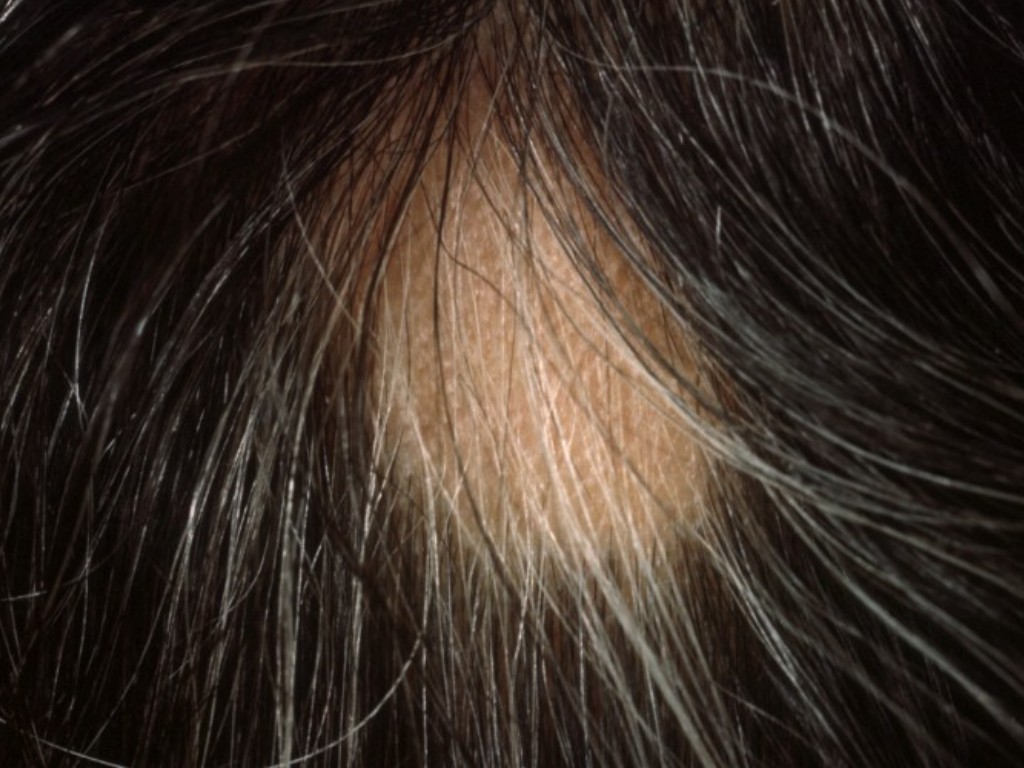
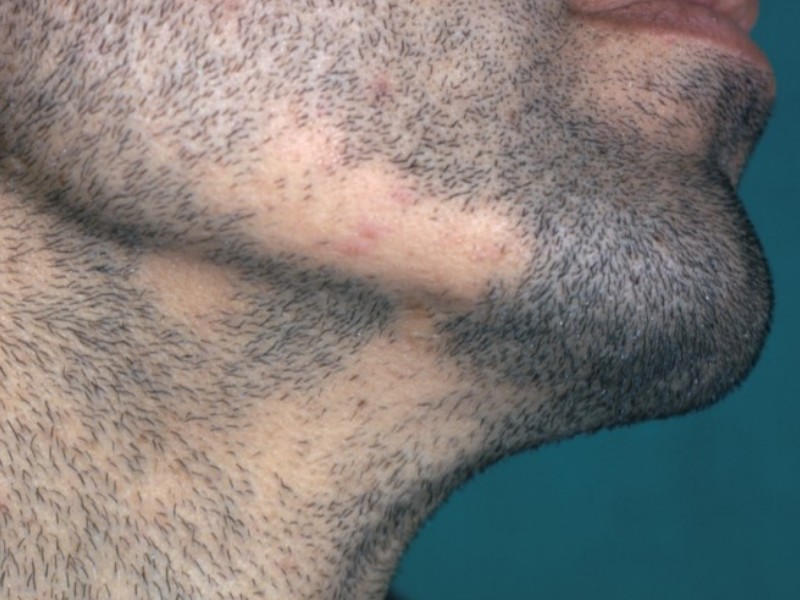
WHAT IS ALOPECIA AREATA?Alopecia areata means patchy baldness. It's a hair disease that causes round or oval bald patches. In the affected areas, (almost) all hair falls out, while the surrounding skin shows normal hair growth. Alopecia areata can be limited to the scalp, but sometimes it can also occur elsewhere on the body.HOW DOES ALOPECIA AREATA DEVELOP?The precise cause of alopecia areata is unknown. It is thought to be caused by a disorder in the body's defense mechanism, the immune system. The immune system is derailed, so to speak, and turns against the body itself, in this case, the hair. Patients with alopecia areata also have a slightly higher risk of other diseases associated with immune system disorders, such as some thyroid disorders, vitiligo (white patches on the skin), or certain forms of anemia. Hereditary factors may also play a role.WHAT ARE THE PHENOMENA?Alopecia areata usually occurs suddenly. Often, the sufferer doesn't notice the hair loss, but the bald patches are discovered by the hairdresser, family members, or friends. In severe cases, hair can fall out in large clumps. The skin itself is usually undetectable. The bald patches are usually limited to the scalp. However, they can occur in any area of the body where hair grows, such as the eyebrows, beard, armpits, and pubic region. Sometimes, hair loss occurs not in patches, but evenly across the entire scalp. In rare cases, all the hair on the head or body falls out.
 |
 |
 |
| alopecia areata scalp |
alopecia areata beard hairs |
alopecia areata totalis |
The course of alopecia areata is very unpredictable. In most cases, hair growth returns spontaneously within a few months to years. The hair that does grow back is sometimes white, but over time, the normal hair color returns. In some cases, complete recovery does not occur. It is also possible that hair growth returns in the original areas, but then bald patches reappear elsewhere. The condition can disappear completely and then return after years. Alopecia areata can also cause nail abnormalities.
Alopecia areata does not affect physical health. However, the development of bald patches or complete baldness can have significant negative psychological consequences.HOW IS THE DIAGNOSIS MADE?The diagnosis can be made based on the typical clinical picture, i.e., its appearance. Additional testing, such as a skin biopsy (removal of a tissue sample for microscopic examination), is rarely necessary.WHAT TREATMENT OPTIONS ARE THERE?In most cases, hair growth recovers spontaneously within a few months to years. This means that the natural course of events can be waited for. However, for many people, alopecia areata is a frightening condition, and it is difficult to adopt a wait-and-see approach. To accelerate hair growth recovery, the following treatment methods can be considered:CorticosteroidsCorticosteroids inhibit the inflammatory response. They can be applied to the bald patches as an ointment, cream, or lotion. Treatment with corticosteroids is not always successful. It works better if the corticosteroid is injected directly into the bald patches. However, this is painful, and the treatment is labor-intensive, especially if the patches are numerous or large. It also has to be repeated several times. Corticosteroids can also be administered in tablet form (prednisone tablets), but this is not common because high doses are required for extended periods. This also has too many side effects.Other local productsIn addition to topical corticosteroids, combination treatments with calcipotriol and minoxidil lotion can also be used. Difencyprone is occasionally used. This substance causes an allergic reaction, resulting in allergic contact dermatitis. Oddly enough, this can cause hair regrowth. However, this treatment has many side effects. And due to strict occupational health and safety regulations, many hospitals prohibit the use of diphencyprone.Methotrexate or ciclosporinMethotrexate and ciclosporin are systemic anti-inflammatory drugs, administered in tablet form. Like prednisone, they suppress the immune system. The difference is that prednisone cannot be used long-term because it causes too many side effects. Methotrexate and ciclosporin can be used long-term. Ciclosporin can be used for several years, while methotrexate can be used indefinitely, as long as no side effects occur. With both drugs, blood tests are required before and during treatment. Both drugs can have side effects. With methotrexate, these primarily include gastrointestinal complaints or elevated liver enzymes, while with ciclosporin, these primarily include high blood pressure and kidney dysfunction. The choice is made based on the patient's preference and any existing health conditions.JAK inhibitorsSince the end of 2024, two JAK inhibitors (JAK inhibitors) have been registered in the Netherlands for alopecia areata: baricitinib and ritlecitinib. Registered means that the government has assessed the efficacy and approved the drug for marketing. This does not necessarily mean it is reimbursed. JAK inhibitors are expensive medications, with treatment costing approximately €9,000 per year. Therefore, there are conditions for reimbursement:
- The alopecia areata must be severe, with more than 50% of the scalp hair loss.
- The alopecia areata must have lasted no longer than 8 years.
- Standard treatments must have been tried first: topical corticosteroids and at least one of the systemic anti-inflammatory drugs methotrexate, cyclosporine, or prednisone.
JAK inhibitors can also have side effects, particularly infections, and blood tests are required before and during treatment.WHAT CAN YOU STILL DO?CamouflageIf you have extensive baldness, you may consider purchasing a wig or hairpiece. This is covered by most health insurers after completing an authorization form. There are also stick-on eyelashes that are indistinguishable from real ones.DietDietary measures and vitamin supplements are not helpful. They cannot influence hair growth.WHAT ARE THE OUTLOOK?Alopecia areata usually resolves completely in small bald patches. For extensive alopecia areata, where, for example, all scalp or body hair has disappeared, the prognosis is poor.
The course of the disease is further negatively affected if the condition originated in childhood, if other immunological diseases are present or run in the family, and if there is a predisposition to eczema, asthma, or hay fever.
The extent to which alopecia areata is hereditary is unknown. However, the hair disease appears to run in the family in approximately 10% of patients. Therefore, a certain predisposition is likely present. In some patients, the hair loss will be permanent.
Patient association:
There is a patient association for patients with alopecia areata and other forms of baldness: www.alopecia-vereniging.nl |