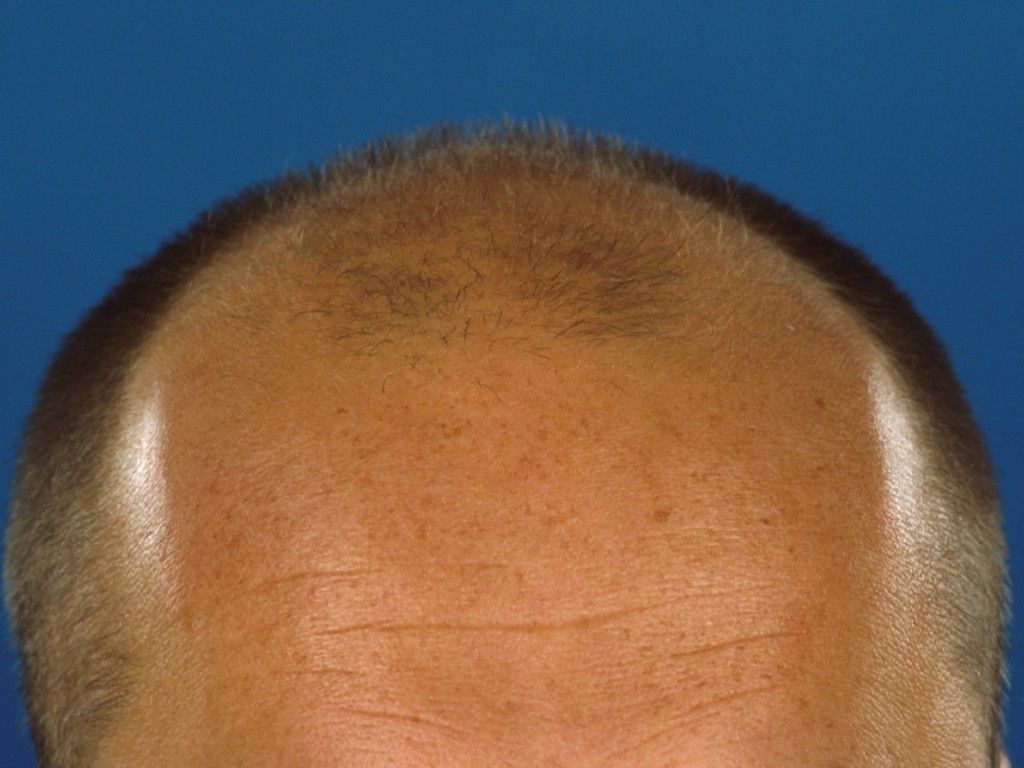
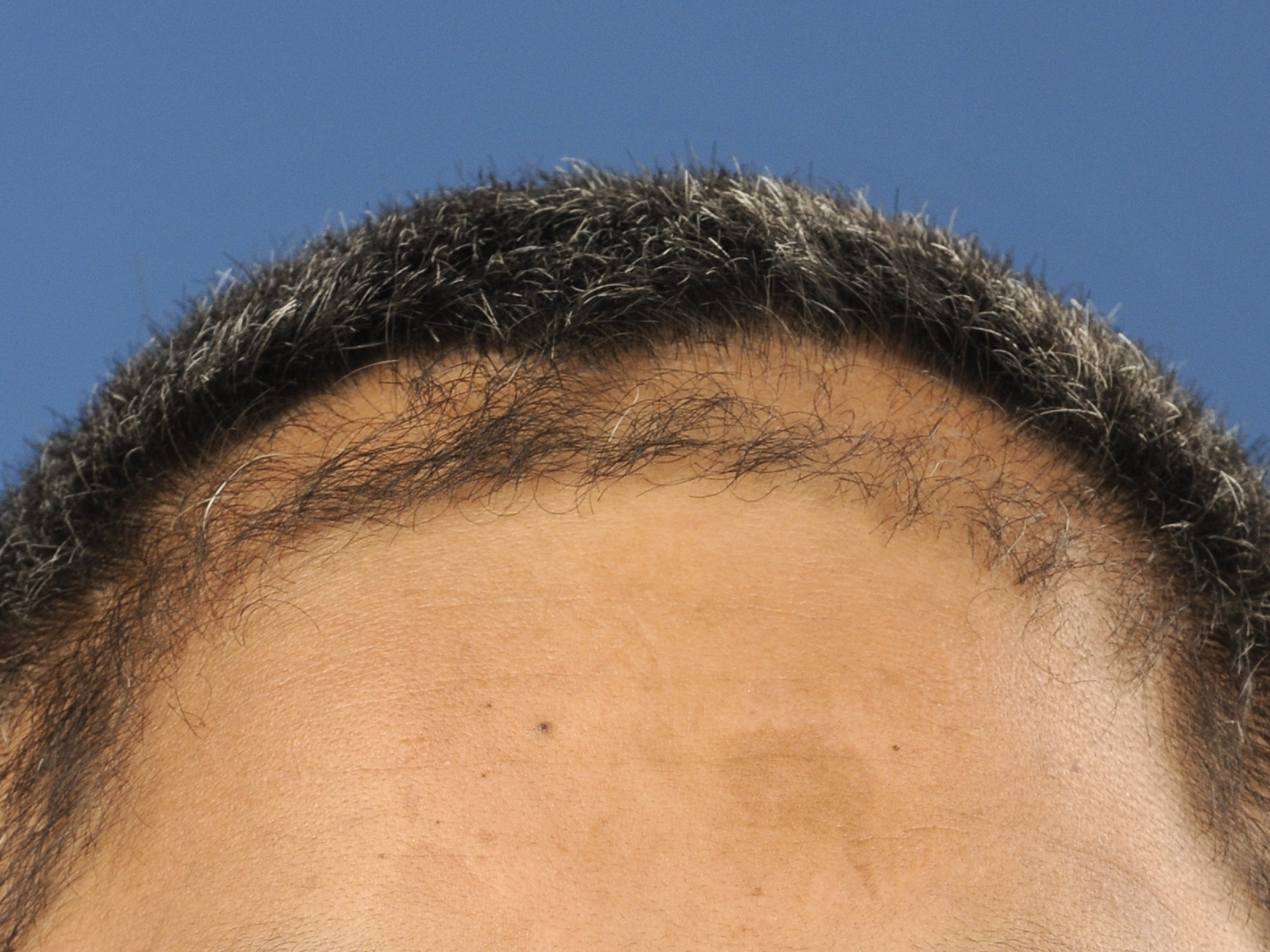
WHAT IS ALOPECIA ANDROGENETICS?There are different types of hair loss and baldness (see the brochure on causes of hair loss ). The most common is male-pattern baldness , which some men experience as they age. The medical term for this is androgenetic alopecia; in English, it's called male-type alopecia or male-pattern baldness. This form of baldness is hormonally determined. The male hormone testosterone, which is produced in greater quantities after puberty, inhibits hair growth on the top of the head.
 |
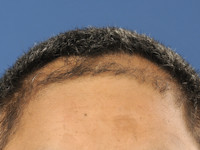 |
| male pattern baldness |
male pattern baldness |
Androgenetic alopecia in menWHO GETS IT?Androgenetic alopecia, or male pattern baldness, is the most common form of hair loss in men. Approximately 60-70% of men will experience it at some point, to a greater or lesser extent. Between the ages of 20 and 50, a third of men already suffer from it. It is so common that it should be considered a normal phenomenon and not a disease. However, some men who are affected find it very distressing.
Hereditary factors play a role. A predisposition for baldness can be inherited from both the father's and mother's side. Baldness is more common in men with fair skin than in men of other races.
This type of hair loss is much less common in women. Androgenetic alopecia in women usually begins around menopause. In women, it can be the result of a hormonal imbalance, although this is rarely the case. This should be considered if the baldness occurs well before menopause or if there are other complaints such as hirsutism (excessive hair in other places) or acne.WHAT DOES IT LOOK LIKE?
|
|
|
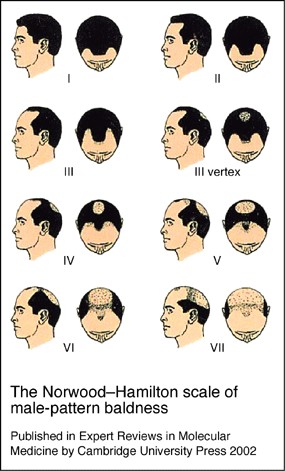
Baldness begins during or shortly after puberty with the receding front hairline and the development of receding temples on the left and right sides above the temples.
The crown gradually becomes bald, after which the two balding areas may merge until almost no hair remains on top of the head.
The lower hairline and the hair on the sides remain because these hairs are resistant to the influence of the male hormone.
The entire process occurs gradually and can take decades. |
WHAT IS THE CAUSE?Hair loss is triggered by the male hormone dihydrotestosterone. This testosterone hormone is abbreviated as DHT. DHT is produced in increased amounts during puberty by the adrenal glands and in the reproductive organs. Hair follicles respond to this hormone. Some hairs, such as body hair, armpit hair, and beard hair, grow faster, while the hair on the top of the head, strangely enough, starts to fall out. The hair follicles can even shrivel completely, resulting in complete and permanent baldness. The sensitivity of the hair follicles on the scalp to the hormone DHT varies from person to person and is hereditary.HOW IS THE DIAGNOSIS MADE?There is never any doubt about this diagnosis, the picture is immediately recognizable to everyone, and no additional investigation is ever necessary (in men; sometimes in women).WHAT CAN BE DONE ABOUT IT?Because androgenetic alopecia isn't a disease but a normal phenomenon, the first question to ask is: "Should I try to do something about it?" Treatment (see below) isn't simple and tends to slow the hair loss process for a while rather than offering lasting relief.
Nevertheless, it can be a significant problem for men affected, difficult to accept, especially if it occurs at a young age. It can lead to decreased self-confidence, psychological problems, and can even become an obsession. This has become less prevalent in recent years, as hairstyles are influenced by fashion trends, and a completely shaved head is now fashionable.
However one copes with the condition, the question often arises: can anything be done about it?
The options include:
- Medication treatment (hair lotions and tablets)
- Hair transplantation
- Wigs -
Medication treatmentMinoxidil lotionMinoxidil is available in 2% and 5% strengths. This lotion can reduce hair loss and also promote some hair regrowth. After stopping the treatment, hairs fall out again. The higher concentration works better than the lower. The treatment can be applied once or twice daily. Women can also use minoxidil. The treatment is not covered by health insurance.Finasteride tabletsFinasteride tablets are available as 1 mg tablets under the brand name Propecia. The dosage is 1 mg per day. Finasteride inhibits the enzyme 5-alpha-reductase (5HT). This enzyme ensures that the hormone DHT is produced in the body. The result of finasteride is less DHT in the body and therefore less hair loss. Finasteride halts hair loss, and in approximately one-third of men, hair growth returns. Like any tablet, finasteride can have side effects. The most concerning side effect, as mentioned in the package insert, is the risk of impotence and loss of libido. In practice, this appears to occur rarely; the risk of this happening is negligible. Women should not use finasteride. Women may use other products that affect hormone balance, such as the Diane-35 contraceptive pill (see further under "male pattern baldness in women").Other hair growth productsThere are many products sold as hair growth products, and they are advertised extensively. Whether these products actually work is always questionable. If a product could actually prevent baldness and hair loss and regrow hair, it would be a miracle cure, quickly becoming a box office success and officially being registered and sold as a medicine.
Hair transplantation: Hair
transplantation involves removing hair from the back of the head and transplanting it to the crown and forehead. This is a permanent solution for baldness because the hair on the back of the head is not sensitive to the hormone DHT and therefore will not fall out with age.
In the past, hair was harvested from the back of the head by punching out a fairly large circle of skin and transplanting it to the forehead. This could sometimes look bumpy, especially if the transplanted clumps of hair are far apart.
Nowadays, new techniques are available. In a technique called the FUT method (follicular unit transfer), a strip of skin is cut from the back of the head under local anesthesia and then sutured. From this strip of skin, the hair follicles are individually separated under a microscope and then transplanted one by one into the bald area. They can then be placed in a barely visible hole. This produces a much better result. In another technique, called the FUE method (follicular unit extraction), the hairs are punched out one by one with a tiny needle and transferred directly to a small hole in the bald area. This also leaves no scars on the donor site, and the donor site can be reused if necessary.
These methods are, of course, very labor-intensive and therefore expensive. A procedure can take 6 to 8 hours, requiring multiple technicians to work simultaneously. Prices range from €3,500 to €12,000 depending on the size of the transplanted area, and it is not covered by insurance. This method is performed in a few private clinics in the Netherlands. You can find the addresses of hair clinics near you by searching online for "hair transplantation."
FUT method in which all hair follicles are released from a strip of skin, ready to be transplanted.
One must be realistic about the result. A hair transplant will never achieve the full head of hair that used to be possible. But the method does work. The quality of Dutch private clinics is generally good. Private clinics are also inspected by the Public Health Inspectorate, and they simply cannot afford to do poor work because they depend on good PR and word-of-mouth.
Skin reduction:
This procedure involves excising the affected area. The surrounding hairy skin is then pulled together and sutured. Sometimes, the scalp is first stretched by placing a balloon filled with water under it for weeks (called a tissue expander). The risk is that the scar will be unsightly or will recede, and that this will become visible later in life as the hairline recedes further. Since the advent of new hair transplant techniques, this method is used less and less frequently.
Hair prosthesis:
Especially in cases of extensive baldness, a hair prosthesis (wig, toupee, hair weaving) is also a possible option.
Patient association
There is a patient association for patients with alopecia androgenetica and other forms of baldness: www.alopecia-vereniging.nl |