WHAT IS PREGNANCY ITCH?During pregnancy, severe itching can occur that doesn't disappear until after delivery. Sometimes it's just itching , sometimes it's a combination of itching and a rash . There are various forms of itching during pregnancy, with different causes. Itchy skin conditions that develop during pregnancy are also called pregnancy dermatoses .WHAT ARE THE FORMS OF PREGNANCY ITCHY?Itching during pregnancy can be divided into an early form , which can already start in the first trimester (the first 3 months), and a late form , which only starts in the last trimester (the last 3 months). In addition, skin diseases accompanied by itching can develop during pregnancy. The different forms of itching during pregnancy are discussed below.
1. Early form of pregnancy itch (early-onset prurigo of pregnancy)
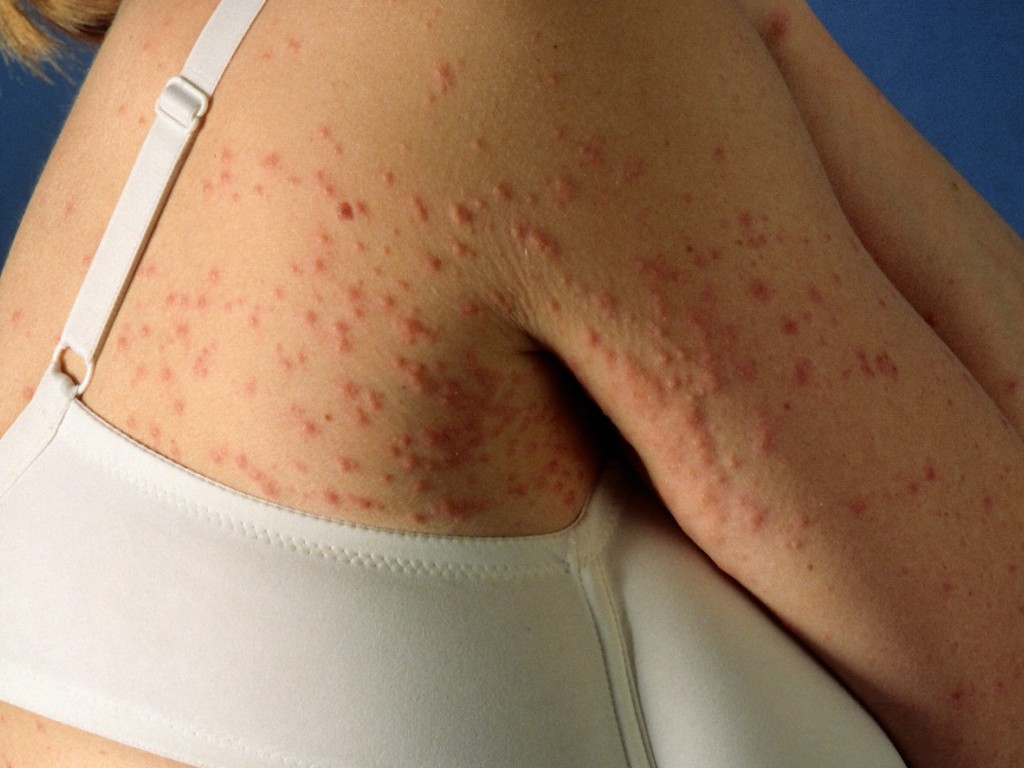
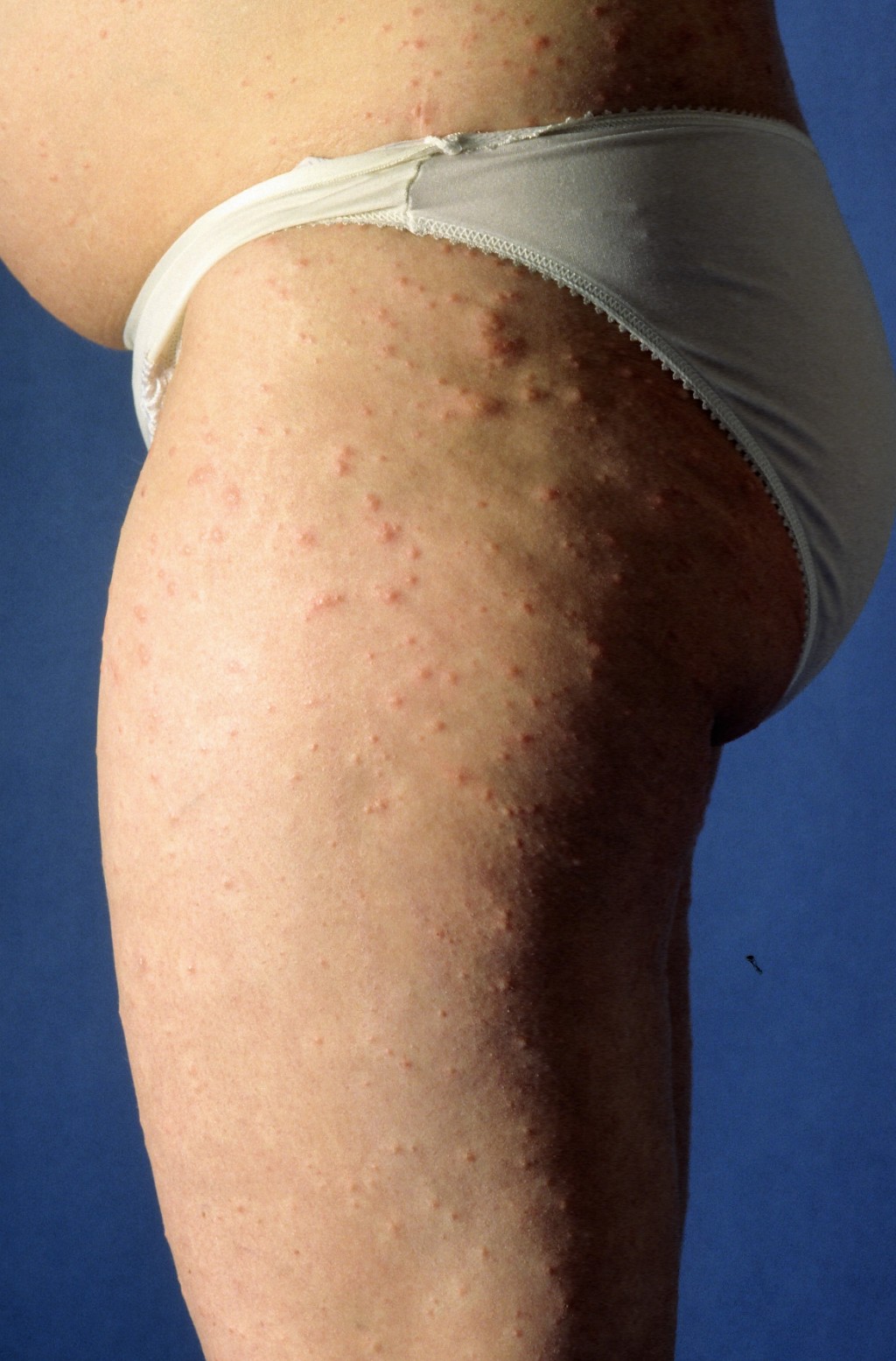
In the early form , there is initially only itching, later on itchy bumps also appear. For a long time the cause of the early form was unclear, but recently it has been discovered that most pregnant women with itching in early pregnancy appear to have a form of atopic eczema . Such an outbreak of atopic eczema during pregnancy (English term: atopic eruption of pregnancy ) can have different forms: it can look like eczema (redness, flaky patches), or it can be the form with mainly itching and itchy bumps.
 |
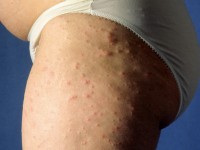 |
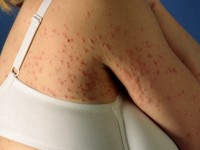
| itching and itchy bumps |
itching and itchy bumps |
Atopic eczema usually begins in childhood, but can also develop later in life. Patients with atopic eczema are prone to developing all kinds of allergies, for example, to house dust, grass pollen, cat hair, and so on. This predisposition is hereditary and is called atopy, and someone who tends to react allergically to everything is called atopic. Someone with atopic eczema can experience all sorts of associated symptoms throughout life, such as atopic eczema, hay fever, dry skin, itching, hives, or asthma.
During pregnancy, atopic eczema can suddenly appear for the first time. This is because pregnancy disrupts the entire immune system. The child growing in the womb is half the mother's, half the father's. To prevent rejection reactions, the immune system is altered during pregnancy. This change is unfavorable for atopic eczema: it can be triggered. On the other hand, there are also skin diseases that disappear like snow in the sun due to the changes in the immune system during pregnancy.Treatment of early pregnancy itchTreatment consists of keeping the skin well-moisturized with nourishing creams and lotions. Dry skin should be avoided, as this causes additional itching.
If eczema is present, corticosteroid creams or ointments are also applied. Because medication use during pregnancy is always important, avoid using the strongest hormone ointments, but only those classified as classes 1 through 3.
For itching, anti-itch lotions containing menthol are also used. Menthol lotions and creams are safe to use during pregnancy; they do not harm the baby.
For severe itching, anti-itch tablets (antihistamines) can also be prescribed. Not all antihistamines are suitable for pregnant women. Antihistamines that have been on the market for years, such as phenergan, dimetindene (Fenistil), clemastine (Tavegyl), cyproheptadine (Periactin), and dexchlorpheniramine (Polaramine), are known to be safe. These do have drowsiness as a side effect. The newer antihistamines cetirizine (Zyrtec) and loratadine (Claritin) have now also been used in thousands of pregnant women without problems.
2. Late-onset prurigo of pregnancy (late-onset prurigo of pregnancy, cholestasis of pregnancy)
The late-onset form is caused by an accumulation of bile salts (waste products) in the liver and in the body at the end of pregnancy. These bile salts cause severe itching, and scratching later also causes skin damage. Itching during pregnancy due to an accumulation of bile salts (cholestasis) is also called intrahepatic cholestasis of pregnancy .
cholestasis of pregnancy develops in the third trimester. The main complaint is itching, especially on the arms and legs; sometimes the palms of the hands and the soles of the feet also itch. The itching provokes scratching, which causes scratch marks (sores, scratches, and scratched bumps). The itching is intense, especially at night, and persists throughout the pregnancy. It subsides within 1-2 days after delivery. Increased bile salt levels in the blood can be detected by blood tests (bilirubin measurement). Elevated bilirubin levels in the blood indicate liver dysfunction. A poorly functioning liver with high bilirubin levels in the blood carries an increased risk of premature or low-birth-weight babies. Liver dysfunction can also lead to other symptoms, such as jaundice, dark urine, vitamin K deficiency in both mother and child, and impaired blood clotting.Treatment of cholestasis of pregnancyFor itching caused by cholestasis of pregnancy, skin care creams and anti-itch lotions containing menthol can also be used. In addition, medications such as Ursochol (ursodeoxycholic acid) or Questran (cholestyramine) are prescribed to reduce the amount of bile salts in the blood. These medications are prescribed by a gynecologist. Sometimes vitamin K is also necessary. Severe itching can also be reduced with light therapy using ultraviolet B (UVB) light.
Tips to reduce itching: wear cotton clothing, keep your nails short (prevents scratching), and try not to scratch. Take alternating baths, ending with cold water, and apply ice packs to the itchy skin. Try an oatmeal bath (anti-itch, available at health food stores).3. Itchy skin lesions that arise during pregnancyIn addition to the above-mentioned common causes of itching during pregnancy, there are other skin conditions that arise during pregnancy and are accompanied by a lot of itching. The two most important are:
- PUPPP: pruritic urticarial papules and plaques of pregnancy (synonym: polymorphic eruption of pregnancy)
- Pemphigoid Gestationis (herpes gestationis)
PUPPP (pruritic urticarial papules and plaques of pregnancy)
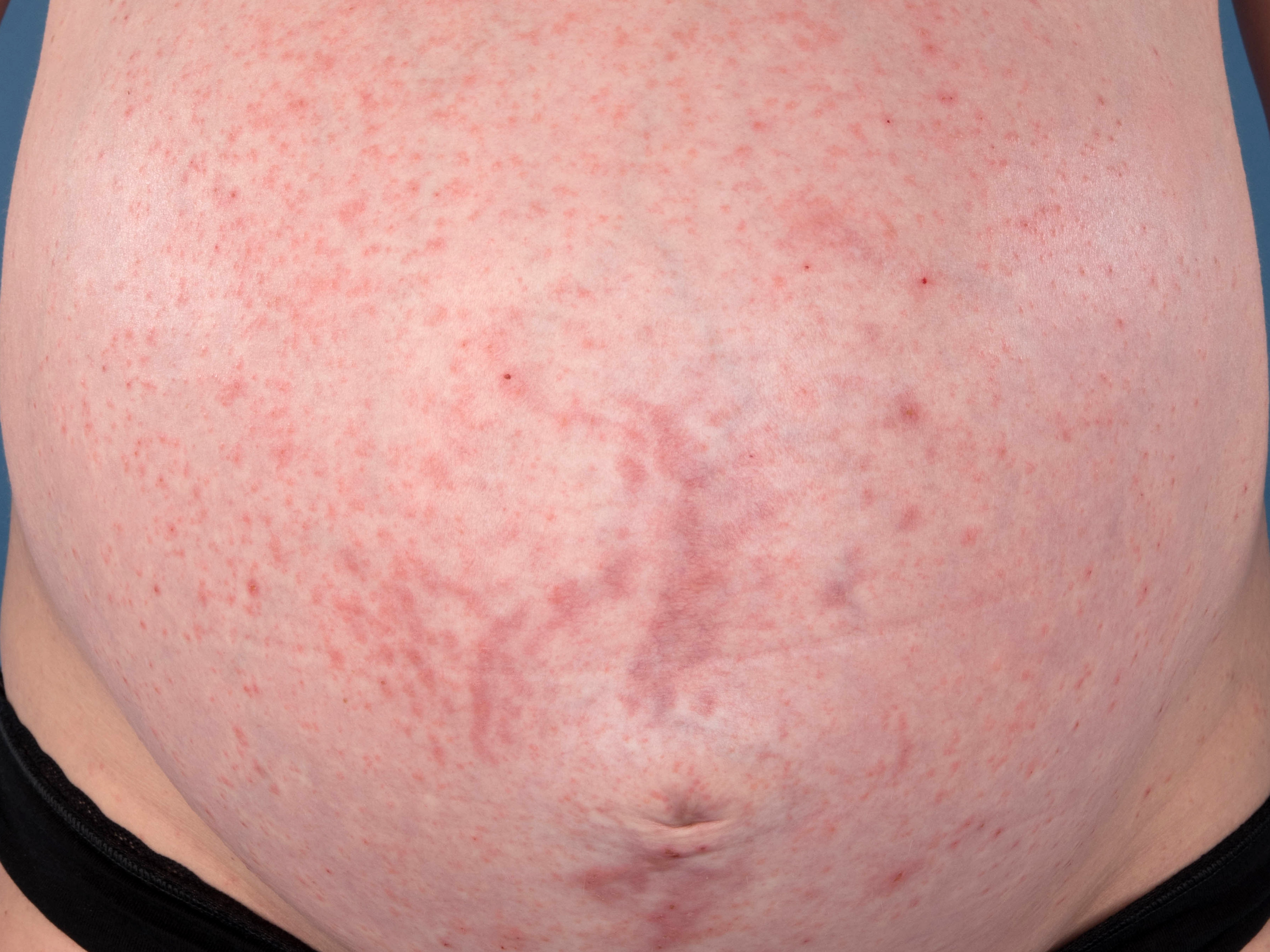
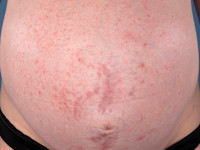
PUPPP is an intensely itchy pregnancy skin condition characterized by numerous raised, itchy bumps and hives of varying sizes. Sometimes blisters also develop. It develops in the third trimester and resolves spontaneously at the end of pregnancy or a few days after birth. It usually begins on the abdomen, sometimes as stretch marks . The area immediately around the navel is usually unaffected. Later, it spreads to the breasts, thighs, and arms; it does not affect the face.
The condition occurs in approximately 1 in 160 pregnant women, usually only in the first pregnancy and not in subsequent pregnancies. It is more common in twin pregnancies and with rapid weight gain during pregnancy. The cause is unknown.
PUPPP is very bothersome but not harmful to mother or child.
 |
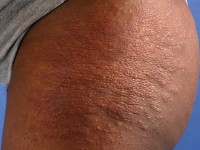 |
| PUPPP |
PUPPP |
Treatment of PUPPP
PUPPP is treated with topical corticosteroids (hormone creams or ointments). These must be strong (at least class III) and used intensively, especially during the first few days. In very severe cases, prednisone tablets are prescribed.
Pemphigoid gestationis (herpes gestationis)
Pemphigoid gestationis is a rare blistering disease that occurs in 1 in 50,000 pregnancies. It is an autoimmune disease in which antibodies are formed against the skin. These antibodies cause blisters (see also the leaflet about blistering diseases ).
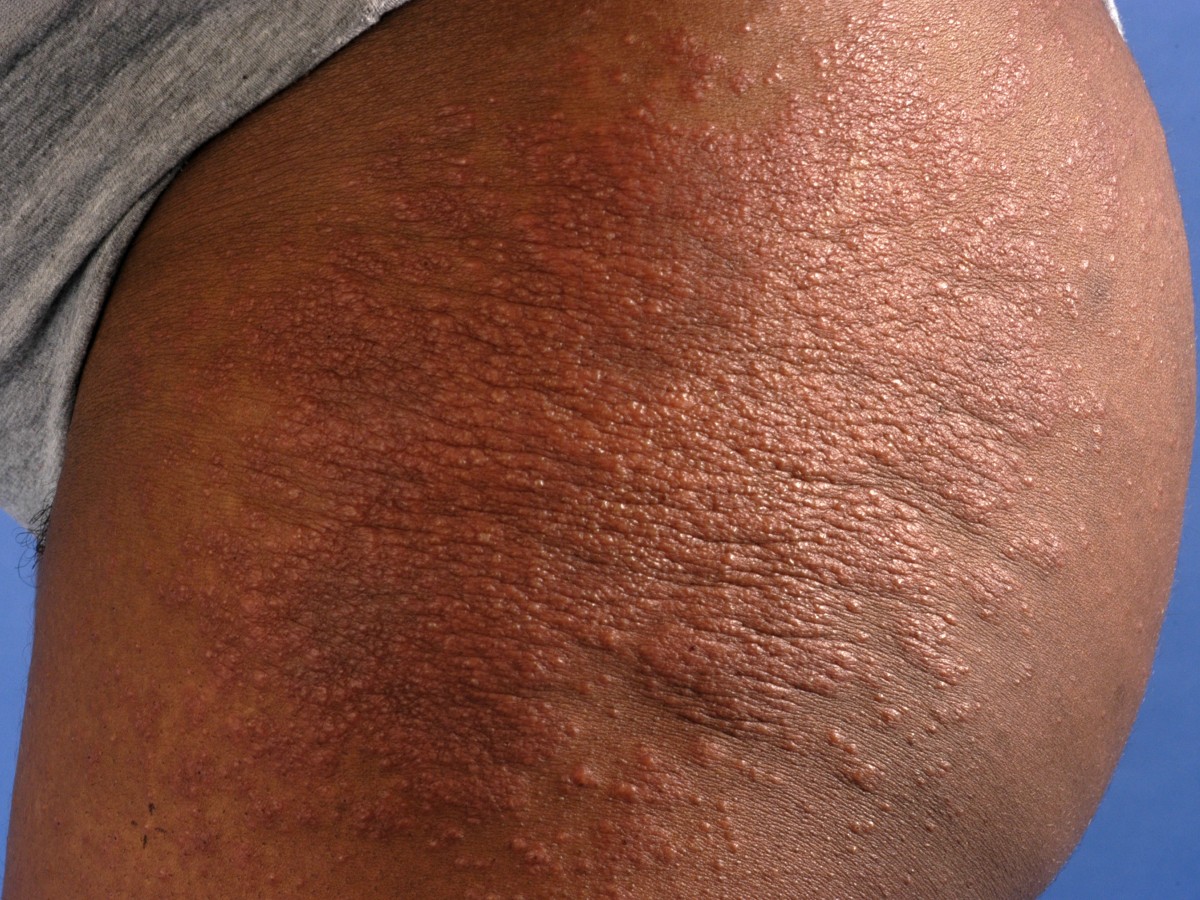
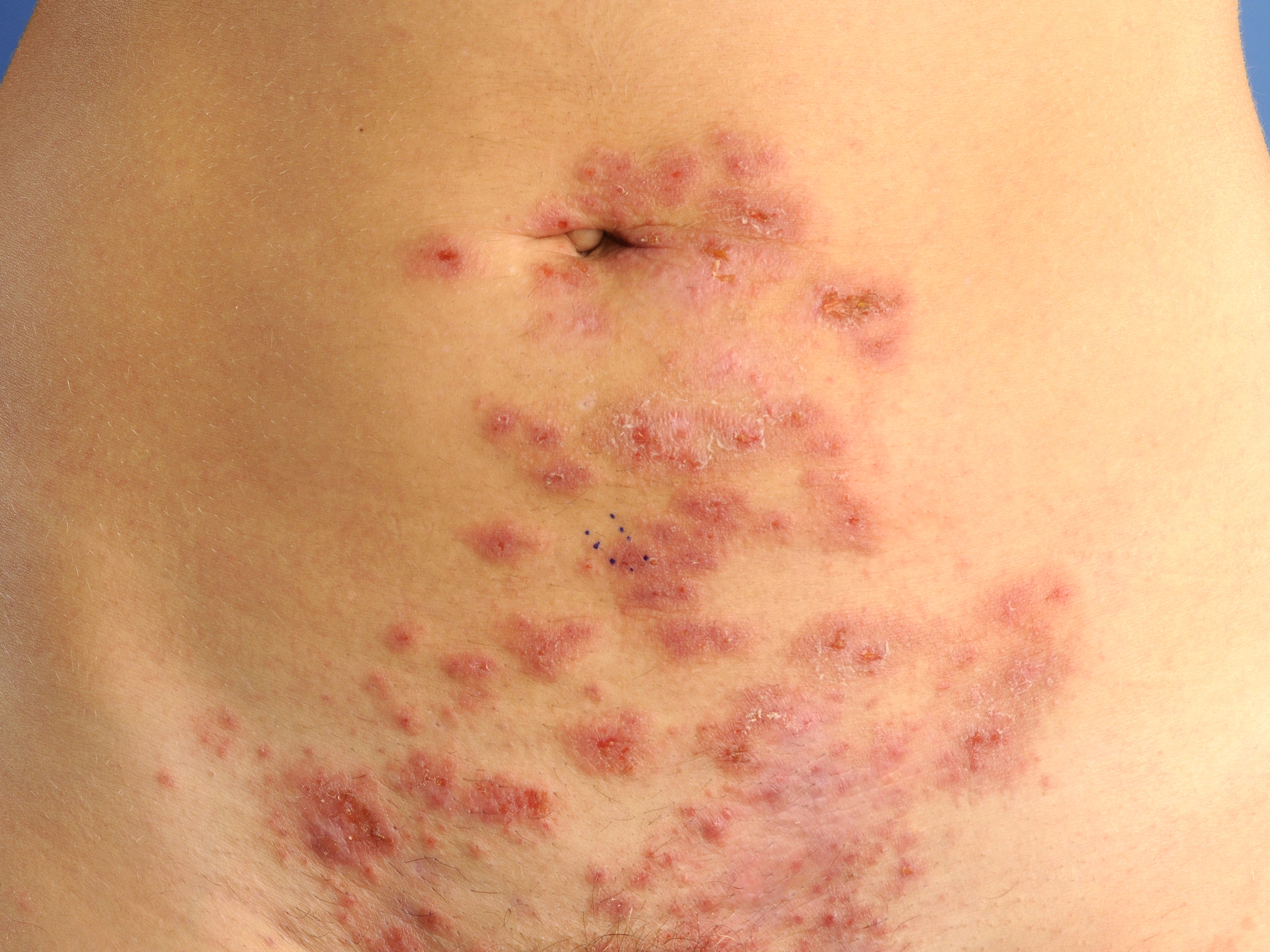
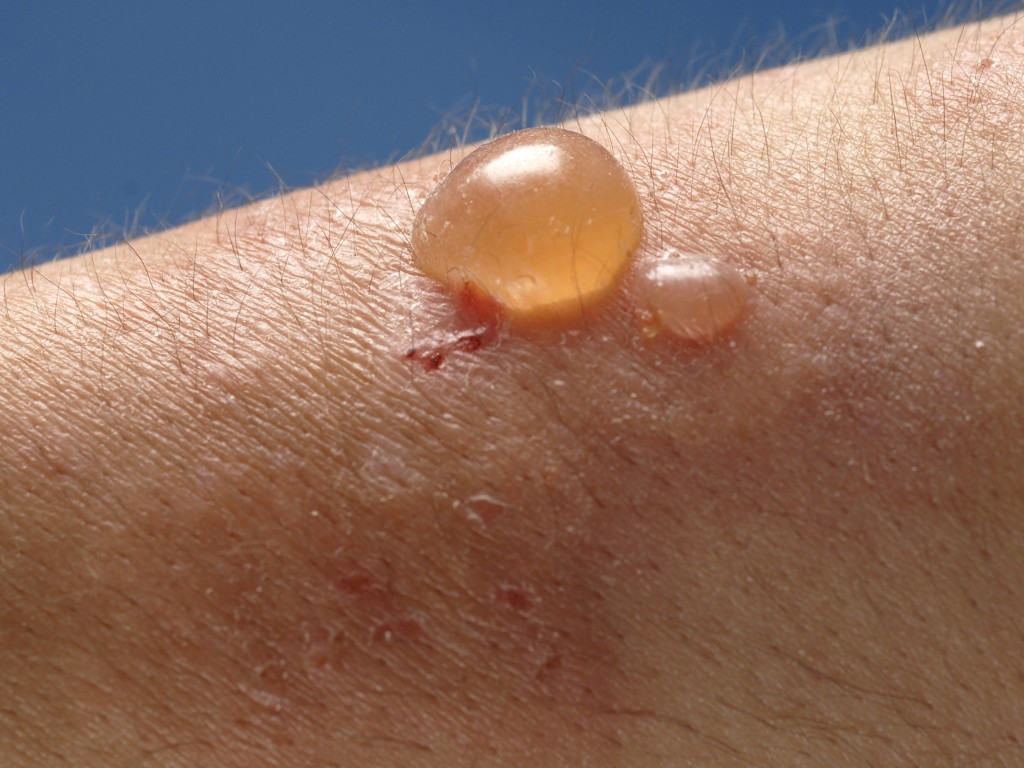
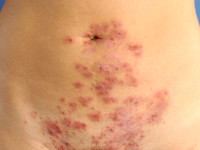
Red, itchy patches appear first, followed by vesicles and/or large blisters filled with clear fluid. The blisters are firm and do not break immediately. It usually begins on the abdomen, around the navel, and then spreads to the arms and legs. It can spread throughout the body. The oral cavity is usually not affected.
 |
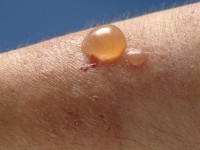 |
| pemphigoid gestationis |
pemphigoid gestationis |
Pemphigoid gestationis can begin at any point during pregnancy. It often improves somewhat at the end of the pregnancy but flares up again after birth. It can recur (worse) in subsequent pregnancies.
Pemphigoid gestationis is not without risk; there is a slightly increased risk of premature or stillbirth. Pregnant women who develop this rare blistering condition must be monitored by a gynecologist and a dermatologist. The newborn may also develop blisters immediately after birth because the antibodies cross the placenta. A skin biopsy is required to diagnose pemphigoid gestationis.
Treatment for pemphigoid gestationis usually begins with applying
topical corticosteroid creams or ointments to the skin. If this is insufficient, prednisone tablets are prescribed. This can affect the baby's hormone balance, but there is no other option. Antihistamines, along with menthol gel, lotion, or ointment, can be prescribed for the itching.
Sometimes high doses of prednisone or other powerful drugs are needed to control the condition. |