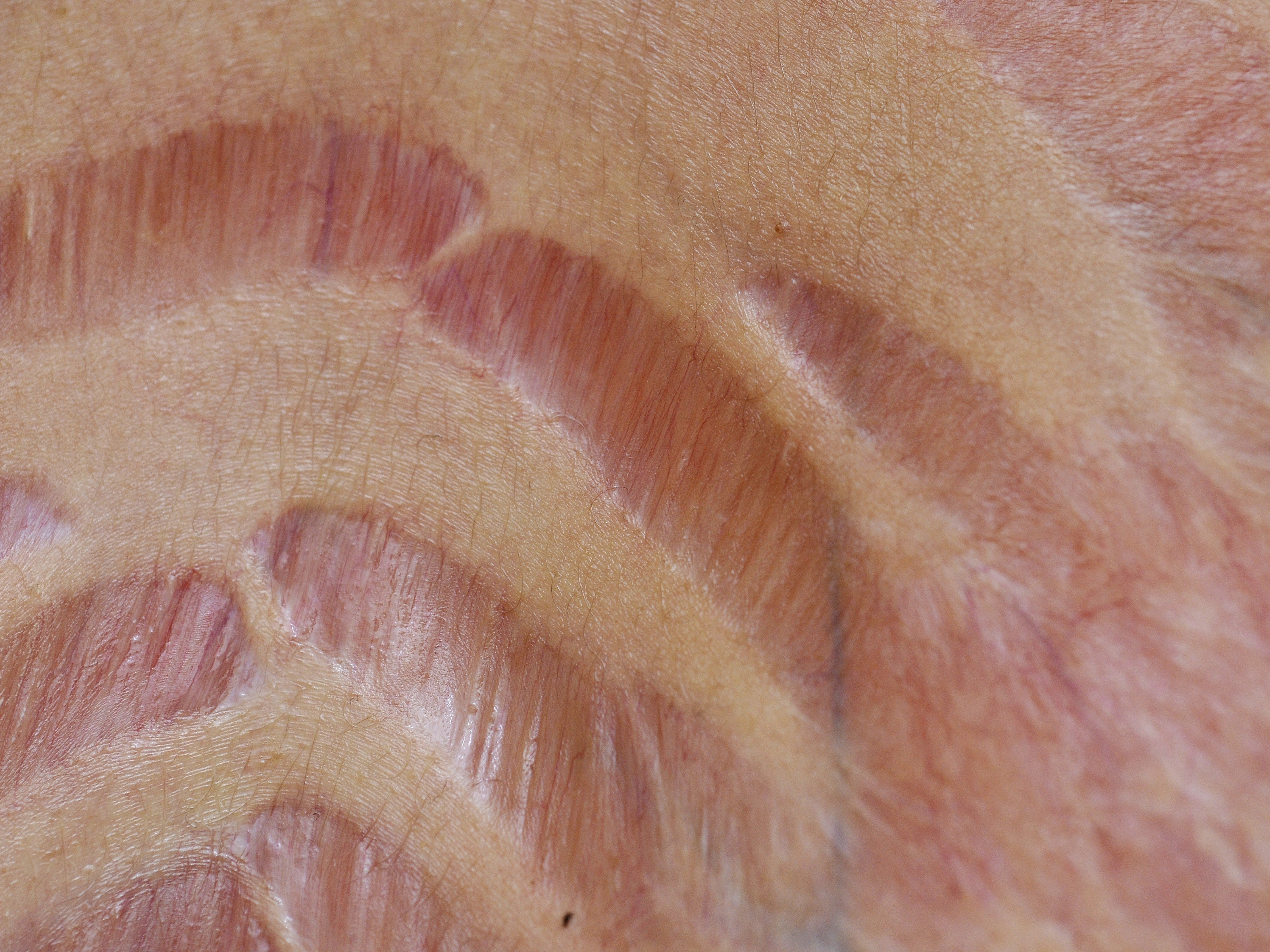
WHAT ARE STRETCH MARKS?Stretch marks are linear skin lesions that develop when the skin is stretched too quickly. They are very common, especially during pregnancy, on the abdomen and breasts. Approximately 90% of pregnant women experience them. While not serious, many women find them cosmetically unsightly and wonder if there's a way to reduce or remove the marks. This turns out to be quite complex; there's no effective treatment for stretch marks. Fortunately, they do become less visible on their own over months to years.
 |
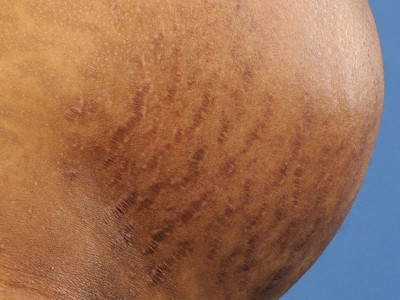 |
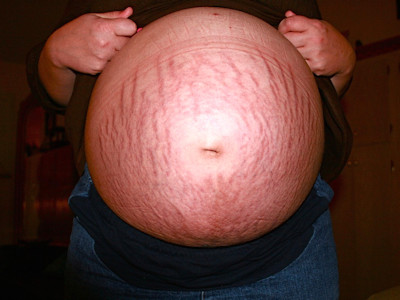
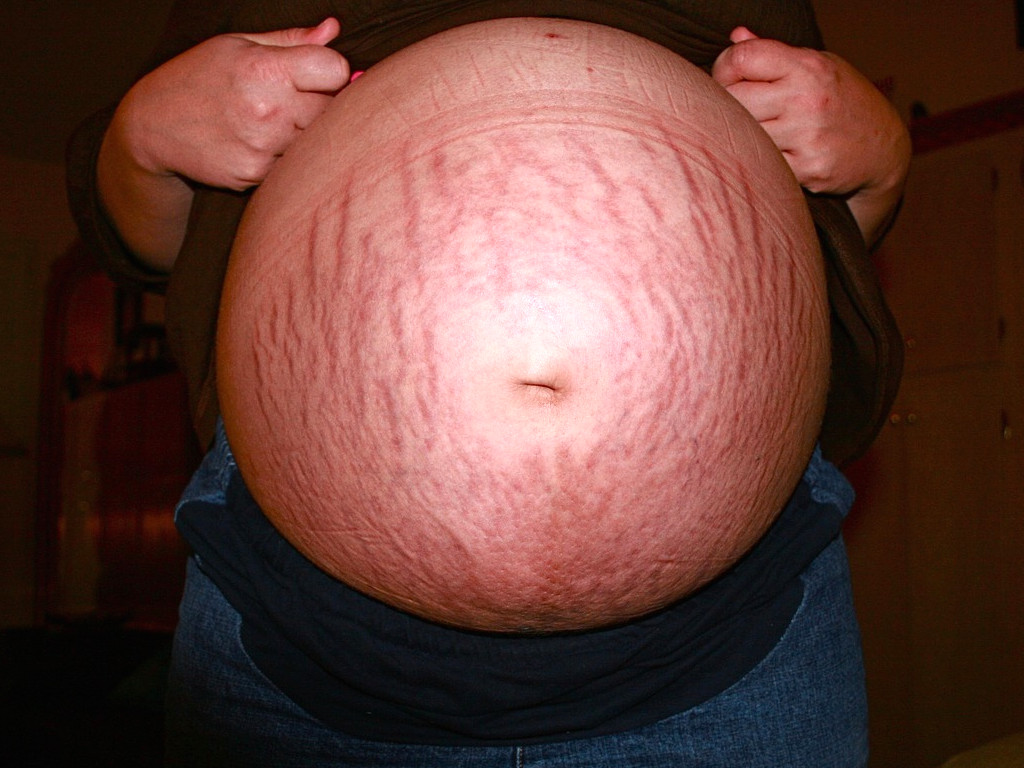
| stretch marks due to pregnancy |
stretch marks due to pregnancy |
WHAT CAUSES STRETCH MARKS?Stretch marks develop because the subcutaneous connective tissue can't keep up with the rapid growth and stretching of the skin and tears. The subcutaneous connective tissue consists of strong fibers (collagen fibers). These can stretch a little, but not much. If the skin stretches too much, they tear. The top layer of skin is very elastic; it doesn't tear and simply grows along with it. However, the skin in the stretch marks does change in appearance: it becomes somewhat smoother, thinner, stretched, and initially has a pinkish-red or purple color. This makes the stretch marks stand out visibly from the surrounding skin. After months to years, the stretch marks become less visible as new connective tissue is produced.IN WHAT SITUATIONS CAN STRETCH MARKS OCCUR?Stretch marks can occur in any situation where the skin stretches rapidly (pregnancy, breastfeeding, breast enlargement, weight gain, the growth spurt of puberty, or muscle gain due to exercise). Stretch marks can also be caused by the use of topical corticosteroid creams or ointments, by taking corticosteroids or other hormones, and by conditions involving hormonal imbalances such as Cushing's syndrome.
Pregnancy
: 90% of women develop stretch marks during pregnancy. The waistline increases dramatically in a short period of time, and the breasts also become larger due to the influence of pregnancy hormones. These stretch marks (pregnancy stretch marks) are primarily found on the abdomen and breasts.
Breastfeeding and breast enlargement:
Towards the end of pregnancy, the breasts become larger and fuller, which can lead to stretch marks on the breasts, often at the bottom, but they can also appear around the nipple. Breast augmentation can also cause stretch marks, especially if the silicone implant is too large in relation to the original breast size. Being
overweight
can also cause stretch marks if someone gains weight rapidly, particularly on the abdomen, thighs, inner thighs, and upper arms.
Growth spurt during puberty:
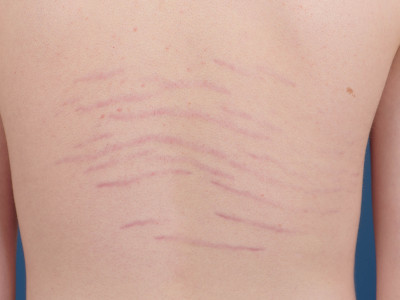
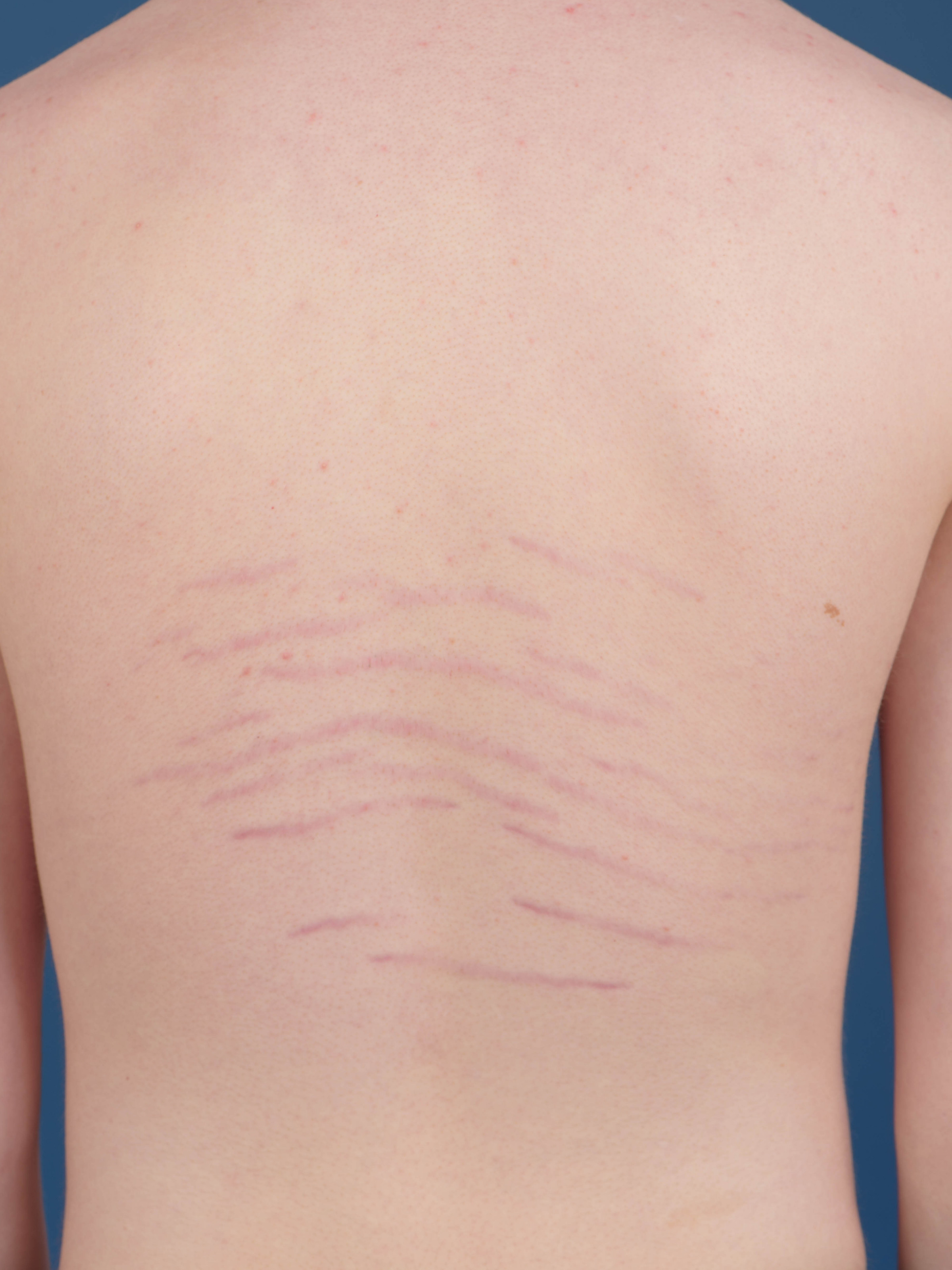
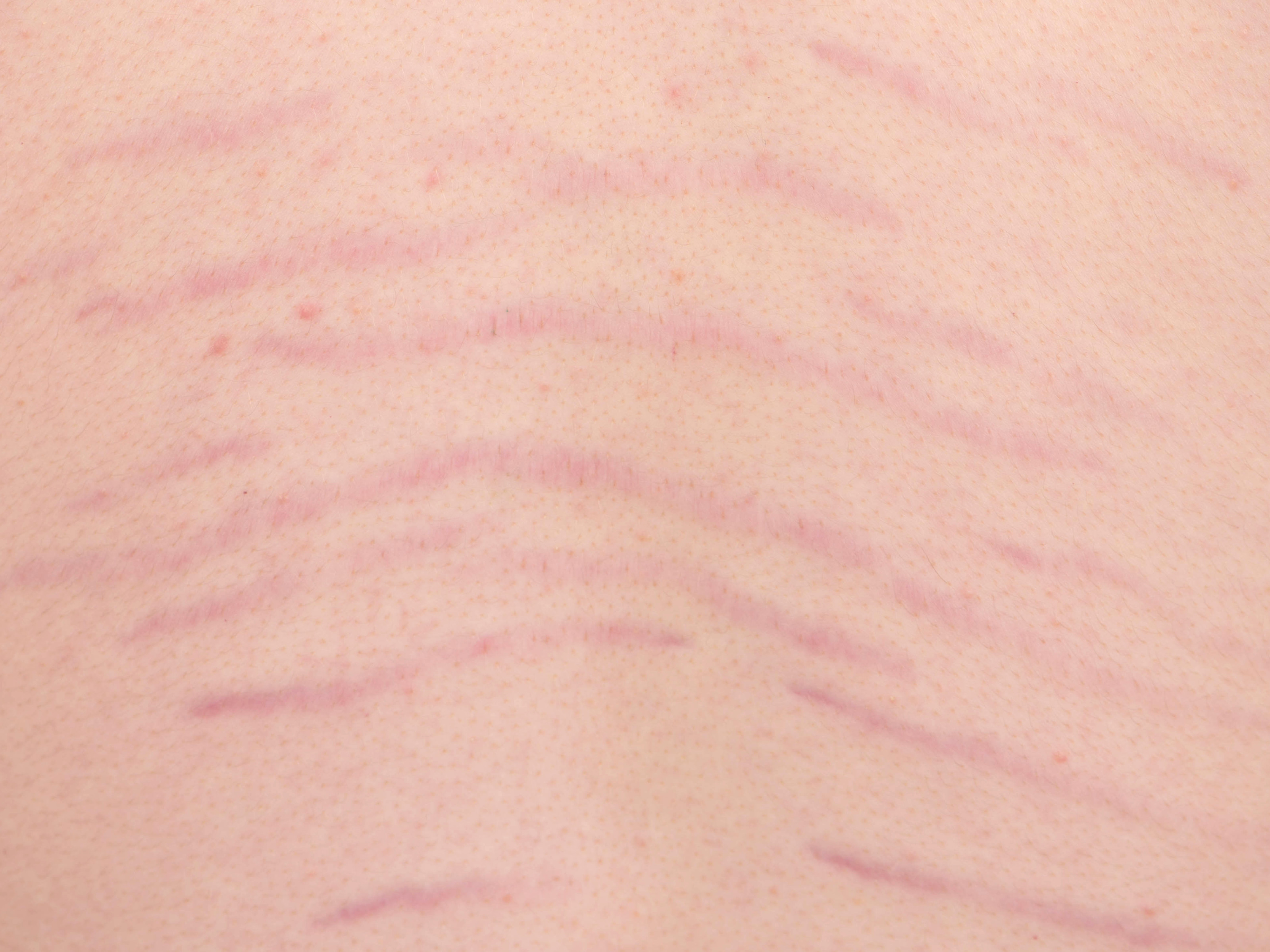
During puberty, stretch marks can appear in children who grow rapidly in a short period of time. This is also called a growth spurt. Stretch marks can also appear during puberty. This is most common in boys between the ages of 10 and 16 and in girls between the ages of 14 and 20. Stretch marks during puberty are mainly found on the thighs, buttocks, lower back, and breasts. Horizontal stripes on the lower back are typical of puberty stretch marks. Initially, these stripes are pink or purple, and may even be raised. Over months to years, they become less visible.
 |
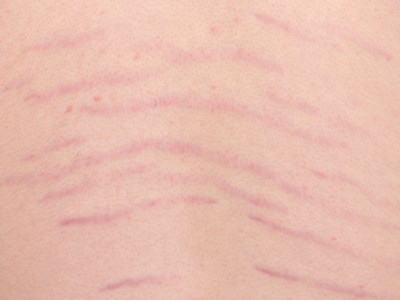 |
| stretch marks during puberty |
stretch marks during puberty |
Bodybuilding:
Stretch marks develop in bodybuilders when the rapid growth of muscle tissue stretches the skin, causing stretch marks to appear, particularly on the arms, thighs, and breasts.
Frequent use of corticosteroid creams or systemic corticosteroids.
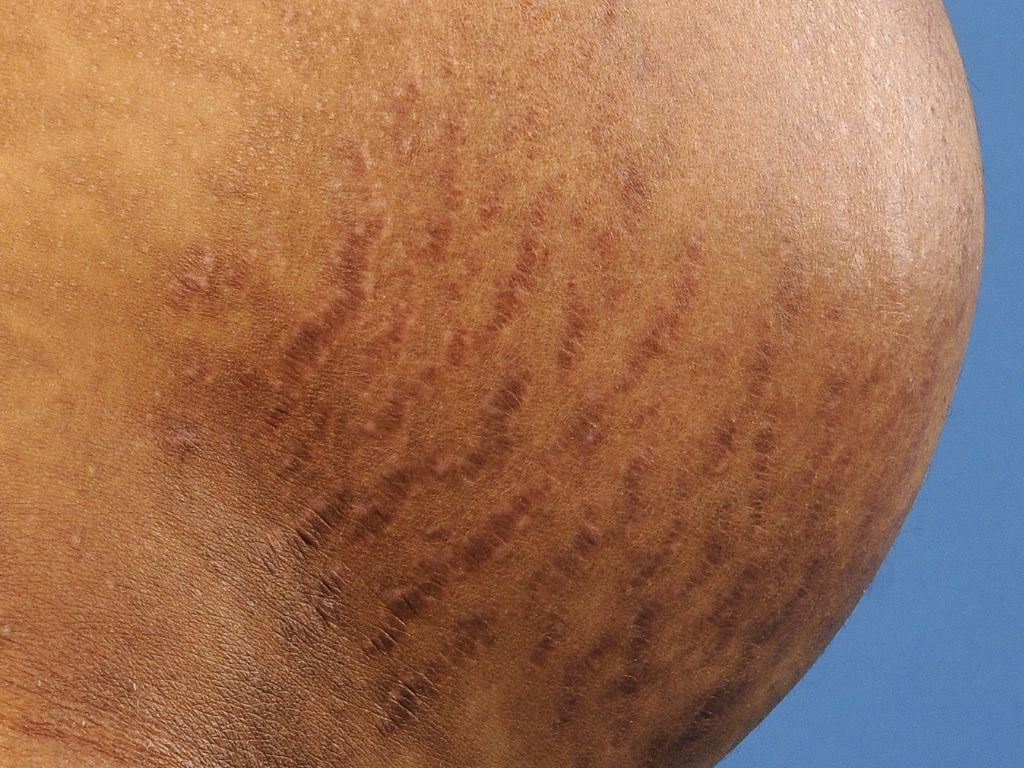
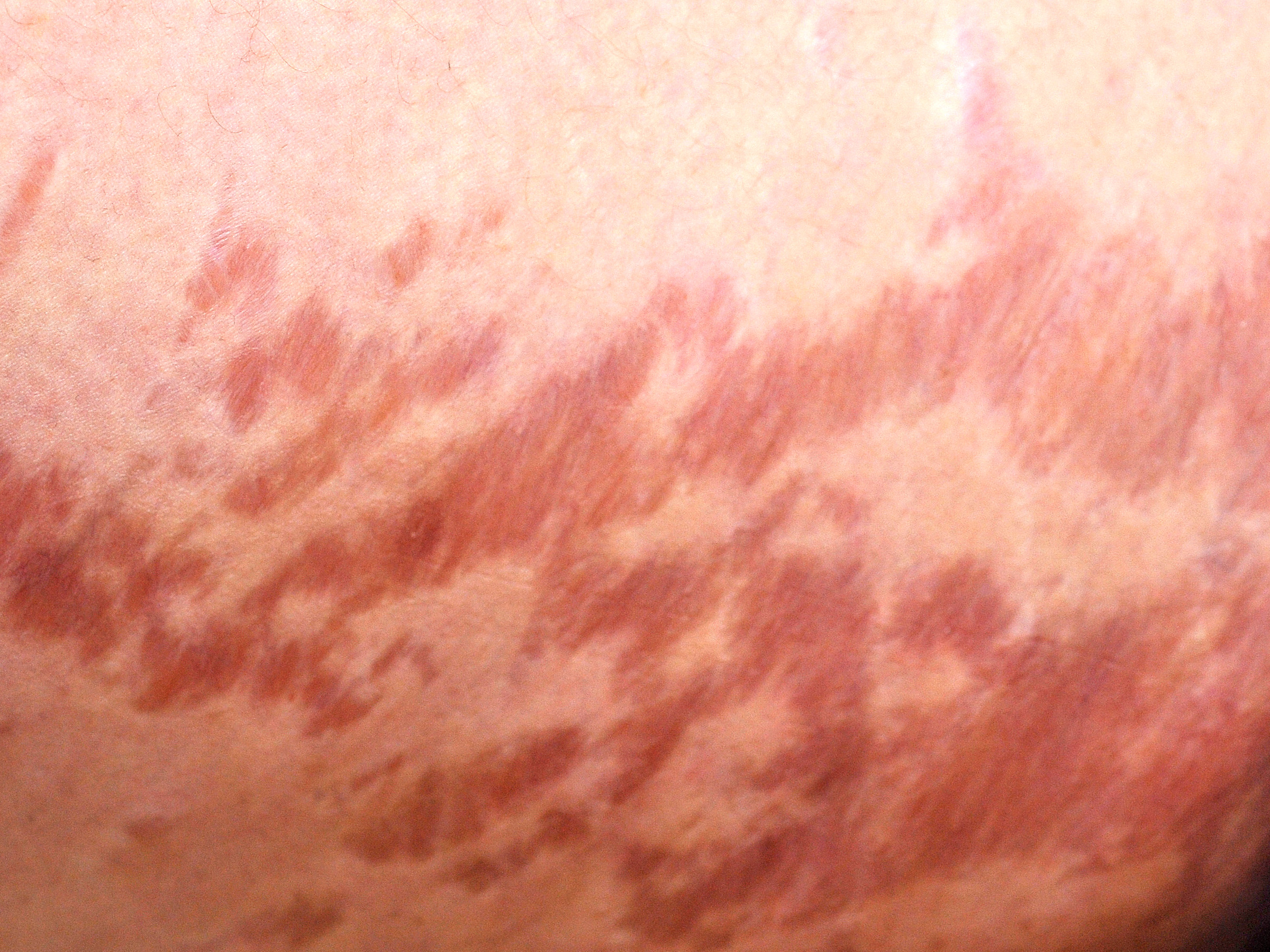
These corticosteroids, adrenal cortex hormones, have a weakening effect on connective tissue. The skin may develop stretch marks and/or become very thin.
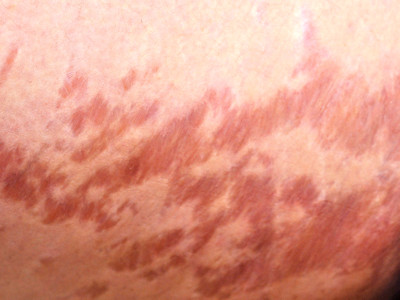 |
![Stretch marks as a side effect of systemic corticosteroids (click on photo to enlarge) [source: www.huidziekten.nl]](../../images/striae-tgv-systemische-corticosteroiden-1z.jpg "Stretch marks as a side effect of systemic corticosteroids (click on photo to enlarge) [source: www.ocosa.org]") |
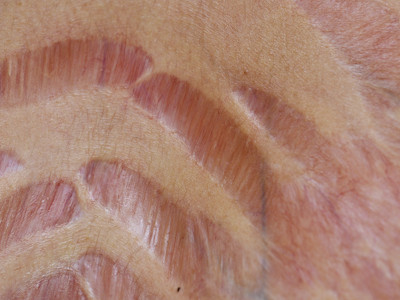 |
stretch marks due to local
corticosteroids |
stretch marks with systemic
steroids |
stretch marks with systemic
steroids |
Cushing's Disease
People who suffer from Cushing's disease may have stretch marks on the abdomen, legs and upper arms.TREATMENTThere's no effective treatment for stretch marks. There's a lot of advertising for all sorts of skincare products and treatments using various laser devices and other equipment. But their effectiveness is limited. At most, some lasers can reduce the redness, but that will also diminish naturally over time. Chemical peels only treat the surface, and that's not the problem. Stretch marks become less visible on their own because connective tissue is regenerated beneath the skin. It's best to wait for this natural healing process and avoid spending a fortune on anti-stretch mark creams and laser treatments in beauty salons and clinics, which offer minimal results. |

![Stretch marks as a side effect of systemic corticosteroids (click on photo to enlarge) [source: www.huidziekten.nl]](../../images/striae-tgv-systemische-corticosteroiden-1.jpg "Stretch marks as a side effect of systemic corticosteroids (click on photo to enlarge) [source: www.ocosa.org]")