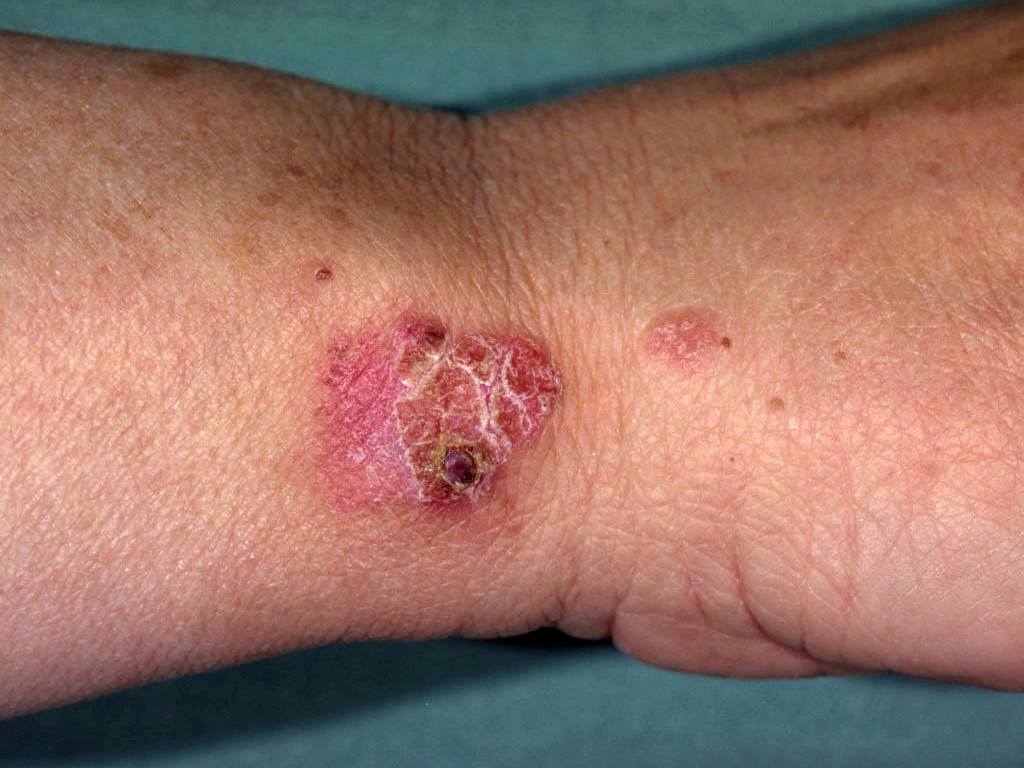
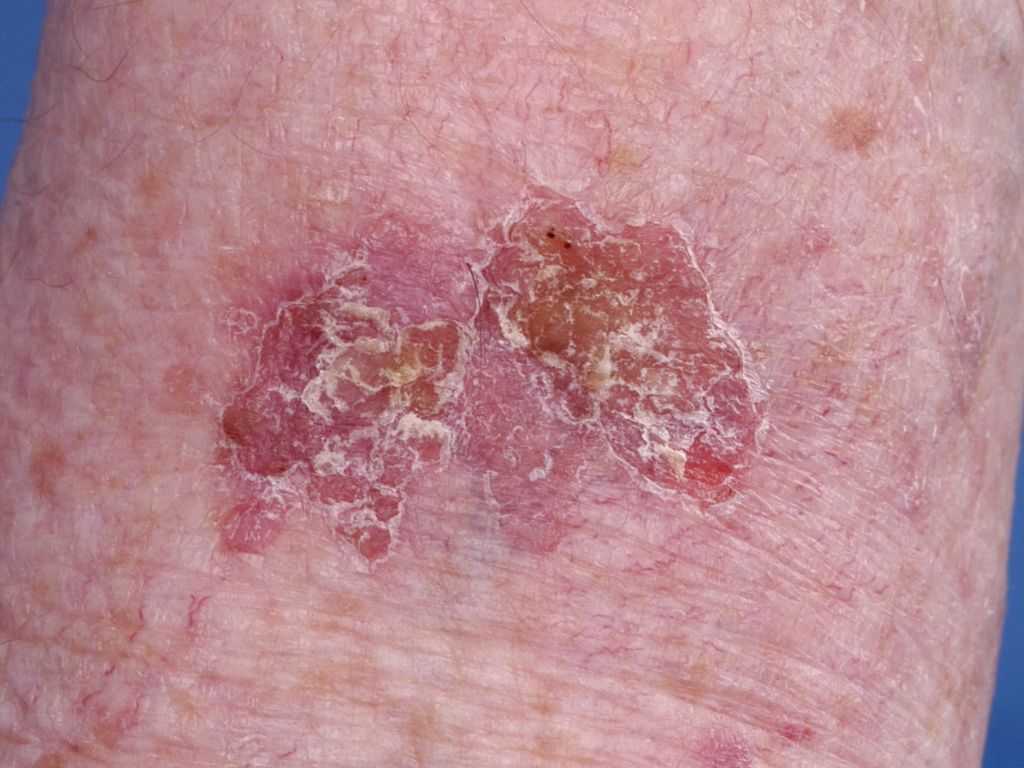
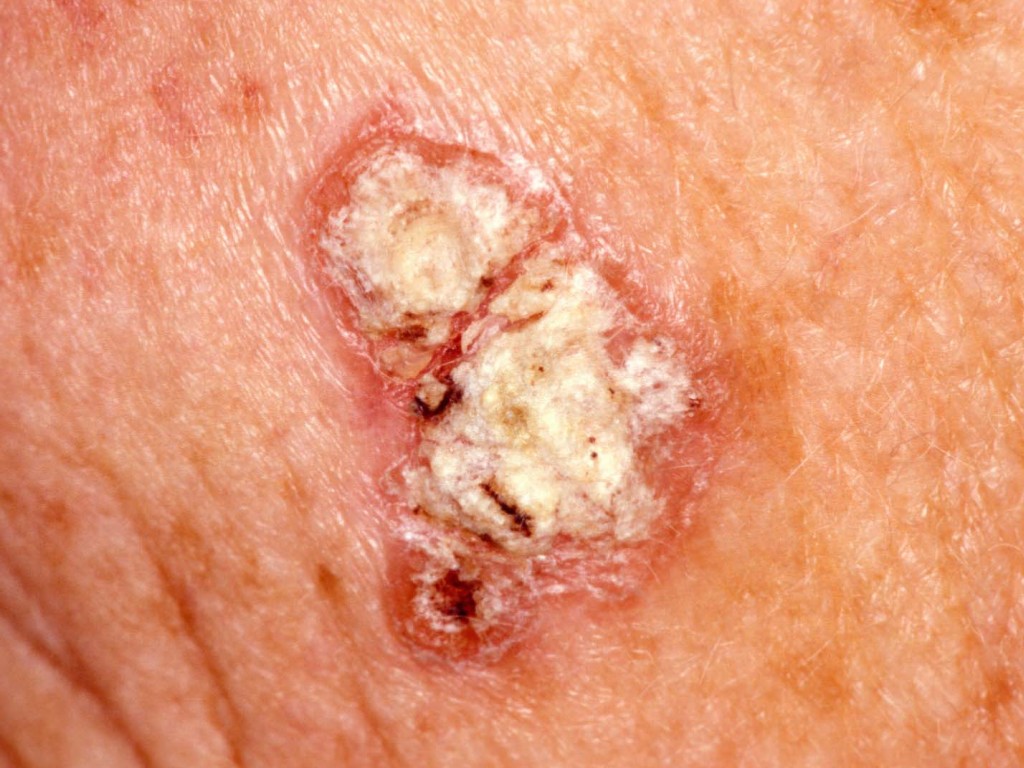
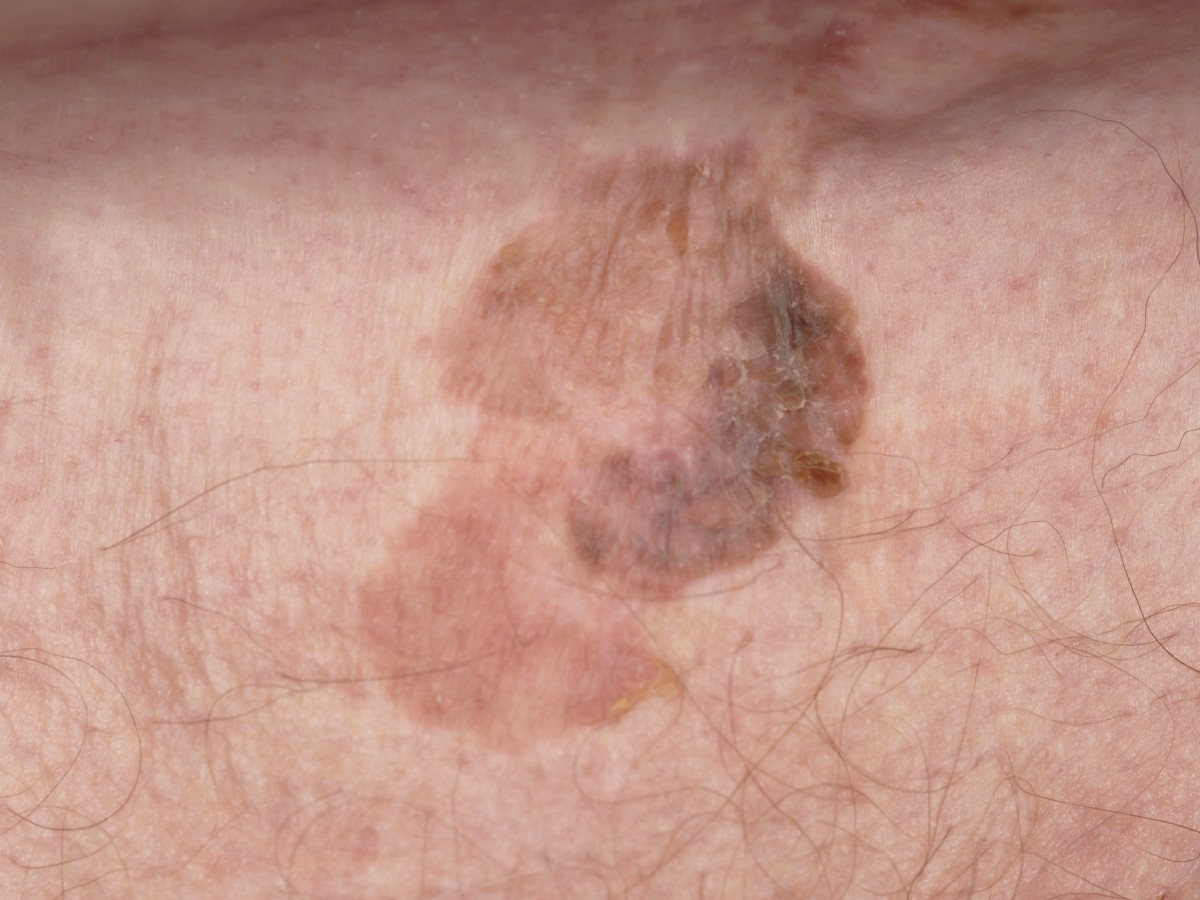
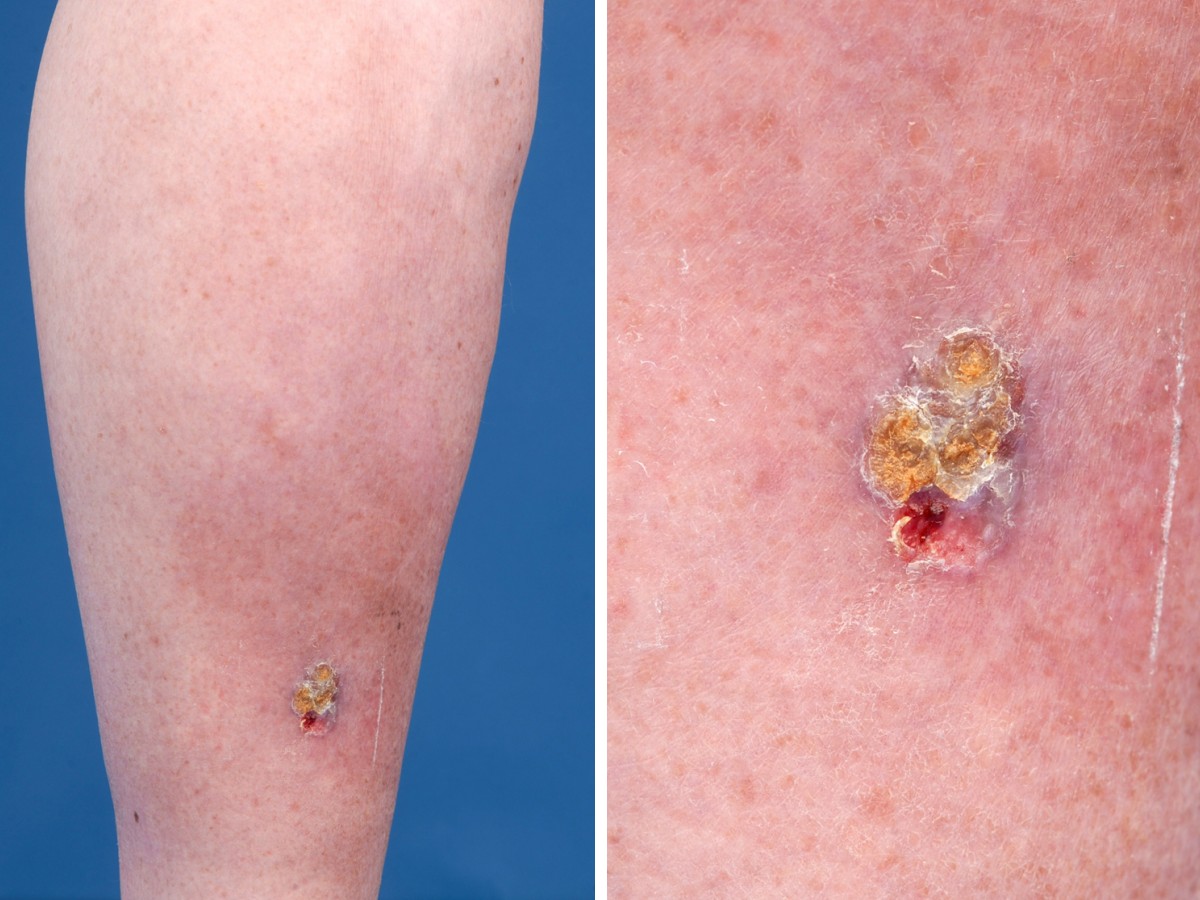
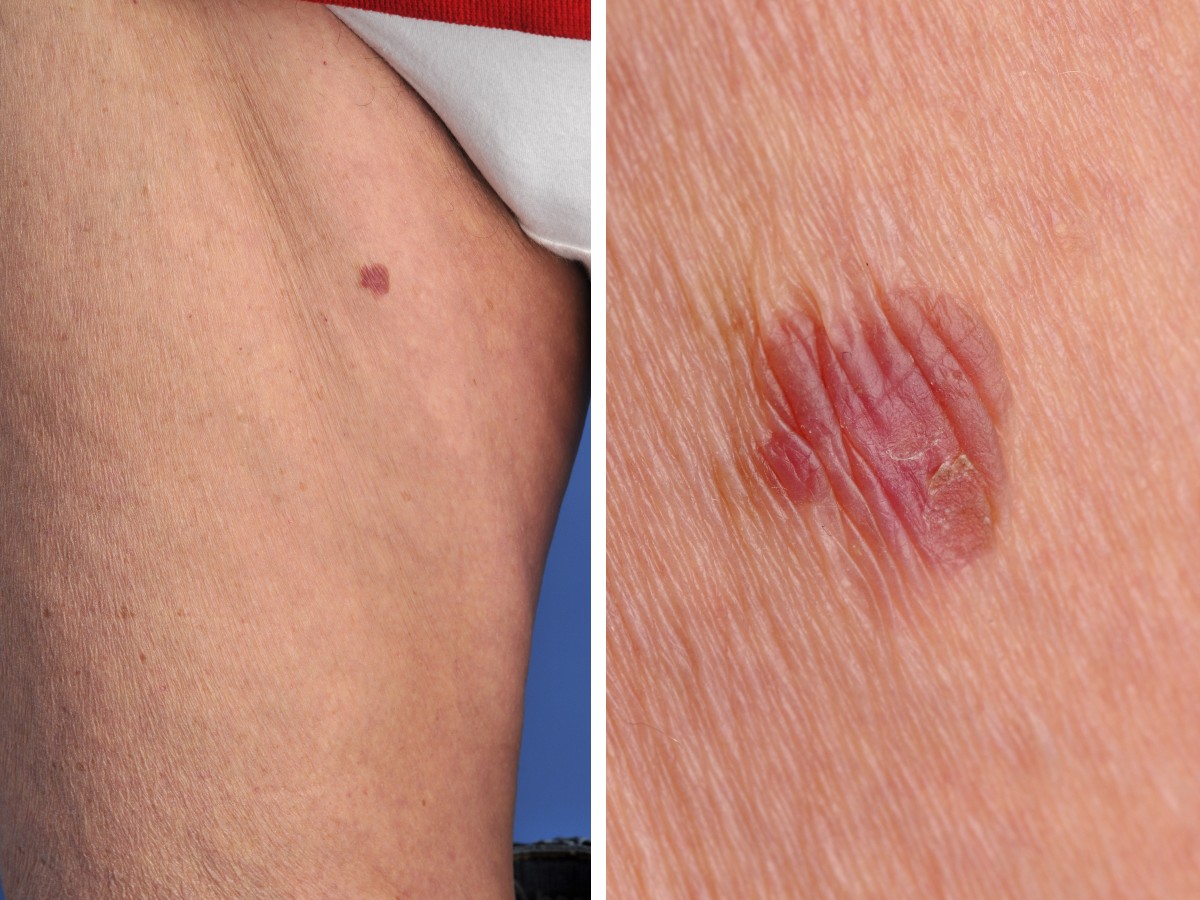
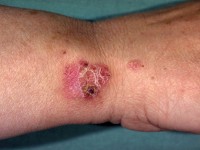
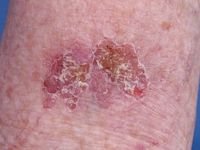
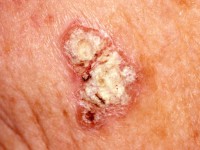
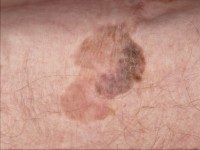
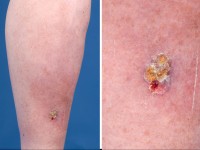
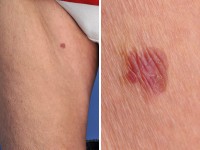
WHAT IS BOWEN'S DISEASE?Bowen's disease is a superficial form of skin cancer. It is an early form of squamous cell carcinoma . The disease is named after the physician who first described it. It usually involves a single, red, scaly patch that slowly enlarges. The patch may resemble a patch of eczema or psoriasis. It is often treated as such, with an anti-eczema ointment, which subsequently proves ineffective. Because it is an early, superficial form of skin cancer, it is not dangerous. It can be removed in various ways.WHAT DOES BOWEN'S DISEASE LOOK LIKE?Bowen's disease is usually a slowly expanding red and scaly patch , resembling eczema or psoriasis. It often has crusts. Sometimes it is partially or completely brown. The patches mainly appear on the lower legs. But it can occur anywhere (face, hands, fingers, on the genitals, around the anus, under and around the nail). Usually, it affects only one patch. In 10-20% of patients, multiple patches are present. This is mainly seen in patients with a compromised immune system (for example, patients with a donor kidney who are taking immunosuppressive drugs) and in patients who have suffered significant sun damage in the past. Bowen's disease mainly occurs in areas that are frequently exposed to the sun, but it can also develop in areas that are never exposed to the sun. It can also occur on the genitals. The variant that occurs on the genitals is called erythroplasia of Queyrat .
 |
 |
 |
| Bowen's disease |
Bowen's disease |
Bowen's disease |
 |
 |
 |
| Bowen's disease |
Bowen's disease |
Bowen's disease |
WHO CAN GET BOWEN'S DISEASE?Bowen's disease occurs primarily in older adults (around 70 years old, especially women). It is more common in people who have had extensive sun exposure throughout their lives. It is also more common in patients taking immunosuppressive medications. The lesions on or near the genitals are sometimes caused by the HPV virus (Human Papilloma Virus), the virus that also causes genital warts. Bowen's disease can coexist with other forms of skin cancer, such as basal cell carcinoma and squamous cell carcinoma.HOW IS THE DIAGNOSIS MADE?The diagnosis is made by taking a skin biopsy from the area. This is necessary because many other skin conditions can resemble it, such as eczema, psoriasis, fungal infections, actinic keratosis, and basal cell carcinoma. It is also necessary to determine whether it is a superficial or deeper form of squamous cell carcinoma.HOW IS BOWEN'S DISEASE TREATED?There are several treatment options for Bowen's disease. The simplest and most effective method is to remove the affected area (surgery, excision). However, because the lesions, while superficial, can sometimes be large, other techniques are also available that remove only the superficial layer of skin (that's where the scar is located). These techniques don't leave as large a scar.Excision:The area is cut away under local anesthesia, leaving a small margin of healthy tissue around it. The excised tissue is sent to the lab to be examined for complete removal. The wound is then sutured.Freezing (cryotherapy):Using liquid nitrogen, the top layer of skin is frozen twice. The frozen skin containing the skin cancer dies off. A blister or superficial wound develops that heals from the edges.Burning away (electrocoagulation):After local anesthesia, the top layer of skin is burned away electrically. This can also be done with a CO2 laser.Photodynamic therapy (PDT):In this procedure, a cream containing methylaminolevulinic acid or 5-aminolevulinic acid is applied to the skin. This is left to absorb for several hours. Methylaminolevulinic acid is absorbed into the cells, particularly tumor cells. The area is then illuminated with a special light. This converts the substance into an active ingredient that kills the cells. This is an excellent technique for superficial areas and leaves virtually no scar.Efudix (5-fluorouracil) cream:You must apply this cream yourself twice a day for four weeks. This is a cell-killing cream that destroys the superficial layers of skin if applied long enough. See also the leaflet about Efudix cream.Aldara (imiquimod) cream 5%:You must apply this cream once a day for 16 weeks. The cream stimulates the body's own immune system, which then attacks and eliminates the tumor. An inflammatory response develops around the area.Radiotherapy:Radiation also works, but this is usually not done because there are simpler methods.WHAT CAN YOU STILL DO YOURSELF?Be careful with the sun. There's no need to panic and avoid the sun now, because it has all sorts of positive effects. You can go outside when the weather is nice. But it's important to avoid sunburn.WHAT IS THE PROGNOSIS OF BOWEN'S MORBUS?Provided the area is treated properly, the prognosis is excellent. If Bowen's disease is left untreated, the area will gradually grow larger and thicker. Eventually, squamous cell carcinoma will develop, which can spread through the superficial layers of skin to the deeper layers. This type of skin cancer can also spread to the lymph nodes. Prevent this by seeing a doctor promptly and getting treatment. |