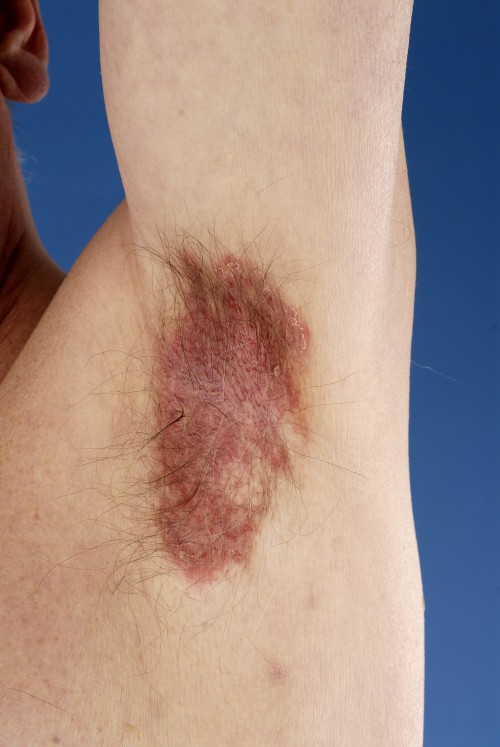
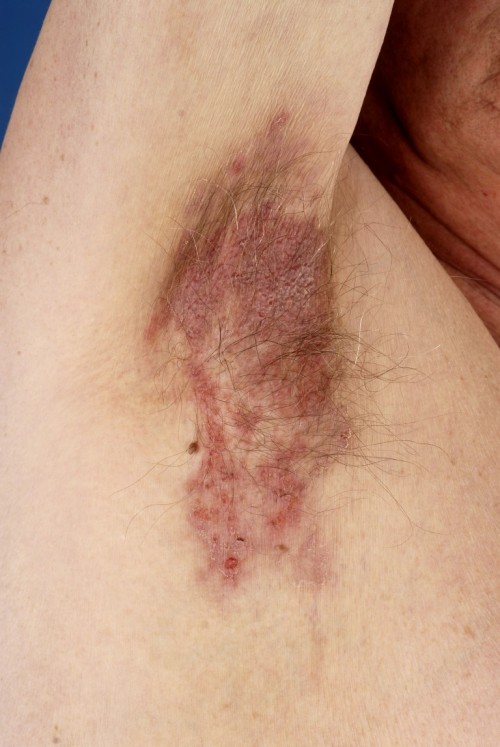
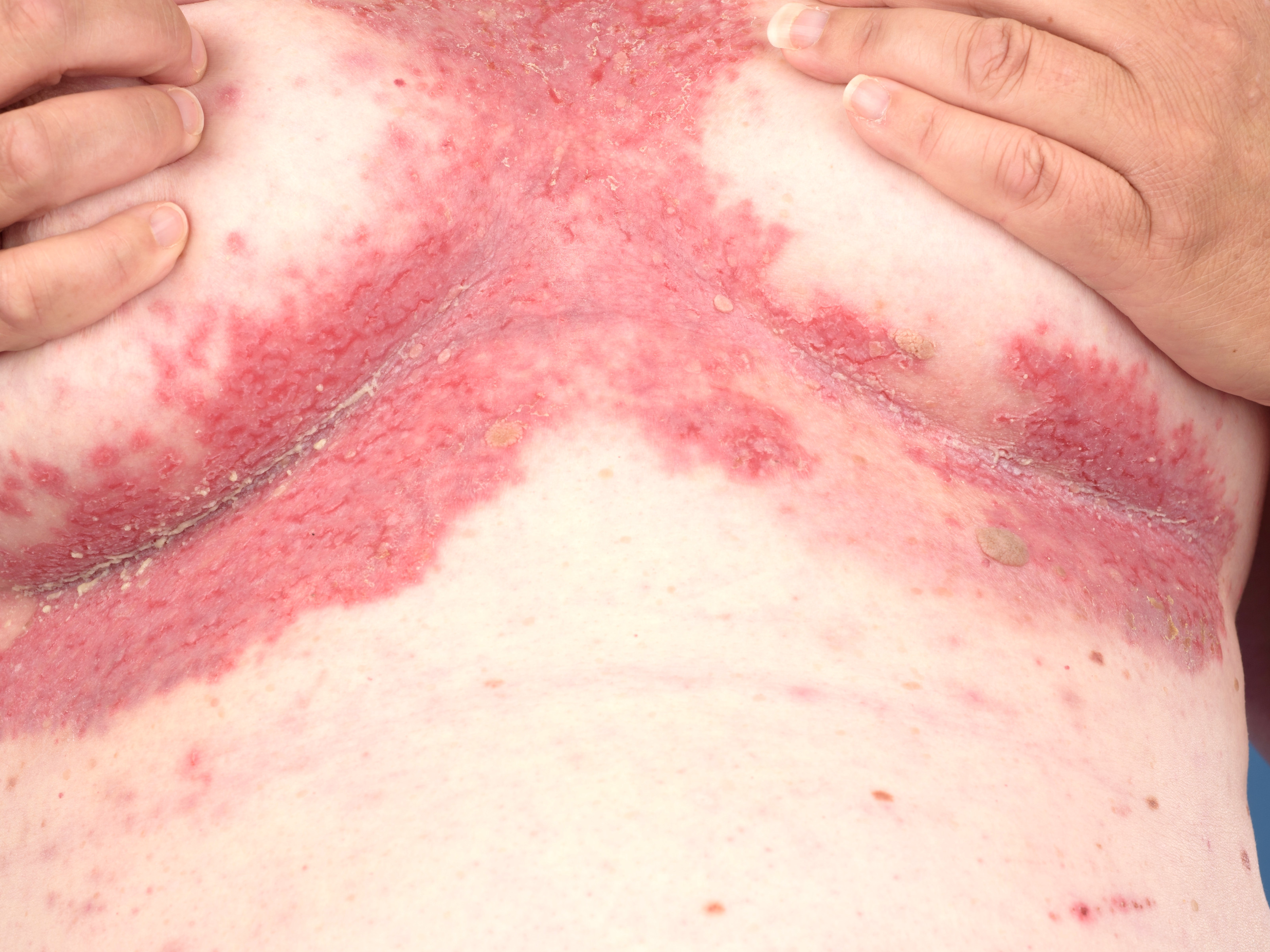
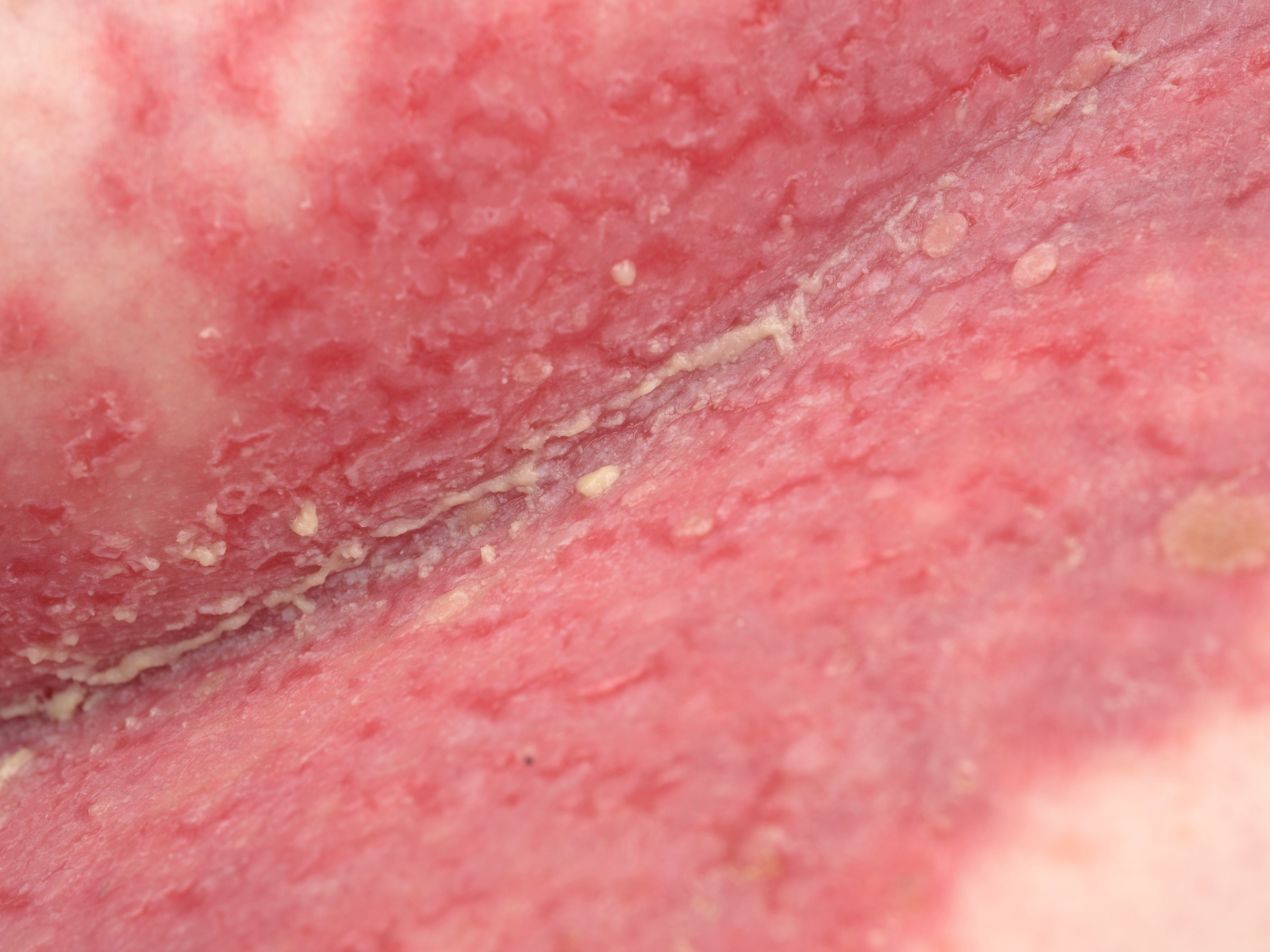
WHAT IS HAILEY-HAILEY DISEASE?Hailey-Hailey disease is a rare hereditary skin disorder that causes blisters, cracks, and superficial sores to develop in the armpits, groin, and other body folds. It was first described in 1939 by brothers Hugh Edward Hailey and William Howard Hailey. Although it is a genetic (inherited) condition, it often only becomes apparent later in life (usually between the ages of 20 and 40). Hailey-Hailey disease is also called pemphigus benign familiaris chronicus .
 |
 |
 |
 |
| Hailey-Hailey |
Hailey-Hailey |
Hailey-Hailey |
Hailey-Hailey |
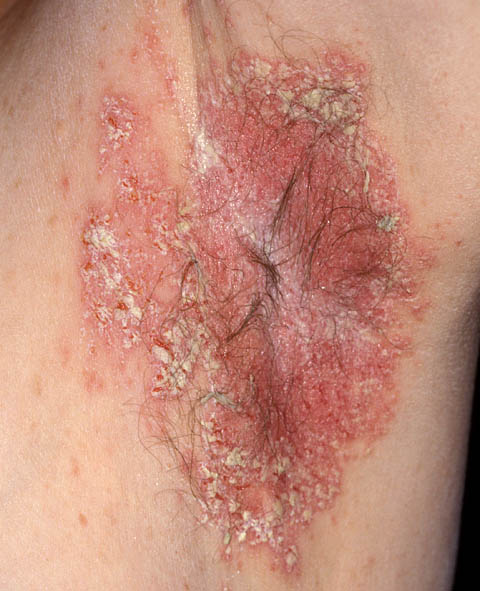
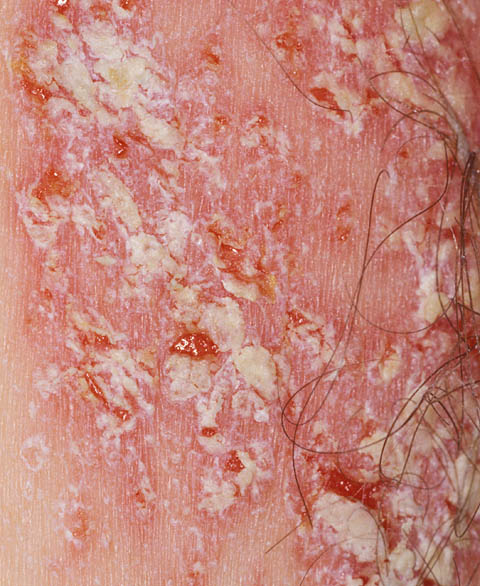
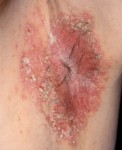
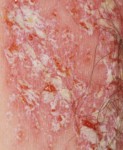
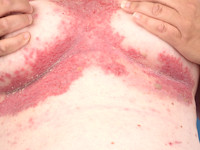
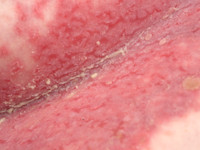
WHAT DOES HAILEY'S DISEASE LOOK LIKE?Red or purple scaly patches develop, with blisters, vesicles, cracks, sores, and sometimes pustules. They are most common in areas subject to high friction and/or (excessive) sweating, such as the neck, armpits, under the breasts, elbow creases, groin, pubic area, and around the anus. The skin breaks easily in these areas because the skin cells are not firmly attached to each other due to the genetic defect. Painful cracks can develop, making movement difficult. The area may be constantly moist (wet) due to fluid leakage from the broken skin. The patches slowly expand at the edges and gradually thicken, sometimes with wart-like changes.
 |
 |
| cracks |
cracks |
Because the skin is broken and moist, and because it often occurs in sweaty and humid areas like the armpits and groin, Hailey-Hailey disease is very susceptible to infection. Infections with bacteria and fungi, and even with the herpes simplex virus, can occur. This can cause areas to become pus-filled, more painful, and develop an unpleasant odor. Contact allergy can also easily develop because the skin barrier is disrupted.
The nails can also be affected (white streaks running lengthwise along the nail). The mucous membranes are usually unaffected.WHAT CAUSES HAILEY-HAILEY DISEASE?Hailey-Hailey is a hereditary condition. The DNA abnormality responsible for the disease has been discovered. It's a complex story. The cells of the epidermis are normally firmly connected to each other by numerous extensions. The strength of these connections between cells decreases when there is too little calcium in the cells. The gene involved in Hailey-Hailey disease (the ATP2C1 gene on chromosome 3) regulates the amount of calcium in the cell. If the calcium level in the cell becomes too low, the cells become dissociated. Hailey-Hailey is inherited in an autosomal dominant pattern. This means that if one parent has the disease, there is a 50% chance that their child will also have it.HOW IS THE DIAGNOSIS MADE?The diagnosis can be made based on the clinical picture, i.e., its appearance. Sometimes a skin biopsy is taken. Under a microscope, it can be seen that the cells have become separated.HOW IS HAILEY-HAILEY DISEASE TREATED?There are no treatments that can eliminate Hailey-Hailey disease. The disorder is ingrained in the genetic makeup, and nothing can be done to change that. What is possible is treating the symptoms with medications that reduce infections and redness. Furthermore, it's important to avoid excessive sweating and mechanical stress on the skin. Finally, surgical techniques are available to remove the affected skin. This last option isn't always successful, as the new skin that grows back naturally also contains the genetic disorder.Reducing sweat production:This can be achieved by avoiding situations that trigger sweating: hot environments, sun, saunas, exertion, sports, and stressful situations. Excessive sweating can be addressed with repeated Botox injections or by deactivating the sweat glands with a new technique: the miraDry method. The miraDry device destroys the sweat glands using a microwave principle. The treatment is expensive (not covered by insurance), but it is effective.Reducing mechanical damage:Wear loose-fitting, comfortable, and airy clothing that doesn't chafe your armpits and groin. Some sports or activities (heavy work involving a lot of arm and leg movement) are not recommended for someone with Hailey-Hailey disease.Fighting infections:This can be done with antiseptic (antibacterial) soaps, such as Hibiscrub or Betadine iodine scrub, or with topical creams and ointments containing antiseptic ingredients, such as chlorhexidine cream, fusidine cream or ointment, mupirocin ointment, or tetracycline ointment or cream.
Sometimes it's necessary to prescribe systemic antibiotics (tablets), such as flucloxacillin, clarithromycin, erythromycin, or minocycline. Some antibiotics not only kill bacteria but also have an anti-inflammatory effect. For fungal overgrowth, topical or systemic antifungal products can be used. A herpes infection is treated with antiviral tablets.Fighting the inflammation:This can be done with topical corticosteroids in cream or ointment form. A mild corticosteroid (class 1 or 2) is usually sufficient, as corticosteroids are absorbed more in the folds than elsewhere on the body. Stronger corticosteroids (class 3) are also used, but there is a risk of skin thinning if used for too long. Combinations of a corticosteroid and an antiseptic product in a cream also work well for Hailey-Hailey. The problem is that these combination preparations, which must be prepared by the pharmacist, are often no longer reimbursed by health insurers.
Another option is to use Protopic (tacrolimus) ointment or Silkis (calcitriol) cream. These are also anti-inflammatory anti-eczema ointments, which have the advantage of not thinning the skin.
In severe cases, short-term use of prednisone tablets or other systemic anti-inflammatory drugs (dapsone, cyclosporine, methotrexate) may be necessary. Certain forms of light therapy, such as PUVA therapy, may also be used.Skin removal with CO2 laser, dermabrasion or surgery:The CO2 laser can burn away (evaporate) a superficial layer of skin. The depth of the effect can be easily adjusted with the laser. The removed skin is replaced by new skin cells from both the depths and the edges. Sweat glands may also be destroyed by the treatment.
Dermabrasion is the shaving of the skin with a rotating rasp. This is essentially the same principle.
Surgical treatment involves surgically removing the affected skin and then applying donor skin from a different location.
There is no guarantee that the problem will be resolved with these surgical techniques; it can recur. However, it usually does provide some improvement.WHAT CAN YOU DO ABOUT HAILEY-HAILEY DISEASE?Try to avoid circumstances that cause excessive sweating: avoid warm environments, keep the room temperature low, avoid sun and heat, avoid excessive exertion, and wear light (cotton) clothing. Preferably loose-fitting, flexible, and made of absorbent material (cotton).WHAT IS THE COURSE OF HAILEY-HAILEY DISEASE?Hailey-Hailey disease is a benign but very bothersome chronic skin condition that worsens during the summer months. Symptoms diminish with age. |