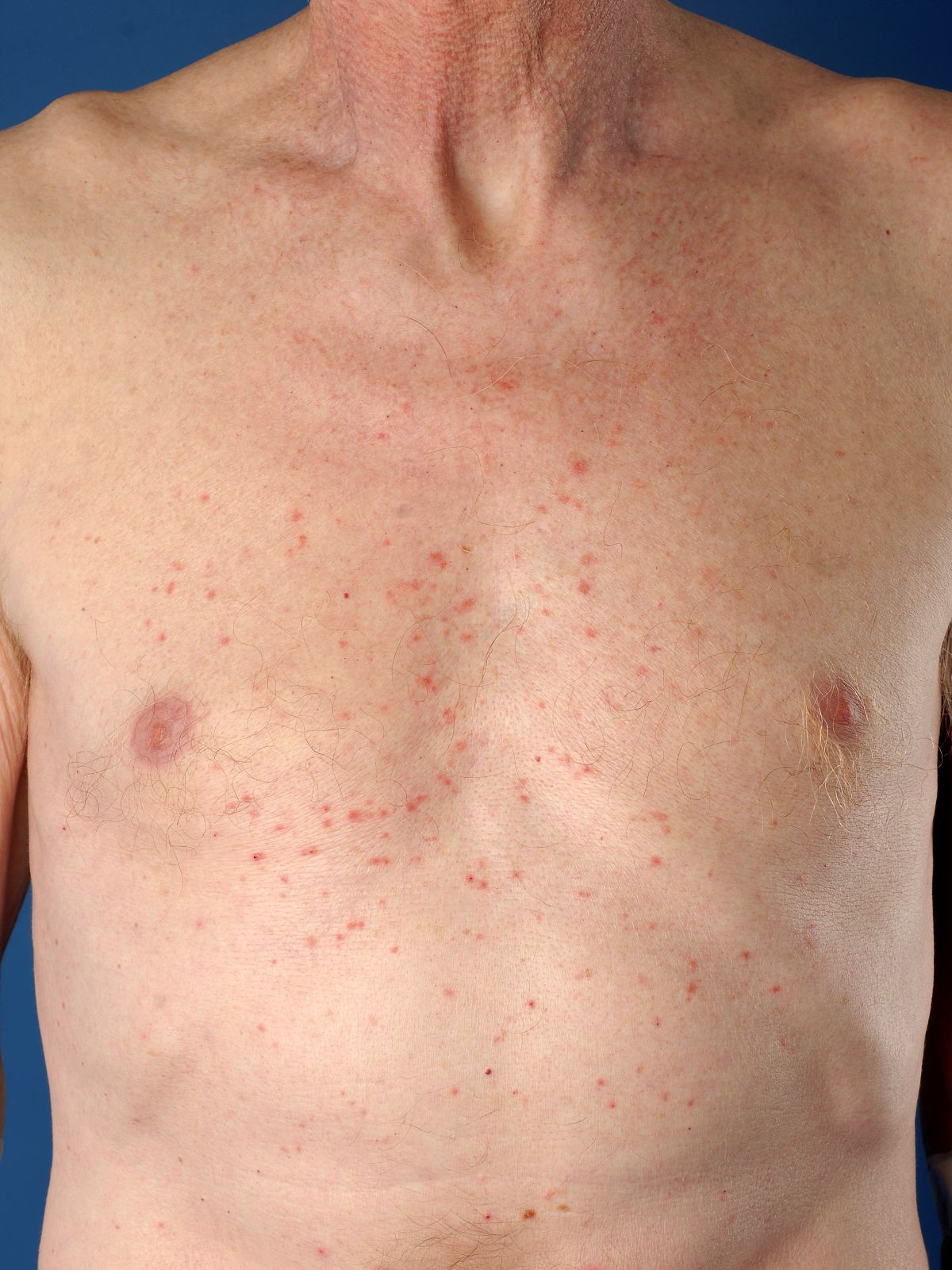
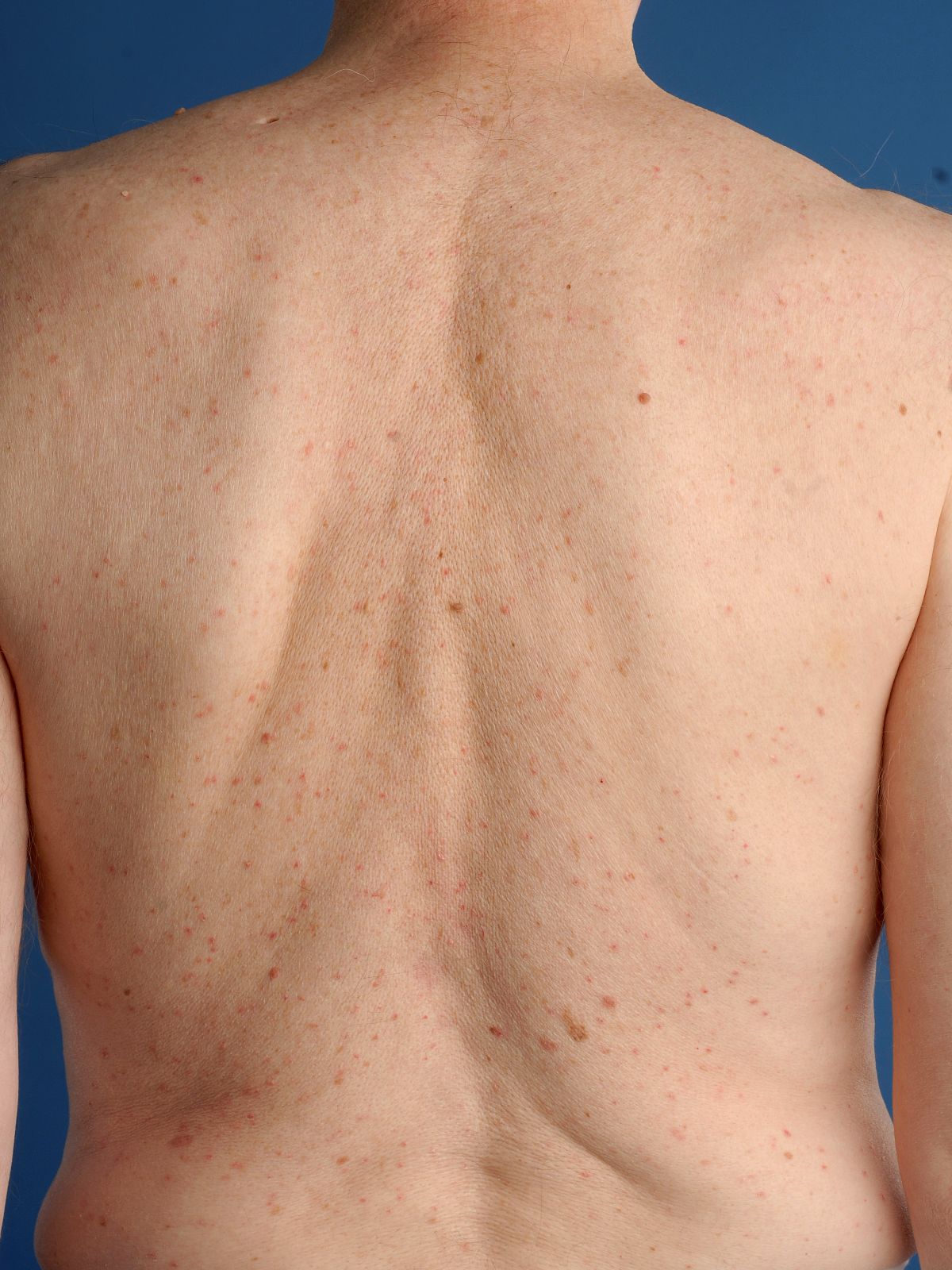
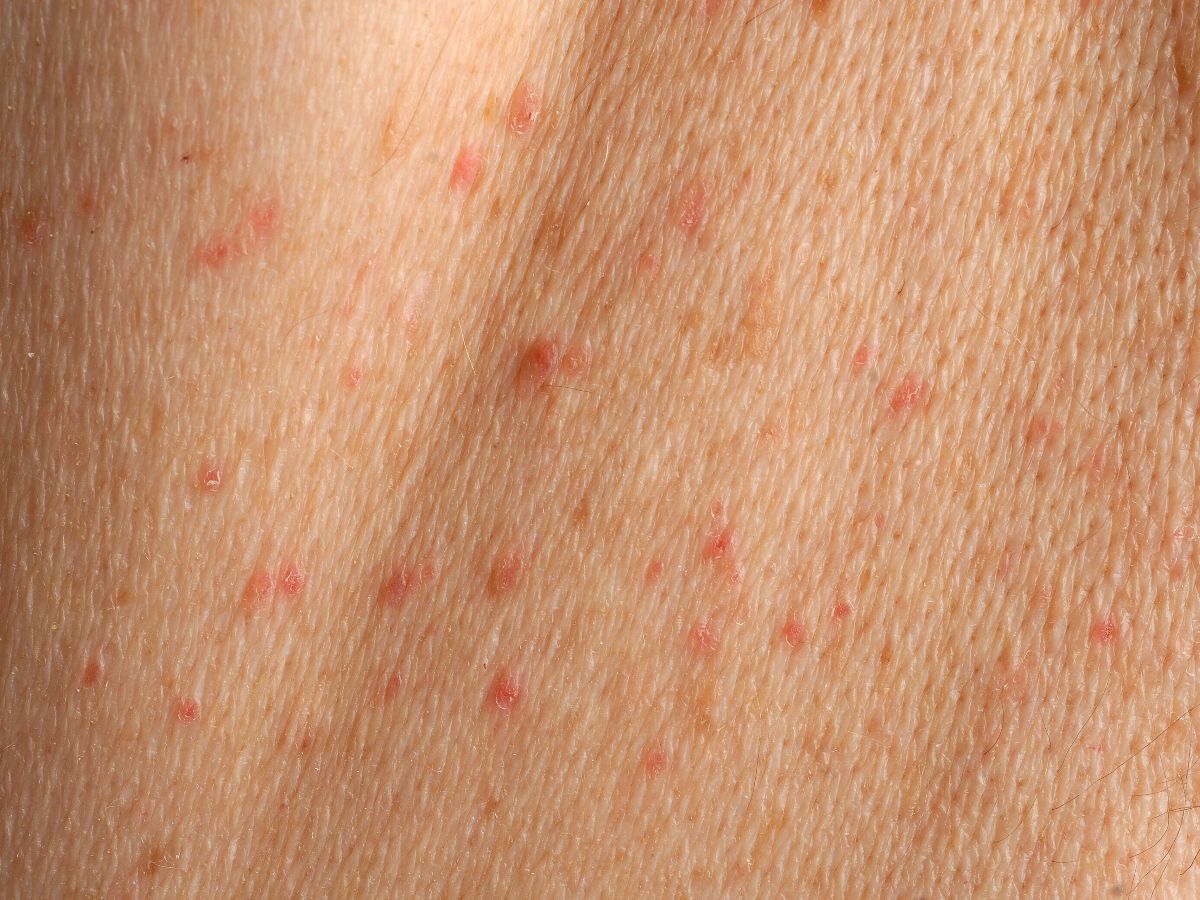
WHAT IS GROVER'S DISEASE?Grover's disease is an itchy skin condition in which numerous small, intensely itchy bumps appear on the trunk, particularly on the chest and back, within a short period of time. It occurs primarily in white men over 40, but women and younger people can also develop it.
Grover's disease was first described in 1970 by Ralph Grover, an American dermatologist, as transient acantholytic dermatosis . Since 1977, it has been called Grover's disease or morbus Grover. Transient means passing, which is correct: it usually resolves on its own within a few months. But unfortunately, some patients have it for years. The condition is not rare, but it often goes unrecognized. There are many similar skin conditions.
 |
 |
 |
| Grover's disease |
Grover's disease |
Grover's disease |
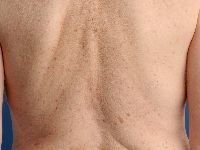
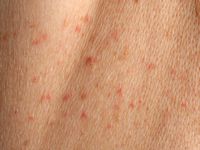
WHAT DOES GROVER'S DISEASE LOOK LIKE?Small, itchy bumps and sometimes blisters appear quickly on the trunk, especially the chest and back. Because of the itching, they are usually scratched quickly, causing sores and scabs. It can also occur on the upper arms or thighs. It occurs primarily in middle-aged to older white men. It is three times more common in men than in women. It is more common in winter than in summer and is not uncommon. The itching can be so severe that it disrupts sleep.WHAT IS THE CAUSE OF GROVER'S DISEASE?The cause is actually unknown. One suggestion is that it's caused by excessive exposure to sun, heat, and sweating. It's also seen in febrile illnesses and prolonged hospitalizations. It's more common in people with dry skin or eczema.HOW IS THE DIAGNOSIS MADE?Grover's disease can be difficult to diagnose; many other skin conditions can mimic it, such as eczema, hives, drug allergies, itchy bumps, scabies, and Darier's disease. Therefore, a skin biopsy is necessary . Based on what can be seen under the microscope (skin cells that are separated from each other), a diagnosis of Grover's disease can be made.
Sometimes blood tests are also performed to detect other underlying causes of itching (e.g., kidney disease, liver disease, or anemia).HOW IS GROVER'S DISEASE TREATED?It can be reduced with supportive measures such as avoiding heat and sweating. Avoid prolonged sun exposure, sauna use, and wear light, polyester-free clothing. Prevent skin dehydration. Various lotions, creams, and ointments are available for dry skin, such as a cooling ointment (unguentum leniens without rose oil FNA).
Other prescribed medications include:
- Topical corticosteroids (creams and ointments).
- Anti-itch lotions containing menthol.
- Dovobet gel (calcipotriol/betamethasone).
- Antihistamine tablets (which can help with the itching).
In severe cases that do not respond to the above medications, isotretinoin or acitretin may be prescribed for several months. Other medications are also available, including prednisone, dapsone, antibiotics such as doxycycline and minocycline, and even methotrexate.
Light therapy (UVB) can also be effective, but it does not always help. It can also be counterproductive. It is a treatment that can be tried.WHAT IS THE PROGNOSIS?The course of Grover's disease varies, and there are several variants. The most common form involves the sudden appearance of numerous itchy bumps, which itch so much that they disrupt sleep, but which also disappear within a few weeks. There are also forms with less itching, but with a recurrent appearance of new bumps, which can last for months to years. And there are forms that itch less but are chronic, with bumps, especially under the breasts, resembling pimples.WHAT CAN YOU STILL DO YOURSELF?Avoid heat, excessive exertion, sweating (sauna visits), and excessive sunlight. Wear light clothing, not polyester. Taking cold showers only helps temporarily and dries out the skin. Prevent your skin from drying out by using lotions, creams, or ointments to combat dry skin. |