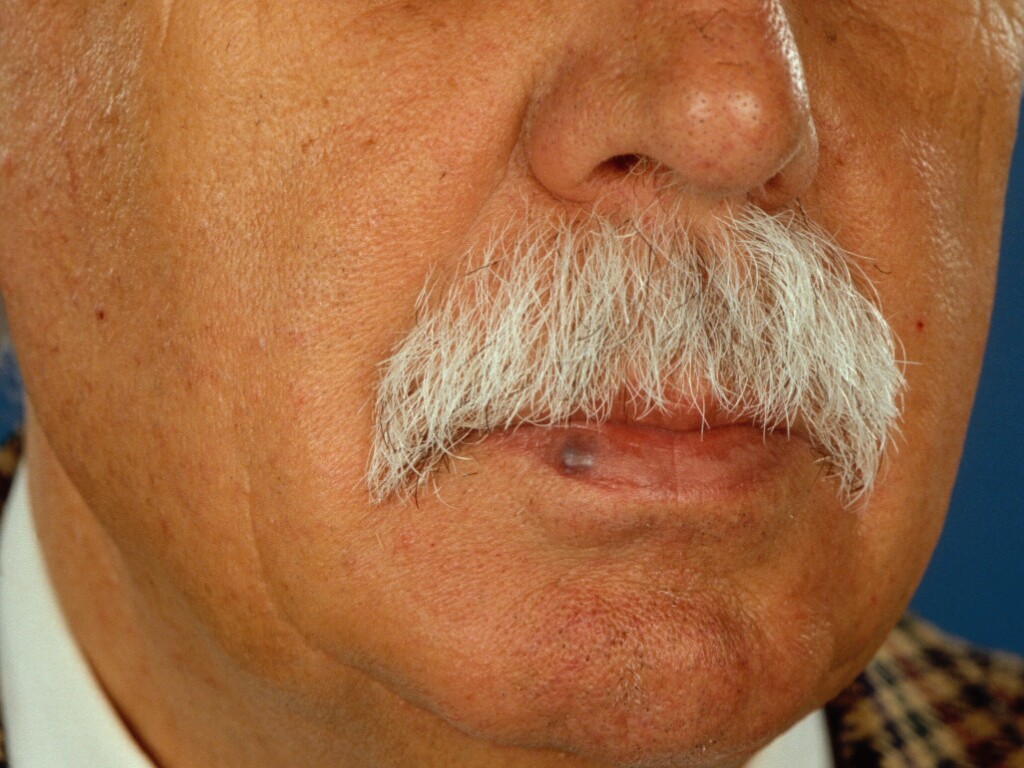
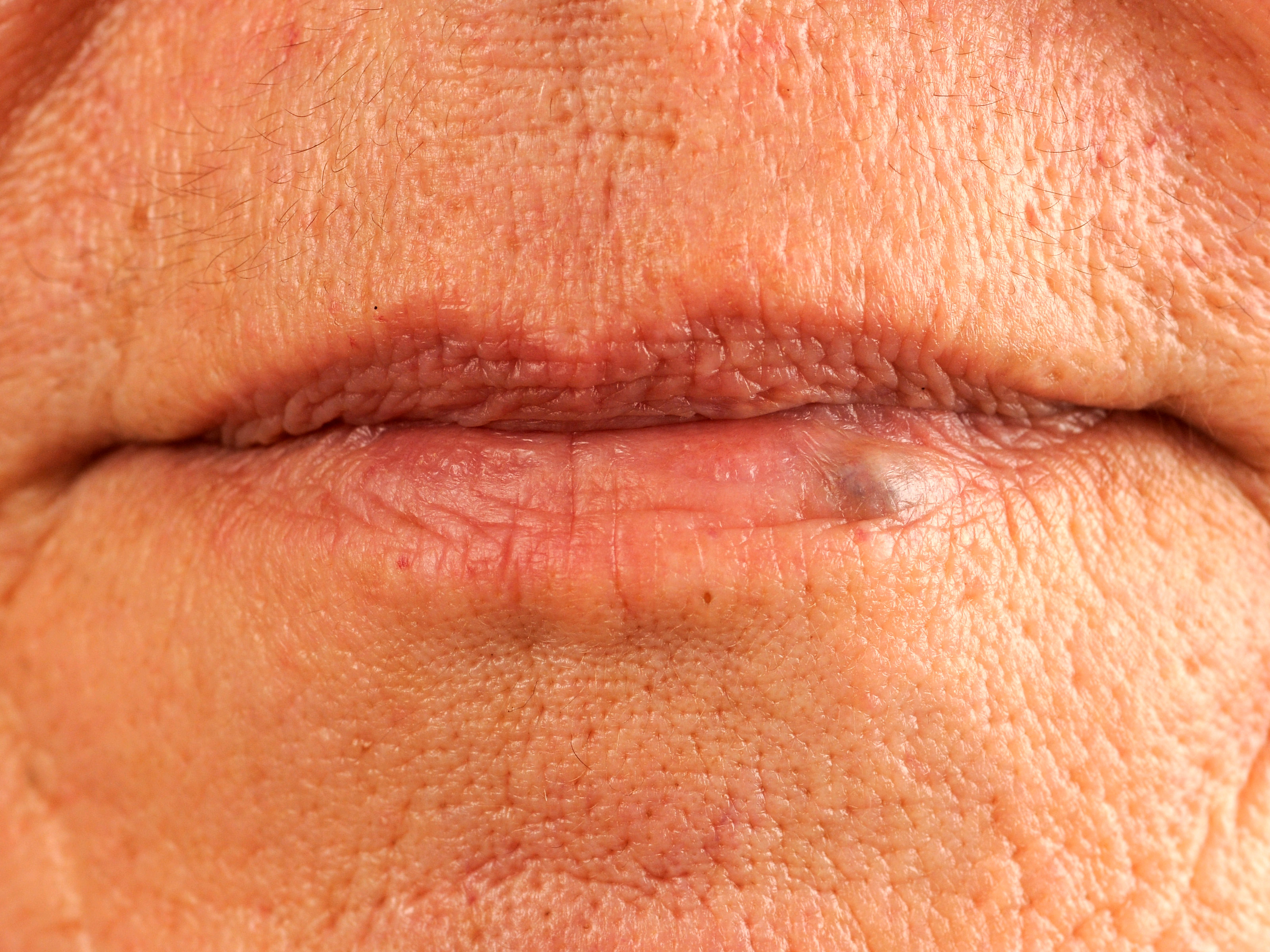
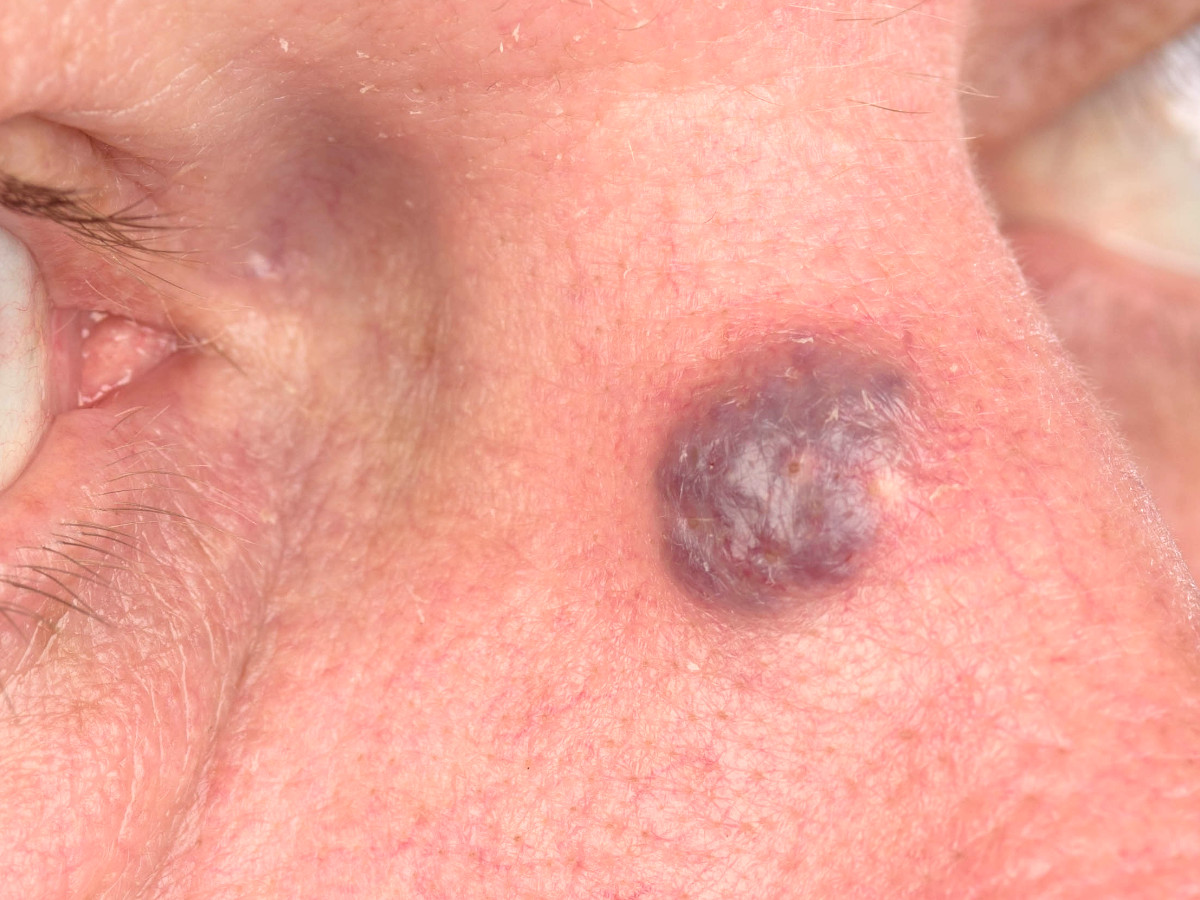
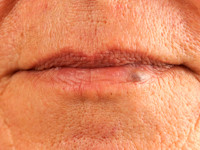
WHAT IS IT?A venous lake is a blood-filled cavity formed by the dilation of a small blood vessel. It is usually found on the lower lip.WHAT DOES IT LOOK LIKE?It's a dark blue, translucent bump, sometimes darker purple or almost black. It can often be deflated, but it will then fill up again. This isn't always successful. They can grow to about 1 cm in size. They're usually found on the lower lip, but they can also appear on the upper edge of the ear or elsewhere on the face.
 |
 |
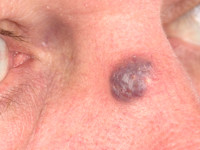 |
| venous lake |
venous lake |
venous lake |
IS IT DANGEROUS?A venous lake is completely harmless and benign. It's common and develops spontaneously. They grow very slowly. If damaged, for example, by being bitten, they can bleed profusely. Otherwise, they rarely cause any problems.HOW DOES IT COME ABOUT?A venous lake is a type of blood blister, a cavity filled with blood. It results from the dilation of blood vessels. It develops spontaneously, usually in areas frequently exposed to the sun, such as the lower lip or the edges of the ear. It is thought to be caused by a weakening of the connective tissue surrounding the blood vessels. Prolonged sun exposure weakens the connective tissue, particularly the loss of elastic fibers (elastin). This also causes wrinkles.WHO CAN GET IT?A venous lake develops in old age (over 50, on average around 65). Anyone can get it. It's more common in men than women. It's especially common in people who have had a lot of sun exposure during their lives.HOW IS THE DIAGNOSIS MADE?The diagnosis is made based on the image. The dermatologist can examine it with a dermatoscope (a lighted magnifying glass); this makes it easy to see a blood-filled cavity beneath the skin. Sometimes a biopsy is taken for microscopic examination.HOW IS IT TREATED?There are several methods to remove it, such as burning away, cutting away, freezing, and treatment with various lasers.Electrocoagulation:The area is anesthetized locally. An electrically heated pellet is used to cauterize or burn it away completely. A small wound the size of the blood blister is created, the bleeding base of which is cauterized. A scab will later form. The wound will heal over the scab within a few weeks.Cut away:Small venous lakes can be removed entirely with a punch, after which the wound is sutured.Laser:There are several types of lasers that can cauterize a venous lake. Large venous lakes can be difficult to remove and require multiple treatments. Lasers and other devices suitable for removing a venous lake include the pulsed dye laser, CO2 laser, argon laser, copper vapor laser, KTP laser, Nd:YAG laser, 810-nm diode laser, infrared coagulation, and intense pulsed light (IPL).WHAT ARE THE OUTLOOK?Those are good. Once removed, they won't come back. |