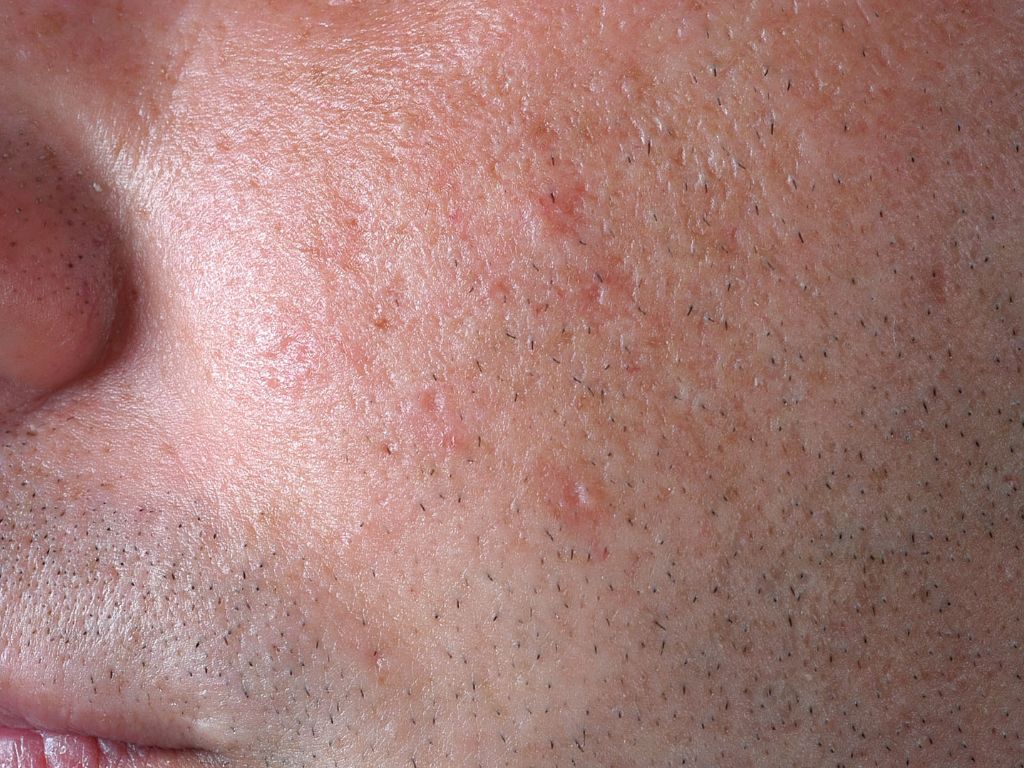
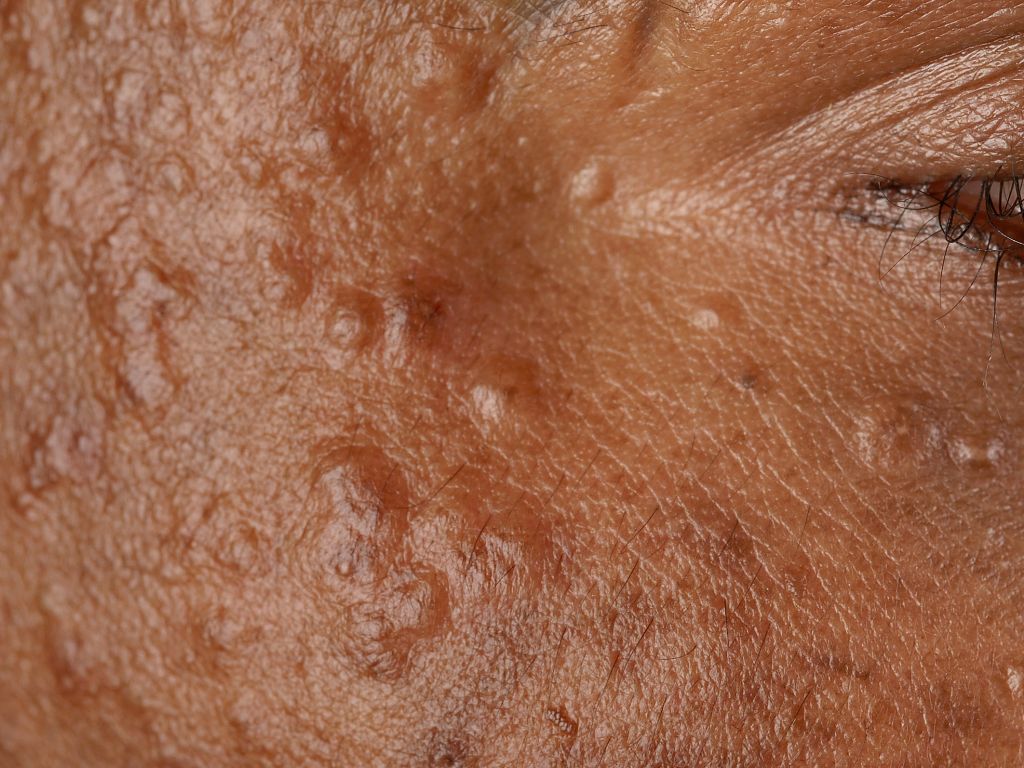
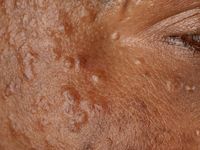
WHAT ARE SYRINGOMAS?Syringomas are benign, skin-colored or translucent bumps that develop from a sweat gland duct. They are most commonly found on the face, especially around the eyes. The name comes from the Greek word syrinx , meaning tube. They usually develop around puberty, more often in women than in men.
 |
 |
 |
| syringomas |
syringomas |
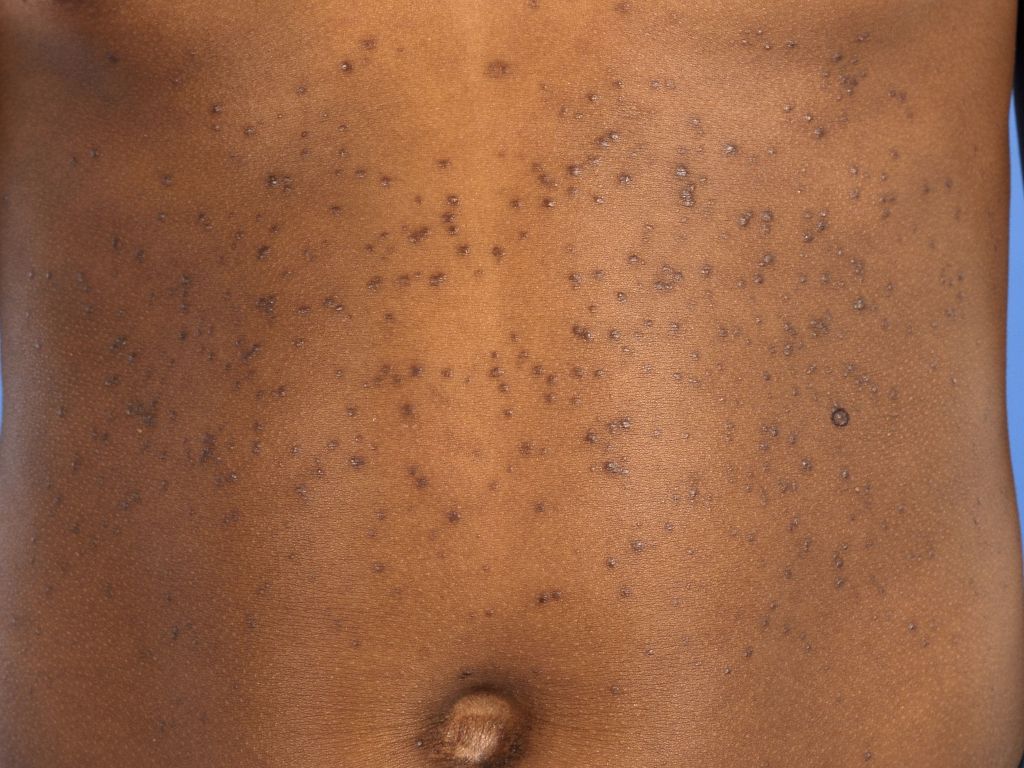
eruptive syringomas |
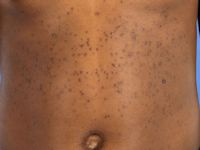
WHAT DO SYRINGOMAS LOOK LIKE?Syringomas are small, skin-colored or transparent, glassy bumps, a few millimeters in size, and they are primarily found on the face. They are usually under the eyes, or on the upper cheeks, or on the lower eyelid. They can also appear elsewhere, such as on the abdomen, under the armpits, or in the genital area. There can be just a few or many. There is also a variant in which many develop simultaneously in a short period of time. This is called eruptive syringomas (eruptive = an outbreak of syringomas). Eruptive syringomas usually develop during puberty and are primarily found on the abdomen. Syringomas are cosmetically unsightly, but otherwise cause no symptoms. They are also not dangerous; a syringoma does not develop into a malignant tumor.HOW DO SYRINGOMAS DEVELOP?The cause of syringomas is unknown. The tubular portions of the sweat glands grow, but the reason for this is unknown. It is suspected that they are triggered by hormones. This is supported by the fact that they increase during puberty and are more common in women. Syringomas can also run in families, so there is a hereditary factor.HOW IS THE DIAGNOSIS MADE?Typically, a biopsy is taken from one of the syringomas. This is sent to the pathology lab, where the pathologist can then see under a microscope that it is a benign tumor originating from a sweat gland. A biopsy is necessary because other benign bumps also occur on the face, and it's not always easy to tell which type it is from the outside.HOW ARE SYRINGOMAS TREATED?Syringomas are difficult to treat because they can be numerous and, after removal, new ones can develop elsewhere. Syringomas can be burned away with a laser (CO2 laser, Erbium YAG laser, or fractional laser). They can also be burned away electrically (electrocoagulation with a fine needle) or frozen with liquid nitrogen. If there are only a few, they can also be surgically removed, using the same "apple corer" (biopsy punch) used for skin biopsies. This leaves round holes that must heal from the edges.
These treatments aim to destroy the syringoma, but they also damage the epidermis (the syringoma lies beneath the skin) and can therefore leave scars. Syringomas can also grow back in the same spot or in different areas. In pigmented skin, color variations can occur.WHAT CAN YOU DO ABOUT SYRINGOMAS?There's nothing you can do about this yourself; there are no things that influence the development of syringomas. There are no known medications that can slow their progression. The bumps can be camouflaged with makeup.WHAT ARE THE OUTLOOK?Syringomas are not dangerous, only cosmetically disturbing. They don't go away on their own, but they can be treated (mostly) with a CO2 laser or other techniques. A syringoma cannot lead to skin cancer. |