WHAT IS SWEET SYNDROME?Sweet syndrome , named after the English physician Sweet who first described it in 1964, is a skin condition in which red or purplish-red, raised, sometimes blister-like patches appear on the upper trunk, the arms, and often also on the face, in a short period of time.
Another name for Sweet syndrome is acute febrile neutrophilic dermatosis . Acute because it develops suddenly, febrile (febris = fever) because it is often accompanied by fever, and neutrophilic because there is an increase in white blood cells (also called neutrophil granulocytes) in the blood or in the patches. Sweet syndrome can be a manifestation of an underlying internal disorder. This is estimated to be the case in 10-20% of patients. However, Sweet syndrome usually develops spontaneously, without an underlying cause.
 |
 |
| Sweet's syndrome |
Sweet's syndrome |
 |
 |
| Sweet's syndrome |
Sweet's syndrome |
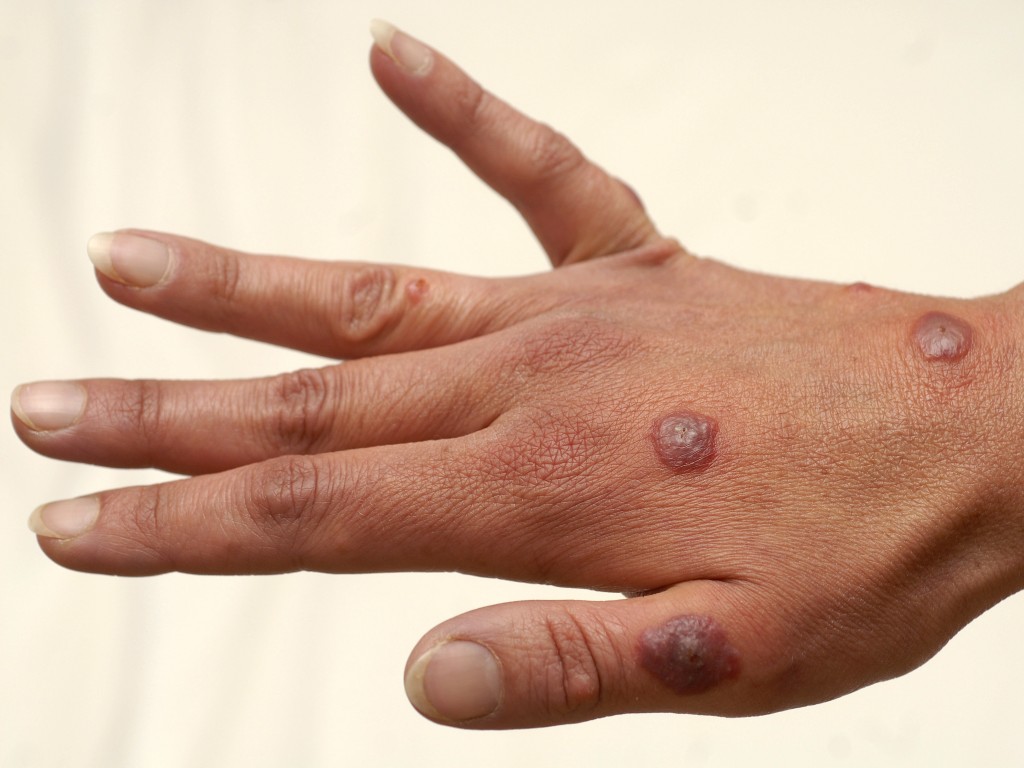
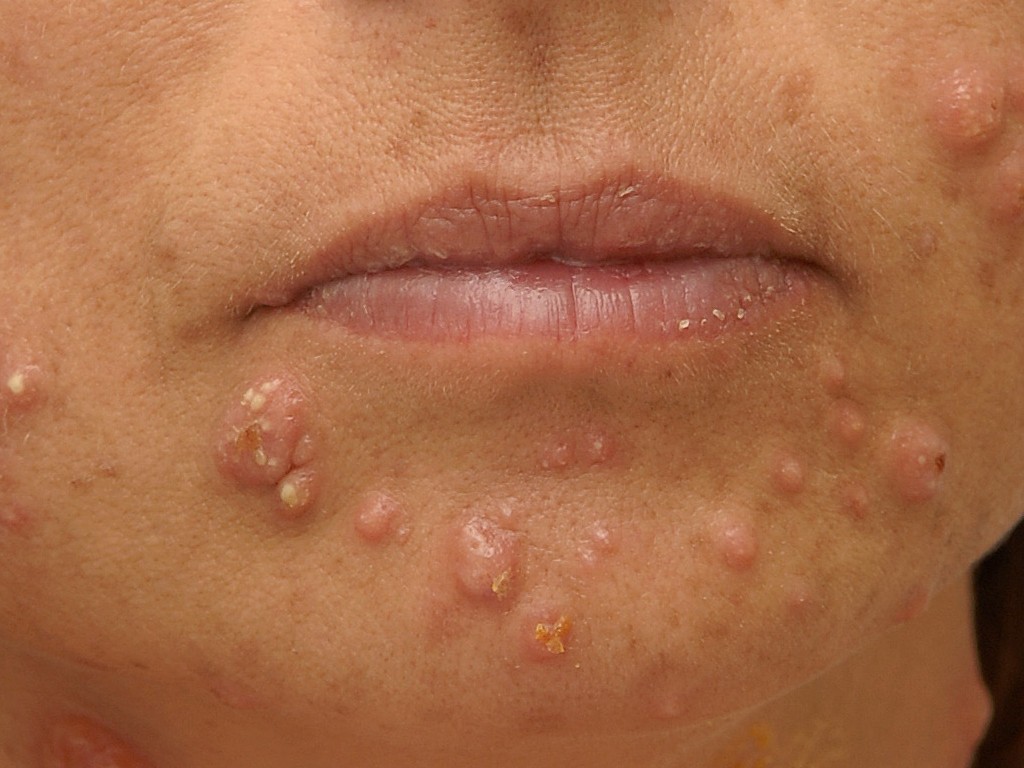
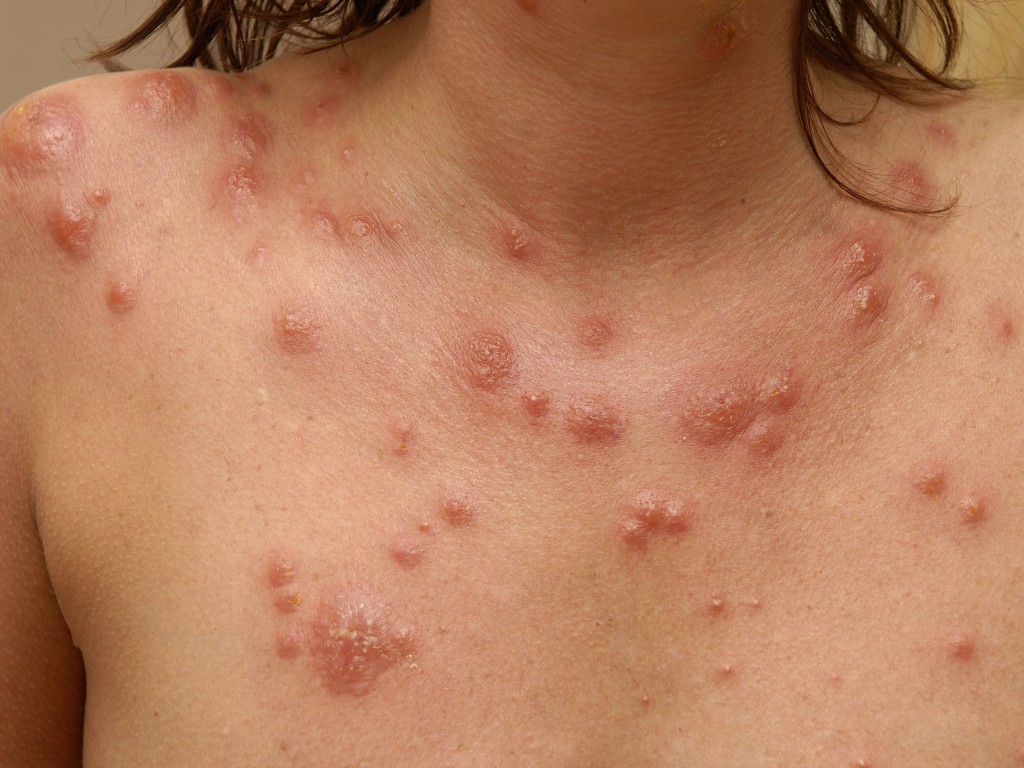
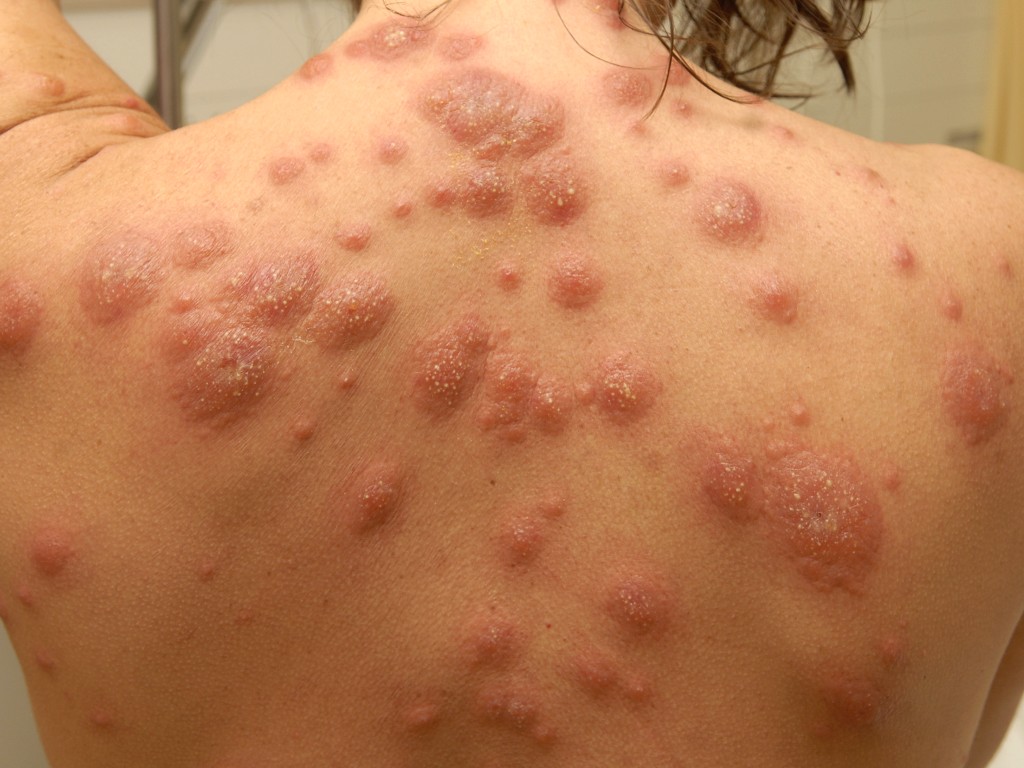
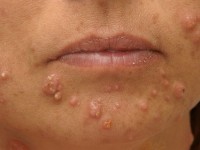
WHAT DOES SWEET SYNDROME LOOK LIKE?With Sweet syndrome, painful red or purple-red raised spots develop rapidly and gradually enlarge at the edges. They are primarily found on the upper torso, chest, or back, as well as on the face or neck and arms and legs. Sometimes they appear to have blisters or vesicles, due to the high level of inflammatory fluid in the skin. Sweet syndrome is not contagious. The spots increase in number and size over a period of days to weeks and then disappear again within 6-8 weeks, leaving no scars. However, some color variations may remain. The spots can disappear very quickly when prednisone is started. Sweet syndrome occurs most frequently between the ages of 35 and 55 and more often in women than in men (15:1). It is rare in children.
In addition to the skin lesions, other symptoms may also be present. Approximately 40-80% of patients with Sweet syndrome have a fever. This fever is present for days or weeks beforehand and can persist throughout the entire course of the illness. Other symptoms may include feeling ill, flu-like, muscle pain, joint pain, headache, neck cramps, eye inflammation, pneumonia, intestinal complaints, and a decline in the functioning of internal organs such as the kidneys, liver and pancreas.WHAT CAUSES SWEET SYNDROME?The red and swollen areas that develop in Sweet syndrome are caused by a sudden accumulation of inflammatory cells (leukocytes) in the skin. This occurs spontaneously (in approximately 70% of cases, no cause can be found) or as a reaction to an internal disease or to medications.
Sweet syndrome (acute febrile neutrophilic dermatosis) can be a reaction to a previous infection , most commonly respiratory or intestinal infections. Internal diseases can also accompany Sweet syndrome. This occurs in inflammatory bowel diseases (ulcerative colitis and Crohn's disease), autoimmune diseases (rheumatoid arthritis, Sjögren's disease, lupus erythematosus, Graves' disease, autoimmune thyroiditis, Behçet's disease, polychondritis, sarcoidosis), blood disorders (benign monoclonal gammopathy, some forms of leukemia), and very rarely in prostate, colon, stomach, or breast cancer. Medications such as tretinoin, trimethoprim-sulfamethoxazole, hydralazine, oral contraceptives, minocycline, carbamazepine, furosemide, nitrofurantoin, and granulocyte colony-stimulating factor can also trigger Sweet syndrome. Sometimes it occurs during pregnancy.HOW IS THE DIAGNOSIS MADE?The diagnosis is made based on the clinical picture, the physical appearance, and by taking a skin biopsy . If the typical skin abnormalities are present and a large number of white blood cells (neutrophils) can be seen under the microscope, the diagnosis of Sweet syndrome is highly likely. If other symptoms are also present, such as feeling ill, fever (not always present), or abnormalities in the blood indicating inflammation (increased erythrocyte sedimentation rate, elevated leukocyte count), this confirms the diagnosis.
If additional symptoms suggest an underlying infection or internal disease, these are also investigated.HOW IS SWEET SYNDROME TREATED?Sweet syndrome is usually treated with prednisone. A common schedule for adults is 40 mg daily for the first week, 30 mg daily for the second week, 20 mg daily for the third week, and 10 mg daily for the fourth week. It may be necessary to use a higher or lower dose, or to stop earlier if things are going well. Sometimes it needs to be given for longer than 4 weeks. Applying a topical corticosteroid ointment or cream also helps somewhat, but not as well as prednisone tablets. Non
-steroidal anti-inflammatory painkillers such as indomethacin, naproxen, or ibuprofen also help with Sweet syndrome.
In addition, many other anti-inflammatory tablets can be prescribed if prednisone causes too many side effects.What is the course of Sweet Syndrome?In most patients, it responds quickly to prednisone, and all symptoms disappear within a few weeks and don't recur. Sometimes it recurs; if so, it's wise to investigate for underlying internal diseases. |