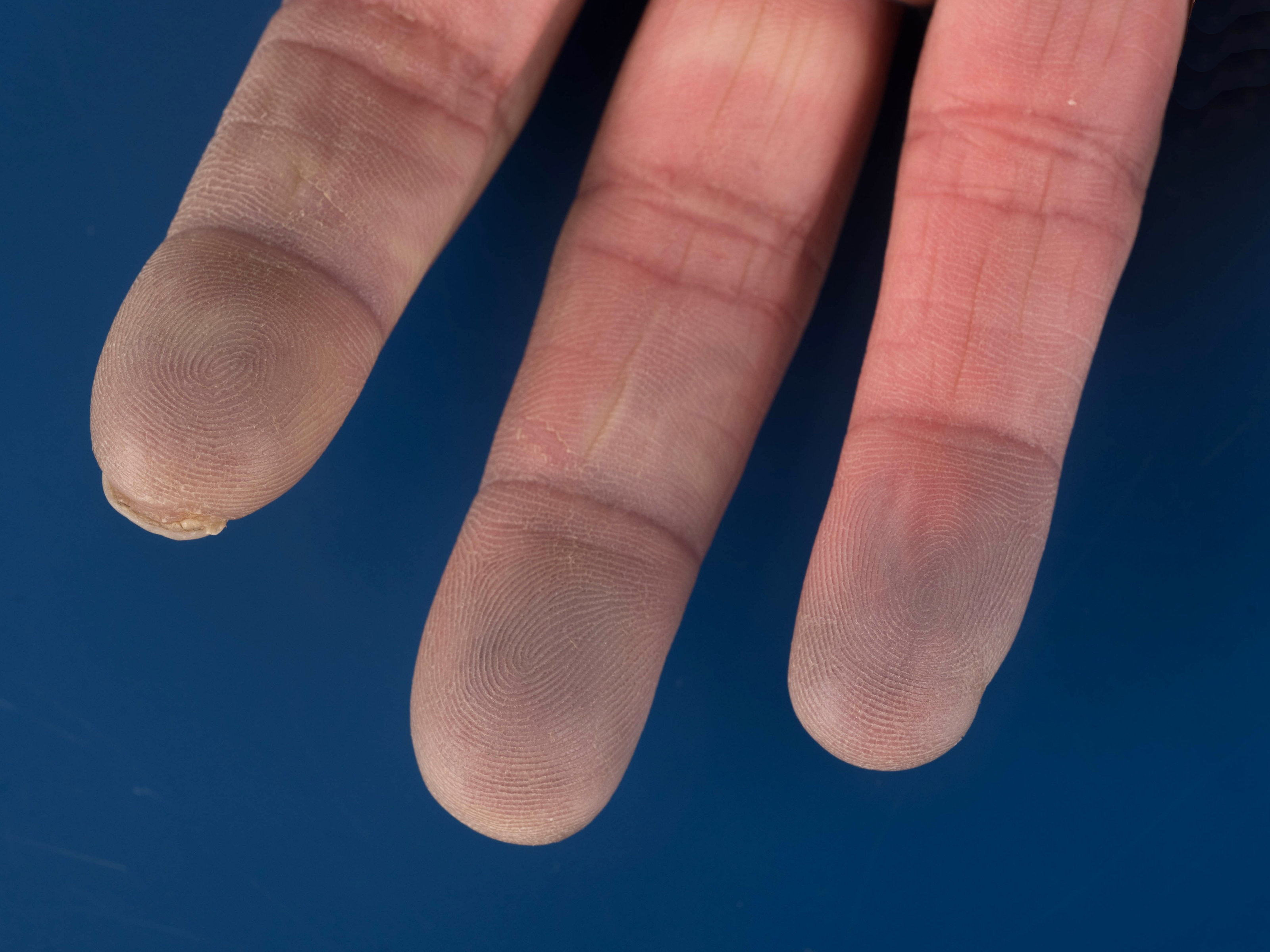
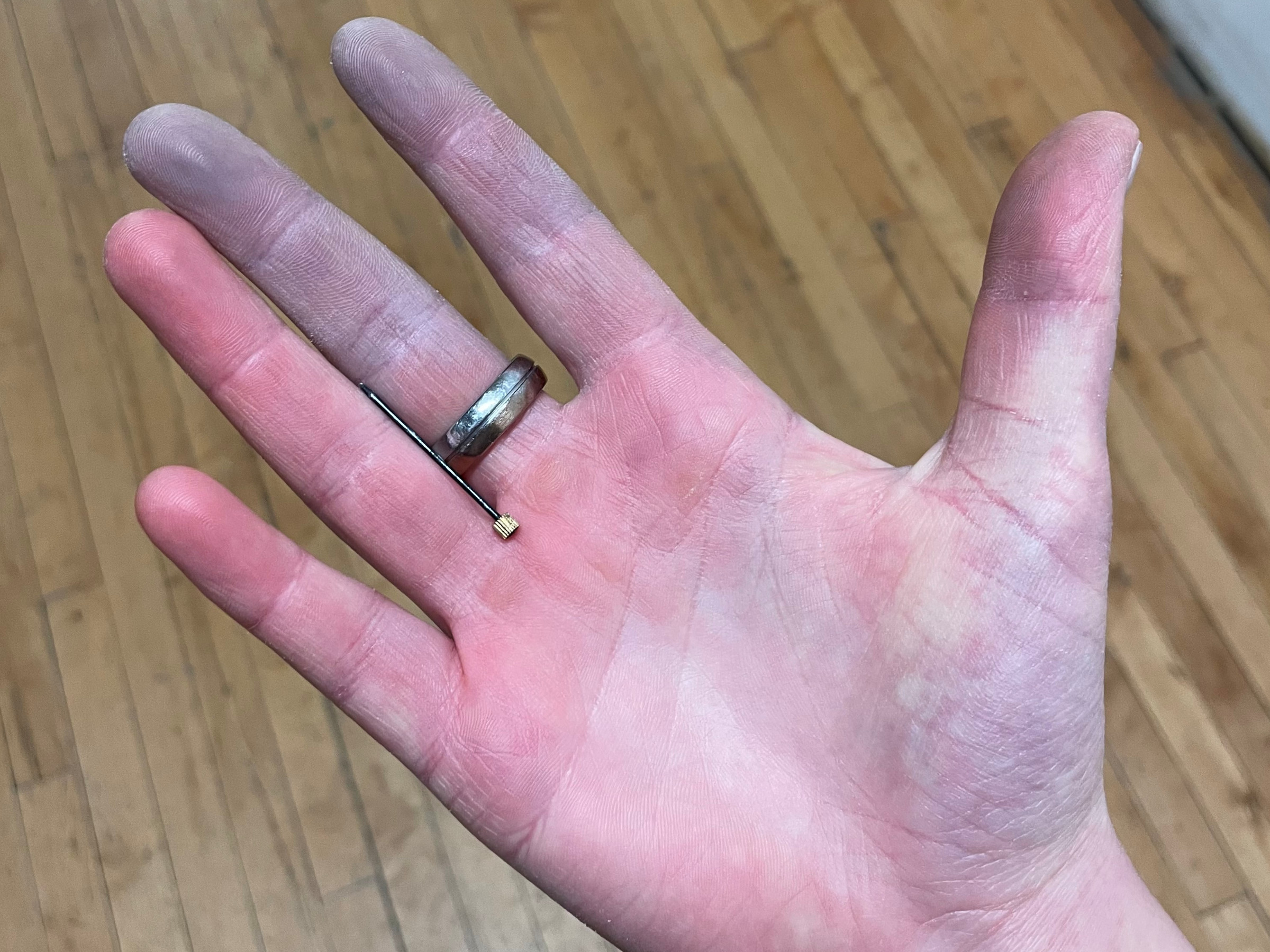
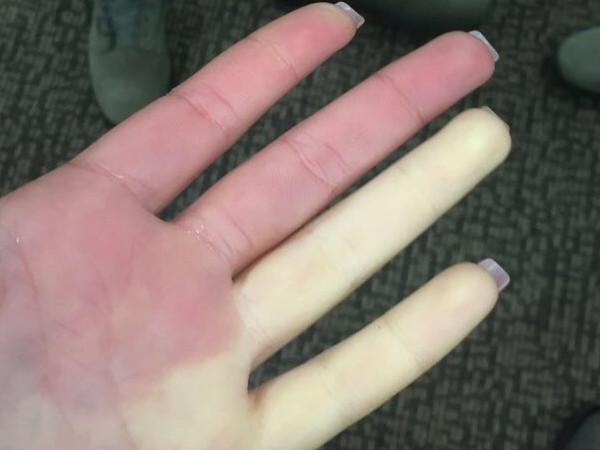
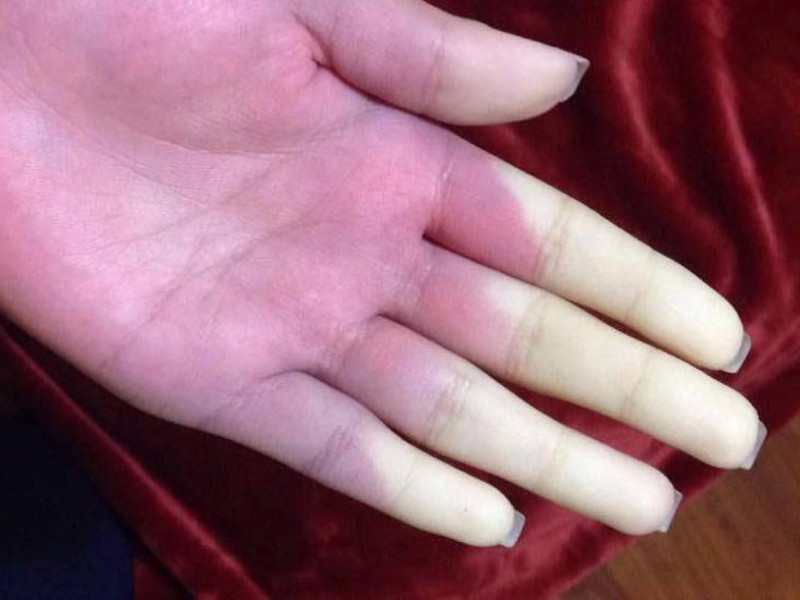
WHAT IS THE RAYNAUD PHENOMENON?Raynaud 's phenomenon is a circulatory disorder in the fingers that occurs after exposure to cold. It can also affect the toes, but it primarily affects the fingertips. Temporarily, there is insufficient blood flow to the fingertips, causing the fingers to appear pale white . The fingers may also be discolored blue . Additional symptoms include cold fingers, numbness, tingling, and pain. It occurs in attacks; once the attack is over, the fingers may temporarily become red .
Besides cold, it can also be triggered by other stimuli such as emotion, vibration (working with electrical equipment, a drill), or heavy typing. The severity varies; sometimes there are only occasional pale fingers and tingling, while other times painful sores develop on the fingers due to severely impaired blood flow.
WHO GETS THE RAYNAUD PHENOMENON?Raynaud's phenomenon is more common in women than in men, especially in young women.WHAT IS THE CAUSE?Raynaud's phenomenon is caused by constriction of the blood vessels in the hand. The walls of the blood vessels that supply the blood flow contain muscle fibers that can constrict or open a vessel. Sometimes a lot of blood needs to flow through the skin, and sometimes not. The amount of blood flowing through the skin, and therefore to the fingertips, is automatically regulated by the body. For example, when it's very hot, more blood flows to the skin to cool the body down. And when it's very cold, the blood vessels constrict. Sometimes this automatic regulation mechanism is disrupted, and the blood vessels to the fingers become constricted too much. This is when Raynaud's phenomenon occurs.
Usually, no cause is found for this phenomenon. In that case, it is also called primary Raynaud's phenomenon . Primary Raynaud's phenomenon can also occur at a young age, in children and adolescents. If it begins before puberty, it usually resolves on its own after a few years. If it begins after puberty, it resolves spontaneously in only about 10% of cases, improves in 40%, and remains chronic in about half of cases.
Sometimes a cause is found for Raynaud's phenomenon. Raynaud's phenomenon can result from diseases that damage the blood vessels. If Raynaud's phenomenon is caused by an underlying disease, it is called secondary Raynaud's phenomenon . In secondary Raynaud's phenomenon, the underlying disease must be identified and treated.WHICH DISEASES CAN CAUSE SECONDARY RAYNAUD'S PHENOMENON?connective tissue diseasesSecondary Raynaud's phenomenon can develop in connective tissue diseases, also known as autoimmune diseases, such as rheumatoid arthritis, scleroderma, CREST syndrome, systemic lupus erythematosus (SLE), Sjögren's syndrome, mixed connective tissue disease, polydermatomyositis, and MCTD overlap syndromes. All of these connective tissue diseases cause small lesions in the blood vessel wall, triggering Raynaud's phenomenon.vasculitisVasculitis occurs when inflammation damages the blood vessel wall. Vasculitis can trigger Raynaud's phenomenon. There are many different types of vasculitis (see vasculitis for more information ).blood disorders in which the blood becomes thick (viscous)The blood can be too thick and therefore difficult to flow. This is called hyperviscosity (sticky blood). This occurs, for example, when there are too many red blood cells (polycythemia) or when there are many abnormal proteins in the blood, as can occur with some internal diseases.arteriosclerosisArteriosclerosis and smoking can also cause damage to blood vessels. Smoking is particularly harmful if you have Raynaud's phenomenon. The nicotine in cigarettes causes vasoconstriction. This happens immediately; after just one inhalation of cigarette smoke, the blood vessels in your fingers become constricted.medicinesMedications can also trigger or worsen Raynaud's phenomenon. Some medications directly affect the blood vessel wall and cause vasoconstriction at the fingertips, such as beta-blockers, anti-migraine agents (ergotamine, methysergide), clonidine, imipramine, and bromocriptine. Medications can also damage the blood vessel wall, as occurs, for example, during chemotherapy (bleomycin, vinblastine).CONDITIONS THAT RESEMBLE RAYNAUD'S PHENOMENON BUT ARE NOT- Chilblains ( perniones ). Permanent red or bluish discoloration and swelling, due to cold.
- Blue hands and toes (acrocyanosis). Permanent blue or purple discoloration. Can be a side effect of medications such as beta-blockers, also occurs in autoimmune diseases and vascular abnormalities.
- Compression of nerves or blood vessels. Raynaud's phenomenon is symmetrical and occurs in both hands simultaneously. If it affects only one side, then vessels or nerves may be compressed, causing impaired blood flow or tingling. For example, vessels and nerves can become compressed in the armpit (thoracic outlet syndrome) or at the wrist ( carpal tunnel syndrome ).WHAT INVESTIGATIONS SHOULD BE DONE FOR RAYNAUD PHENOMENON?Typically, a preliminary blood test is performed, which examines hemoglobin levels, signs of inflammation (general blood count, erythrocyte sedimentation rate), liver and kidney function, and signs of connective tissue diseases (autoimmune diseases). Autoimmune diseases can be detected with special blood tests that look for antibodies in the blood.
It is also important to inform your doctor if you have any symptoms that could be associated with autoimmune diseases, such as joint pain, muscle weakness, dry mouth and eyes, rashes and skin changes, fever, difficulty swallowing, shortness of breath, fatigue, or a general feeling of being unwell.HOW IS RAYNAUD'S PHENOMENON TREATED?The first step in treatment consists of things you can do yourself: stop smoking if you do, and always keep your hands warm. Buy good-quality gloves and thick socks and wear them at all times. A variety of special gloves are available for Raynaud's patients, including electrically heated gloves and ski boots. Avoid the cold, ensure your home is warm and dry. Avoid contact with vibrating tools and avoid overexerting your hands. Stop taking medications that have a negative effect, such as beta-blockers and migraine medications. Ensure any wounds or sores are treated properly, consult your doctor, and prevent wounds from becoming infected.
The second step, if necessary, consists of treatments that increase the blood vessels in your fingers.VASODIGANTSVasodilators are effective in approximately half of patients. Examples include:
- Calcium antagonists (nifedipine, amlodipine, diltiazem).
- Other vasodilators (doxazoline, ketanserin, captopril).
- Prostaglandins. These agents are administered intravenously during hospitalization.
They are only used for severe forms of Raynaud's phenomenon with wounds to the
fingertips.INTERVENTIONS BY THE ANESTHESISTThe anesthesiologist can sometimes use injections to block a nerve, preventing the automatic constriction of the blood vessels in response to cold. The nerves causing the blood vessel constriction can also be severed (sympathectomy). This is quite drastic, and its effectiveness is uncertain.WHAT CAN I DO IF I HAVE AN EFFECT?Warm your hands, but not too quickly (don't hold them against a hot radiator). It's best to warm them gradually in a bowl of lukewarm water. Use painkillers if necessary.WHAT ARE THE OUTLOOK?The prognosis varies widely and is difficult to predict. Primary Raynaud's phenomenon that develops at a young age, under 18, usually resolves spontaneously. If it develops later in life, over 35, it is chronic in about half of the cases. With secondary Raynaud's phenomenon, the outcome depends heavily on the underlying disease and whether it can be treated. Approximately 13% of patients with secondary Raynaud's phenomenon develop damage (wounds) to the fingers. With secondary Raynaud's phenomenon caused by connective tissue diseases, a finger can sometimes be damaged to the point that a tip or phalanx needs to be amputated. This occurs in less than 1% of cases. For some connective tissue diseases, such as scleroderma, new medications have become available, such as Tracleer (bosentan), which can prevent the development of wounds on the fingertips. |