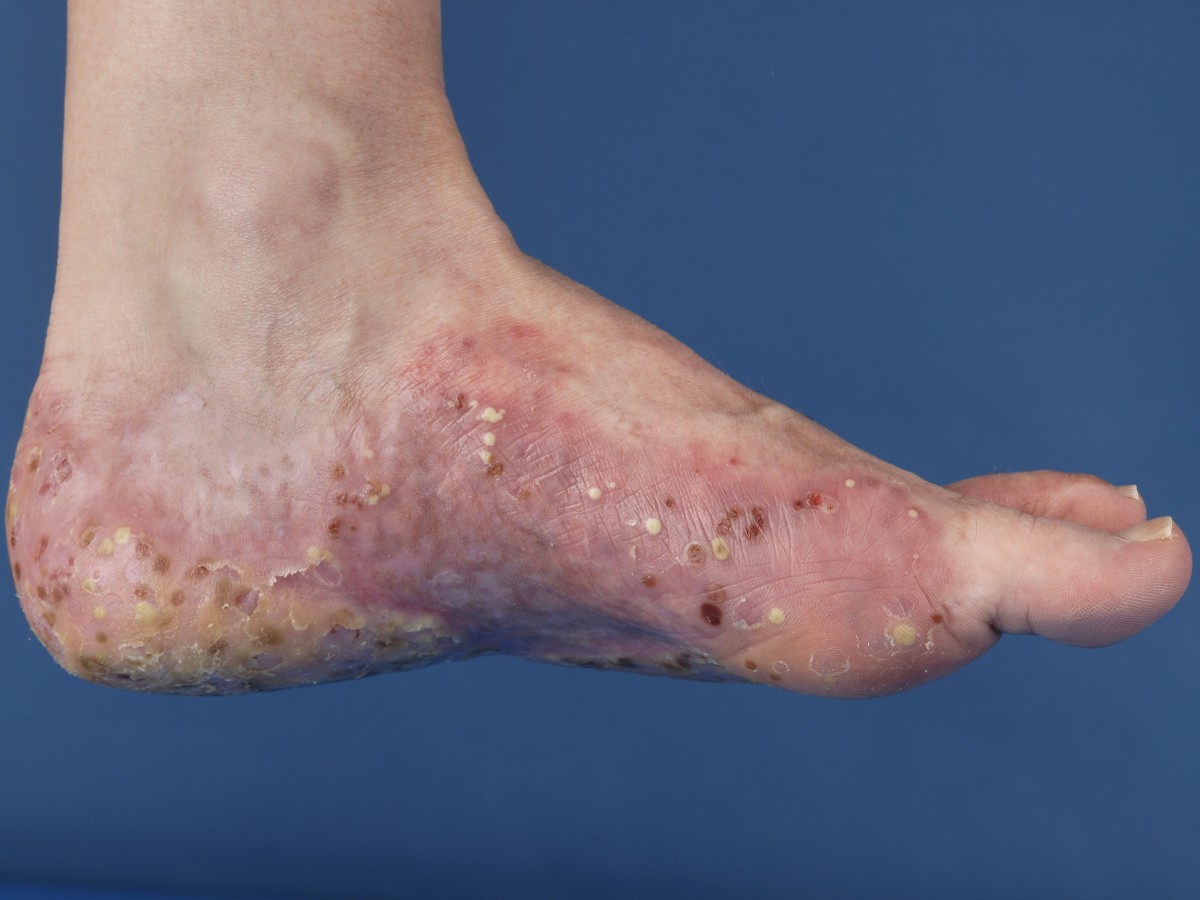
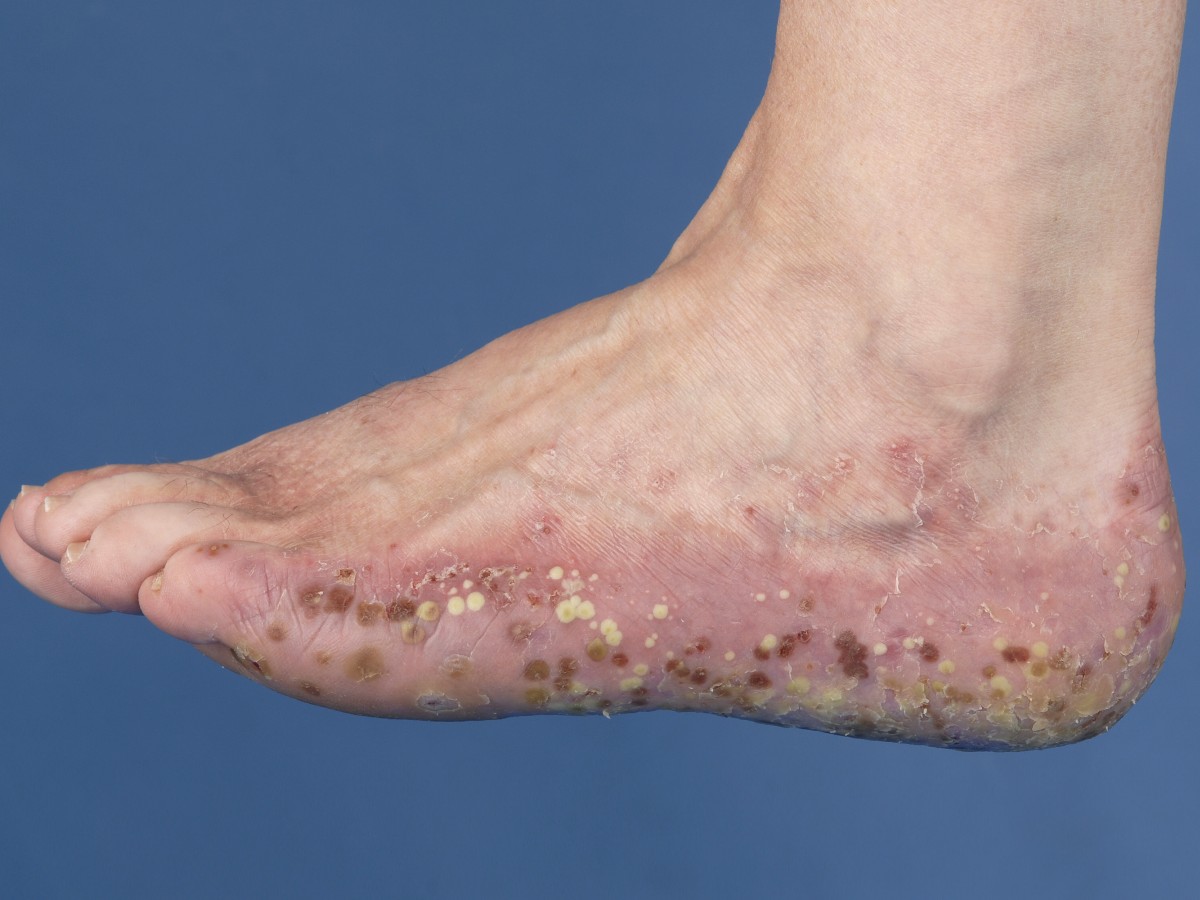
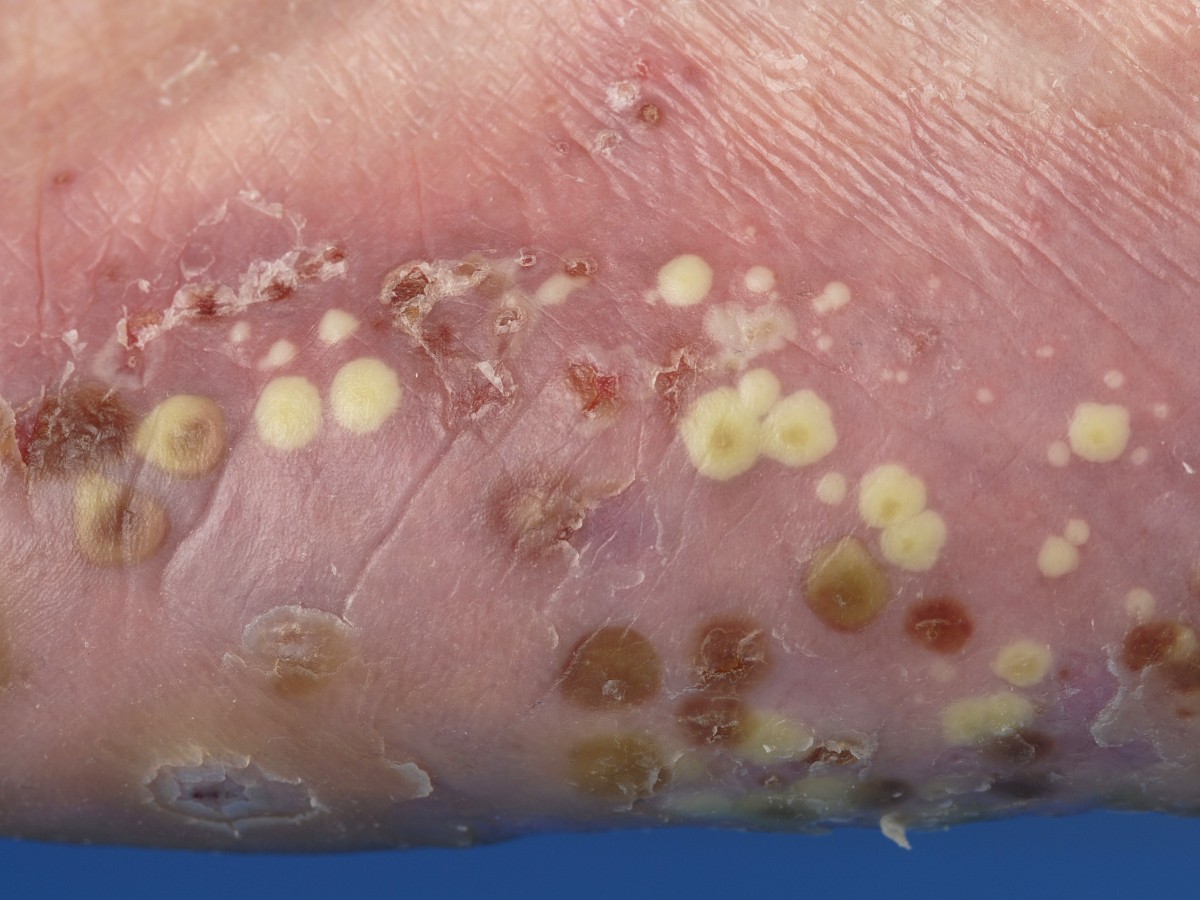
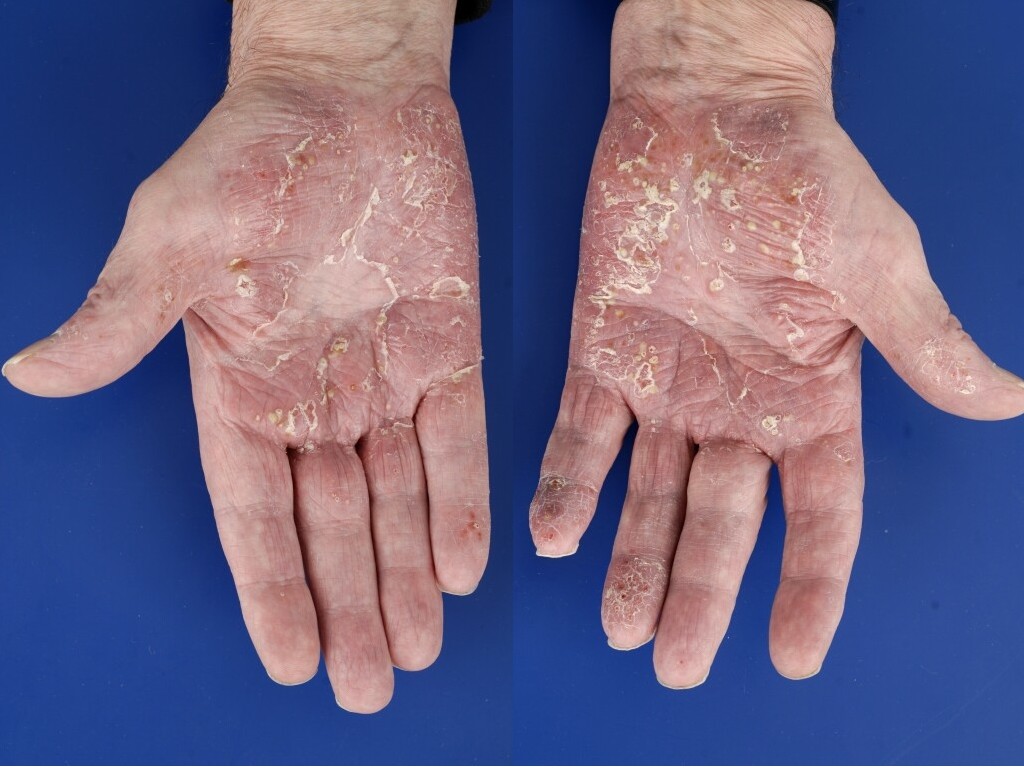
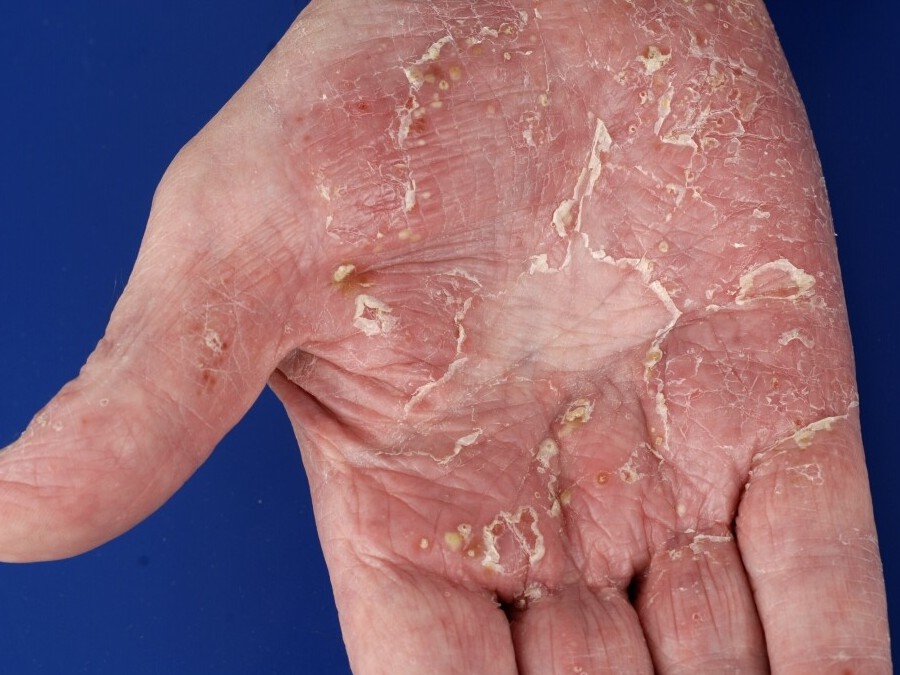
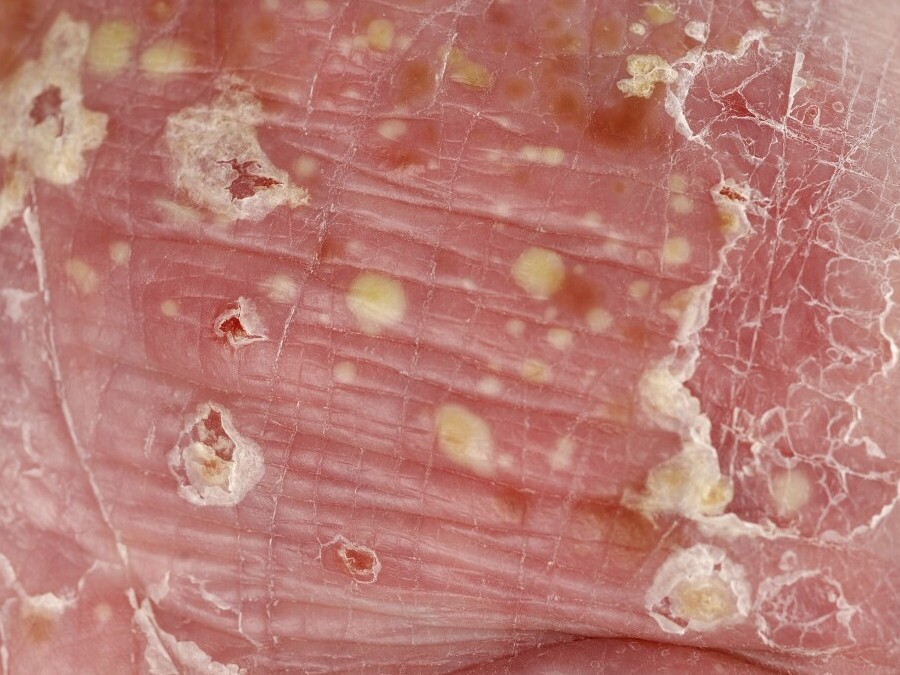
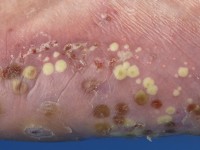
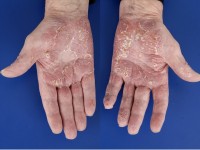
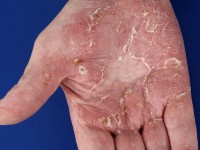
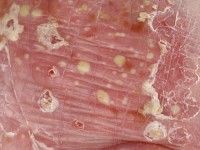
WHAT IS PALMOPLANTARIS PUSTULOSIS?Pustulosis palmoplantarisAndrews-Barber disease ( Andrews-Barber disease ) is a rare skin condition in which pustules develop on the soles of the feet and palms of the hands. These pustules , or pustules, are not caused by an infection. They contain no bacteria; the contents are sterile. The pustules are filled with white blood cells (leukocytes). The skin is also red and flaky, peeling, and can develop painful cracks. The condition is somewhat similar to psoriasis , but it is a different skin condition. Interestingly, it occurs primarily in smokers .
 |
 |
 |
| palmoplantar pustulosis |
palmoplantar pustulosis |
palmoplantar pustulosis |
 |
 |
 |
| palmoplantar pustulosis |
palmoplantar pustulosis |
palmoplantar pustulosis |
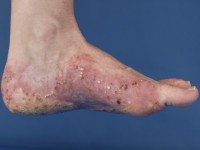
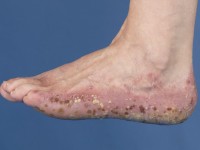
WHAT DOES PUSTULOSIS PALMOPLANTARIS LOOK LIKE?Superficial pustules, 2-5 mm in diameter, develop in attacks on the soles of the feet and/or palms of the hands, usually bilaterally. In 70% of cases, the pustules affect both hands and feet, in 20% only the feet, and in 10% only the hands. The skin is usually red. The pustules dry into a brown crust and leave red, flaky skin with painful cracks. New pustules develop continuously. Itching and pain are the main symptoms. In severe cases, patients may be unable to walk due to the pain.WHO CAN GET PUSTULOSIS PALMOPLANTARIS?In principle, anyone can develop palmoplantar pustulosis, but it occurs primarily in women who smoke , around the age of fifty; 85% of patients are female, and 95% smoke. There is a correlation between the severity of the condition and the number of cigarettes smoked per day. Palmoplantar pustulosis can occur simultaneously with other conditions, such as joint pain, thyroid disease, respiratory infections, lung cancer (also due to smoking), gluten intolerance (celiac disease), psoriasis, depression, and age-related diabetes. Patients with rheumatoid arthritis or psoriasis who have been treated with biologics (drugs with an anti-TNF effect such as infliximab, adalimumab, and etanercept) can also develop palmoplantar pustulosis. This is a rare and unexpected side effect of this group of medications.WHAT IS THE CAUSE OF PUSTULOSIS PALMOPLANTARIS?The cause is unknown. Some think it's a variant of psoriasis, because it can also occur. But it's likely a completely different condition, as it occurs almost exclusively in women who smoke. What happens is that large numbers of white blood cells (leukocytes) migrate from the bloodstream to the skin. They are drawn there by an as-yet-unknown signal. A collection of leukocytes forms in the skin, forming a pustule. Eventually, the pustule ruptures, along with the overlying skin.HOW IS THE DIAGNOSIS MADE?The diagnosis can be made based on the clinical picture, i.e., the appearance. Some skin conditions can mimic the condition, such as bacterial (staphylococcal) or fungal (Candida) infections, eczema with blisters, chronic hand eczema, or psoriasis. A culture or biopsy may be necessary .HOW IS PUSTULOSIS PALMOPLANTARIS TREATED?Palmoplantar pustulosis is a chronic condition that is difficult to treat. A key step in getting rid of it is quitting smoking . However, quitting smoking is very difficult. Your doctor can help.
In addition, ointments and medications can be used to reduce the inflammation.Ointments:- strong local corticosteroids (Diprosalic, Diprosone, Dermovate)
- dithranol ointments
- tar ointments (coal tar solution (LCD) 20% in lanette ointment FNA)
- combination preparationsIn persistent cases, the following treatments are eligible:- light therapy (UVB, PUVA, local (topical) PUVA)
- treatment with medicines such as:
- acitretin, alitretinoin, isotretinoin
- doxycycline, minocycline, tetracycline
- dapsone (diaphenylsulfone)
- methotrexate
- ciclosporin
- biologicals (TNF inhibitors, ustekinumab).WHAT CAN YOU STILL DO YOURSELF?Quit smoking
Avoid stress
Book a sun and sea holiday
Do not peel off skin, do not pickWHAT IS THE PROGNOSIS?Palmoplantar pustulosis is a chronic condition that can persist for years. It progresses in attacks, sometimes with periods of worsening and other times with excellent results. If you manage to quit smoking, the prognosis is much better; after about three months, the condition resolves or improves significantly. |