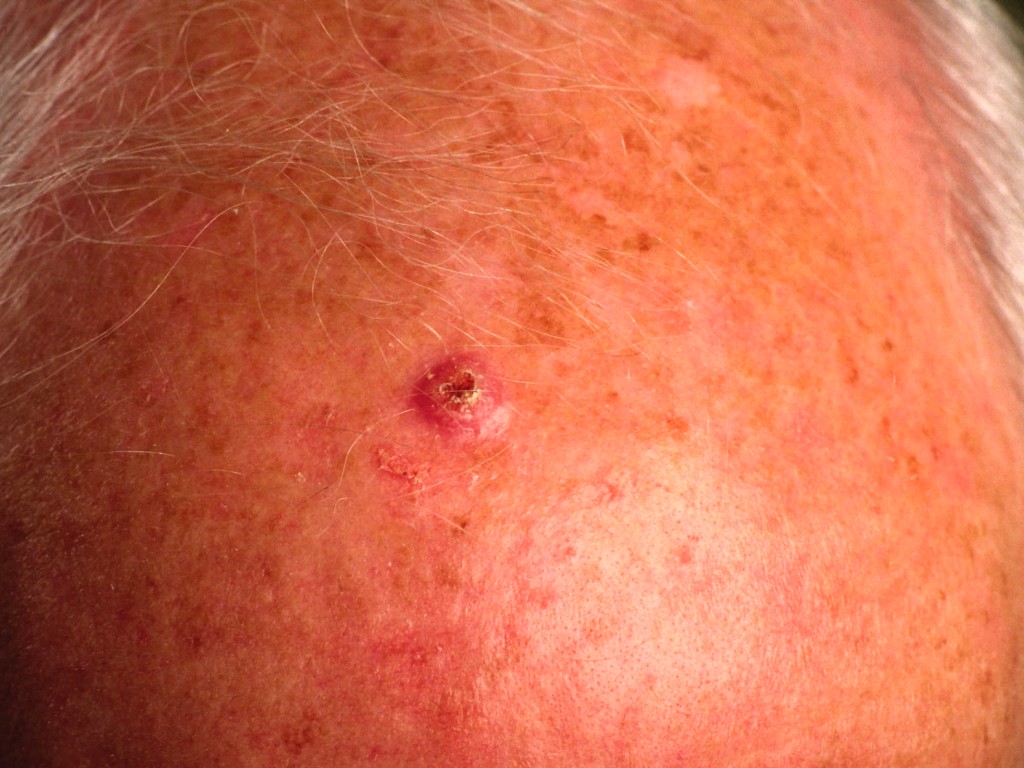
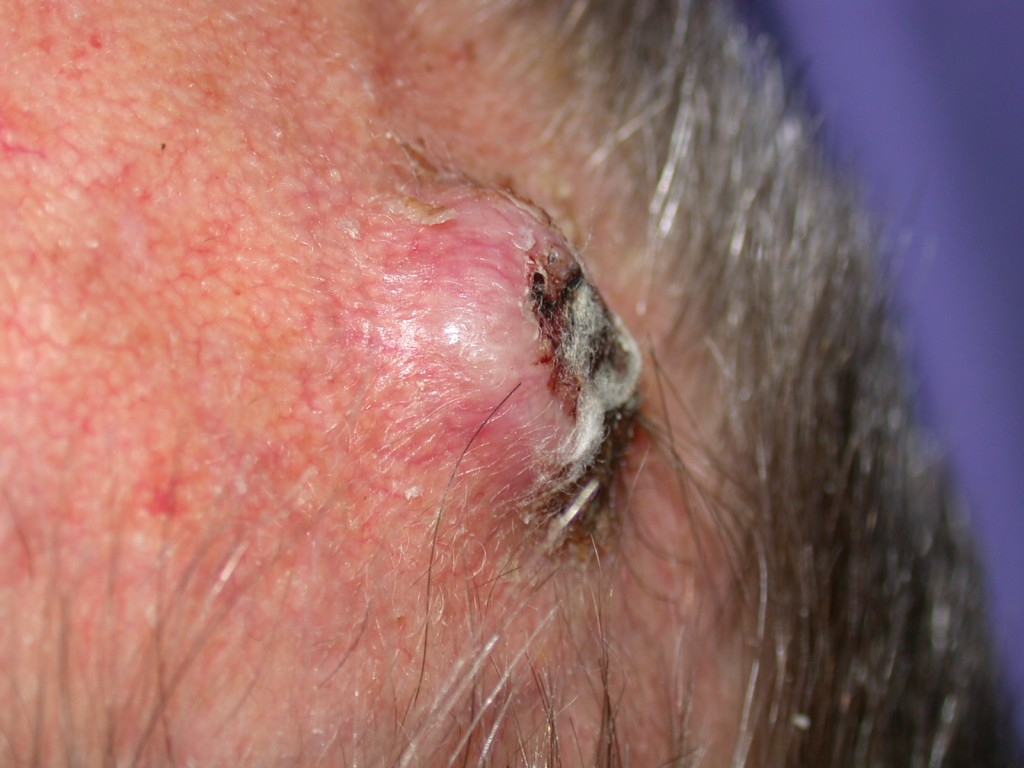
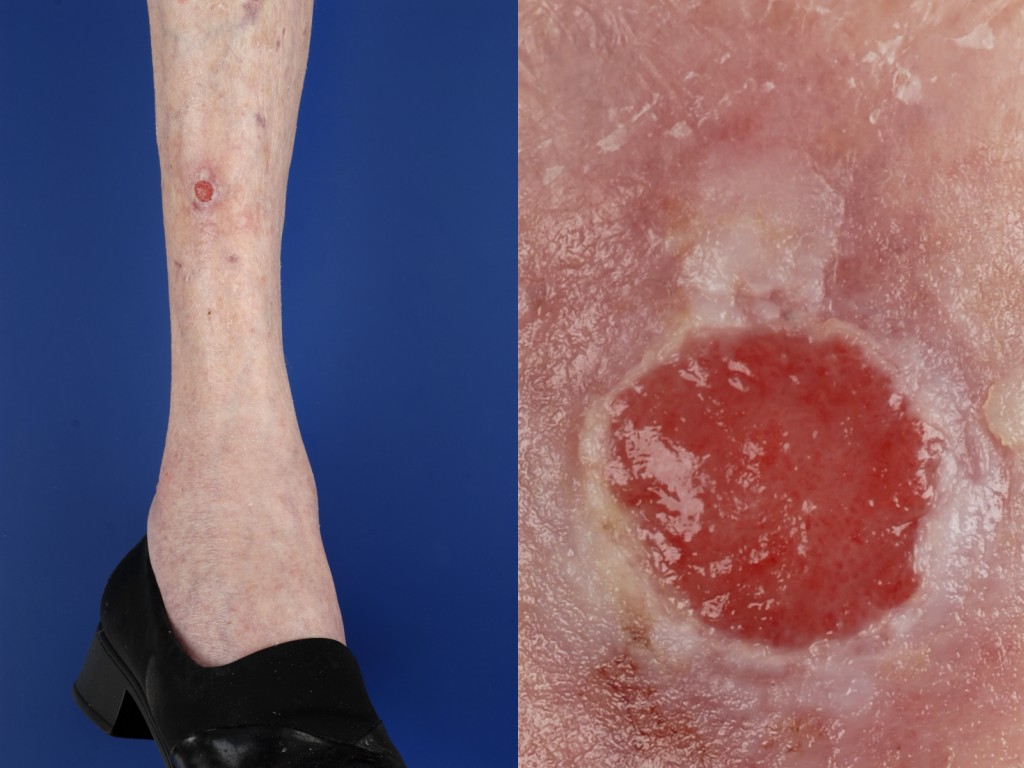
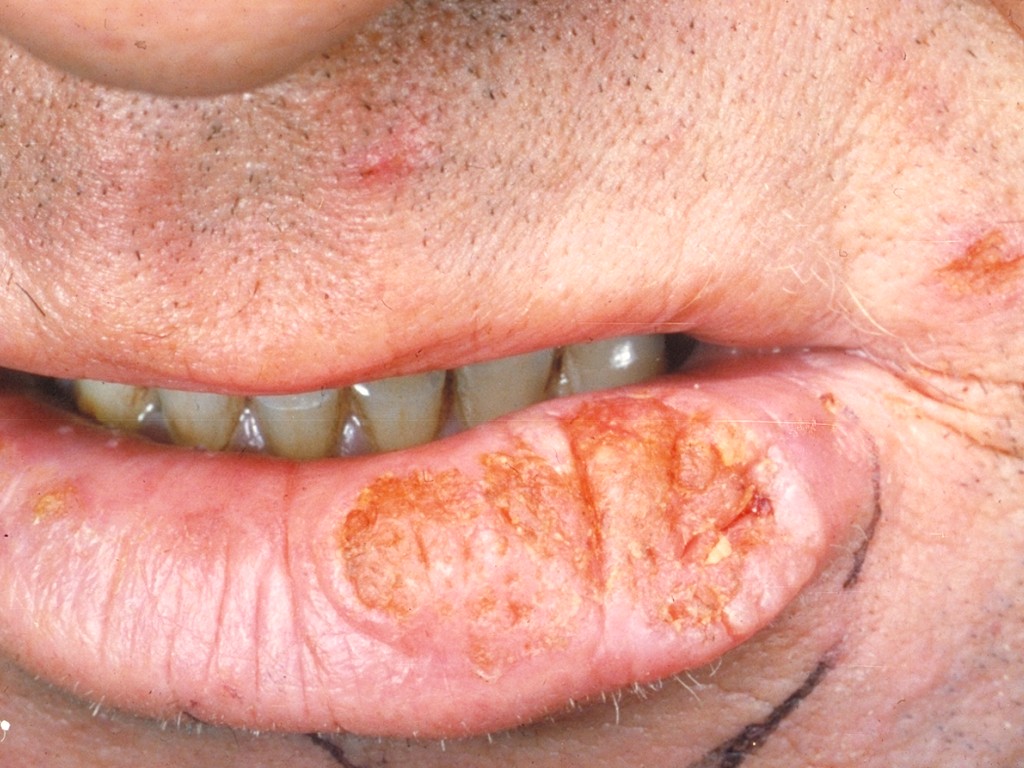
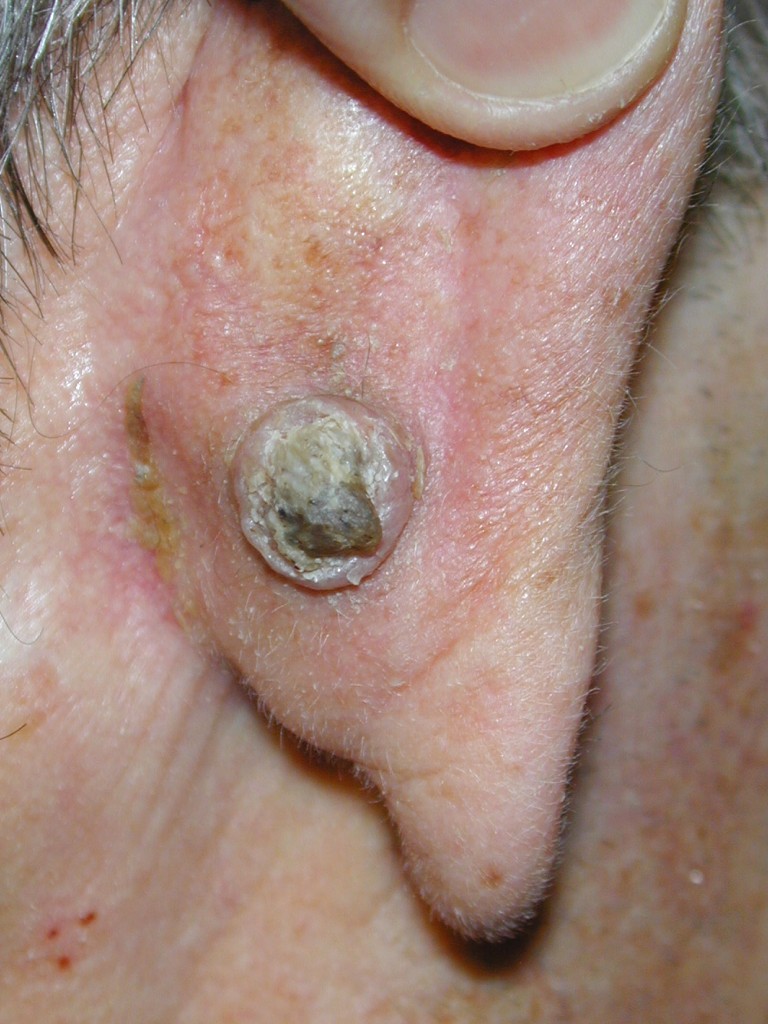
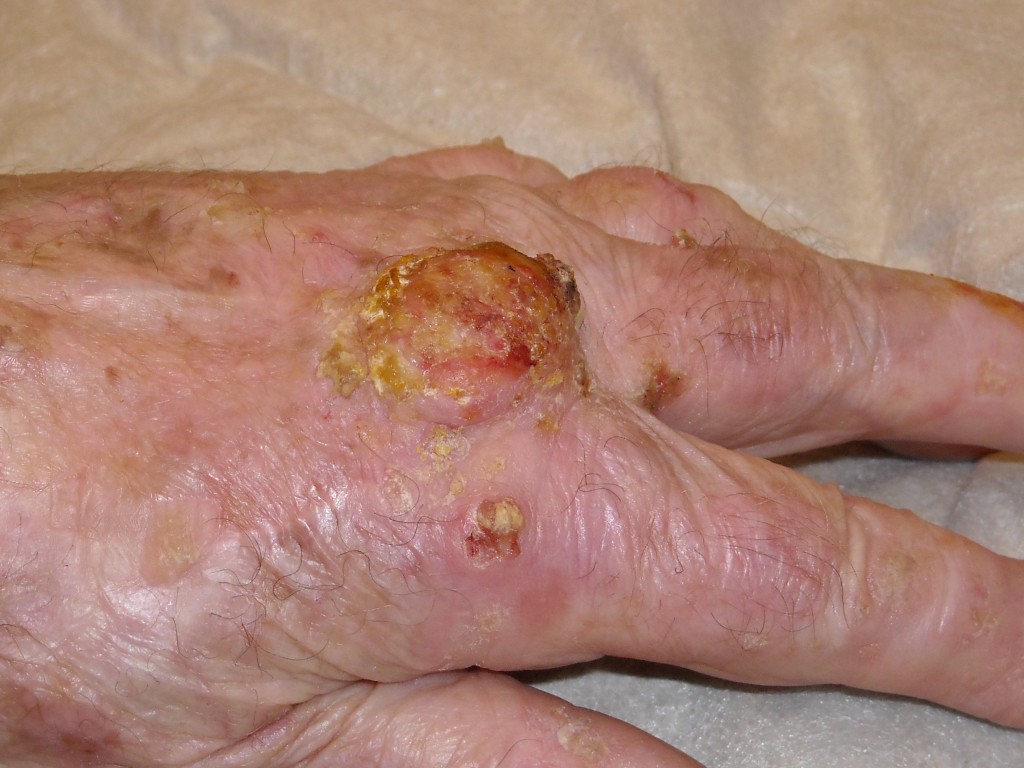
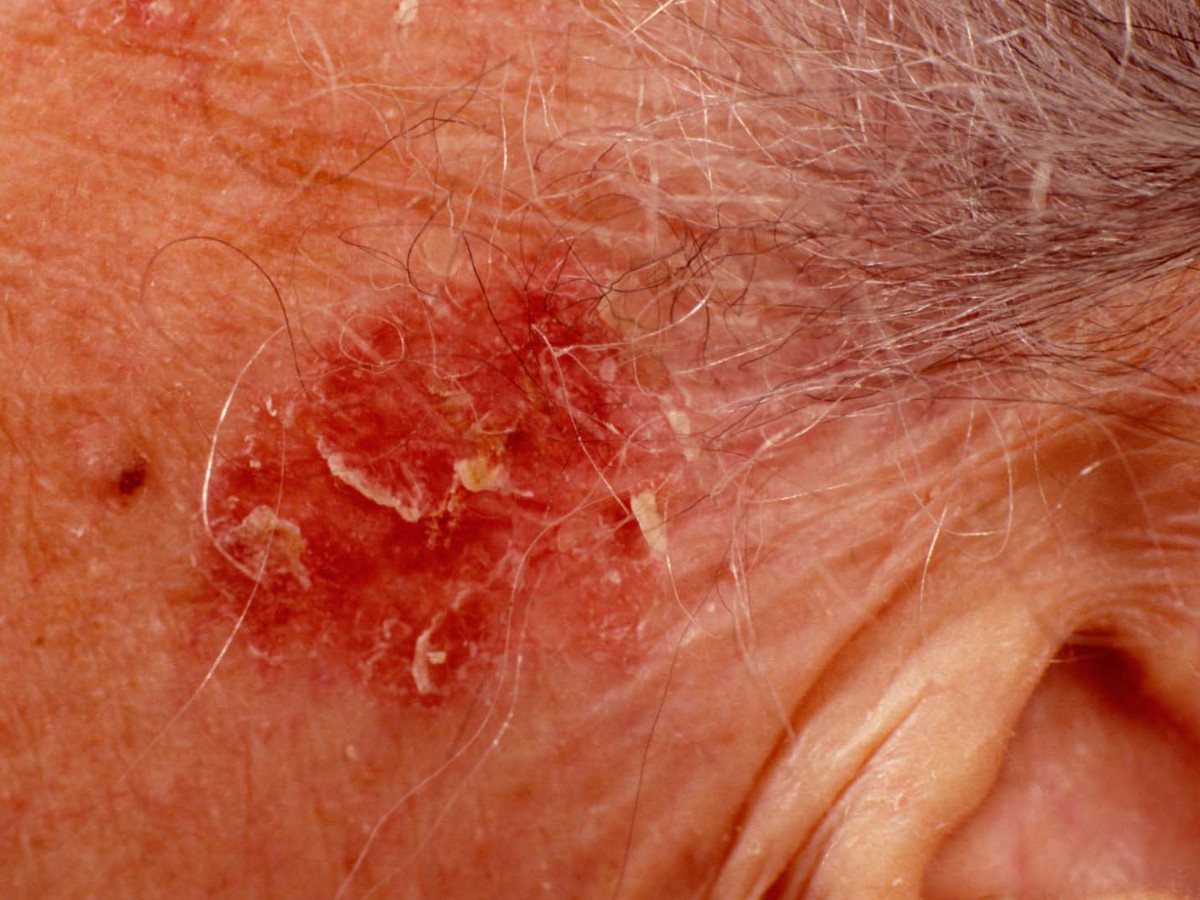
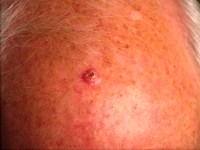
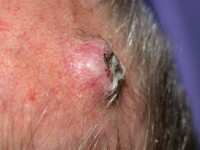
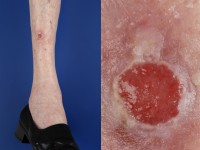
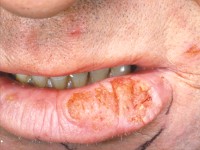
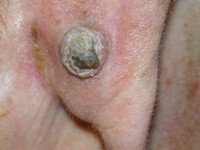
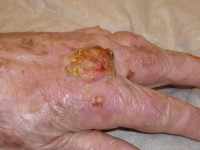
WHAT IS A SQUAMOUNT CELL CARCINOMA?Squamous cell carcinoma is a form of skin cancer. Carcinoma is the medical term for cancer. Squamous cells form the lining of various structures in our body, and the skin is also largely composed of squamous cells. Squamous cell carcinoma ( Latin name: carcinoma spinocellulare, English term: squamous cell carcinoma ) is a form of skin cancer that can grow deeply and damage underlying tissues. Squamous cell carcinoma can also spread to lymph nodes and other organs (metastases) and can be fatal if not removed in time.WHAT DOES A SCALE CELL CARCINOMA LOOK LIKE?Squamous cell carcinoma usually begins as a skin-colored or light red bump. This bump gradually enlarges and can be painful. Squamous cell carcinoma can also look like a small wound that gradually enlarges. Squamous cell carcinoma is not always easy to recognize initially. Squamous cell carcinoma can occur anywhere on the body. However, it is most common in areas exposed to sunlight, such as the face (scalp, ears, lips), the backs of the hands, and the lower legs and forearms.
 |
 |
 |
| squamous cell carcinoma |
squamous cell carcinoma |
squamous cell carcinoma |
 |
 |
 |
| squamous cell carcinoma lip |
squamous cell carcinoma ear |
squamous cell carcinoma |
Superficial variant: Bowen's disease
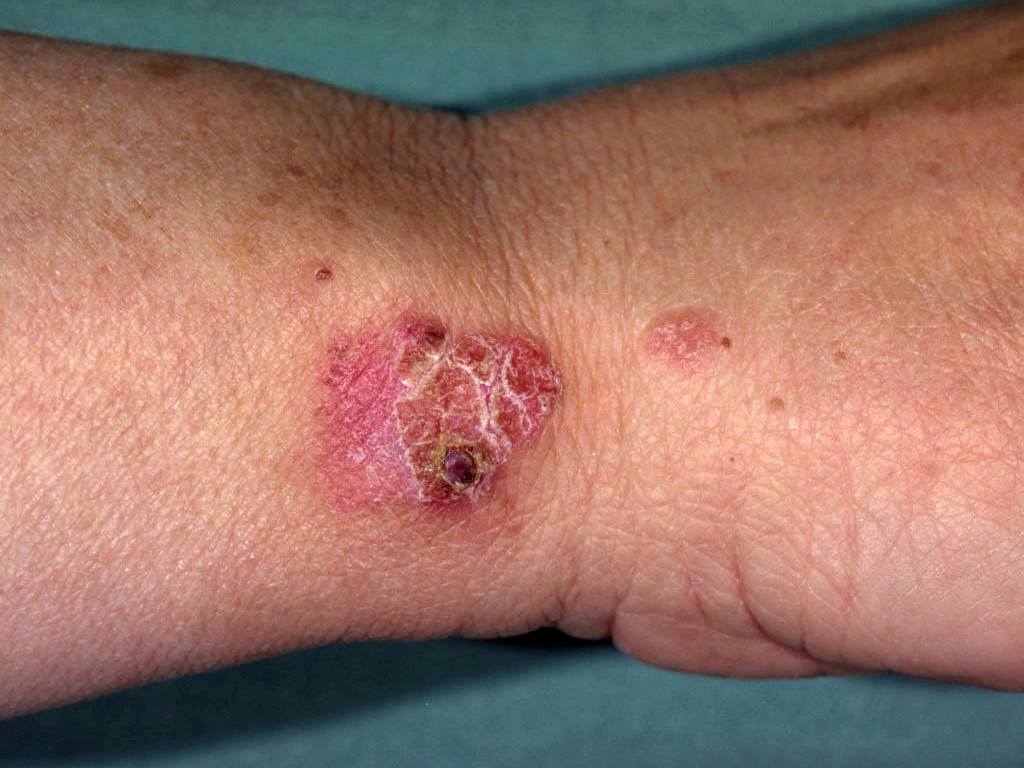
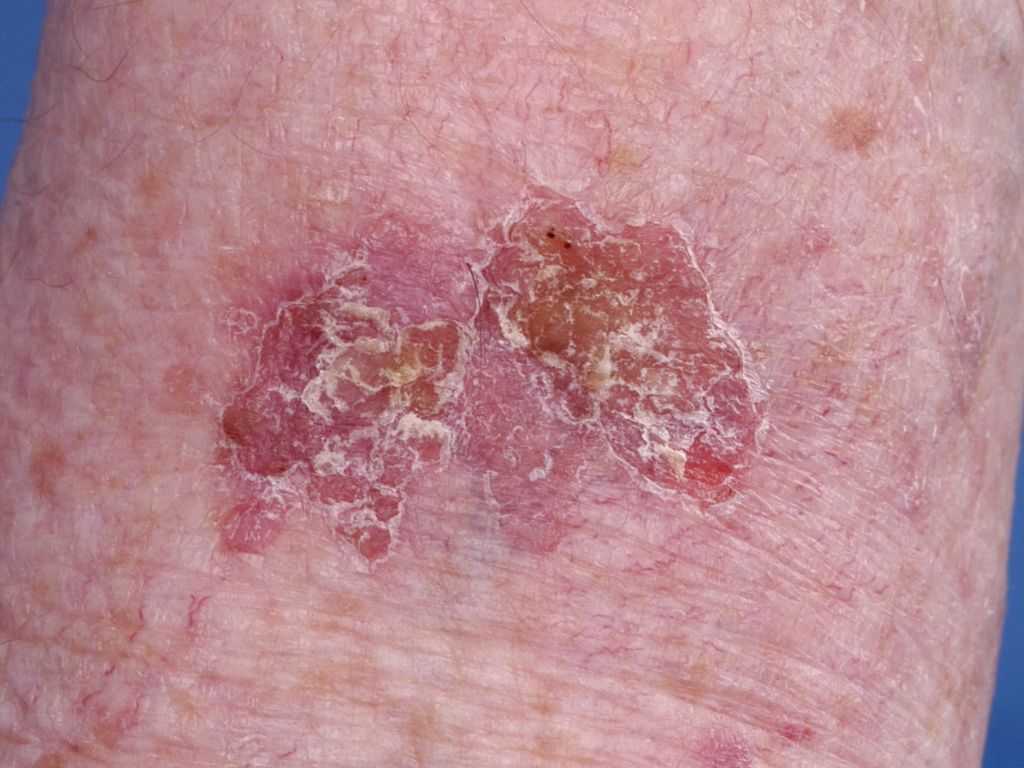
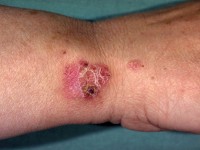
There is also a superficial form of squamous cell carcinoma, which is not very dangerous and is easily treated. This form is called intraepidermal squamous cell carcinoma or Bowen's disease . Superficial Bowen's squamous cell carcinoma appears as a red, scaly patch that feels slightly rough. The patch can grow very slowly and does not cause any symptoms.
 |
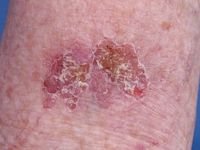 |
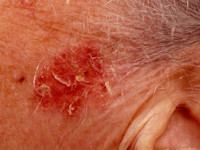 |
| Bowen's disease |
Bowen's disease |
Bowen's disease |
HOW DOES A SCALE CELL CARCINOMA DEVELOP?The sun is the main culprit. Squamous cell carcinoma is mainly caused by prolonged exposure to sunlight. Ultraviolet light damages the DNA of cells, which can lead to malignant tumors. Therefore, squamous cell carcinoma is most commonly seen in areas exposed to light all day, such as the face and the backs of the hands. People with fair skin are less sensitive to the sun and have a higher risk of developing skin cancer. This also applies to squamous cell carcinoma.
Squamous cell carcinoma can also develop in long-standing wounds. Squamous cell carcinoma can also develop in warts (especially genital warts) caused by certain wart viruses (human papillomavirus). Patients with compromised immune systems, for example, because they have a donor kidney for which they take prednisone or other immunosuppressive drugs, also have an increased risk of developing squamous cell carcinoma.HOW IS THE DIAGNOSIS MADE?The diagnosis is made based on the imaging, its appearance. It's not always easy to recognize, especially if it's a small bump or wound. Therefore, it's necessary to confirm the suspicion with a microscopic examination. For this, a biopsy is taken under local anesthesia using anesthetic injections. A biopsy is a piece of tissue punched out of the area with a small, round instrument resembling an apple corer. Sometimes the entire tumor is excised at the same time and sent for examination.
As a further examination, the lymph nodes in the surrounding area are examined to see if they feel enlarged. If so, an ultrasound can be performed to examine the lymph nodes, and a needle can be inserted into them (lymph node biopsy) to collect tissue. In exceptional cases, a lung x-ray is performed to determine possible metastasis.WHAT IS THE TREATMENT?Surgery:
The first-line treatment for squamous cell carcinoma of the skin is surgical removal. This is usually performed under local anesthesia by a dermatologist or a (plastic) surgeon. The goal of the procedure is to achieve the best possible cosmetic result. However, it is important that the carcinoma is completely removed, including a margin of healthy tissue around it. To ensure complete removal, the removed tissue is always examined microscopically. If the carcinoma is not completely removed, or if the margin around it is too narrow, the procedure must be repeated.
Radiation Therapy:
Radiation therapy is also an effective treatment method. The area where the tumor is located is irradiated. The radiation device is configured so that the rays remain superficial and do not cause deep damage. The radiation dose is also divided over several appointments. This means that patients often have to visit the hospital for radiation therapy, much more frequently than with surgical treatment.
Other methods
Other techniques for removing a tumor include freezing it with liquid nitrogen or burning it away with an electrical device (electrocoagulation). These techniques are not the first choice and are only used in special circumstances.
Treatment of superficial squamous cell carcinoma (Bowen's disease)
Superficial squamous cell carcinoma (Bowen's disease) can be treated in various ways. It can be removed surgically, but it can also be frozen with liquid nitrogen or applied with a cream containing an inhibitory drug (Efudix cream). Superficial squamous cell carcinoma can also be treated by scraping it away (curettage) and then cauterizing the superficial wound.
A new and effective treatment is photodynamic therapy. In this treatment, the lesion is first treated with a light-sensitive substance, which is primarily absorbed by the carcinoma cells. A few hours later, the lesion is illuminated with an intense light source. This destroys the carcinoma cells that have absorbed the light-sensitive substance, while the normal healthy cells continue to live.POST-INSPECTIONAfter treatment for squamous cell carcinoma, regular checkups are usually scheduled for at least five years. During these checkups, the treated area is examined, but new tumors are also checked for elsewhere.WHAT ARE THE OUTLOOK?The outlook is good. If the carcinoma is completely removed, subsequent problems will almost never occur. In a small percentage of patients (approximately 4%), the carcinoma can spread to the lymph nodes or other organs. This occurs primarily with very large carcinomas (and therefore detected too late or treated too late) and with carcinomas on the ears or lips. If metastasis has occurred, the outlook is much less favorable. Additional surgical treatment or radiotherapy, and possibly chemotherapy, may be necessary.
Ultimately, a person can die from metastatic squamous cell carcinoma. In a large 2008 study of patients with squamous cell carcinoma of the skin, approximately 1% of patients ultimately died from the carcinoma's effects.
The outlook for superficial squamous cell carcinoma (Bowen's disease) is very favorable. This form almost never causes serious health problems. Long-term follow-up after treatment is therefore not necessary.WHAT CAN YOU STILL DO YOURSELF?After treatment for squamous cell carcinoma, it's important to monitor your skin closely. If a bump or sore develops that doesn't disappear on its own within a few months, it's wise to consult your doctor or dermatologist. You should also do the same if you notice enlarged lymph nodes.
You should also take steps to minimize your exposure to sunlight. Avoid prolonged sun exposure, avoid sunburn, and use a sunscreen with an SPF of 15 or higher. If necessary, wear a hat (e.g., a cap for men with bald heads). |