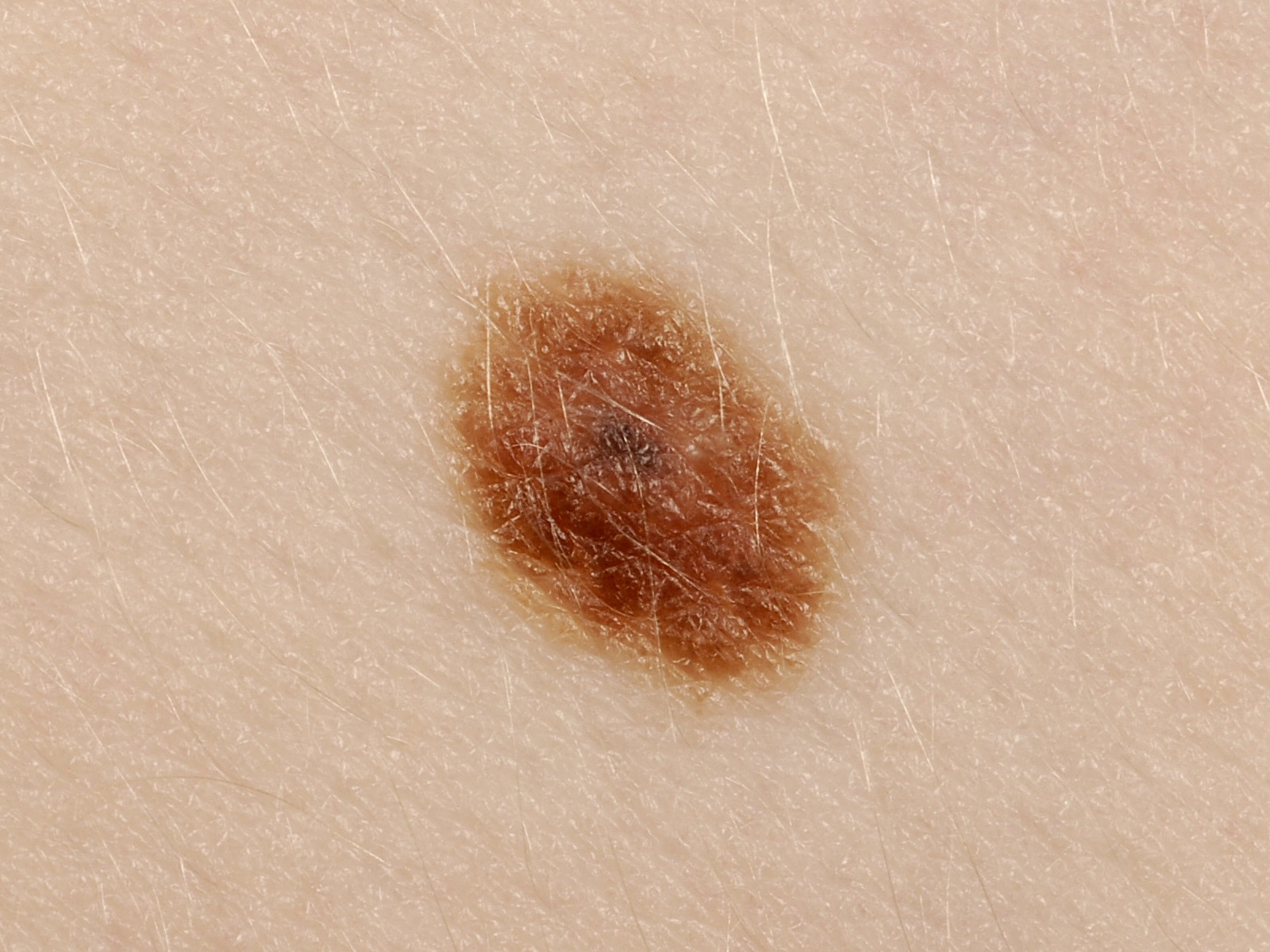
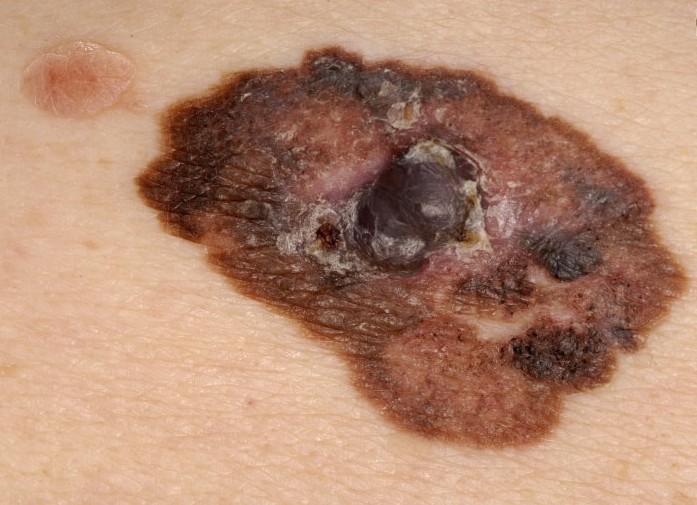
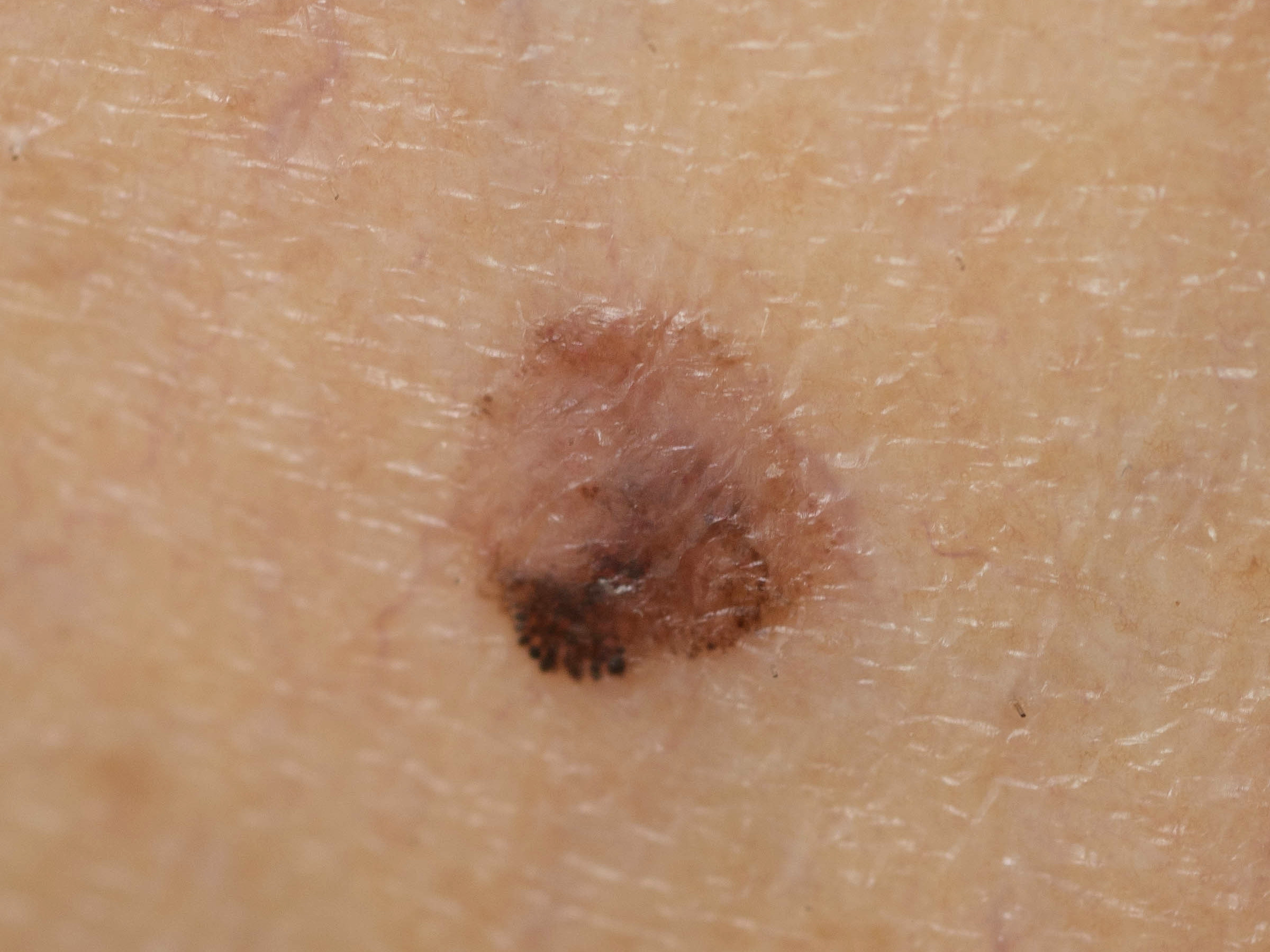
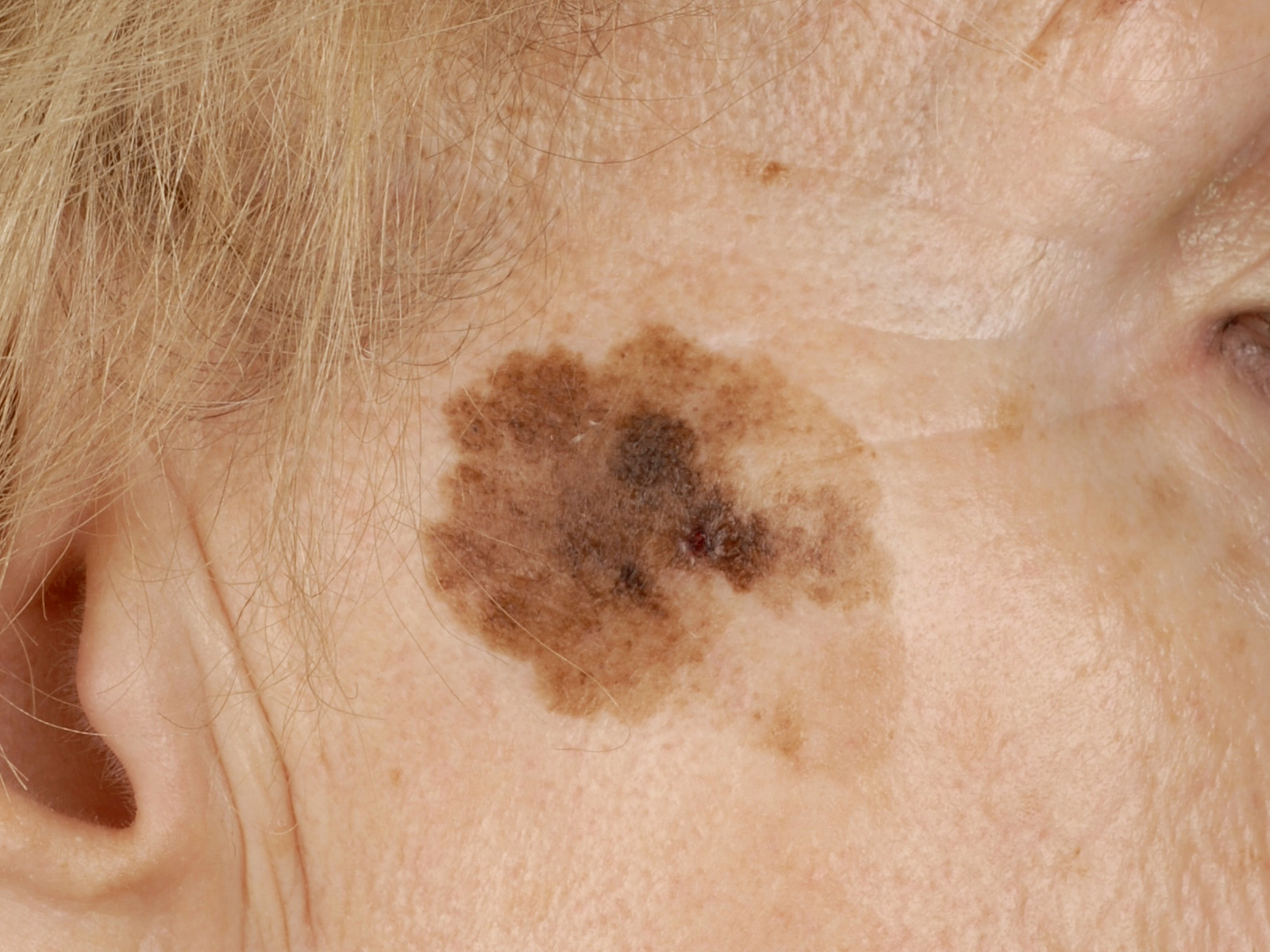
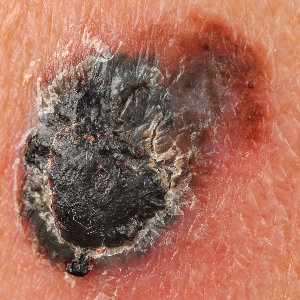
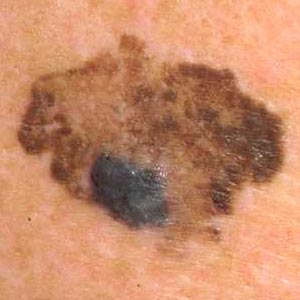
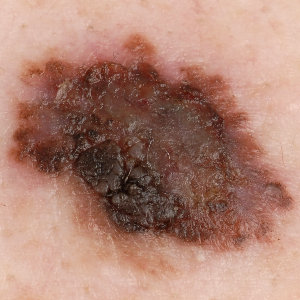
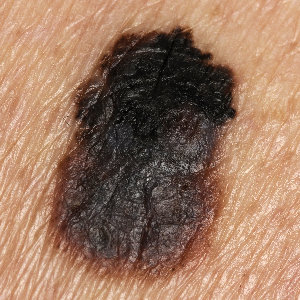
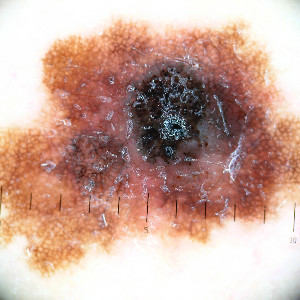
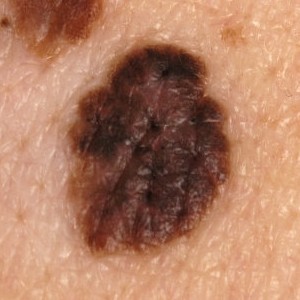
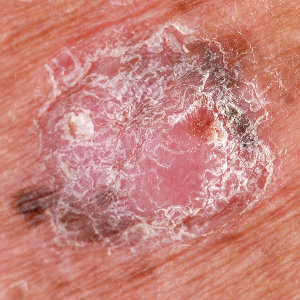
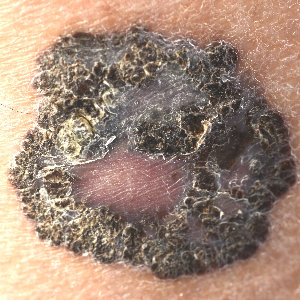
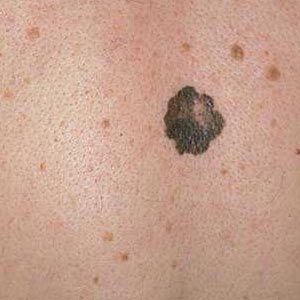
Melanoma is a form of skin cancer that develops from the skin's pigment cells (melanocytes). These melanocytes are found throughout the skin. Melanocytes produce a brown pigment that gives the skin its color. This pigment protects the skin from the damaging effects of sunlight. The pigment cells are evenly distributed throughout the skin. In moles, many of these pigment cells are clustered together.
A melanoma occurs when a group of pigment cells has transformed into cancer cells (melanoma literally means "black tumor"). Because pigment cells are present everywhere, a melanoma can develop anywhere in the skin. Sometimes a melanoma develops in an existing mole.
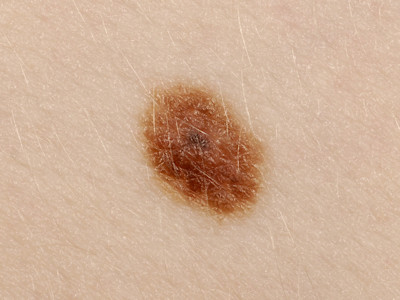 |
 |
| mole (benign) |
melanoma (malignant) |
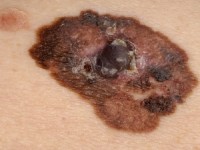
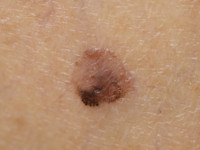
Most forms of skin cancer are not dangerous, but melanoma is. A melanoma can grow deeply and spread to lymph nodes and other organs. If this happens, it is very difficult to treat. Therefore, if you have any doubts about moles or other pigment spots, it's important to see your doctor or dermatologist as soon as possible to have the area assessed. The old saying "prevention is better than cure" certainly applies to melanoma.HOW COMMON IS MELANOMA?Melanoma is becoming increasingly common worldwide, particularly in people with fair skin. This is believed to be due to increased exposure to sunlight (the rise of sun tourism, travel to sunny regions, and increased leisure time). Approximately 5,000 new melanomas are discovered each year in the Netherlands. Melanomas can develop at any age, with a peak between the ages of 30 and 60. Thanks to early detection and improved public education, the survival rate for people with melanoma has improved significantly in recent years.WHAT DIFFERENT TYPES OF MELANOMAS ARE THERE?Melanoma in situ
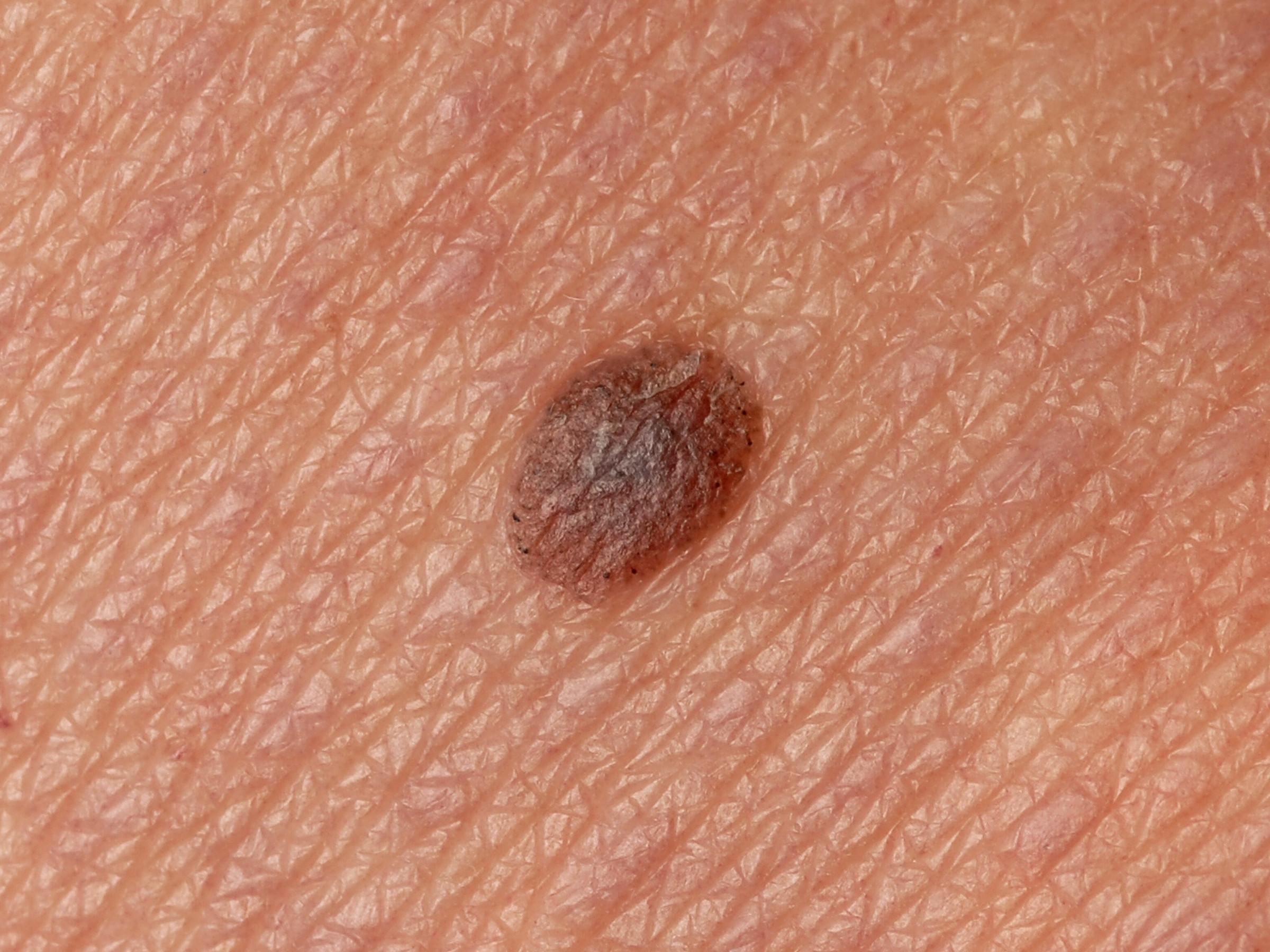
This is a superficial variant of melanoma. The melanoma cells are only in the top layer of the skin, the epidermis (also called the epidermis), and have not yet penetrated the dermis. Therefore, there is no risk of metastasis with this early form.
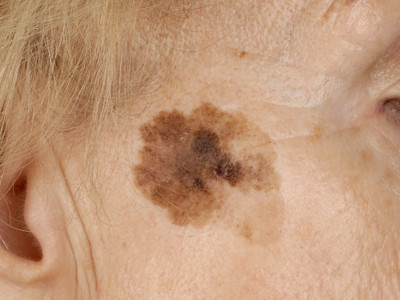
Lentigo maligna
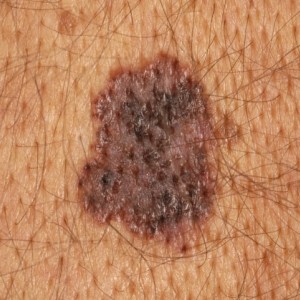
This is a form of superficial and slow-growing melanoma, usually seen on the cheek in older people. Initially, there is a dark brown pigment spot with black areas that slowly enlarges. In fact, this is also a melanoma in situ. A lentigo maligna spot can develop into a full-blown melanoma, at which point it is called a lentigo maligna melanoma. The chance of this happening is approximately 5%. Therefore, removal of a lentigo maligna is always recommended. Not every brown spot on an older person's cheek is or becomes a lentigo maligna melanoma; pigmented spots on the face are very common in older people. These are evenly light or dark brown spots, also called age spots (medical term: lentigo senilis or lentigo solaris).
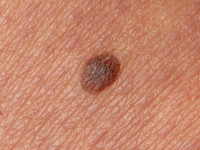
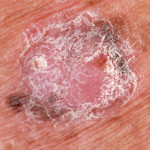
Superficial spreading melanoma (superficial spreading melanoma):
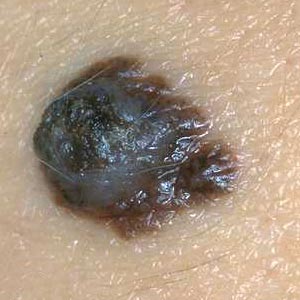
Most melanomas fall into this category. These melanomas grow superficially in all directions but usually do not grow deeply into the skin.
 |
 |
 |
| melanoma in situ |
lentigo maligna |
superficial spreading |
Nodular melanoma
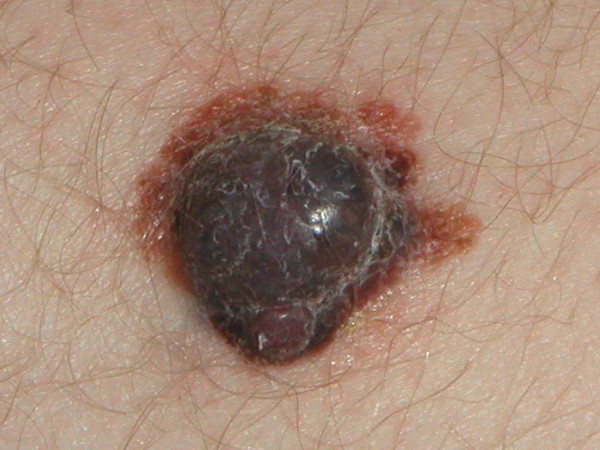
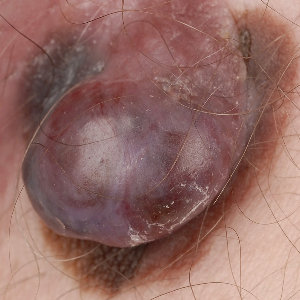
This type of melanoma shows an accumulation of many melanoma cells at an early stage. This is often visible on the surface as a dark gray, dark blue, or black raised area.
Acrolentiginous melanoma
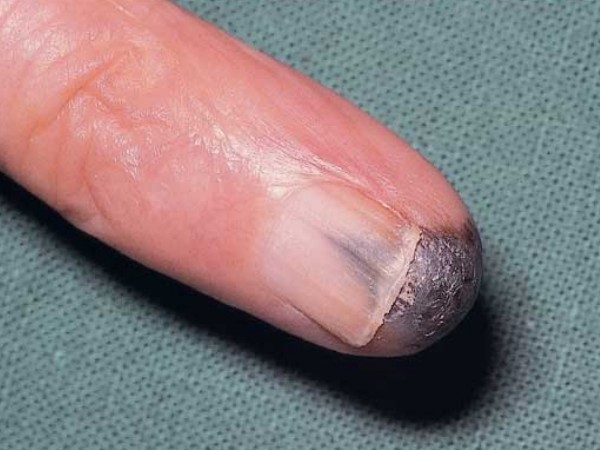
This type of melanoma is rare. It is located on the acra (=extremities) of the body, namely the hands (fingers/nails) or the feet (toes/nails).
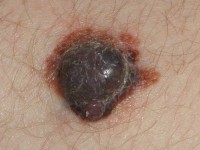 |
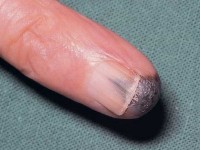 |
| nodular melanoma |
acrolentiginous melanoma |
Rare forms of melanoma
In rare cases, a melanoma can develop on mucous membranes (mouth, nose and throat, vagina and anus), or in the eye. Another rare variant is unpigmented melanoma (amelanotic melanoma). This is a colorless variant of regular melanoma. It is a notorious type because it is often not recognized as melanoma and therefore removed too late.HOW DOES MELANOMA DEVELOP?Melanomas can develop spontaneously, anywhere on the skin, or in an existing mole. Sunburn plays a role. Heredity also plays a role; it runs in some families. Having a large number of moles, irregular moles, or very large congenital moles also carries a slightly increased risk of developing melanoma.
Risk factors for developing melanoma:
1. Excessive exposure to sunlight or other ultraviolet (UV) radiation sources, such as tanning beds. Sunburn at a young age (childhood, under 5) is a particular risk factor.
2. Fair skin. People with fair skin, freckles, or blond/red hair, who tan with difficulty and burn easily, are more prone to developing melanoma.
3. Heredity. The risk increases with the number of family members who have melanoma. In 5% of patients with melanoma, this also appears to run in the family.
4. Having many normal or irregular moles. People who have a very large number (more than 50) of normal moles or 3 or more abnormal moles (atypical or dysplastic moles) have a slightly increased risk of melanoma.
5. The presence of large congenital moles. The risk of melanoma depends on the size of these moles (medical term: congenital nevus). With a small congenital mole, the risk is negligible. With a large congenital mole (giant nevus), larger than two palms, the risk of developing melanoma later in life is approximately 3-5%. These figures are not entirely reliable; recent and better studies indicate that the risk is even lower.
Most risk factors are therefore uncontrollable, except for excessive exposure to sunlight. Therefore, sunbathe responsibly: avoid prolonged exposure, avoid burning, use good sunscreen, and pay special attention to small children.WHEN SHOULD I SEE A DOCTOR ABOUT A BONEMARK?If a new, growing mole has developed, or if an existing mole has changed in color, shape, or increased in size, you should make an appointment with your doctor. This is especially true for adults; in children, it's normal for new (and therefore growing) moles to develop.HOW CAN YOU RECOGNIZE A MELANOMA AND DISTINGUISH IT FROM A NORMAL BONE?Usually, there are symptoms that indicate that a melanoma has developed or that a mole is changing into a melanoma. These can be:
- the appearance of new moles or a brown-black or black bump
- the sudden or slow enlargement of an existing mole
- protrusions or bumps that develop within it
- irregular contours (jagged edges)
- itching or pain
- bleeding, ulcers or scabs
- color changes such as darkening
- the development of different colors within one spot (light brown, dark brown, black, blue-black, red, white-pink)
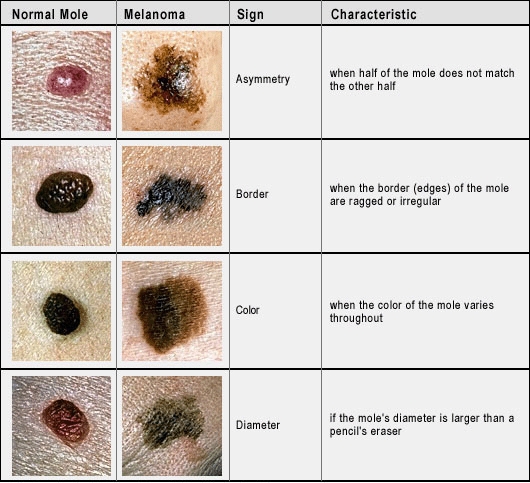
Moles can be assessed according to the ABCD rule or ABCDE rule. Each letter represents a characteristic of a mole that indicates a possible transition to a melanoma. The ABCD rule is originally in English, the A stands for Asymmetry (the non-symmetrical nature of the mole), the B for Border, the C for Color, the D for Diameter (size) and the E for Evolution (change), or Elevation (the creation of a raised area).
Source: National Cancer Institute, USA
Asymmetry:
A mole is symmetrical if an imaginary line can be drawn through it, and the two halves on either side of that line are mirror images of each other. Symmetry is a sign of benignity, asymmetry of malignancy.
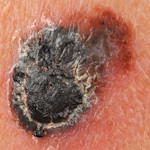 |
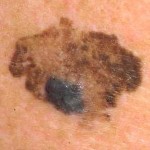 |
| asymmetry |
asymmetry |
Border (border)
An irregular, jagged border is a sign of malignancy.
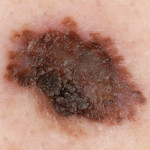 |
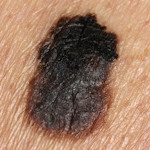 |
| irregular edge |
irregular edge |
Color (color)
Two or more different colors within 1 spot is a sign of malignancy.
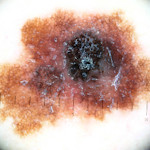 |
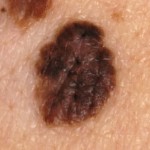 |
| brown, black, pink-white |
light and dark brown |
 |
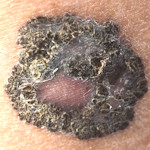 |
| black, red |
black, white-pink, brown |
Moles up to 6 mm in diameter
are usually harmless; a mole larger than 6 mm is a reason to be concerned. However, size alone isn't enough to be concerned. A mole that has only grown larger without any of the changes listed under A, B, or C is usually harmless.
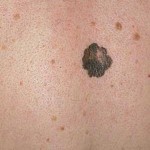 |
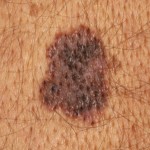 |
| larger than 6 mm |
larger than 6 mm |
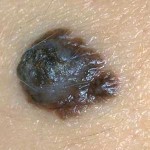
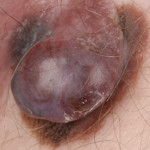
Evolution (growth) or Elevation (raised parts).
Evolution means that a change occurs in the mole. Elevation is sometimes used as a term, indicating that (part of) the mole rises, becoming higher than its surroundings.
 |
 |
| elevated part |
elevated part |
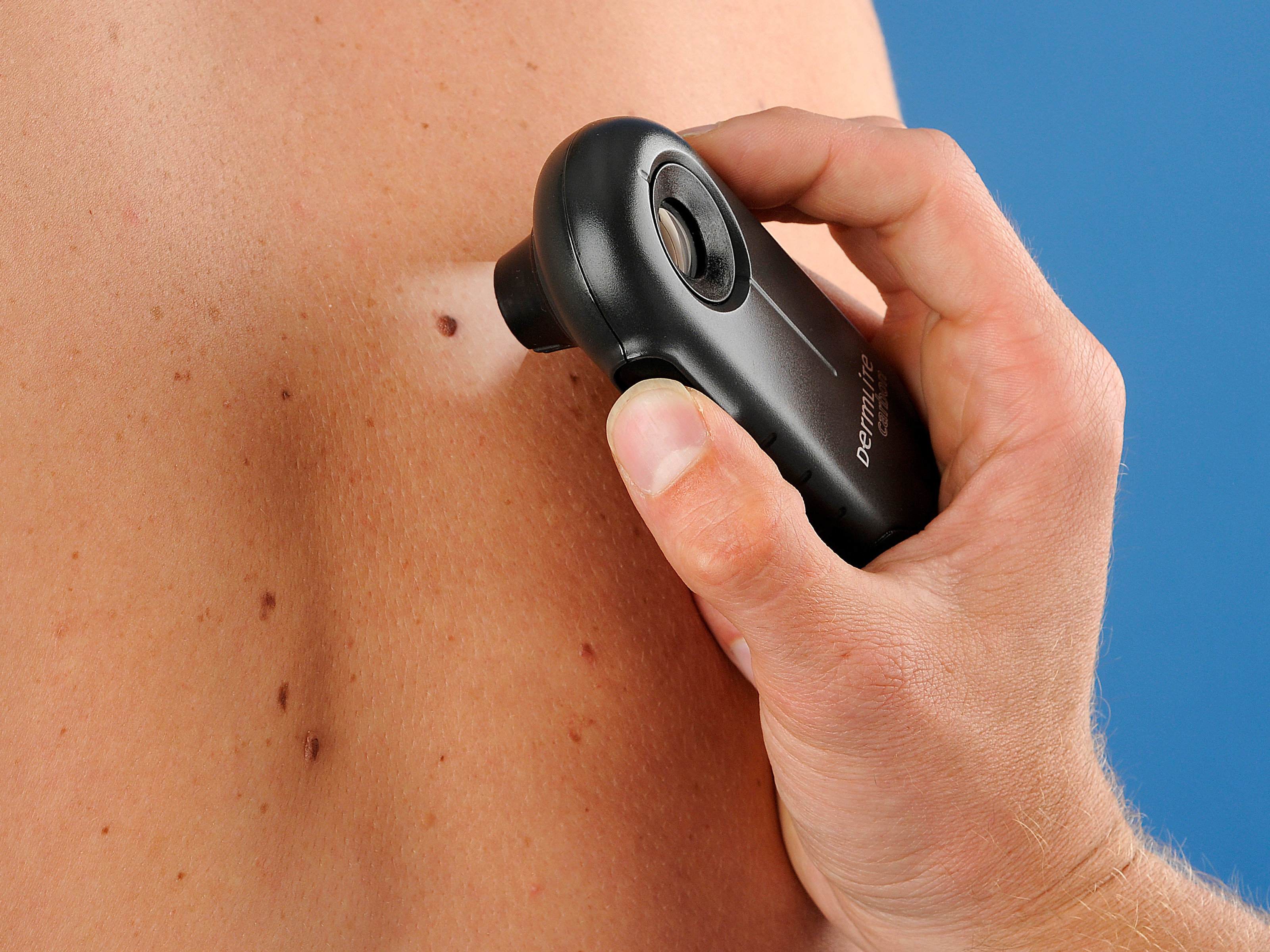
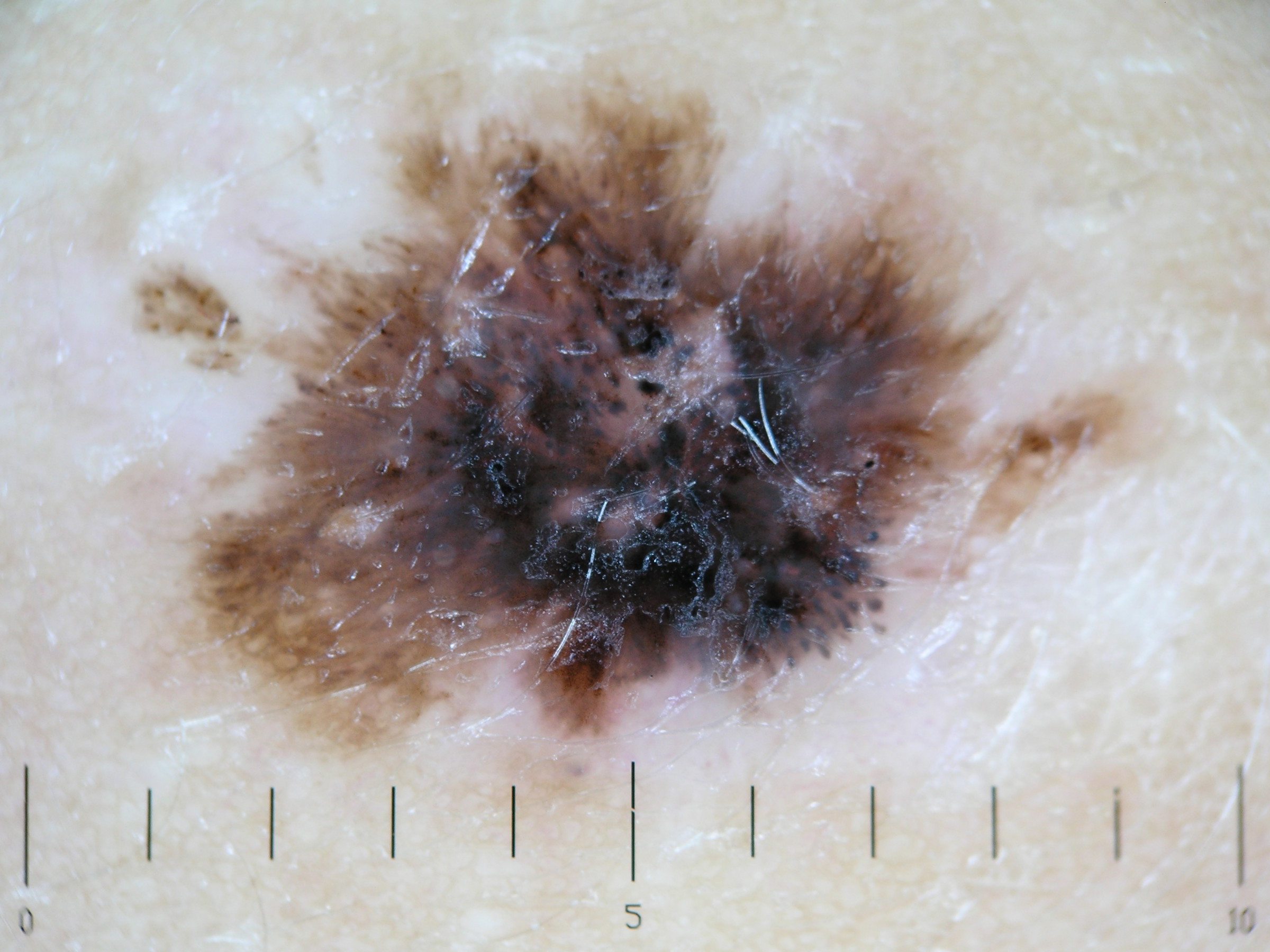
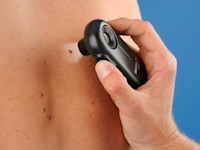
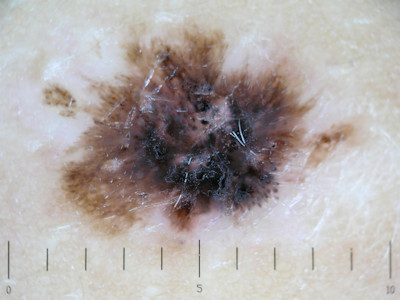
DERMATOLOGIST ASSESSMENTThe dermatologist examines the mole and assesses it based on the characteristics mentioned above. Because dermatologists have extensive experience assessing moles, they can usually tell with the naked eye whether it is a benign mole or possibly a melanoma. The dermatologist also has a dermatoscope. This is a highly magnifying, illuminated lens that is placed directly on the skin. By applying a drop of oil or water to the lens, the top layer of skin becomes slightly transparent, allowing you to see through it. This reveals structures that are invisible to the naked eye. The dermatoscope is used to examine any abnormal shapes or colors, or irregular edges.
 |
 |
| the dermatoscope |
image under dermatoscope |
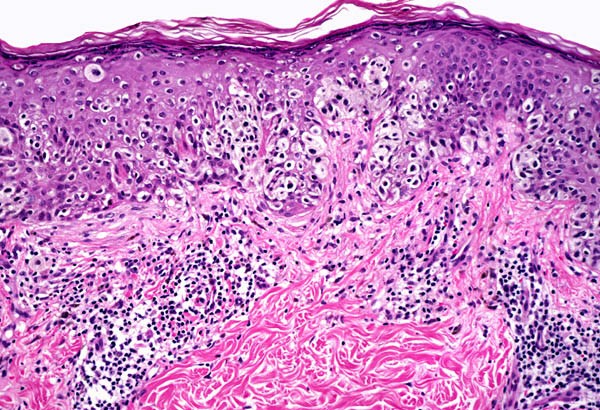
If melanoma is suspected, the entire mole must be removed. This is done under local anesthesia. The excision is performed in two steps. First, the entire mole is excised, leaving a small margin (2-3 mm) of extra tissue around it to ensure everything is removed. This is called a diagnostic excision, intended to determine whether it is a melanoma. If, after examination by the pathologist, it appears to be a melanoma, the same area must be excised again with a safety margin of 1 or 2 cm. This is called a therapeutic excision. It is not performed in one go, because removing a mole with a margin of tissue of 1 or even 2 cm around it leaves a large scar and is difficult in some areas. So it must be certain that it is indeed a melanoma, and not something that resembles one, such as an unruly mole, or a seborrheic keratosis with a little pigment, or a hemangioma (benign blood tumor). And if it is a melanoma, the pathologist must also measure the thickness, because the thickness of the melanoma determines whether 1 or 2 cm of skin needs to be removed during the next procedure.BIOPSY (DIAGNOSTIC EXCISION)An oval is drawn around the area to be removed, leaving a 2-3 mm border of extra skin around it. This diamond-shaped area is numbed by injecting anesthetic fluid into the skin around it. The oval is then cut out, and the skin is sutured.PATHOLOGY ASSESSMENT (UNDER MICROSCOPE)The skin sample is sent to the laboratory to be assessed by a pathologist. This takes some time. The tissue sample must undergo a series of treatments, be embedded in a block of paraffin, then cut into wafer-thin slices, stained, and assessed. The pathologist examines the cells and the overall structure through the microscope and ultimately determines whether it is a mole (benign) or a melanoma (malignant). Sometimes it's somewhere in between, and then the diagnosis is made, for example, that it is a "disturbed" mole (medical term: dysplastic nevus). Such a disturbed mole is also better excised, but if a diagnostic excision has been performed with a 2-3 mm border around it, that has essentially already been done.
If it is a melanoma, the pathologist also assesses how deeply the melanoma has grown. This is done by measuring the thickness of the melanoma in millimeters. This thickness, also known as the Breslow thickness, has significant predictive value and also determines the required safety margin around the scar for the next procedure, the definitive surgery.
Sometimes a melanoma is very superficial and remains confined to the upper skin layer, with no growth into the underlying tissue. This is called a melanoma in situ. Such a superficial in situ melanoma has a very favorable prognosis. It doesn't need to be excised with a large safety margin; a margin of half a centimeter is sufficient, and there's no need for years of follow-up appointments.
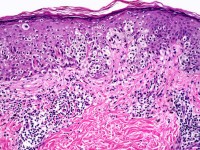 |
| image under the microscope |
DEFINITIVE SURGERY (THERAPEUTIC EXCISION) OF A MELANOMAThe definitive surgery is also performed under local anesthesia. Around the scar where the melanoma was initially removed, a second piece of skin is removed for safety reasons, with a safety margin of 1 or 2 cm. The margin depends on the determined thickness (Breslow thickness) of the melanoma. If the Breslow thickness is less than or equal to 2 mm, a 1 cm margin is sufficient; otherwise, a 2 cm margin is recommended.
This second surgery can create a fairly large wound, which cannot always be sutured immediately. In that case, a skin graft is necessary to close the wound. This is usually performed on an outpatient basis. In some areas of the body (face, hands), there is little remaining skin, and a smaller margin can be used. If the dermatologist anticipates that closing the wound will be difficult due to the location or size of the surgical wound, you may be referred to a plastic surgeon for the definitive surgery.
The removed piece of skin is also sent to the pathology laboratory and examined microscopically to determine whether the melanoma has been completely removed.CHECKS AFTER MELANOMA REMOVALSelf-Checkups
After melanoma treatment, it's important to monitor your skin closely. If new pigmentation abnormalities develop or if existing moles change, it's wise to consult your general practitioner or dermatologist. Also pay attention to any skin changes around the surgical scar. It's also wise to watch for any enlarged lymph nodes. Excessive exposure to sunlight, and especially sunburn, should be avoided.
Checkups by a Dermatologist
After the melanoma has been removed, follow-up appointments are scheduled. The checkup consists of inspecting the scar and feeling for the lymph nodes. The skin is also checked for any unusual moles. This is usually done by a dermatologist. Routine X-rays, ultrasounds, or scans are not useful during checkups unless there's a specific reason.
The recommendations regarding how often checkups are necessary after melanoma removal have changed quite a bit in recent years. The following advice is currently given:
For thin melanomas (less than 1 mm thick), a single check-up one to three months after melanoma treatment is sufficient. During this check-up, you can discuss any remaining questions with the dermatologist. Afterward, you do not need to return for further check-ups. You should, however, monitor your skin yourself. If you notice a new or changed mole, have it evaluated by your GP or make an appointment with the dermatologist.
Melanomas thicker than 1 mm are monitored for 5 years: every three months in the first year, every four months in the second year, and every six months in the third through fifth years.
Family Monitoring:
It sometimes happens that several members of a family, or even a whole family, have melanoma. In that case, there may be an increased hereditary risk of developing melanoma. It is advisable for people who are part of such a family to contact a dermatologist. If necessary, all family members can be screened for melanoma.
Checking for many moles:
Some people have a large number of moles, including those that are very large or appear irregular. These are also called atypical or dysplastic moles. Self-checking is difficult in this case because it's not so easy to assess. These individuals are advised to have regular checkups with a dermatologist, for example, once a year.WHAT IF THERE ARE POSITIVE LYMPH NEEDLES?Our body contains the lymphatic system, consisting of lymphatic vessels and lymph nodes. The lymphatic vessels transport tissue fluid containing all kinds of waste products, and sometimes bacteria and viruses, from the body to the lymph nodes. The lymph nodes can be considered purification stations or filter stations. The cells in the lymph nodes are part of our immune system and can neutralize bacteria and viruses. After the lymph fluid has passed through several of these lymph nodes, it flows back into the bloodstream. Lymph nodes are located in many different places in our body, but primarily in the neck, armpits and groin, along the trachea, near the lungs, near the intestines, and behind the abdominal cavity. Lymph nodes are normally not palpable, but if there is inflammation somewhere, they become enlarged and sometimes painful, and then they can be felt. A lymph node can also become swollen and sometimes tender or painful when skin cancer has metastasized.
Melanoma can also spread. Initially, the cancer cells are transported via lymphatic vessels in the skin to the lymph nodes in the neck, armpits, or groin. For example, a melanoma on a leg will first spread to the lymph nodes in the groin. However, the cancer cells can also spread via the blood to other organs of the body, such as the lungs, liver, other areas of the skin, or the brain.
If a (possibly) swollen lymph node is found during the physical examination, a needle aspiration of this suspicious node is performed. You will be referred to a pathologist for this. The pathologist will examine the lymph node fluid for the presence of cancer cells. If no cancer cells are found, or if there is a recurrence, this lymph node will not be surgically removed, and a wait-and-see approach will be chosen.
However, if cancer cells are found, this lymph node must be surgically removed along with all other lymph nodes in the affected lymph node station, for example, in the groin. This procedure is always performed under general anesthesia by a surgeon.SURGERY REMOVAL OF LYMPH GNOMESWhen a complete lymph node station (for example, all the lymph nodes in the armpit) is removed, problems can arise, both in the short and long term. Possible problems include limited movement, loss of strength, radiating pain, sensory disturbances, and fluid retention (lymphedema). In the latter case, the arm or leg swells and can feel heavy and tired. Lymphedema sometimes manifests quickly, but usually only months or years after the surgery. Manual lymphatic drainage (a type of massage) or compression therapy combined with elastic stockings or bandages can improve lymphatic drainage, reducing edema.THYMINE GLAND EXAMINATIONThis is an experimental method, not a routine treatment. A blue dye is injected into the melanoma scar. This fluid then accumulates in the nearest lymph node. This node can then be located, removed, and examined for metastases. If microscopic examination reveals no malignant cells in the removed node, the risk of metastases in other lymph nodes is very small and they do not need to be removed. This sentinel lymph node method has been studied in recent years. It turned out that the sentinel lymph node procedure did not improve survival rates. Therefore, the method was ultimately not adopted as standard treatment for melanoma. It is an option for melanomas thicker than 1 mm, and only for patients who are truly interested. There are also disadvantages: an additional wound, the risk of complications, the risk of lymphedema, and an extended waiting period due to the referral to a surgeon.COMPLEMENTARY TREATMENTSIf the disease has spread to lymph nodes or other organs, making surgical intervention impossible, other treatments are used. These treatments are highly specialized and are only offered at specialized cancer centers in the Netherlands. You will therefore be referred to one of these oncology centers near you.
Biologics / targeted therapy
Biologics are newly developed drugs that very specifically target the growth of melanoma cells. They are called biologics because they have the structure of human antibodies (monoclonal antibodies), but are prepared in a laboratory. They are very expensive drugs that are only provided through specialized oncology centers. In wealthy Western countries, including the Netherlands, these products (ipilimumab, vemurafenib, dabrafenib, nivolumab, cobimetinib) are available under certain conditions. Not all types of melanoma respond equally well to all the different drugs. These new treatments for melanoma can be effective, but they also cause side effects.
Radiotherapy
: Radiation therapy is sometimes administered to the area of skin where the melanoma has been removed, and sometimes also to the site of metastases. Cancer cells tolerate radiation less well than normal cells. The aim is to choose the radiation dose to destroy the melanoma cells while minimizing damage to normal tissue.
Chemotherapy: Chemotherapy
is sometimes chosen for metastatic melanoma treatment. Cytostatics are used for this therapy. These are highly aggressive medications that inhibit cell division. They are administered as pills or intravenously (into the bloodstream) and thus reach the entire body. Cancer cells (which are usually rapidly dividing cells) are more sensitive to cytostatics than normal tissue cells and will therefore be "killed" sooner than most healthy cells in the body. Unfortunately, cytostatics have many side effects (fatigue, hair loss, etc.).
Isolation perfusion:
This involves isolating a limb, such as a leg, from the circulation of the rest of the body and injecting a high concentration of a cytostatic. Sometimes a raised temperature treatment (hyperthermia) is also administered.
Immunotherapy
Immunotherapy is still primarily an experimental therapy. Several types of immunotherapy are in development. These usually involve vaccines against melanoma cells or "rejuvenated" white blood cells that are designed to selectively attack the tumor. Immunotherapy is performed in specialized centers.
Palliative treatment
When a patient is diagnosed with cancer cells that have spread too far to other internal organs, and treatment is no longer considered beneficial, palliative treatment is chosen. This treatment aims to prevent further spread of the melanoma and reduce symptoms, for example, by providing adequate pain relief. Local radiation therapy for symptom-causing metastases is also a form of palliative treatment.
See also: KWF brochure on melanoma (PDF)WHAT ARE THE PROSPECTS FOR MELANOMA?As mentioned before, melanoma is a dangerous form of skin cancer. It can be fatal. If it is detected early and removed in time, before the melanoma cells have had a chance to penetrate deeply and spread to the lymph nodes or other organs, the future looks bright. The problem is essentially solved by removing the tumor. However, if melanoma cells have already detached from the original tumor, they can, over time, form new tumors elsewhere in the body. These "micro" metastases are often difficult or impossible to detect early in the follow-up period. They are invisible on x-rays or scans, and also invisible with blood tests or other laboratory tests.
The risk of metastasis increases as the melanoma thickens. The thickness of the melanoma, measured in millimeters by the pathologist, therefore determines the chance of survival. In 90-95% of patients with a melanoma thinner than 1 mm, the disease does not recur. As the melanoma thickens, the percentage of patients in whom no melanoma metastasis is found after 5 years gradually decreases. If metastasis occurs, the prognosis becomes poorer.
Any melanoma metastasis occurs primarily through the lymphatic vessels in the skin. These lymphatic vessels drain into lymph nodes. The lymph node where the metastasis first occurs is called the sentinel lymph node. Presumably, only then will the other nearby lymph nodes (in the lymph node "stations" of the armpits, groin, and neck) be affected. If a lymph node contains a metastasis, it can often be felt as a firm lump under the skin, 2-3 cm in diameter.
Currently, the survival rate for all people with melanoma in the Netherlands is approximately 80%. If a lymph node has metastasized, the chance of recovery is much smaller. In the case of extensive metastases via the blood to other organs, a cure is generally no longer possible. The 80% survival rate applies to the entire group of patients with melanoma, both thin and thick melanomas combined. The survival rate is much better for thin melanomas. For example, for women with a melanoma thinner than 0.75 mm, the 5-year survival rate is 98%. This means that of every 100 women diagnosed with a melanoma thinner than 0.75 mm, two will have died after 5 years. The table below shows the average survival rates for the thickness of the melanoma measured in millimeters (the Breslow thickness).
| Breslow thickness |
5-year survival rate |
10-year survival rate |
|
men |
women |
men |
women |
| < 0.75 mm |
95% |
98% |
90% |
97% |
| 0.76 - 1.5 mm |
95% |
94% |
92% |
94% |
| 1.51 - 3.0 mm |
70% |
76% |
40% |
60% |
| > 3.0 mm |
42% |
55% |
32% |
46% |
| all thicknesses, < 60 years |
75% |
90% |
62% |
81% |
| all thicknesses, > 60 years |
76% |
68% |
46% |
60% |
New treatments (targeted therapies, biologicals) have improved survival rates; reliable long-term figures are not yet available.
AFTER THE DIAGNOSIS IS MADE
Most patients diagnosed with melanoma, or those being considered for it, experience anxiety and uncertainty. First, there's the unpleasant phase of waiting for the pathology results. Even during this phase, many questions arise, but these can't be adequately answered until the pathology results are available. If it is indeed a melanoma, and the thickness is known, then more can be said about the future prospects. A wealth of information about melanoma is available online, but it's difficult to absorb, understand, and translate all that information to a personal situation. Average survival rates don't tell you much either, as every person is unique. It's best to assume the best, namely that in most cases, there's a positive outcome. During subsequent checkups, sometimes for five or ten years, the melanoma patient is repeatedly confronted with this anxiety. However, the risk of something going wrong decreases significantly over time, and with it, the cause for concern.
ADDRESSES
|