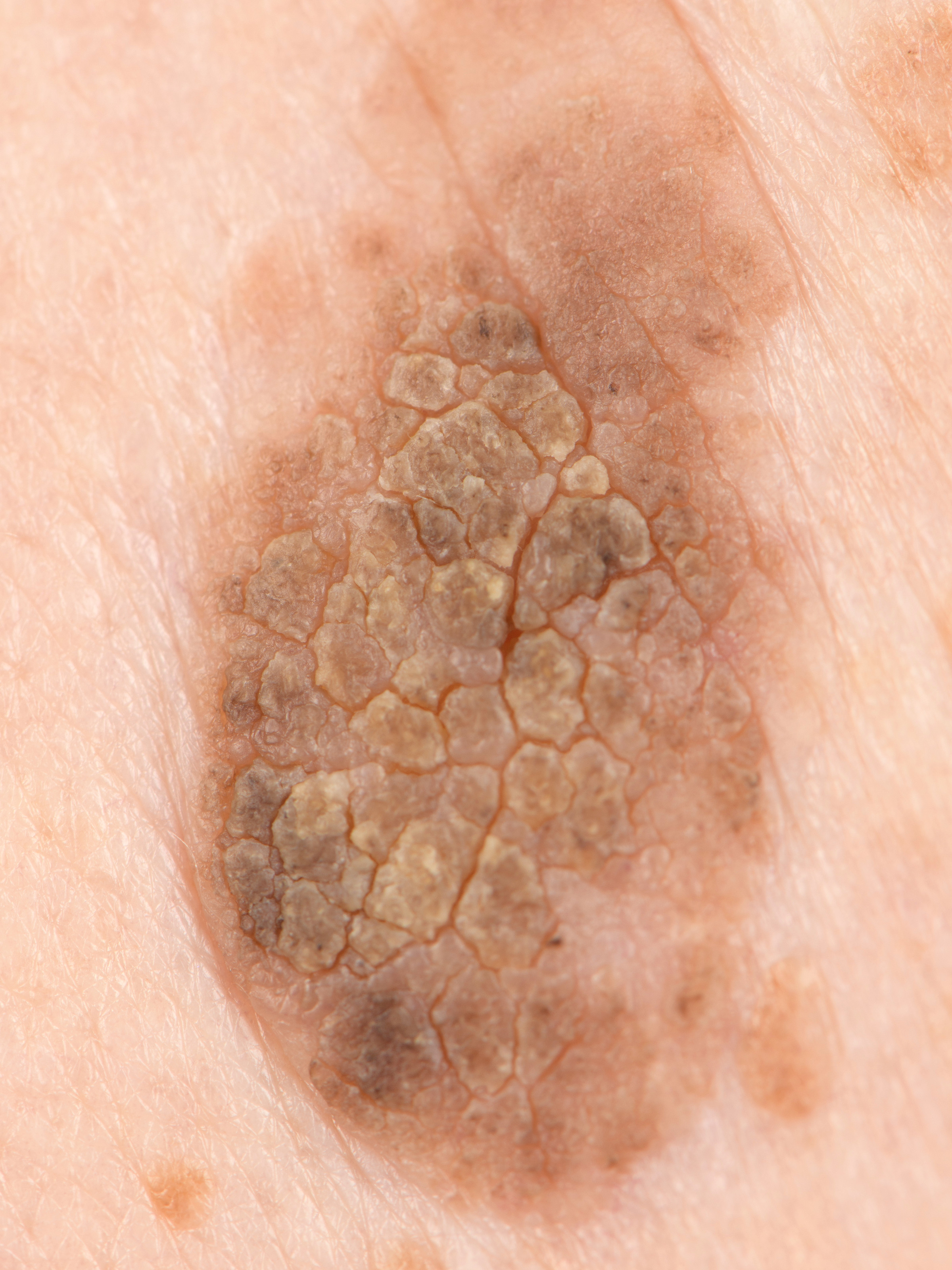
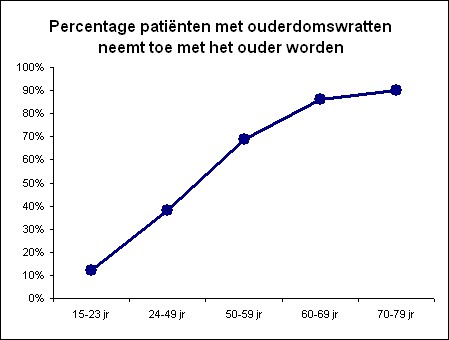
WHAT ARE THEY?Senile keratosis (senile keratosis) is a benign growth on the skin that is very common, especially in older people (over 50). They increase in number with age. By the age of 30, people usually have a few. The older you get, the more they appear. Hence the unflattering name "senile keratosis" (verruca senilis). Another common name is verruca seborrhoica (greasy wart). The English term is seborrheic keratosis or seborrheic wart .
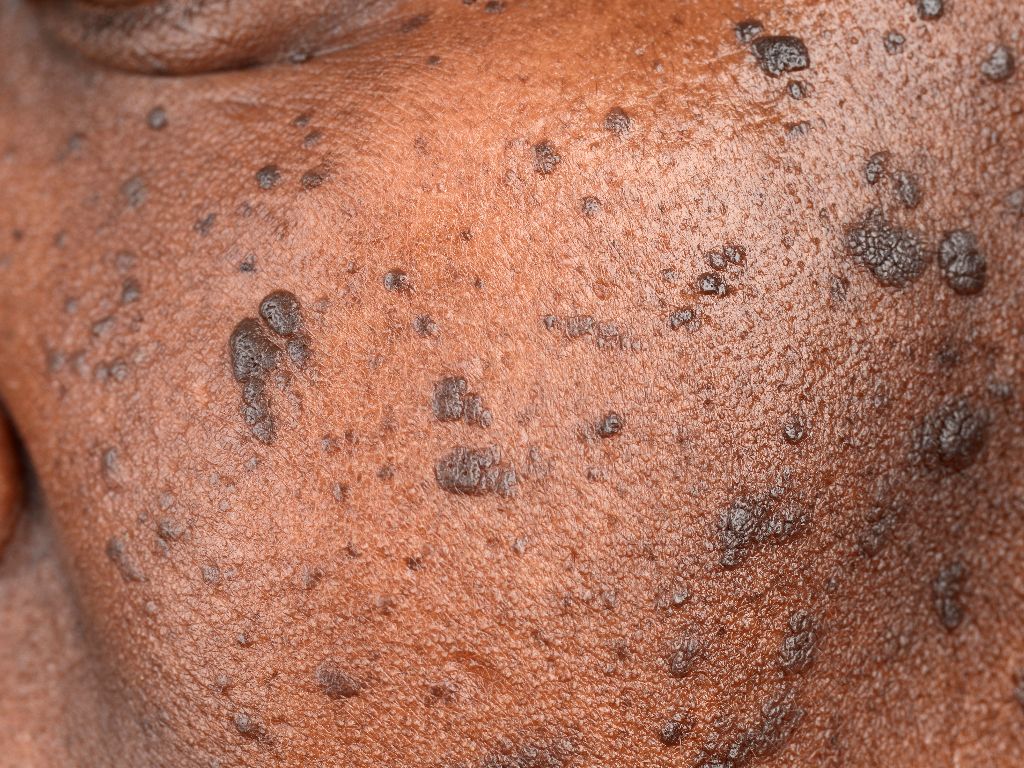
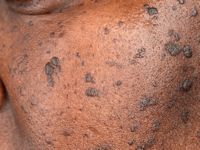
WHO GETS IT?Everyone (almost everyone) will eventually develop seborrheic keratosis (senile keratosis). They occur equally in men and women. However, some people are more susceptible than others. Some have only a few, others hundreds. They are much less common in people with pigmented skin. A variant of seborrheic keratosis does occur in pigmented people, which is much smaller, much darker, and primarily affects the face and neck. This variant is called dermatosis papulosa nigra.
 |
 |
 |
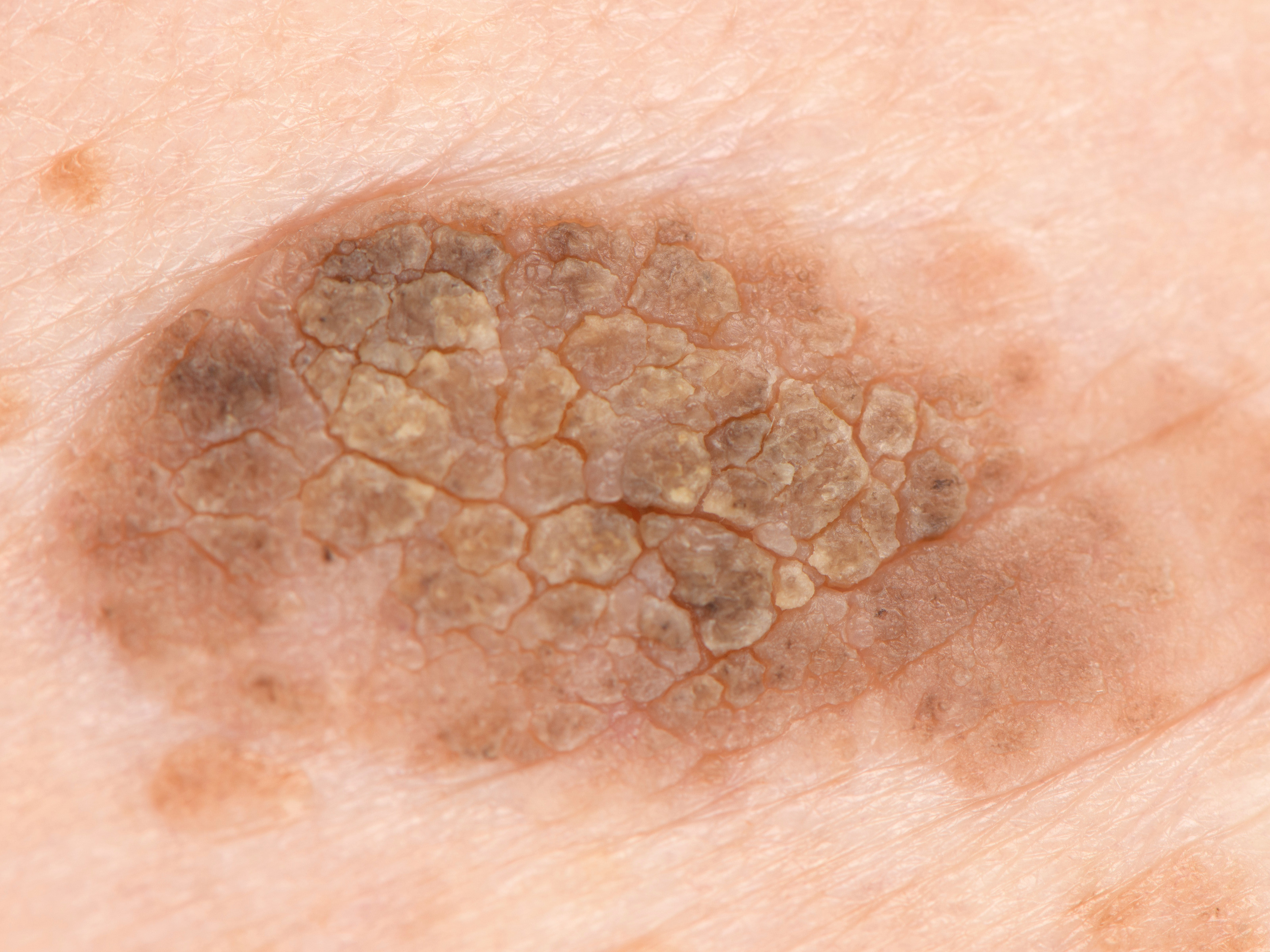
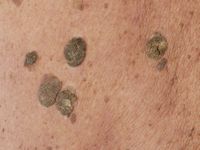
| age warts |
age warts |
dermatosis papulosa nigra |
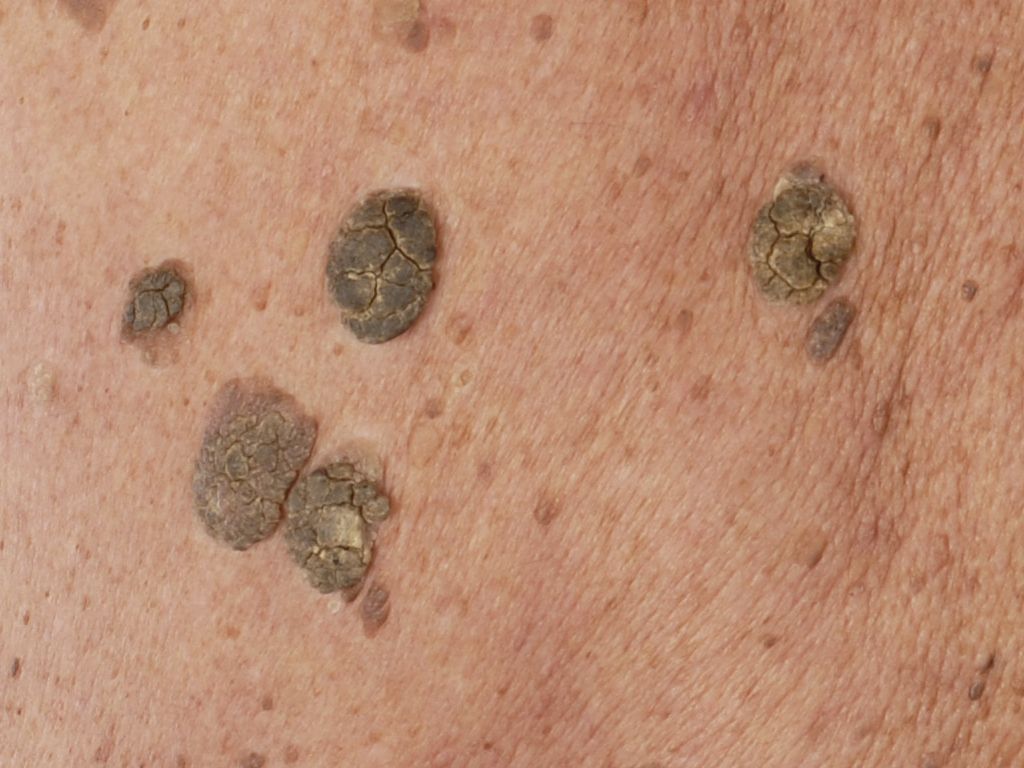
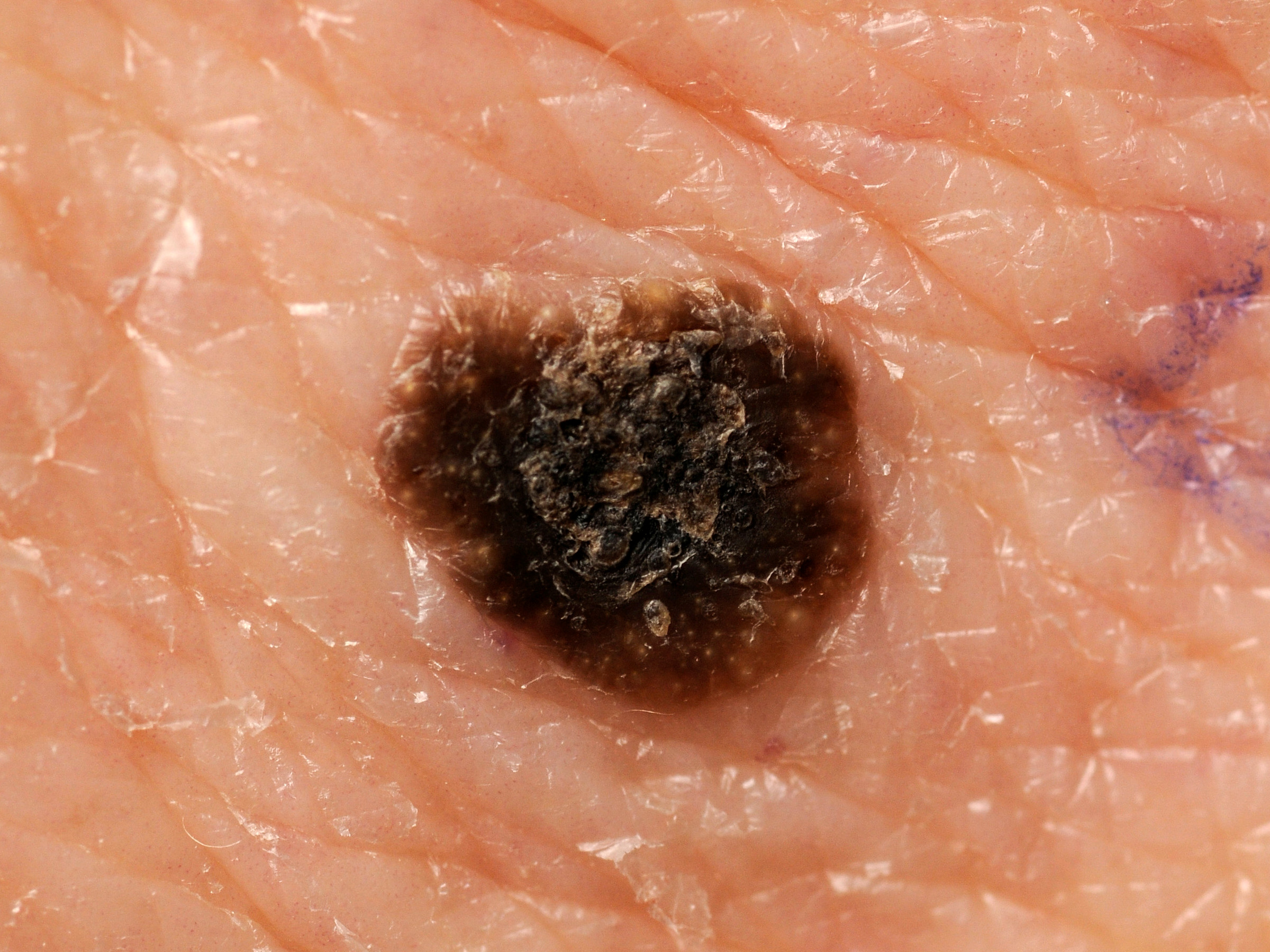
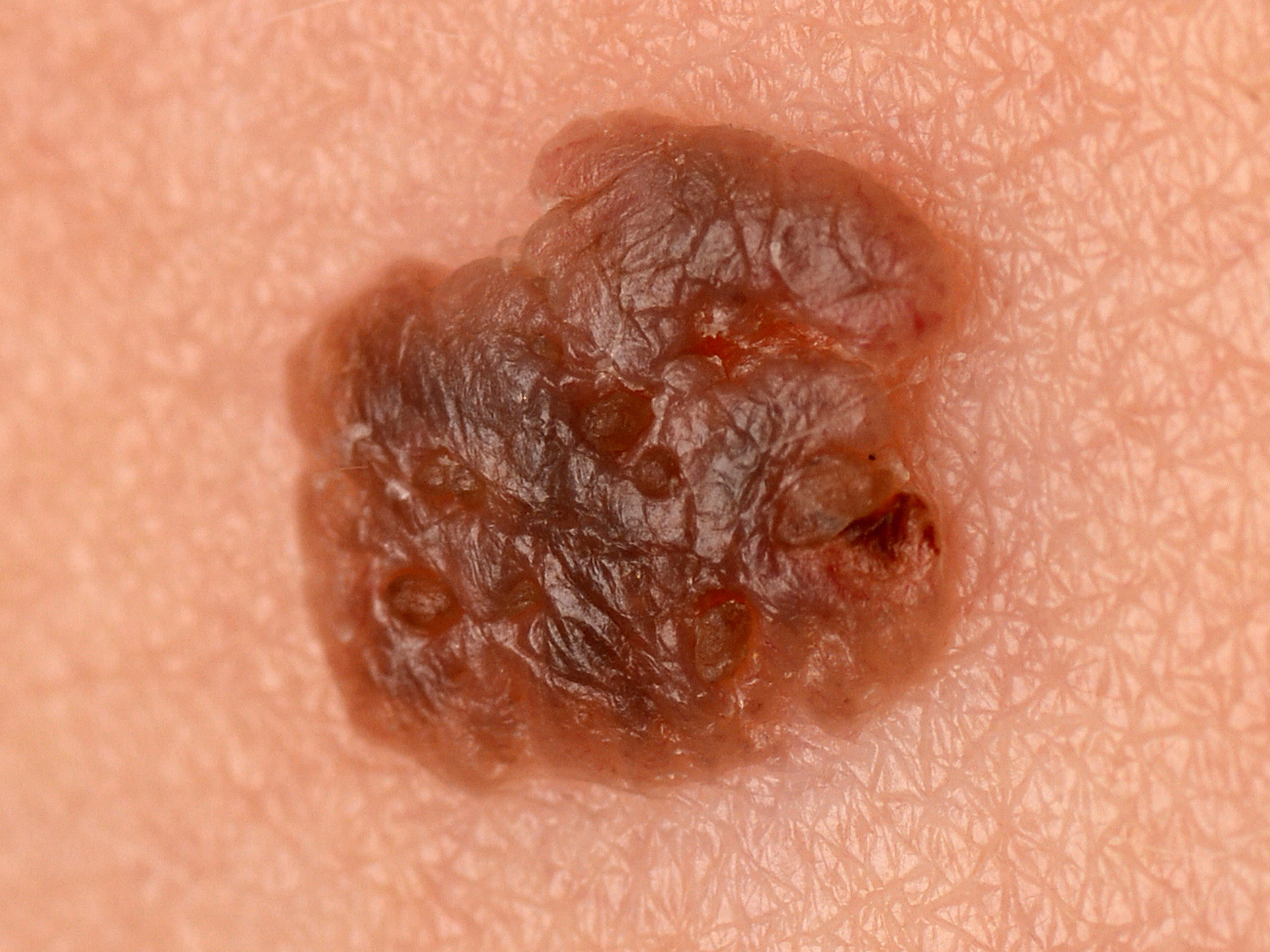
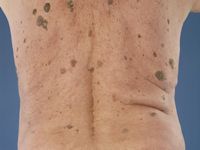
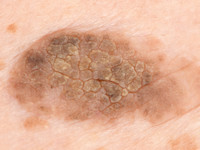
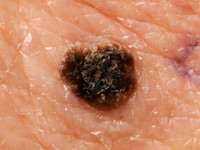
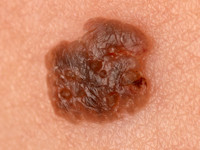
WHAT DOES IT LOOK LIKE?Seborrheic warts can have various shapes and colors. Initially, they are often a skin-colored, yellow-brown, or grayish-brown spot with a rough, velvety surface. Later, they become thicker and larger, with a warty (cauliflower-like, bumpy, or crumbly) surface. They appear to be resting on the skin and are easy to scratch off, yet they are firmly attached to the skin. The surface is sometimes somewhat yellowish and greasy, hence the name verruca seborrheica (greasy wart). The average size is 0.5 to 1 cm, but they can grow to several centimeters. Sometimes they are brown or black.
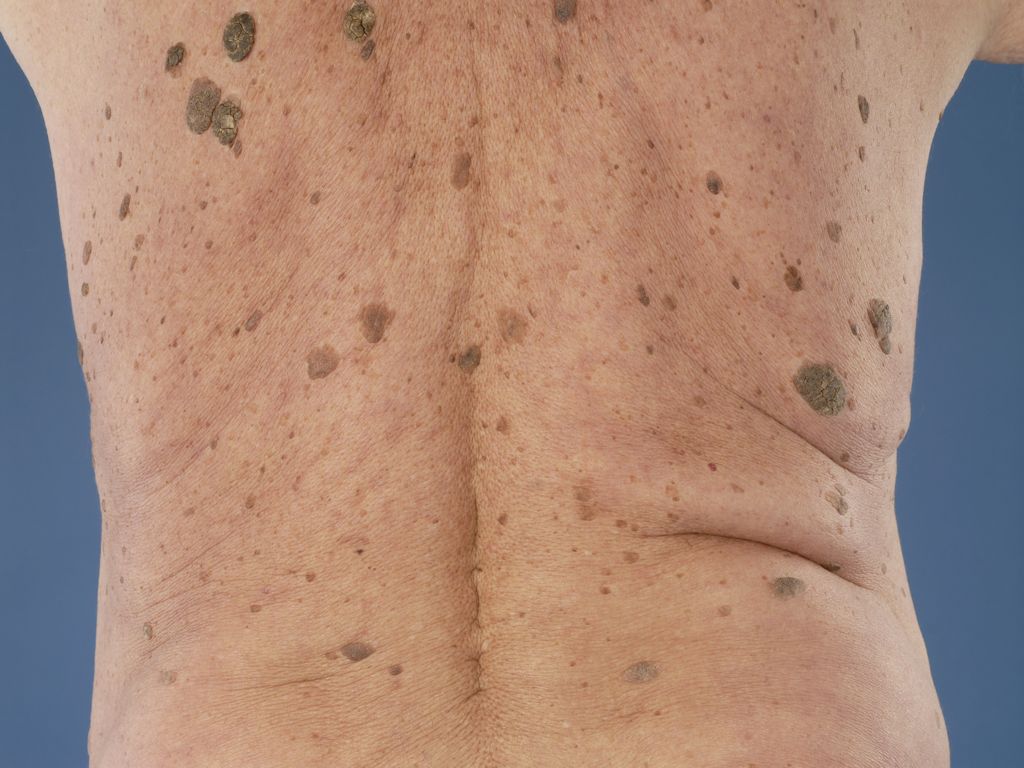
They can appear anywhere on the body, except the palms of the hands, soles of the feet, and the lips. However, there are certain areas where they are most common, such as the chest, back, face (especially at the temples), and neck. Sometimes there are just one or a few, sometimes a whole cluster, or the entire body is covered with hundreds of seborrheic warts.
 |
 |
 |
| age wart |
age wart |
age wart |
Variants of seborrheic keratosis:StuccokeratosesThese age-related warts are primarily found on the backs of the hands, forearms, lower legs, ankles, and the backs of the feet. They are multiple small, hard bumps that vary in color from white, grayish, to light brown.Dermatosis papulosa nigraThese are small (1-5 mm in size) brown to black spots, bumps or warts that mainly occur on the face and neck in patients with dark skin and in Asians.WHAT IS THE CAUSE?The cause of seborrheic keratosis remains a mystery. Other warts, such as plantar warts, are caused by a virus, the human papillomavirus (HPV). In the case of seborrheic keratosis, extensive research has been conducted to determine whether a viral infection is involved; this has not been found. Because some people experience more seborrheic keratosis and it can also run in families, it is possible that a hereditary factor plays a role. Currently, it is believed that over the years, a "mutation" develops in some skin cells, causing them to divide more rapidly and form a bump/wart.IS IT CONTAGIOUS?It's not contagious. No virus or bacteria have ever been found to be involved in the development of seborrheic keratosis, so it's not contagious.HOW IS THE DIAGNOSIS MADE?Seborrheic keratosis (senile keratosis) is generally easy to recognize based on its appearance. Further examination is almost never necessary. Occasionally, it's not entirely certain that it's a seborrheic keratosis. If there's any doubt, the wart or a section of it is removed under local anesthesia and sent to the laboratory for tissue analysis.HOW ARE AGE WARTS TREATED?Because these warts are benign, they don't need to be removed. Many people still want them removed for cosmetic reasons, or because they're in the way (they can grow very large), or because they're constantly scratched and then bleed.
The warts can be removed. This is usually done by a dermatologist, but some general practitioners also perform it. There are several techniques:
Scraping:
The wart is scraped from the skin with a curette (a sharp spoon). This leaves a superficial abrasion, which heals with a scab. Later, just like with a normal abrasion, little or nothing will be visible.
Freezing:
Freezing with liquid nitrogen is also an option. The wart is frozen to pieces and later dies and falls off the skin.
Burning (electrocoagulation):
The wart can be precisely burned away with an electrocoagulation device. This technique is particularly useful for small warts on pigmented skin (dermatosis papulosa nigra). A small needle is used to dab the warts and burn them away. The skin is first numbed with an anesthetic cream or with anesthetic injections.
Removal:
Some seborrheic warts, which are very large and protruding, can be cut from the skin under local anesthesia with a small knife or razor blade.
Anesthesia:
Because the warts are firmly attached to the skin, some form of anesthesia is necessary. Sometimes cooling with a canister containing a very cold liquid (chloroethyl spray) is sufficient. However, this effect wears off quickly. For removing (scraping off) large seborrheic verrucas, a good, proper anesthetic is best. For this, a small amount of anesthetic fluid (such as lidocaine) is sprayed directly under the wart. Afterwards, the wart, even a very large one on the face, can be removed painlessly. Another method, particularly suitable for dermatosis papulosa nigra, is applying a numbing cream (EMLA cream). This should be applied an hour before the treatment and covered with plastic wrap.WHAT CAN I DO TO PREVENT AGE WARTS?There's nothing you can do to influence the progression of seborrheic keratosis or prevent its development.
It's not recommended to scrape off the keratosis yourself; it's not as easy as it seems, and it can cause wounds that can become infected. If you want to get rid of seborrheic keratosis, it's best to have your doctor remove them. They can also assess whether it's actually seborrheic verruca.WHAT ARE THE OUTLOOK?Seborrheic keratosis doesn't go away on its own. It can grow larger, sometimes reaching several centimeters. It can also become very thick, making it harder to remove. It can bleed and irritate. However, it's not cancerous, and it can't become cancerous. |