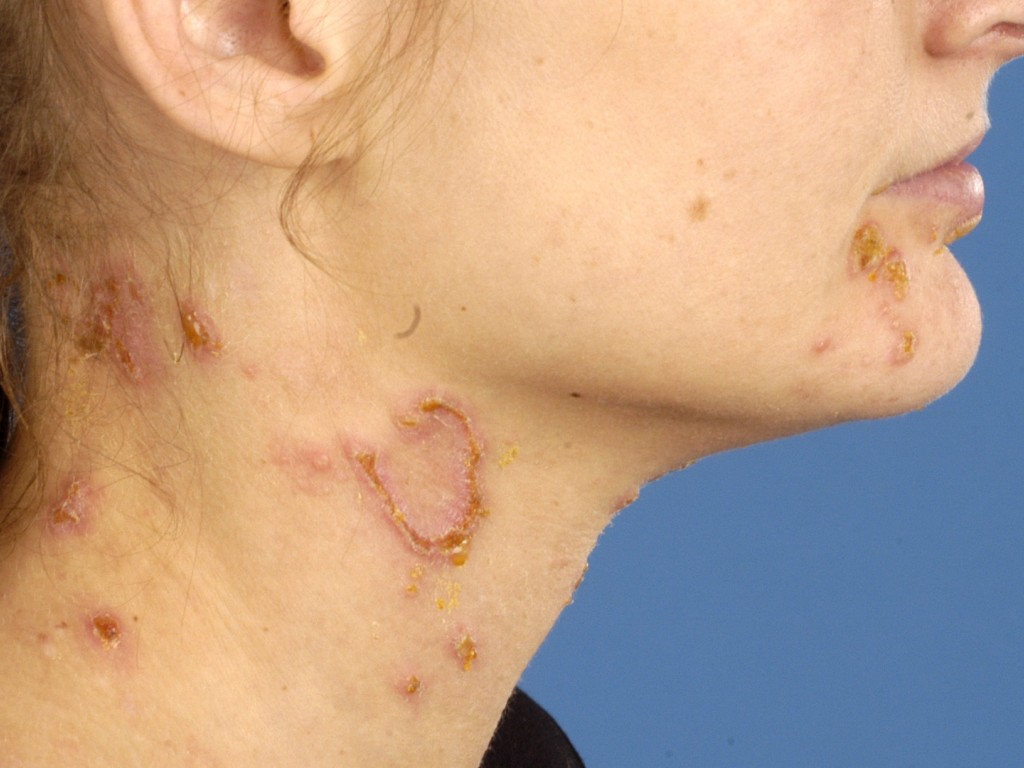
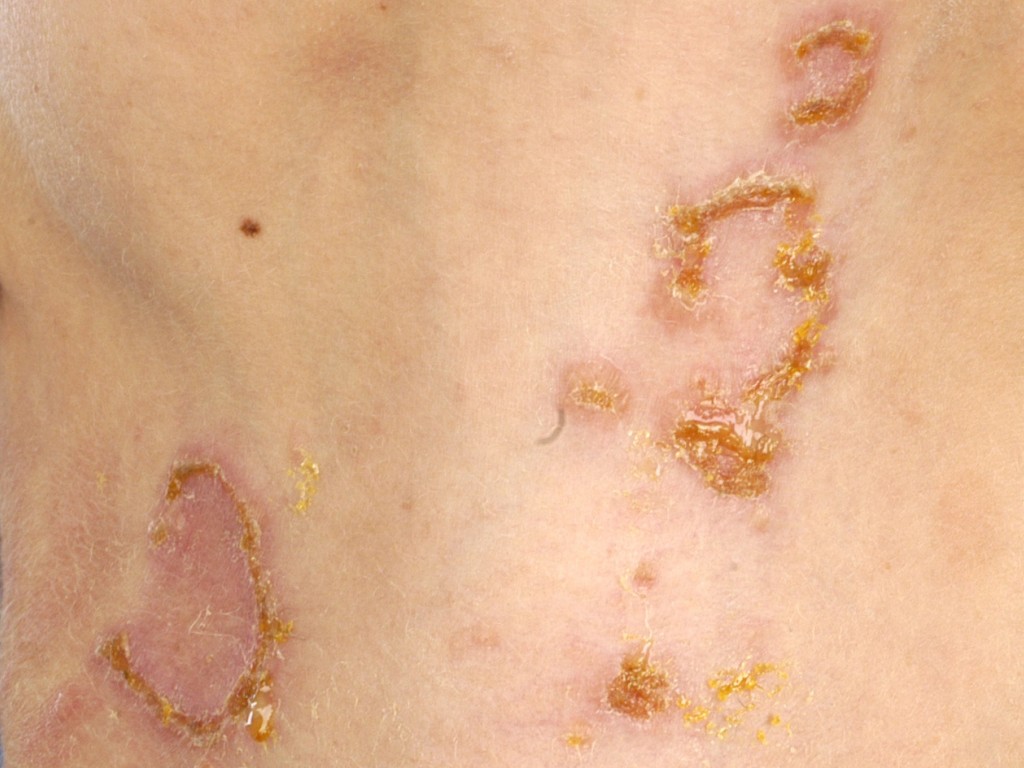
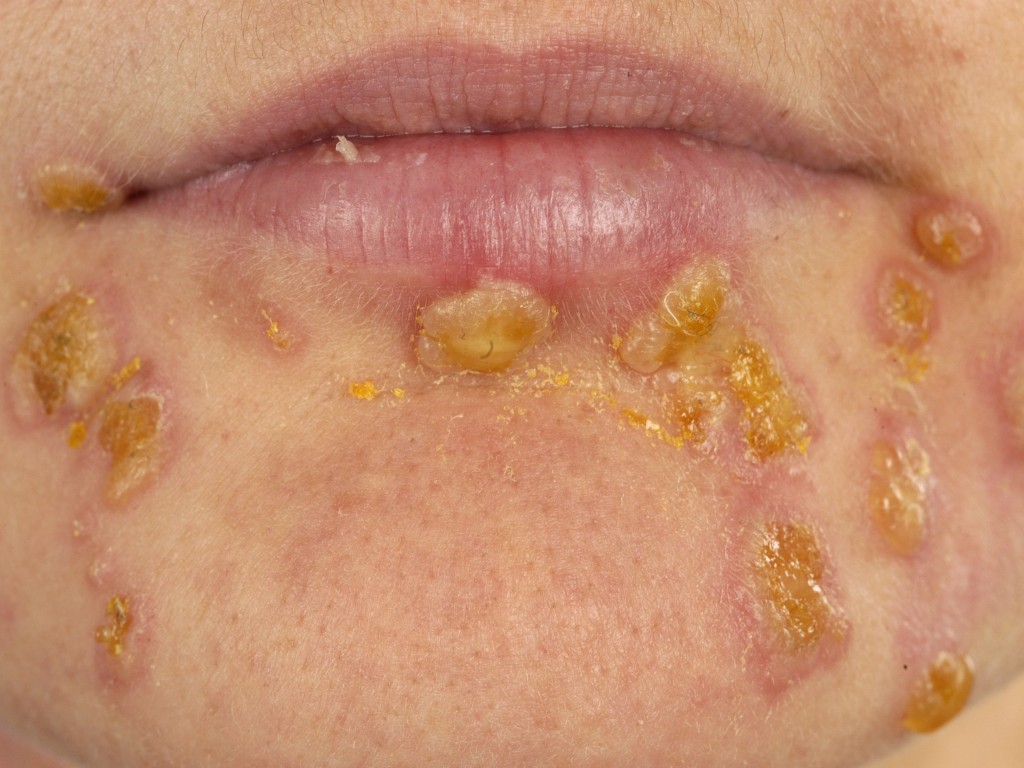
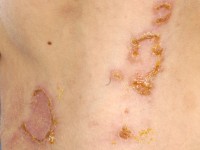
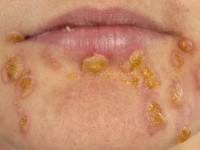
WHAT IS LINEAR IgA DERMATOSIS?Linear IgA dermatosis is a rare blistering disease of the skin and mucous membranes. Blisters and blisters appear suddenly on the skin. It can develop without any cause, but can also be triggered by medications.WHAT DOES IT LOOK LIKE?Small and large blisters and vesicles develop. The blisters can contain clear, yellowish, or bloody contents. They can appear anywhere on the body, but in children, they are more common on the lower abdomen. The skin where they appear can appear normal; sometimes the skin around the blisters is red or raised. Itching and a burning sensation can accompany them. Sometimes, a ring of many new small blisters develops around a spot. If the blisters break, superficial wounds and scabs develop on the skin.
 |
 |
 |
| linear IgA dermatosis |
linear IgA dermatosis |
linear IgA dermatosis |
Besides the skin, the mucous membranes (eyes, oral cavity, pharynx, esophagus, anus) can also be affected. This is the case in half of all patients. The eyes can be damaged, both the inner surface of the eyelids and the cornea. Symptoms include dry, irritated eyes, a feeling of having a gritty feeling inside, and sensitivity to light. Blisters and ulcers can develop in the mouth and throat, along with hoarseness, a sore throat, and gingivitis. The mucous membrane lining the nose can also be affected, resulting in nosebleeds.WHO CAN GET LINEAR IGA DERMATOSIS?In principle, anyone can develop linear IgA dermatosis, but it is very rare. It is mainly seen in young children (under 5 years old) and the elderly (over 50 years old). The drug-induced form is more common in the elderly. Linear IgA dermatosis in children is also called chronic bullous disease of childhood.WHAT IS THE CAUSE?Linear IgA dermatosis is a so-called autoimmune disease. For an unknown reason, antibodies are formed against the skin. These antibodies are also called immunoglobulins, type A (abbreviated: IgA). The antibodies target the layer of proteins that attach the skin to the underlying layer. Why this happens is unknown. The antibodies trigger an inflammatory response. White blood cells are then dispatched to clean up the mess, but in doing so, the layer that attaches the skin is also damaged, resulting in blisters.
There are known cases where this blistering condition was triggered by another underlying disease. However, this is extremely rare. It has been described in lymphomas (Hodgkin's and non-Hodgkin's lymphoma), blood disorders, infections, autoimmune diseases (SLE, rheumatoid arthritis, dermatomyositis, polymyalgia rheumatica), and intestinal diseases. Because it is so rare, there is no need to investigate underlying diseases if someone has no symptoms that suggest anything.WHICH MEDICINES CAN CAUSE IT?There is a long list of medications that can trigger linear IgA dermatosis. The most notorious is the antibiotic vancomycin. Other medications mentioned include amiodarone, Augmentin (amoxicillin/clavulanic acid), captopril, cefamandole, ciclosporin, co-trimoxazole, diclofenac, phenytoin, glibencamide, iodinated contrast agents, lithium, moxifloxacin, sodium hypochlorite, penicillin, somatostatin, and sulfamethoxazole/trimethoprim.
If the condition was caused by a medication, you must carry a medication passport stating that this medication must never be prescribed to you again. Your general practitioner and pharmacist must also be aware of this and record it in your records.IS LINEAR IGA DERMATOSIS A DANGEROUS DISEASE?That's not too bad; the blisters that develop are superficial and heal without scarring. If the mucous membranes are involved and scarring occurs, it can cause problems. However, there is treatment (usually with dapsone tablets) that can prevent further damage.HOW IS THE DIAGNOSIS MADE?The diagnosis is based on the clinical picture, its appearance. However, additional testing is usually necessary, such as a skin biopsy . It can closely resemble other skin conditions, such as impetigo or other blistering conditions .HOW IS LINEAR IGA DERMATOSIS TREATED?Tablets:
Most adult patients with linear IgA dermatosis respond well to the medication dapsone at a dose between 50 and 100 mg per day. However, dapsone can have side effects that make it unmanageable. For young children, a lower dose is tried, or an alternative medication such as the antibiotic erythromycin is used. Linear IgA dermatosis is not caused by bacteria; so how does an antibiotic work? Erythromycin is not only an antibiotic; it also has an anti-inflammatory effect that is independent of its antibacterial properties. Other agents used with varying degrees of success for linear IgA dermatosis include prednisolone, ciclosporin, sulfasalazine, colchicine, mycophenolate mofetil, tetracycline, nicotinamide, and intravenous immunoglobulins. Long-term treatment is often necessary to suppress blistering.
Ointments and dressings:
Small blisters are sometimes treated with a corticosteroid cream. Broken blisters and abrasions can be dressed with various wound dressings. The simplest is often a gauze dressing with a dry gauze layer on top, loosely secured with paper bandages. For infections, betadine-iodine ointment gauze dressings or an antibacterial ointment can also be used. Special silicone-coated wound dressings are also available; these are gentle on the skin.WHAT ARE THE OUTLOOK?In most patients, the condition resolves completely after a few years. In children, it lasts an average of four years (2 to 8 years), and in adults, it lasts an average of six years (1 to 15 years). If it was caused by medication, and the responsible medication is stopped, it resolves more quickly. There is also a form of linear IgA dermatosis that develops during pregnancy: this is not dangerous for the baby and often resolves spontaneously in the third trimester. |