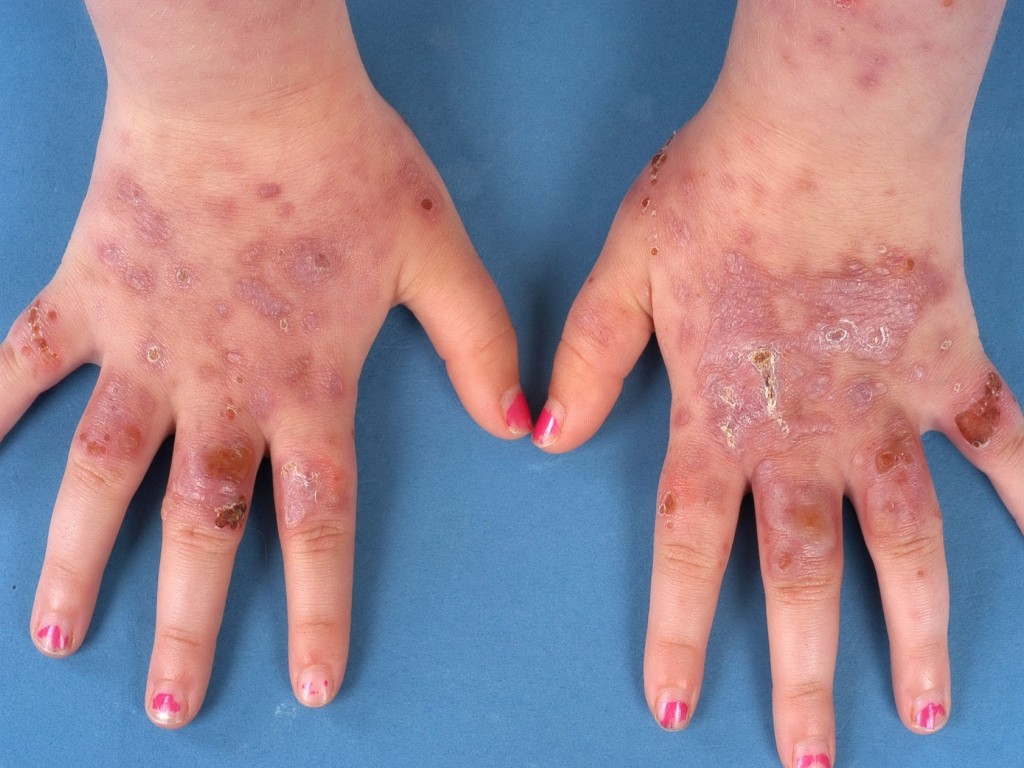
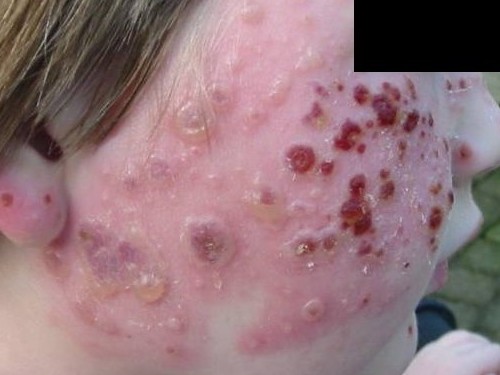
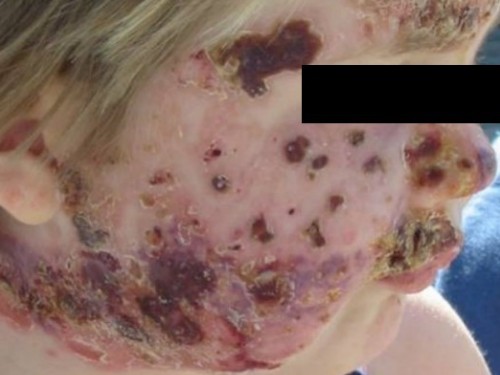
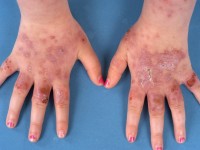
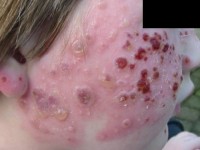
WHAT IS HYDROA VACCINIFORME?Hydroa vacciniforme is a rare form of sun sensitivity that causes blisters and crusts to form on the face and other sun-exposed areas, such as the backs of the hands. It begins in childhood. Hydroa (hydra = water) refers to the fluid-filled blisters, and vacciniform means: resembling smallpox.WHAT ARE THE PHENOMENA?Symptoms usually arise in spring, when the sun begins to regain its strength. A few hours (0.5 to 2 hours) after sun exposure (particularly UVA rays), a burning sensation, redness, and swelling develop in the skin. Red spots, blisters, and vesicles may appear on areas that have been exposed to the sun, such as the face, the edges of the ears, and the backs of the hands. Some of these blisters may be filled with blood. The blisters often have a small indentation in the center. Later, sores with scabs and ulcers develop. The skin breaks down, which can leave scars.
Other symptoms may include painful and burning eyes with sensitivity to light, a flu-like feeling, fever, headache, and split nails.
 |
 |
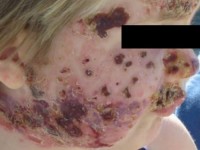 |
| hydroa vacciniforme |
hydroa vacciniforme |
hydroa vacciniforme |
WHAT IS THE CAUSE OF HYDROA VACCINIFORME?The cause is unknown. It develops spontaneously. It is clear, however, that it is triggered by sunlight. That's why it's mainly found on the face and the backs of the hands. It's primarily the UVA (the part of sunlight that causes tanning) that causes hydroa vacciniforme. In recent years, it has been thought to be related to a previous viral infection, the Epstein-Barr virus (EBV). However, this is not certain. An Epstein-Barr virus infection is very common; almost everyone has had it at some point.WHO GETS HYDROA VACCINIFORME?Fortunately, the condition is very rare. It occurs in both boys and girls, primarily in the 3-15 age group. It's probably slightly more common in girls than boys. But in boys who have it, it can be more severe or last longer. It occurs in children with fair skin. Tanned skin protects against sunlight.HOW IS THE DIAGNOSIS MADE?The diagnosis is based on the clinical picture and its appearance. Sometimes, a skin biopsy or blood or urine tests are necessary. Several skin conditions can mimic this, and testing is necessary to determine the cause.HOW IS HYDROA VACCINIFORME TREATED?Sun protection:
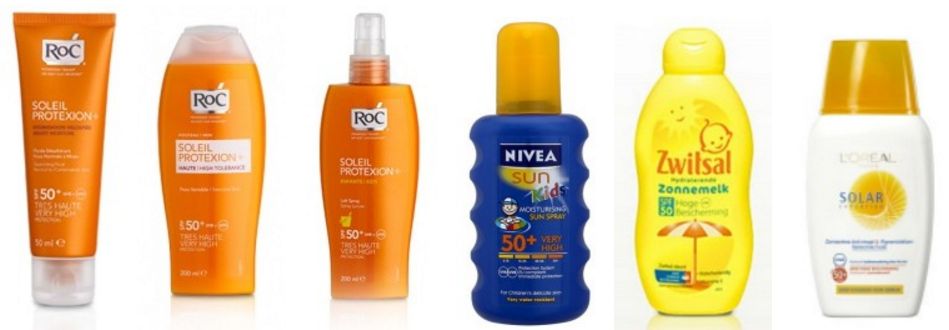
The most important thing for curing hydroa vacciniforme is avoiding the sun. The sun is the culprit, so keep your child out of the sun. Use high-quality sunscreen with a high SPF (factor 50). The sunscreen should offer excellent UVA protection. Good sunscreens are widely available: supermarkets, pharmacies, and drugstores. Buy a product from a reputable brand (Roc, Nivea, Zwitsal, L'Oréal, etc.).
Avoid sunlight
- Stay out of the sun, especially during peak hours (between 11:00 AM and 3:00 PM).
- Wear clothing that provides the best protection from the sun. Special sun-protective clothing is also available.
- Wear sunglasses.
- Be careful in cool and windy weather, as you won't notice the sun's heat.
- Be especially careful in high mountains (powerful UV rays).
- Beware of sun reflections from snow, beaches, and water.
- Glass (behind windows, in the car) protects against UVB, but UVA rays pass through.
- Even under a parasol, sunlight, especially UVA light, reaches the skin.
- Even in cloudy weather, UVA light is present.
- Use a good sunscreen and always apply it before your child goes outside.
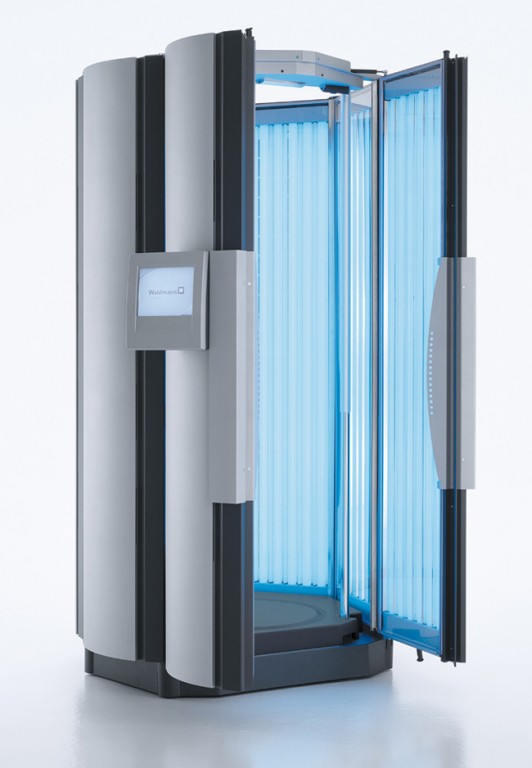
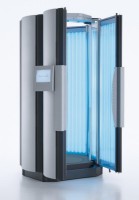
Acclimating to sunlight It is possible to artificially acclimate the skin to sunlight. This is called photoacclimatization therapy. This can be achieved, for example, by using a UVB light box
that emits a very low amount of light
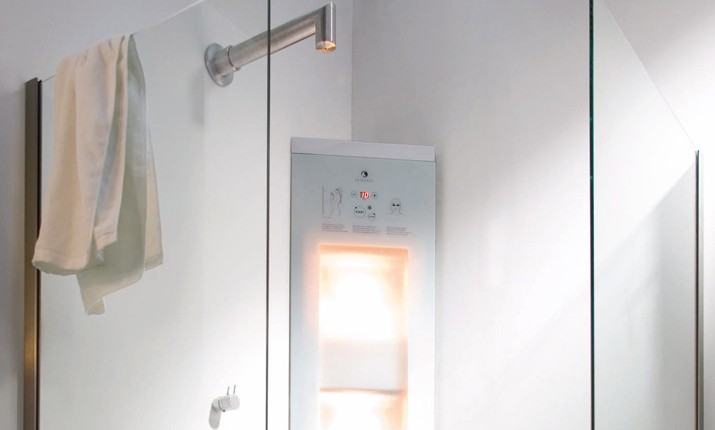
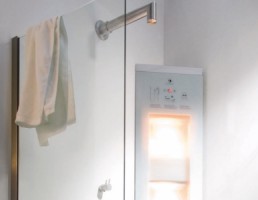
2-3 times a week . With each subsequent visit, the amount of light increases. This causes the skin to thicken and tan somewhat, making it more resistant to sunlight. This provides a protective effect. Light acclimatization should begin at the beginning of the year so that the skin is acclimatized by spring, when the sun becomes more intense. Nowadays, UVB light elements are also available for purchase that can be installed in the shower. Sunshower BV supplies this type of equipment, which also allows for light acclimatization. These UVB shower lamps are expensive (around 2500 euros). Sometimes health insurance companies will reimburse part of the cost.
 |
 |
 |
 |
| UVB light box |
Sunshower UVB equipment for the shower |
Caring for blisters and wounds:
Extensive damage with blisters and wounds requires wound care. Open wounds and blister bases can be treated with antibacterial ointments (fusidin ointment or cream, silver sulfadiazine cream) or covered with gauze or petroleum jelly. A thick protective layer of zinc oxide ointment is also an option, but removing it can be painful. Corticosteroid ointments or tablets are sometimes prescribed for newly formed sores to reduce inflammation.WHAT ARE THE OUTLOOK?The outlook is good. Hydroa vacciniforme is a childhood condition that resolves spontaneously during puberty. However, scars that have formed remain visible. Therefore, it's important to minimize damage as much as possible during childhood by using effective sun protection measures. |