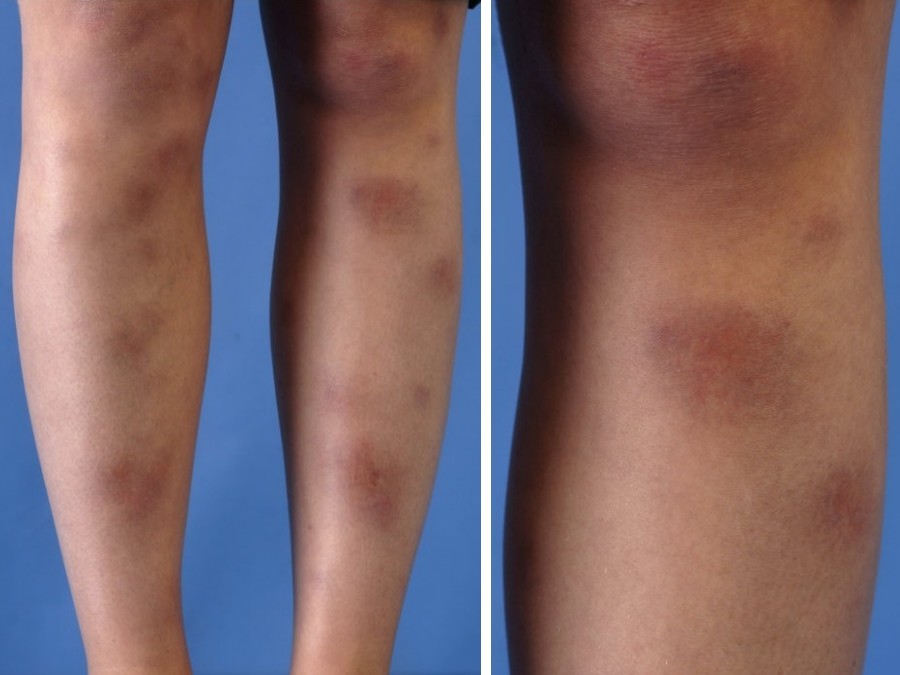
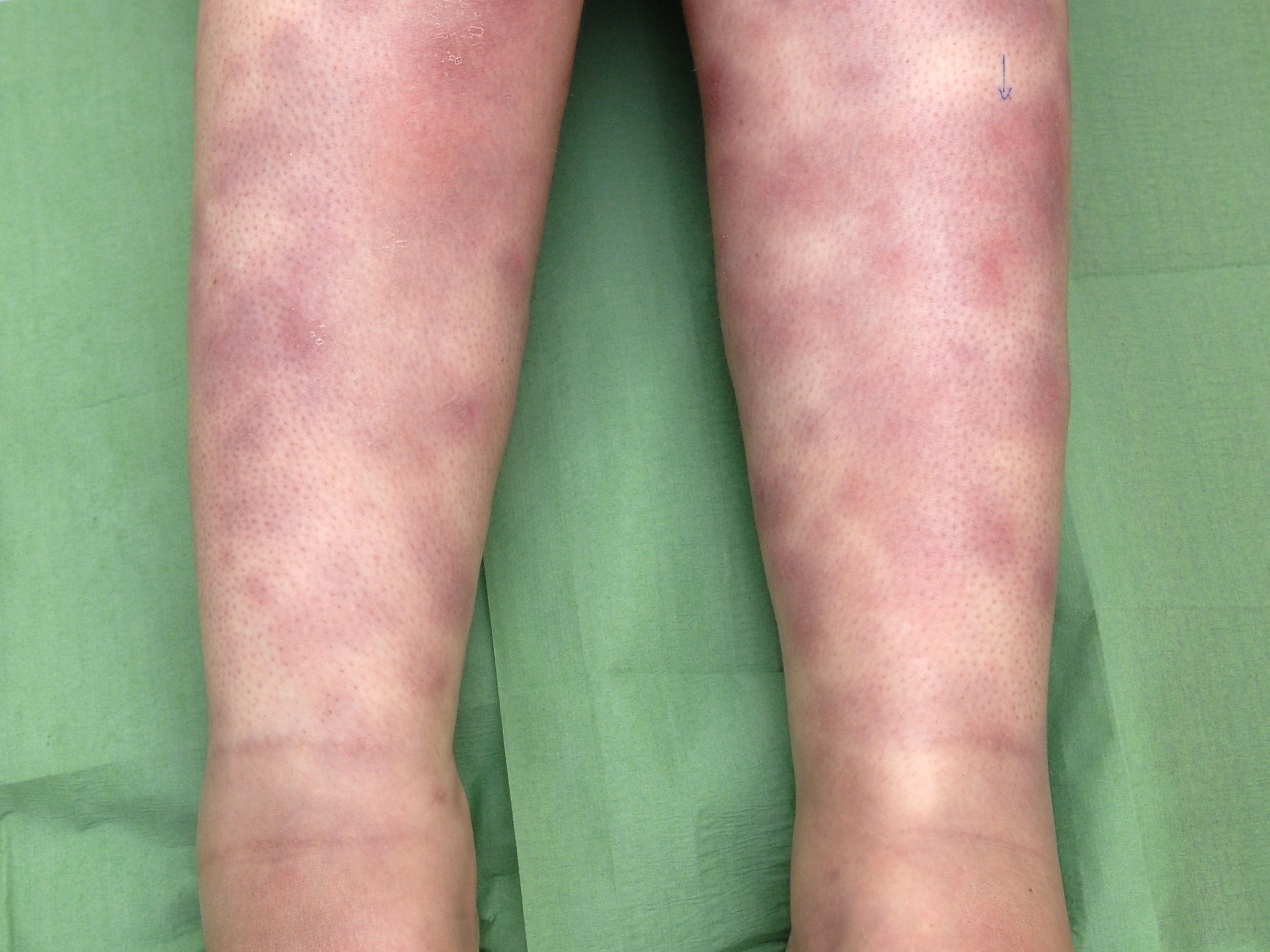
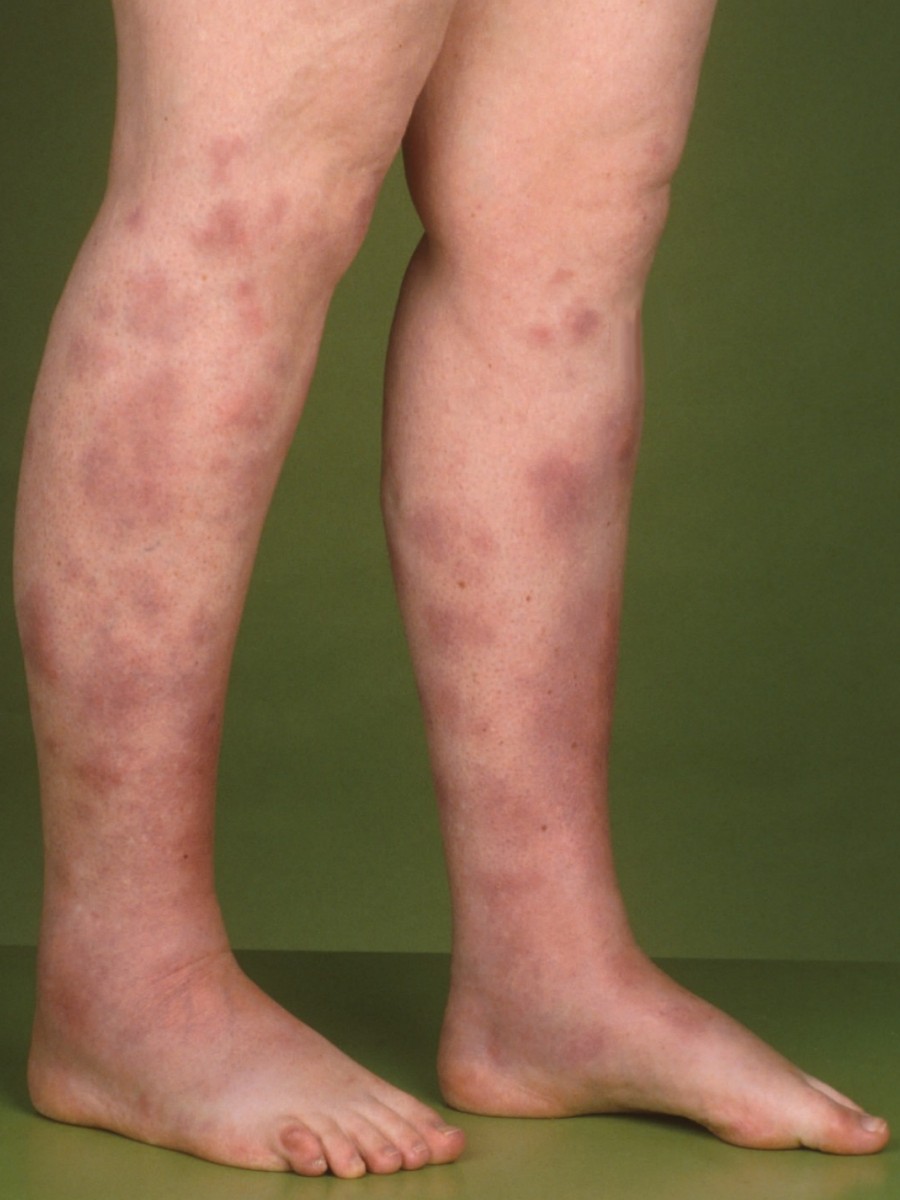
WHAT IS ERYTHEMA NODOSUM?Erythema nodosum is a skin condition in which painful red bumps suddenly appear on the legs, often on the front of the lower legs. These bumps are caused by inflammation in the subcutaneous fat. It is usually a reaction to an infection, another illness, or medication. It resolves on its own.
 |
 |
 |
| erythema nodosum |
erythema nodosum |
erythema nodosum |
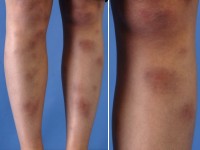
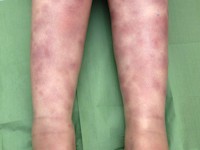
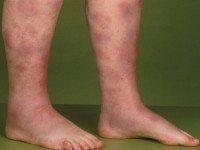
WHAT DOES ERYTHEMA NODOSUM LOOK LIKE?With erythema nodosum, painful, red, and warm bumps suddenly appear on the legs, usually at the front of the lower legs. They can also appear on the arms. The spots are 1-5 cm in size and most of them are under the skin (in the fat). Sometimes they are larger patches or discs of inflammation. It usually affects both legs. There is often some swelling of the legs, and fluid can accumulate (edema) on the lower legs and around the ankles. The spots later turn blue and gradually fade. New ones may appear in other areas. It usually takes 3-6 weeks for the condition to completely disappear.
During an attack, other symptoms may also occur, such as fever, fatigue, headache, feeling ill, painful joints, and eye inflammation. These symptoms also resolve on their own.WHAT IS THE CAUSE OF ERYTHEMA NODOSUM?Erythema nodosum is an inflammation of the fat cells in the layer of fat beneath the skin. The inflammation is a reaction (a kind of allergic reaction) to something. This could be a previous infection (often respiratory or intestinal infections), or a medication used in the preceding weeks. A common cause is a streptococcal infection, a bacterium that can cause strep throat and sore throat. But various cold viruses can also trigger it. Erythema nodosum can also develop with internal diseases such as sarcoidosis or intestinal diseases like Crohn's disease, but this is rare. Very often, the cause is completely unclear.WHO CAN GET ERYTHEMA NODOSUM?In principle, anyone can get erythema nodosum. Approximately 800 new patients are diagnosed in the Netherlands each year. It occurs primarily in women between the ages of 15 and 40.IS ERYTHEMA NODOSUM CONTAGIOUS?Erythema nodosum is not contagious. It could be a reaction to bacteria, such as those that cause strep throat, but the sores themselves are not contaminated by bacteria.HOW IS THE DIAGNOSIS MADE?The diagnosis is based on the clinical picture, its appearance. Usually, no further testing is necessary. Sometimes a skin biopsy is taken under local anesthesia (if the picture isn't entirely clear).
Depending on whether other symptoms are present or have been present, such as a cough or sore throat, a throat culture, blood tests, or an X-ray may be performed to try to determine the cause. Because nothing is often found and erythema nodosum resolves on its own, it's also possible to decide not to do any further testing and simply wait until the condition subsides.HOW IS ERYTHEMA NODOSUM TREATED?Erythema nodosum resolves on its own. The pain and inflammation can be reduced by taking painkillers that also have an anti-inflammatory effect, such as aspirin (acetylsalicylic acid), diclofenac, ibuprofen, or indomethacin.
- Acetylsalicylic acid tablet or effervescent tablet 500 mg: 1 or 2 tablets 4 times daily.
- Diclofenac 25 mg: Up to 6 tablets of 25 mg per day.
- Diclofenac retard 75 mg: 75 mg once or twice daily.
- Brufen (ibuprofen) 200 mg: Up to 8 tablets of 200 mg per day.
- Indomethacin 50 mg: 50 mg 3-4 times daily.
If the inflammation is severe, it is advisable to rest, even bed rest, or lie down on the couch and not move around too much. If there is a lot of fluid in the leg, a bandage, elastic stocking, or gauze bandage can help. On the other hand, they can also cause pain if they're too tight due to pressure on the painful bumps.
If an underlying cause is found, it will be treated if possible and still necessary. But often, no cause is found, or it was an infection that has already cleared up.WHAT IS THE PROGNOSIS?In most patients, erythema nodosum disappears on its own within 3 to 6 weeks and never returns. In some cases, it takes longer, or it does return. |