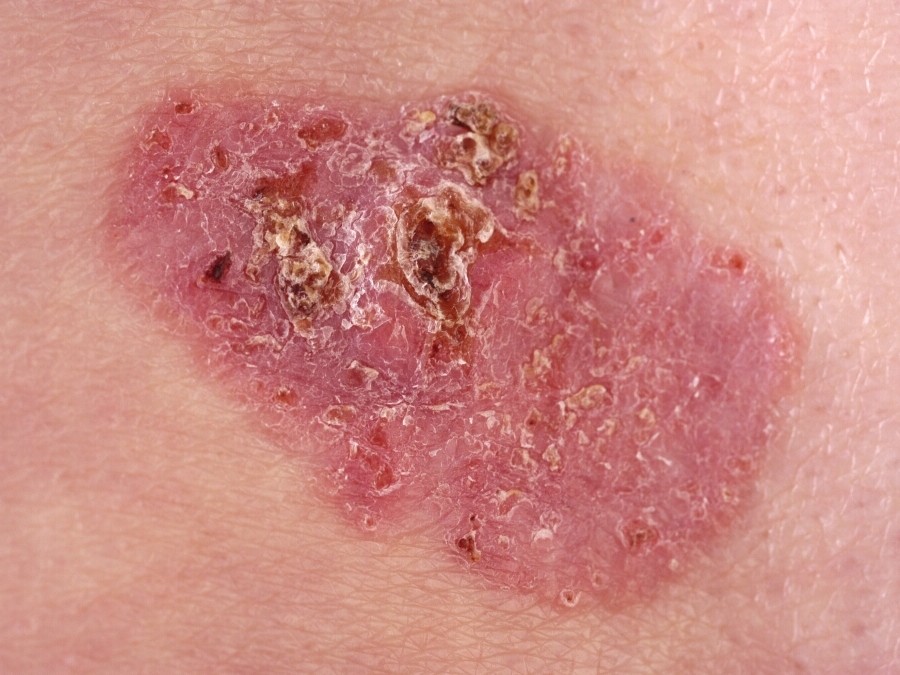
Basal cell carcinoma is considered a form of skin cancer, but it differs from other forms of skin cancer because it is curable in almost all cases (almost 100%). This is because basal cell carcinoma only grows locally, grows very slowly, and does not metastasize (does not spread further into the body via blood vessels and lymphatic vessels).
Treatment consists of cutting or otherwise removing the basal cell carcinoma and a small protective zone around it (freezing, radiation, burning (electrocoagulation), laser surgery, photodynamic therapy).
Basal cell carcinoma is therefore easily treated by removing it in its entirety. Preferably, of course, at the earliest possible stage, when it is still small and can be removed with the most minimal procedure possible. It does grow locally, so the longer you wait, the greater the damage to the surrounding tissue and the larger the scar. Therefore, it is important to have the skin inspected by a doctor promptly if new bumps or spots appear. Keep in mind that basal cell carcinoma grows slowly and can therefore be present for years.
Basal cell carcinoma is common. Approximately 25,000 new cases of skin cancer are discovered annually in the Netherlands, and about 80% of these are basal cell carcinomas. It mainly occurs in older adults and is clearly linked to sunlight exposure. It is therefore more often seen in areas that have been frequently exposed to sunlight, such as the face. Excessive sun exposure, and especially sunburns, are a risk factor for the development of this and other forms of skin cancer. People with fair skin who burn easily are therefore more likely to develop skin cancer. The number of cases of basal cell carcinoma has been increasing in recent decades due to the aging population and the increase in sun tourism since around 1960.
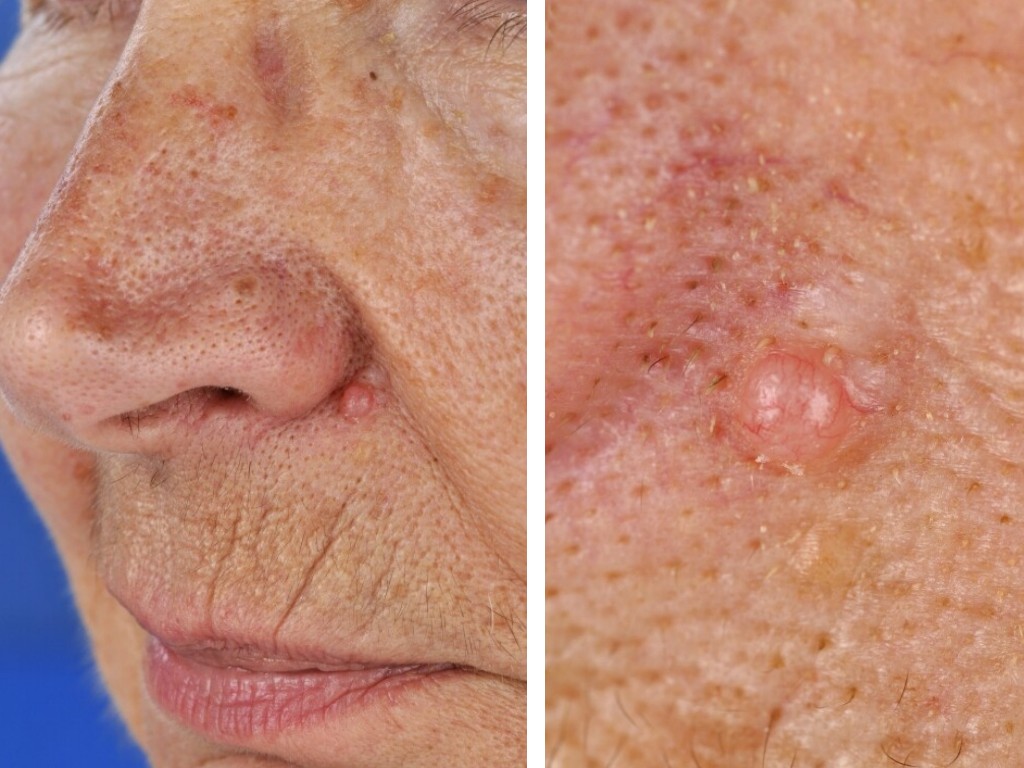
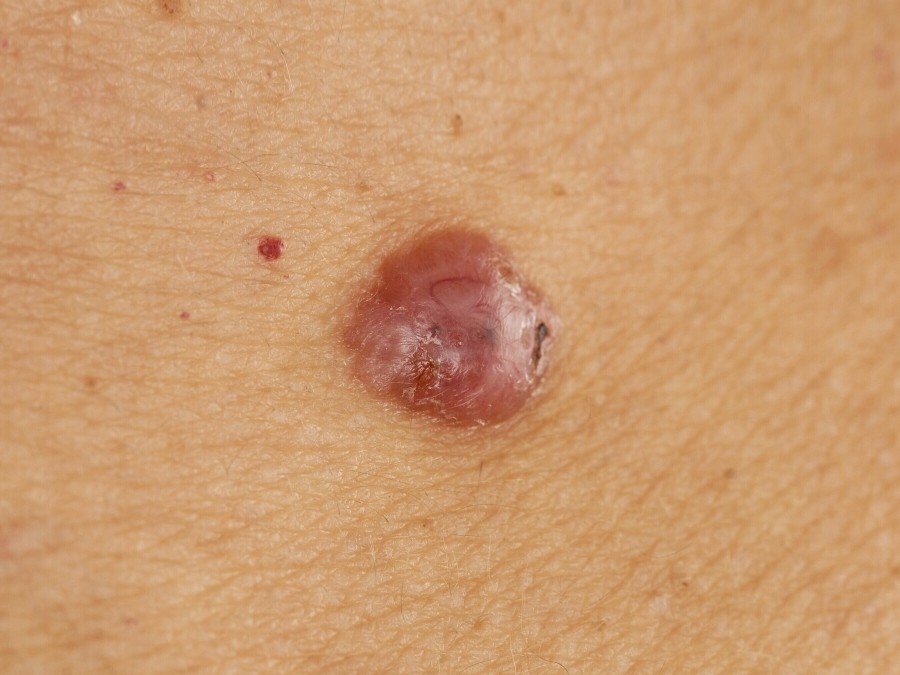
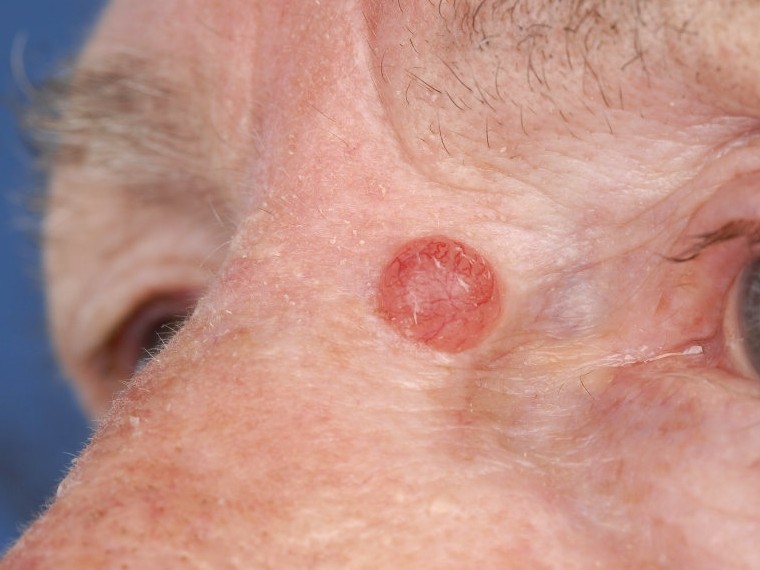
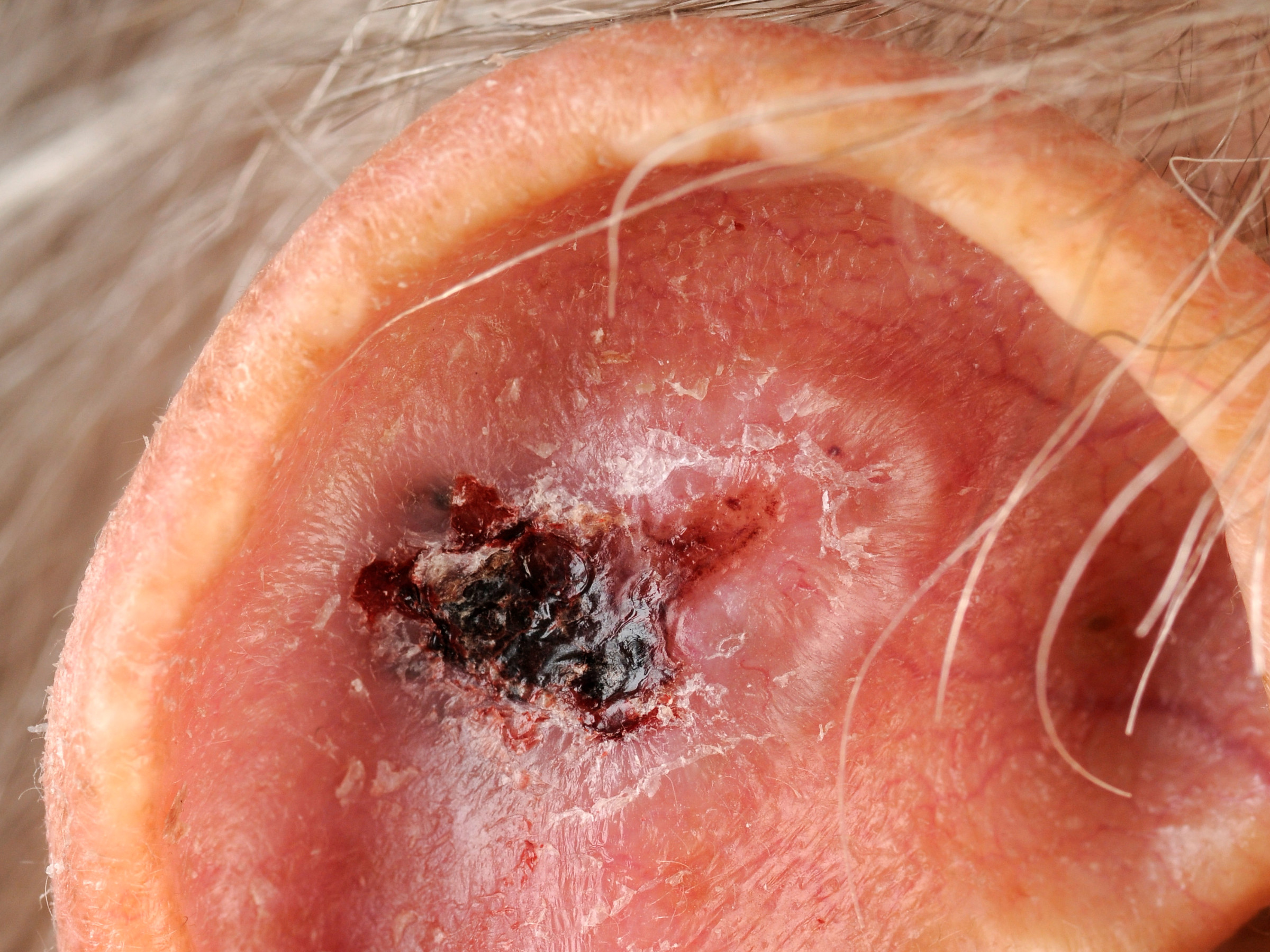
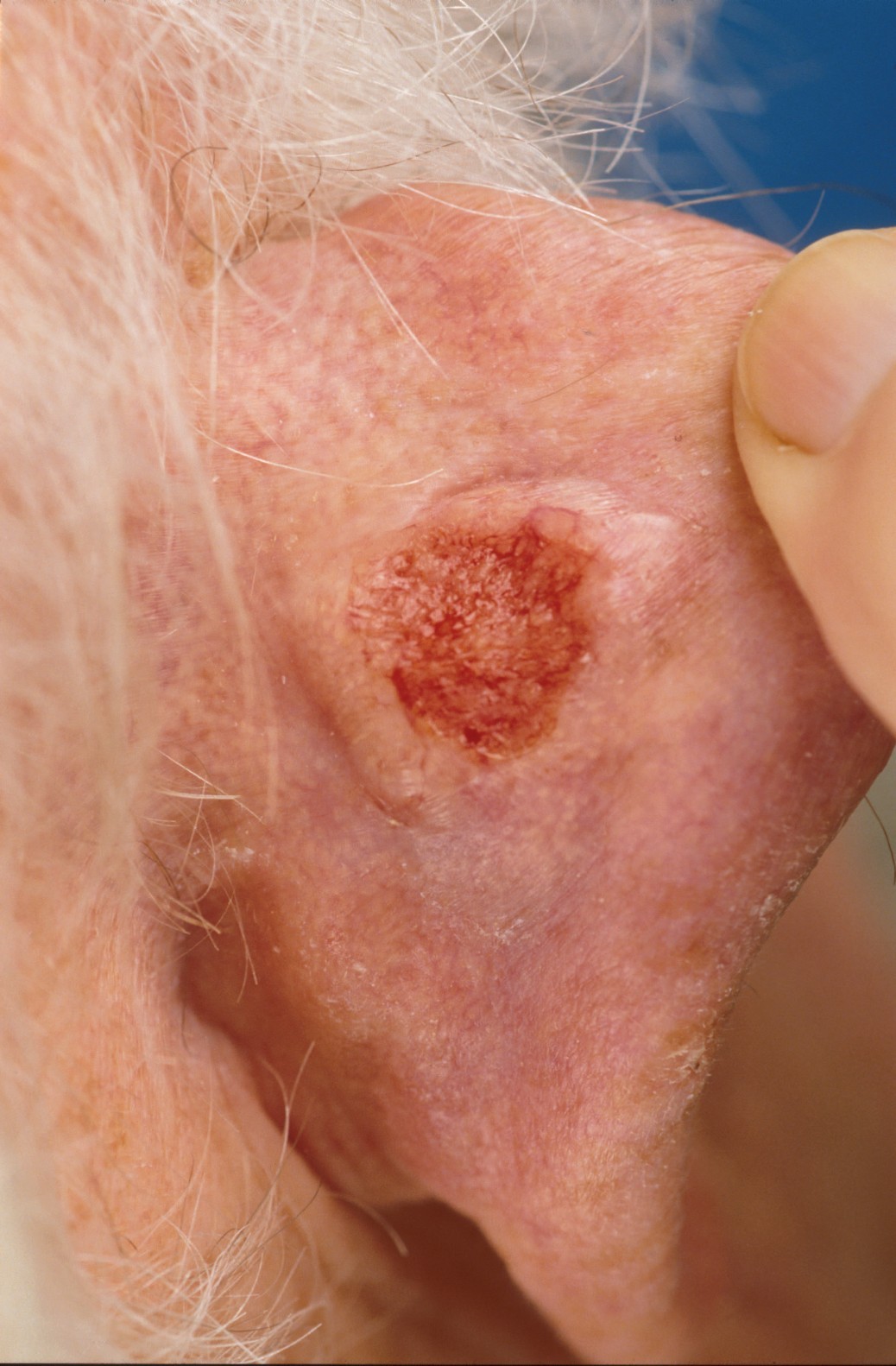
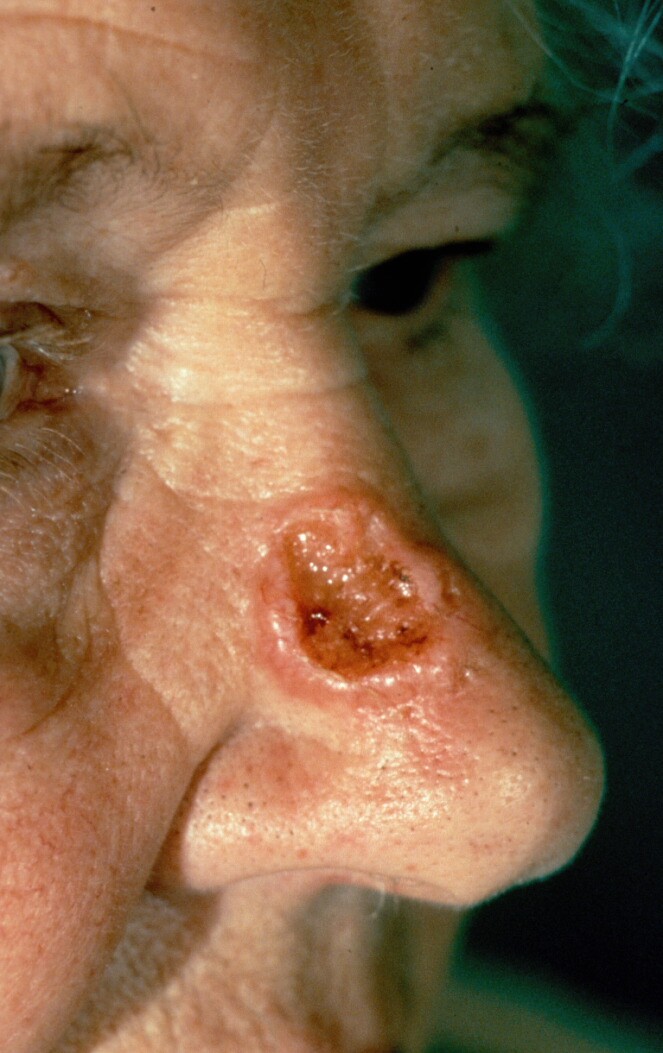
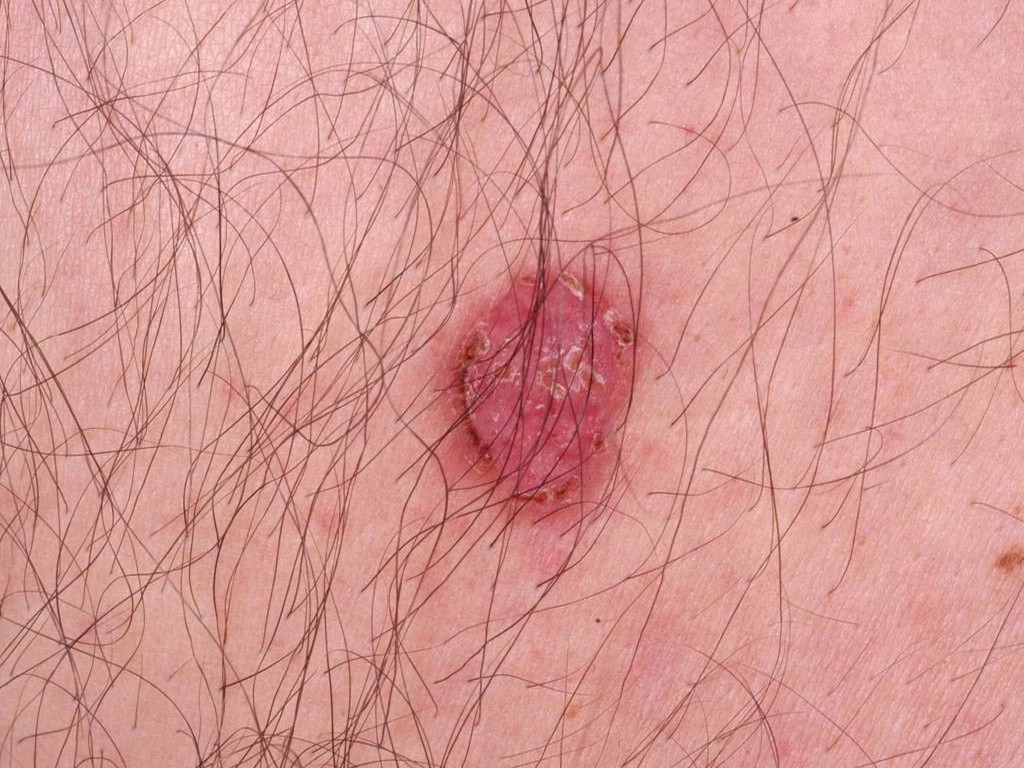
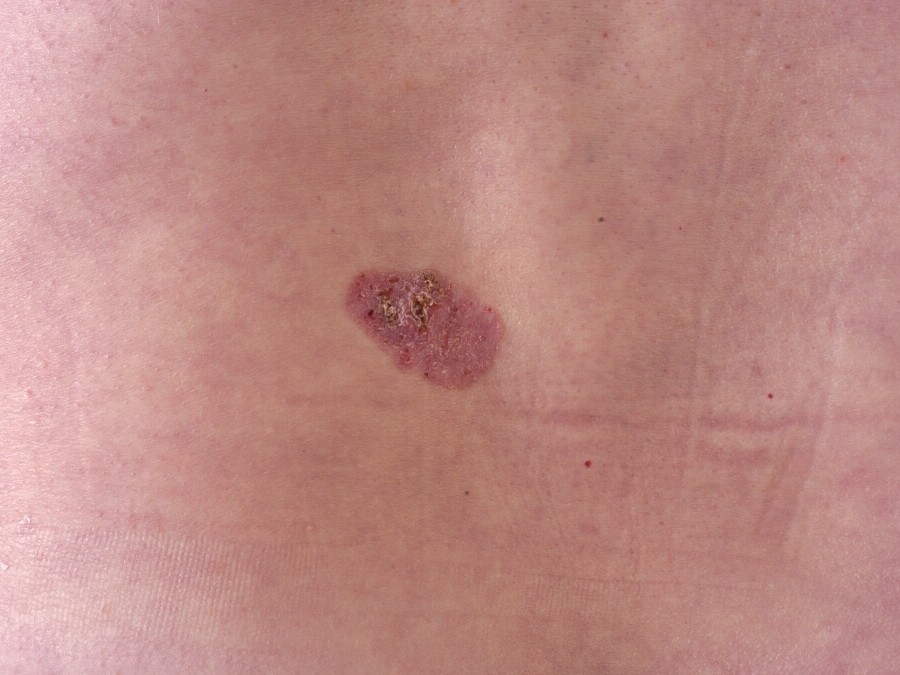
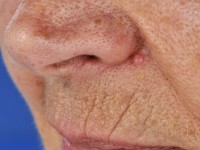
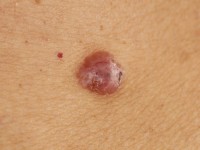
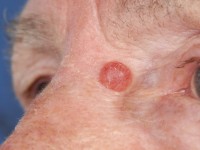
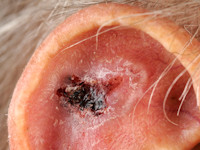
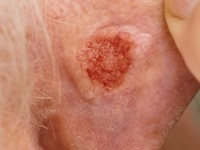
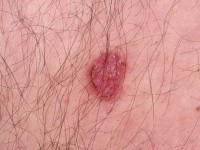
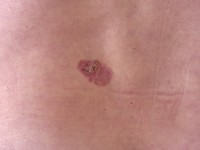
Basal cell carcinoma usually appears as a skin-colored bump. Sometimes it has a glassy-shiny appearance and small blood vessels are visible. However, it can also break and take on the form of a sore. There are also variations where it remains flat, but can still be recognized by discoloration, redness, or flaking.
 |
 |
 |
| basal cell carcinoma, spherical |
basal cell carcinoma, spherical |
basal cell carcinoma, spherical |
 |
 |
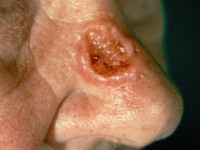 |
| basal cell carcinoma, ulcer |
basal cell carcinoma, ulcer |
basal cell carcinoma, ulcer |
 |
 |
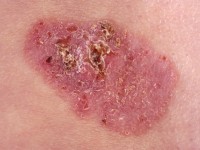 |
| basal cell carcinoma, flat |
basal cell carcinoma, flat |
basal cell carcinoma, flat |
The diagnosis can be made with certainty by taking a small piece of skin for microscopic examination (a biopsy ) under local anesthesia. Your doctor will then recommend one of the many treatment options. In the vast majority of cases, basal cell carcinoma can be easily removed surgically, but sometimes there are technical or practical reasons to prefer a different technique.
Follow-up:
After removal, appointments are made for follow-up. Initially, this will involve wound inspection. Sometimes, an appointment is made for suture removal. This can also be done at your general practitioner.
If there is only one spot, there is no need for further follow-up appointments to examine the skin. If you notice anything about your skin that you are not entirely sure about, the same applies to you as to everyone: make an appointment with your general practitioner or dermatologist to have it assessed.
There is always a small chance that the basal cell carcinoma has not been removed completely. This chance is around 3-5%, depending on the technique used. So, if you notice a new bump or growing area on the treated area after a few months, you should contact your doctor.
If there are multiple areas (two or more basal cell carcinomas), it's wise to schedule an annual checkup with your dermatologist for at least the first three years. Anyone who has had two or more basal cell carcinomas is apparently susceptible to it. This can happen if your skin has been exposed to sunlight for many years. Patients who take medications that suppress the immune system are also susceptible to developing basal cell carcinomas. |