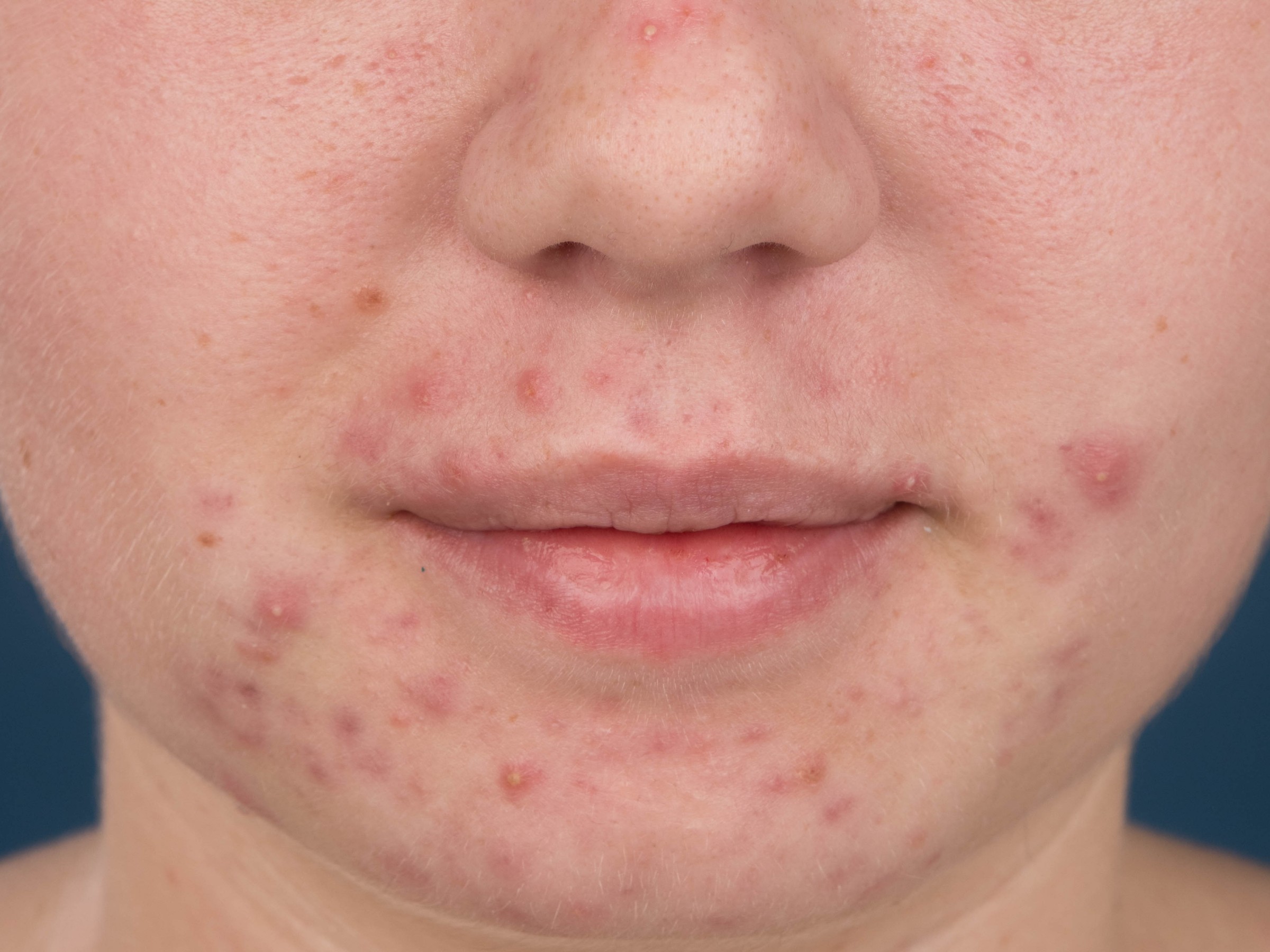
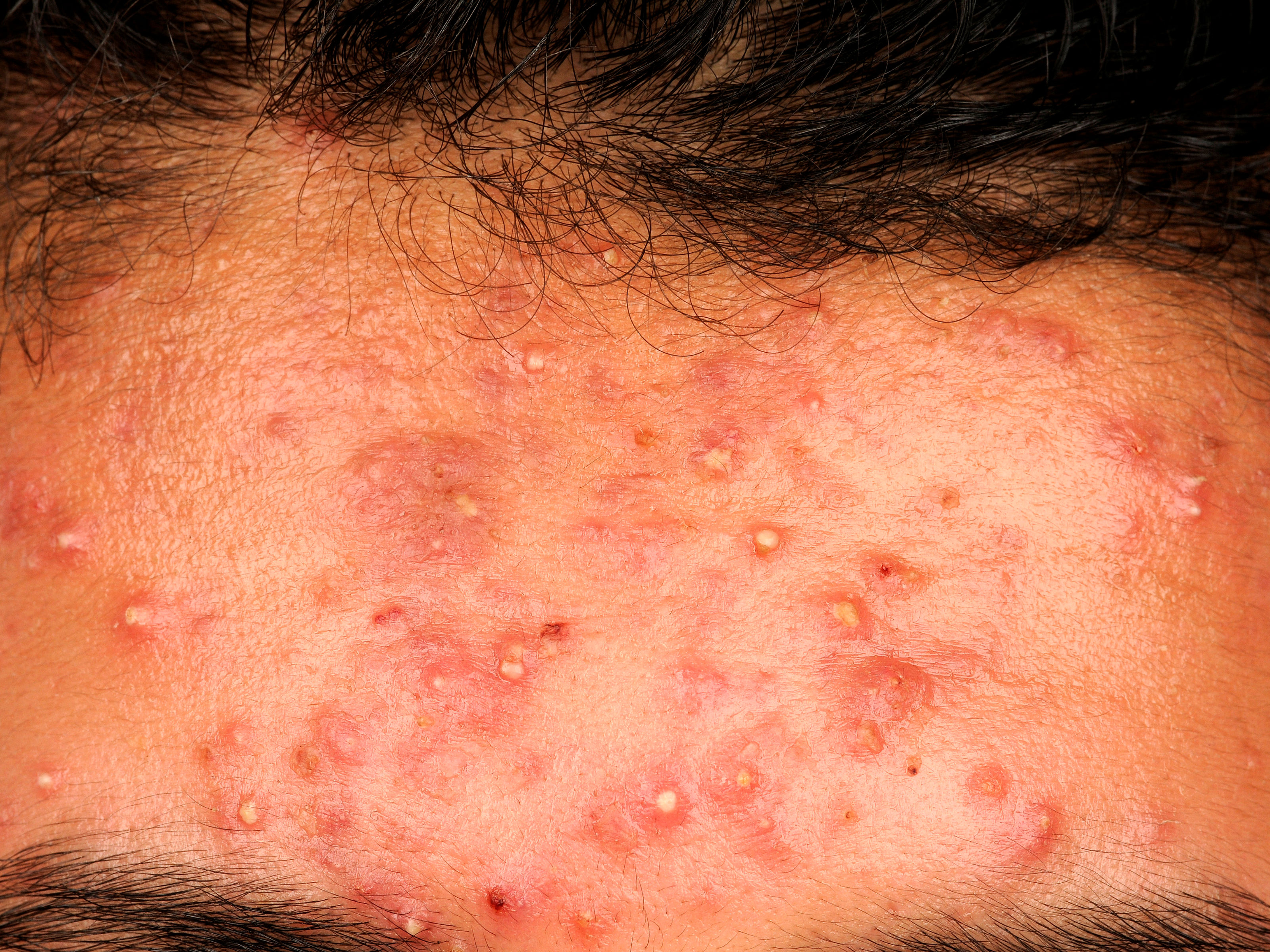
WHAT IS ACNE VULGARIS?Acne vulgaris, or simply acne, is the medical term for teenage pimples. Almost everyone gets acne during puberty. For some, it's just a few pimples, while for others, it's a widespread skin condition that can cause significant psychological problems and spoil the enjoyment of everyday life. Acne can sometimes persist after puberty or only begin in adulthood.HOW DOES ACNE VULGARIS DEVELOP?Acne is caused by inflammation of the skin around the sebaceous glands (sebaceous follicles). Several factors contribute to the development of acne. In most cases, acne begins during puberty, when the skin undergoes various changes under the influence of hormones.
The sebaceous glands on the face, back, and chest enlarge and produce more sebum. If too much sebum is secreted, it can accumulate and block the sebaceous gland's duct. These sebum accumulations are called comedones. There are superficial, open comedones (black comedones) and more subcutaneous, closed comedones (white comedones). The sebum accumulation is further exacerbated by increased keratinization of the sebaceous gland's duct, which narrows it. Bacteria live in the sebaceous glands, which convert the sebum into fatty acids. Due to the accumulated sebum and irritating free fatty acids, the clogged follicle expands further and eventually ruptures. The irritants penetrate the adjacent skin and cause inflammation, resulting in pimples and spots.
Some forms of acne are caused by external factors. This usually involves contact with substances that block the sebaceous gland, such as certain cosmetics. Other factors to consider include oil-containing or chemical products in certain professions and industries. Mechanical factors (pressure and rubbing) can also aggravate existing acne. Examples include acne under the chin of a helmet and on the forehead under a headband.
Finally, several medications can cause or worsen acne, such as prednisone and medications for tuberculosis and epilepsy.ACNE HAS NOTHING TO DO WITH:Eating the wrong foods.
Because acne is often associated with oily skin, it's often thought that fatty foods promote acne. Pork, chocolate, and French fries, in particular, are considered the culprits. Scientific research has never been able to demonstrate this link. Food allergies also play no role in acne.
A vitamin deficiency
.
Therefore, there's no point in taking vitamin supplements for acne.
Poor hygiene
. This too is a myth. Hygiene is not related to acne. Excessive washing with soap and water is pointless and can even be harmful to the skin.
Infections.
Acne is not an infectious disease and is therefore never transmitted from one person to another.
Perspiration.
Sebum production and perspiration are unrelated. Heavy sweating does not affect the severity of acne.
Tension or stress.
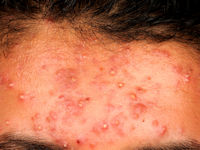
Rather, the opposite is true: severe acne can cause significant psychological distress (feelings of inferiority).WHAT ARE THE PHENOMENA?Acne vulgaris is characterized by the presence of comedones, red papules, and pustules. Severe inflammation can cause subcutaneous inflammation, which can leave unsightly scars after healing. Squeezing or scratching pimples promotes inflammation.
 |
 |
 |
| acne vulgaris |
acne vulgaris |
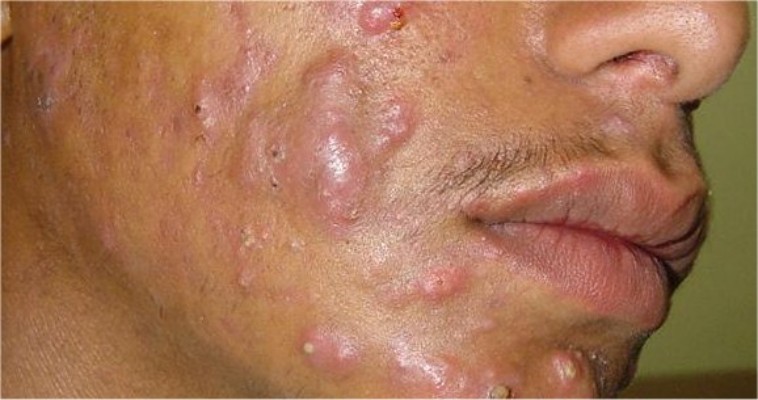
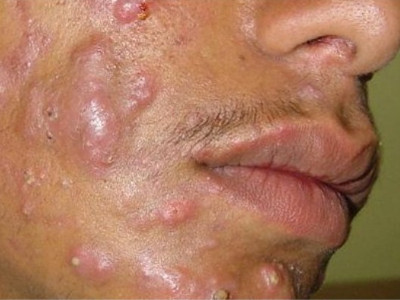
acne conglobata |
SPECIAL FORMS OF ACNEBesides acne vulgaris, which means "common" (the most common form of) acne, there are several other forms of acne with a different appearance or progression.
Acne conglobata.
Acne conglobata is a severe form, occurring primarily in men and often persisting well after the age of 20. The inflammation is much more severe than in common acne (acne vulgaris). The shoulders, back, and chest are generally more severely affected than the face. Characteristic are double comedones, large subcutaneous lumps, and abscesses (pus-filled cavities), which eventually heal, leaving unsightly scars.
Acne ectopica (hidradenitis suppurativa). This is a variant of acne in unusual locations, such as the armpits, groin, and buttocks. It can be very severe. The recurring inflammation and abscesses can cause the patient considerable discomfort. This form of acne usually occurs after the age of 20, particularly in smokers. See also hidradenitis suppurativa .
Acne excoriée.
Some people with acne, often young women with mild acne, can become so obsessed with the skin condition that they scratch or squeeze every pimple. This only worsens the inflammation and leads to scarring (acne excoriée).HOW IS THE DIAGNOSIS MADE?Acne is generally easy to recognize, so the diagnosis can usually be made based on the visible abnormalities. Further testing is almost never necessary.
Acne is often classified as mild, moderate, or severe based on the number of spots and pimples and their extent. The presence of scars is a factor in assessing the severity of the acne.WHAT IS THE BEST TREATMENT?Although acne treatment options have increased dramatically in recent years, acne remains a chronic condition. Acne doesn't disappear overnight.
Even milder forms of acne often require long-term attention. Acne can't always be cured. However, it's usually possible to calm the acne and keep it that way until it eventually resolves on its own.
There's no standard treatment for acne. When inflammation is the primary symptom, treatment differs from when the primary concern is blackheads.
The severity of the condition, the symptoms, the occurrence of scarring, as well as age and gender, determine which anti-acne treatment is started.
Various treatments are available, each working in different ways:
Agents that counteract increased keratinization of the duct.
These include benzoyl peroxide, tretinoin, and adapalene. They are applied in a cream, gel, or lotion. These agents cause the skin to flake off, allowing the sebum to escape more easily. This prevents the formation of blackheads. Benzoyl peroxide also slightly inhibits bacterial growth. For mild forms of acne, benzoyl peroxide, tretinoin, or adapalene can be used once a day.
A drawback of benzoyl peroxide, tretinoin, and adapalene is that these substances often irritate the skin at the beginning of treatment. If necessary, the strength can be reduced or the product can be applied every other day.
Agents that inhibit bacterial growth:
Besides the aforementioned benzoyl peroxide, antibiotics are primarily used to inhibit bacterial growth. They can be applied both externally and internally, often in combination with tretinoin, adapalene, or benzoyl peroxide. Antibiotics are usually used for moderate to severe acne. The most commonly used internal antibiotics are doxycycline and minocycline. If this type of treatment is chosen, the antibiotic should be administered for a longer period (3 to a maximum of 6 months). Antibiotics applied externally in a gel or lotion are erythromycin and clindamycin.
Anti-inflammatory agents:
Some antibiotics, including the aforementioned doxycycline and minocycline, also have an anti-inflammatory effect.
Anti-sebum inhibitors:
It has long been known that the pill can affect sebum production. There are contraceptive pills on the market that have a beneficial effect on acne. This is recommended for women who want to use a contraceptive pill in addition to acne treatment.
Another drug that suppresses sebum production is isotretinoin. This medication contains a substance related to vitamin A. It is a highly effective medication for internal use. In addition to suppressing sebum production, isotretinoin has an inhibitory effect on the abnormal keratinization of the sebaceous gland duct and suppresses the inflammatory response. It is only prescribed for severe forms of acne that do not respond sufficiently to other medications.
The most common side effect is dryness of the lips, nasal mucosa, eyes, and skin. Sometimes liver enzymes and blood fat levels can increase during treatment, requiring blood tests.
Isotretinoin has serious risks when used during pregnancy. As a result, serious birth defects can occur. For this reason, a possible pregnancy must be ruled out before treatment can begin. In addition, women of childbearing potential must take extra precautions to prevent pregnancy during treatment and for one month after discontinuation.
The pros and cons of this treatment must be carefully weighed.
Psychotherapy:
If pimples are so disruptive to daily life that they can no longer think of anything else and feelings of sadness prevail, psychotherapy can be helpful. Behavioral therapy can help relieve the urge to constantly pick at every pimple, which worsens or perpetuates acne.WHAT CAN YOU STILL DO YOURSELF?The ultraviolet rays in sunlight can temporarily benefit acne. Overexposure to sunlight or artificial UV sources is discouraged due to the risk of skin cancer. Excessive exposure is harmful! It's important to realize that some acne treatments prescribed by a doctor (such as isotretinoin and certain antibiotics) can make the skin extra sensitive to sunlight.
Acne treatment always takes time to take effect. It usually takes at least one to three months to achieve satisfactory results.
Most acne patients experience increased sebum production. This can manifest as a greasy, shiny face. Cleansing the skin beforehand can remove excess sebum. Excessive washing with soap and water is pointless and can even be harmful to the skin. It is recommended to wash the skin daily with lukewarm water, without scrubbing or scouring. Squeezing or scrubbing blackheads, pimples, and spots yourself can lead to scarring and worsening of the spots and is therefore not recommended.
Dry skin can develop during treatment. A moisturizing cream can sometimes help, but be careful that it's not too greasy, as this can cause new pimples.
The ultraviolet rays in sunlight can temporarily have a beneficial effect on acne. Overexposure to sunlight or artificial UV sources is not recommended due to the risk of skin cancer. Too much is harmful! It's important to realize that some acne treatments prescribed by a doctor (such as isotretinoin and certain antibiotics) make the skin extra sensitive to sunlight.
Finally, it's wise not to constantly switch from one medication to another. If one medication isn't effective enough, it's often better to add another to the treatment. Because multiple factors contribute to the development of acne, a combination treatment is usually necessary to combat the condition on multiple fronts simultaneously.WHAT ARE THE OUTLOOK?Acne is a harmless condition that usually disappears on its own after a few years. Lifelong scarring can be largely prevented by the treatments mentioned above. Acne usually disappears by the age of twenty-five, but sometimes the condition persists into old age. |