INTRODUCTIONThis brochure about self-examination of the skin and lymph nodes is intended for patients who have had a thin melanoma (1 millimeter thick or less) removed.
The prognosis for a thin melanoma is so good that regular hospital checkups are unnecessary. The survival rate approaches 100 percent.
The risk of metastasis is very small. It also appears that patients notice enlarged lymph nodes themselves sooner than the doctor. The risk of developing a new, second melanoma is also small: only 3 out of 100 people who have previously had a melanoma develop a second melanoma. A second melanoma is usually much thinner than the first, because the patient is aware of it and consults the doctor much sooner.
For these reasons, routine dermatological checkups for thin melanomas have been discontinued. The risk of new melanomas and metastases is very small, and it appears that patients are perfectly capable of detecting new spots or swollen lymph nodes themselves. Routine checkups by a doctor therefore add no value; they appear to be unnecessary.
The key is that you remain alert to any new spots or swollen lymph nodes. The best way to do this is to perform a systematic self-examination twice a year for the next three years. If you notice anything that concerns you, make an appointment with your general practitioner or dermatologist.EXAMINATION OF THE LYMPH GNOMESIn cases of deep-growing melanoma, melanoma cells can break away and travel via the lymphatic system to the lymph nodes in the armpits, groin, or neck (depending on the location of the melanoma). The chance of this happening is small for thin melanomas, but if it does occur, it can be noticed by the enlargement of these lymph nodes. A normal lymph node is the size of a large pea and barely palpable. A swollen lymph node is the size of a broad bean, about 1-2 centimeters in size. Lymph nodes lie beneath the skin and are only easily felt in thin people. Lymph nodes also enlarge after an infection, which usually shrinks again after a few weeks.INSTRUCTIONS FOR SELF-EXAMINATION OF LYMPH GLANDSTo examine swollen lymph nodes, you should apply gentle pressure with your fingers under the skin to check for firm structures. The analogy of a pea and a broad bean also applies here. They are loose and shift under your fingers. Examine the left armpit with your right hand, and vice versa. It's especially important to examine all lymph node stations if the melanoma was on the trunk. For a melanoma on an arm or leg, examining the corresponding armpit or groin is sufficient.
It's sometimes helpful to self-examine your lymph nodes while showering, as this is easier with a little soap on your skin. Make sure you're not in a hurry or distracted, so you can feel carefully. If you know how your neck, armpit, or groin usually feels, it's not difficult to notice a difference. Compare both sides.
If you think the nodes are swollen, make an appointment with your GP or dermatologist.SKIN EXAMINATIONWhen examining the skin, two things are important:
1. changes in existing moles;
2. development of new moles.Existing molesExisting moles should not:
1. grow larger
2. change color
3. change shape
4. itch, sting, or hurt
5. show scabs or bleedNew molesIt's rare for people over 30 to develop new moles. And especially not for these moles to be larger than 5 millimeters. If a mole does gradually grow larger, to over 5 mm, it's recommended to schedule a follow-up appointment.INSTRUCTIONS FOR SKIN EXAMINATIONChoose a quiet moment for the self-examination. To inspect your skin, you'll need a large mirror and the ability to look at your back in the mirror. Examine the skin all over your body. You can also ask for help inspecting the moles on your back. However, this should always be the same person. While examining the moles, lightly run your hand over them to feel if they feel different from other moles. A changing mole that might be a melanoma often causes an unusual sensation, such as itching or irritation, but sometimes a more vague feeling.EXAMINATION OF THE SCARIn rare cases, melanoma can recur at the scar site. This is called a local recurrence. To detect this, the scar is carefully examined for the development of pigment spots and palpable to see if it feels soft and if there are no lumps in the deeper tissue. The scar can only be properly assessed several months after surgery.
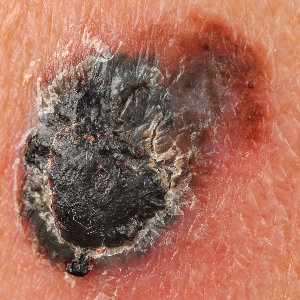
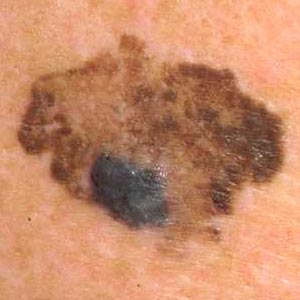
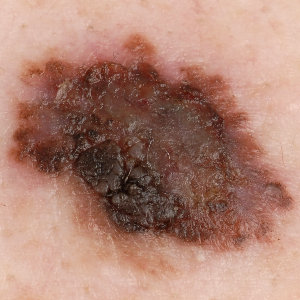
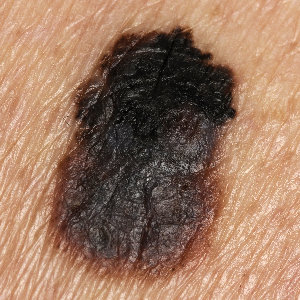
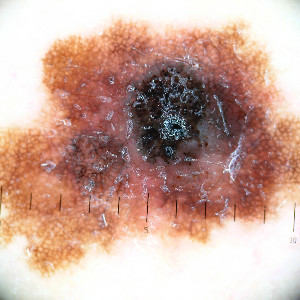
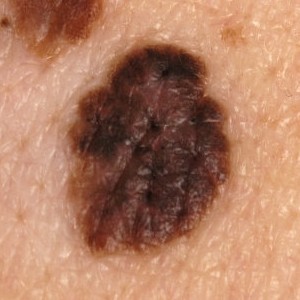
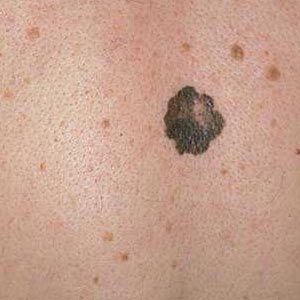
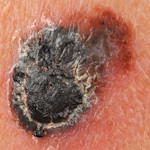
If you notice changes in existing moles or in the scar, or if new moles develop, make an appointment with your GP or dermatologist.WHAT SHOULD I PAY ATTENTION TO WHEN EVALUATING MOLES?AsymmetryA mole is symmetrical if an imaginary line can be drawn through it, and the two halves on either side of that line are mirror images of each other. Symmetry is a sign of benignity, asymmetry of malignancy.
 |
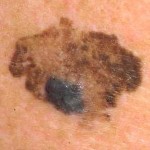 |
| asymmetry |
asymmetry |
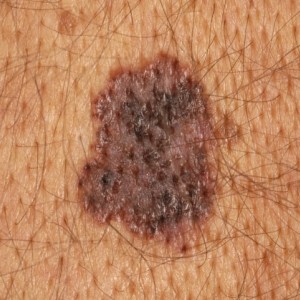
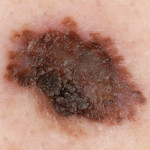
Irregular edgeAn irregular, jagged border is a sign of malignancy
 |
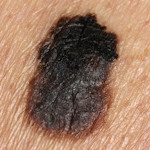 |
| irregular edge |
irregular edge |
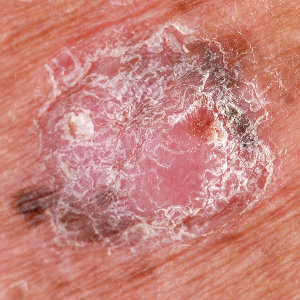
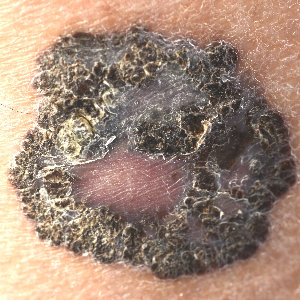
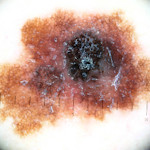
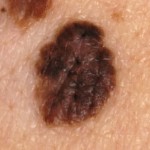
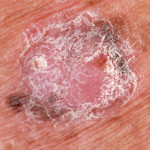
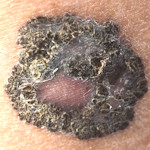
Different colors
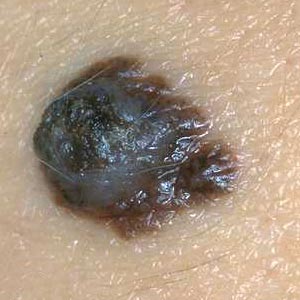
Two or more different colors within 1 spot is a sign of malignancy.
 |
 |
| brown, black, pink-white |
light and dark brown |
 |
 |
| black, red |
black, white-pink, brown |
Larger than 6 mm:
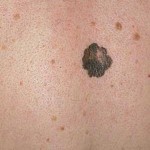
Moles up to 6 mm are usually harmless; a mole larger than 6 mm in diameter is a reason to be careful. However, size alone isn't enough to be alarmed. A mole that has only grown larger without any of the changes listed under A, B, or C is usually harmless.
 |
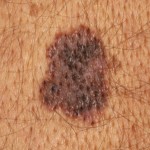 |
| larger than 6 mm |
larger than 6 mm |
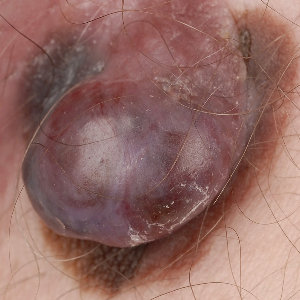
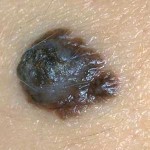
Growth of the mole, changeGrowth can include the spot becoming larger, or a protruding portion, a swelling, or a bump. Other changes, such as sores, pain, itching, or bleeding, are also reasons to see a doctor.
 |
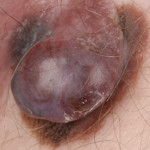 |
| elevated part |
elevated part |
|