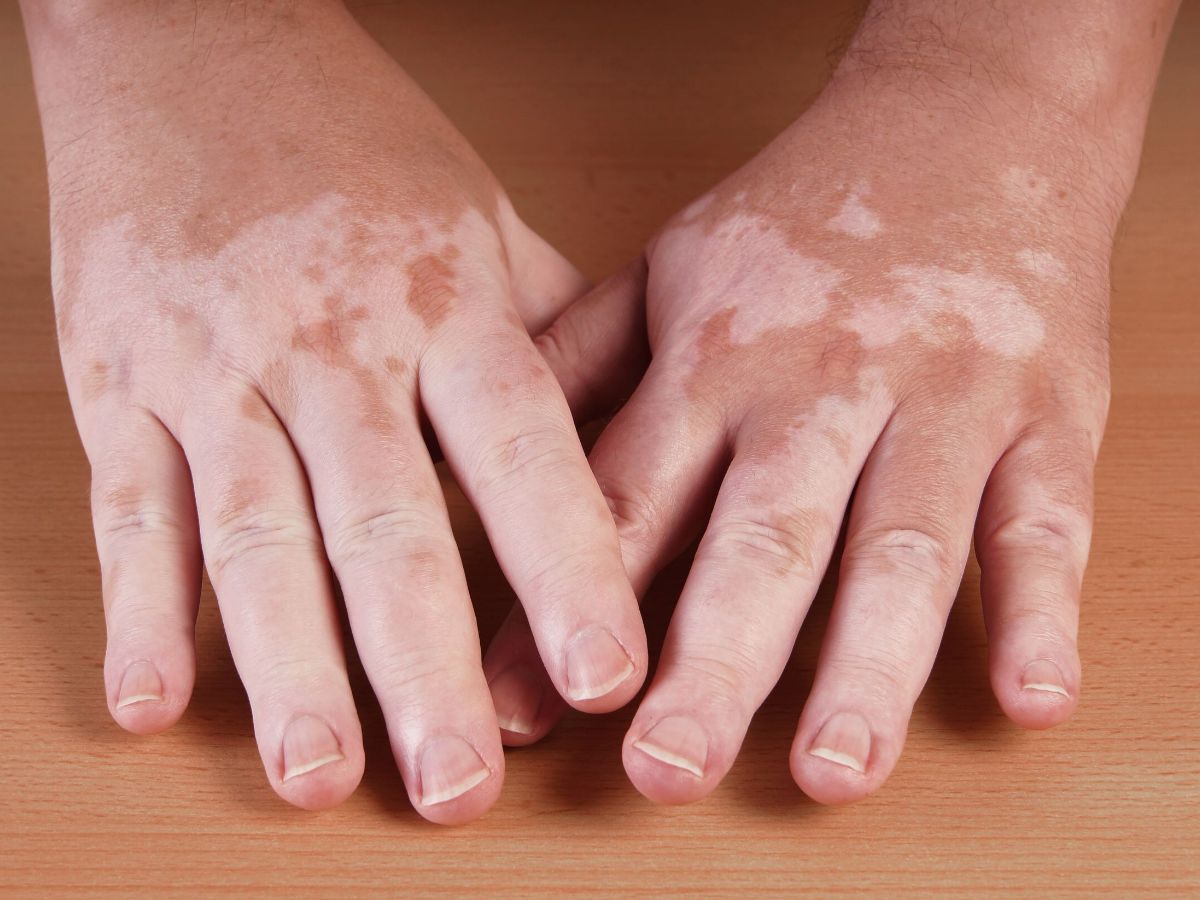
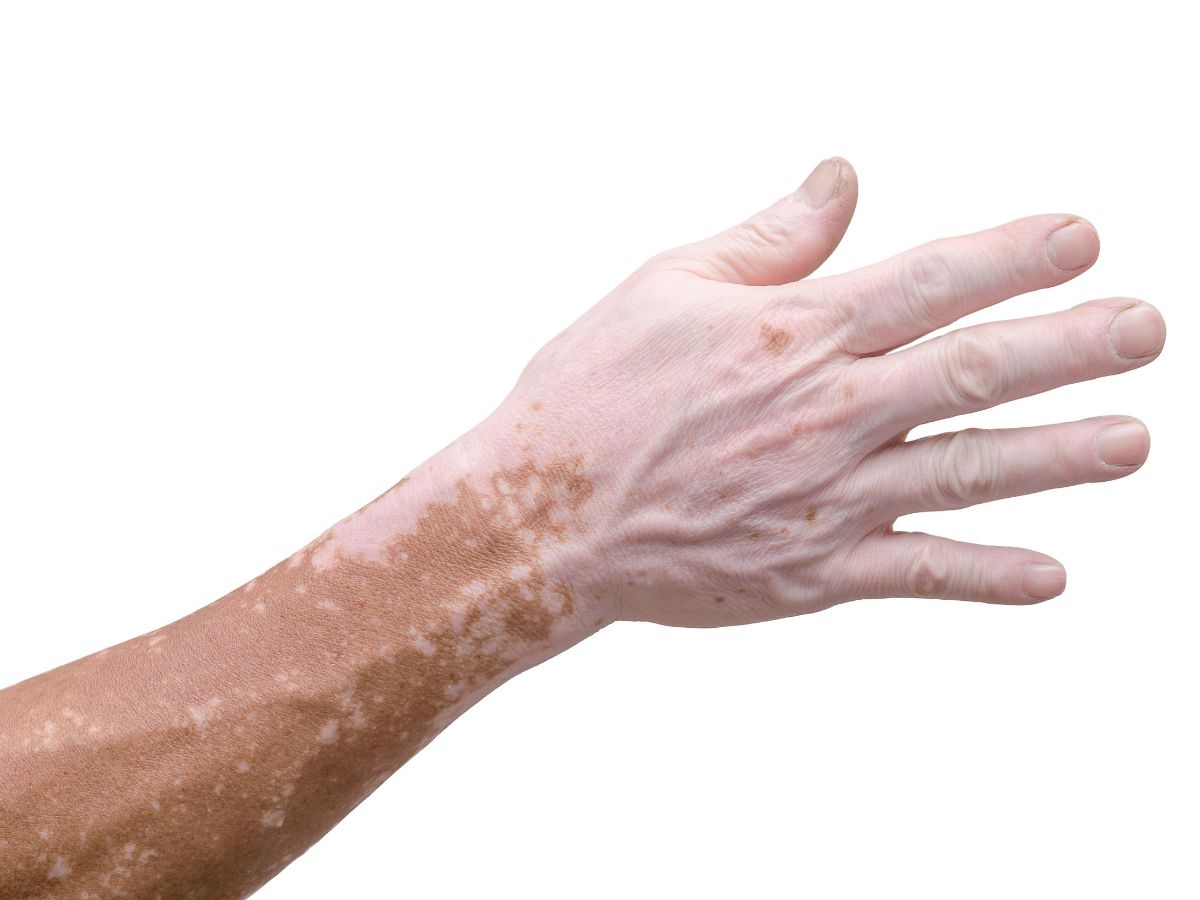
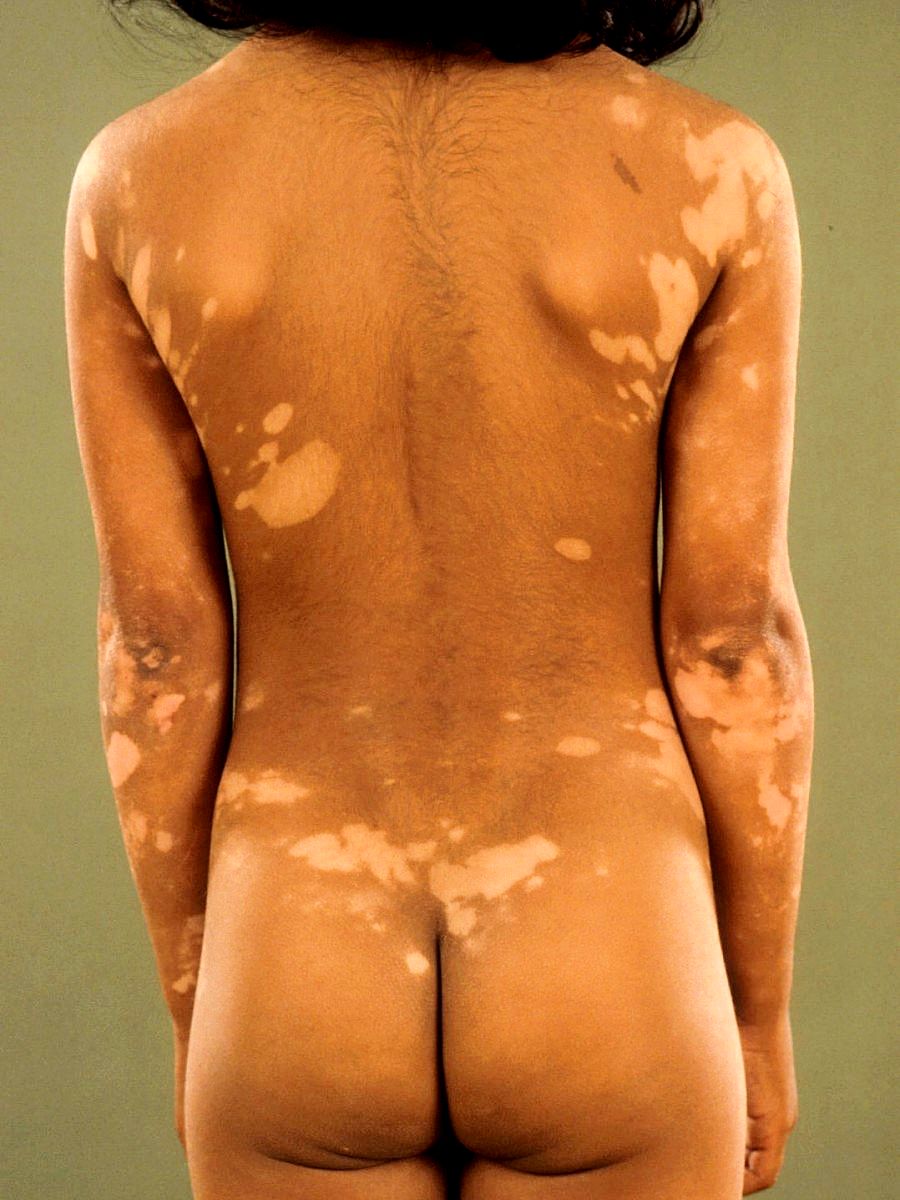
WHAT IS VITILIGO?Vitiligo is a condition in which the skin and hair lose pigment, resulting in milky-white patches of varying size and shape. At least 0.5% of the world's population suffers from vitiligo. When a sample of white vitiligo skin is examined under a microscope, the pigment cells (melanocytes) in the skin are completely absent.
Vitiligo can develop at any age, but in approximately 50% of patients, the condition manifests before the age of 20, and in 70-80% before the age of 30.
Besides being a medical problem, vitiligo is primarily a significant psychosocial issue. Research shows that vitiligo can negatively impact quality of life and that psychological support is sometimes necessary to learn to cope with the condition.
Various treatments are available for vitiligo, but none are truly effective. This is one of the reasons why many dermatologists advise their patients to leave the condition alone if it is in a location where it is relatively undisturbed.
HOW DOES VITILIGO DEVELOP?The precise cause of vitiligo is still unknown, but it is certain that hereditary factors play a role. Identical twins can both develop vitiligo in the same areas. The fact that vitiligo often occurs in different individuals within the same family also points to a hereditary predisposition. Several theories, which are not mutually exclusive, have been developed.
The two most common theories are:
- the autoimmune theory
- the pigment cell destruction theory
The autoimmune theory
Some researchers believe that vitiligo is an autoimmune disease, a disorder of the body's defense mechanism (immune system). The immune system attacks tissues or cells of the body itself. In the case of vitiligo, it is thought that this autoimmune reaction causes the destruction of pigment cells. This theory about the development of vitiligo is partly based on the fact that other autoimmune diseases are more common in people with vitiligo, such as certain thyroid diseases, alopecia areata (a specific form of hair loss), and diabetes. However, these relationships are so rare that it doesn't make sense to screen all vitiligo patients for autoimmune diseases.
The pigment cell destruction theory.
This theory posits that pigment cells are destroyed by substances released when melanin (skin pigment) is produced by the pigment cells.
Normally, pigment cells have a protective mechanism that neutralizes these substances. In vitiligo, this protective mechanism is thought to be disrupted. This theory is supported by the fact that in people with vitiligo, white patches are most common in areas that are normally the most pigmented.WHAT ARE THE PHENOMENA?The patches vary in size and shape and can appear anywhere on the body. Vitiligo patches can gradually spread and often have a border that is darker than normal skin. The hair in the vitiligo patches often turns white.
The course of the disease is difficult to predict. The skin condition usually worsens over the years, with intermittent periods of improvement. Spontaneous recovery of vitiligo patches, especially in sun-exposed areas, is common. However, recovery is usually incomplete. Vitiligo of the lips, hands, and face almost never resolves spontaneously. The same is true for areas where white hair grows as a manifestation of vitiligo. Spontaneous improvement is also less common in vitiligo that develops later in life.HOW IS THE DIAGNOSIS MADE?Vitiligo is generally so easy to recognize that the diagnosis can usually be made based on the characteristic skin lesions. Additional laboratory testing is almost never necessary.
WHAT IS THE BEST TREATMENT?
There is no single therapy that guarantees a cure. Most treatments offer cure rates between 25% and 75%. This also depends on the location of the condition on the body. The face generally responds better to various treatments than the hands and feet. The chance of success must therefore be weighed against the burden of the often long-term treatment and the possible side effects. For most treatments, it is unknown whether the returned pigment persists after treatment is stopped. The most commonly used treatments are discussed below.
Corticosteroids
Treatment with strong to very strong corticosteroid creams (see also the brochure on topical corticosteroids ) is successful in some cases (30%): especially in early vitiligo, these creams can have a beneficial effect by preventing further spread. In this treatment, corticosteroid creams are applied to the vitiligo areas once a day. Treatment with corticosteroids should not be continued for too long, as these creams can have harmful side effects in the long term. In general, it will be clear after a few weeks, or at most after 3 months, whether this treatment has been successful.
Narrow-spectrum UVB (311) light.
The most effective treatment is with ultraviolet-B (UVB) light with a wavelength of 311 nm. The treatment is performed in a special light booth and takes place twice a week. Over the course of one year, approximately 60% of patients with vitiligo experience pigment repigmentation in 75% of the affected skin. The first pigment reappearance can be expected after about six weeks. This is then visible as brown spots. Sometimes it is necessary to continue this treatment for years (with breaks) to achieve good results. An adverse effect can also occur initially, as the white spots become more noticeable compared to the further tanning skin. Narrow-spectrum UVB is preferred over PUVA (see below) because PUVA generally has more side effects.
PUVA treatment:
This treatment involves administering a substance that makes the skin more sensitive to ultraviolet A (UVA) light. This substance is called psoralen, hence the name PUVA.
Psoralen can be administered by taking tablets, applying a psoralen cream to the skin, or by taking a bath with psoralen dissolved in the bathwater. Side effects of psoralen, such as nausea and so-called PUVA itching, as well as occasional liver function disorders, can occur, especially when using tablets. Treatments with UVA and UVB light both carry an increased risk of developing skin cancer. You can read more about this in the brochure about psoriasis.
Transplantation:
In more or less mild forms of vitiligo, small pieces of normally pigmented skin can be transplanted to the vitiligo patches. This is done on an outpatient basis, under local anesthesia. This treatment is only performed in people whose vitiligo has subsided, either spontaneously or after light therapy.
The "reverse" method.
This method is sometimes used in patients with such extensive vitiligo that only a few areas of normally pigmented skin remain. In these patients, the remaining normally colored skin can be depigmented with a type of bleaching agent, resulting in an even skin tone. The most common method is a hydroquinone-containing cream or a special pigment laser.
New treatments are being investigated, but their effectiveness remains unclear.
CHILDREN WITH VITILIGOIn children, most treatments are ineffective and have many side effects, so treatment should be cautious. Corticosteroid creams are recommended for small areas. For more extensive lesions, narrow-spectrum UVB light appears to be the best option. Surgical treatments are not recommended for children.
 |
| vitiligo |
WHAT CAN YOU STILL DO?Camouflaging depigmented areas with skin-colored makeup has no healing effect, but it is a good method for reducing the visibility of even the most unsightly skin lesions. A skin therapist will explain the possibilities of this method (e.g., special "medical" camouflage cream) and provide instructions for use. You can then apply this method yourself at home. It is important to stay exactly within the borders of the vitiligo area, otherwise a dark border will develop. It is also important to note that vitiligo areas burn easily with exposure to sunlight. Therefore, it is recommended to always protect the skin from excessive sun exposure with covering clothing or by using a sunscreen with an SPF of 15 or higher. This also has the advantage that the healthy, pigment-forming skin contrasts less with the white, unpigmented skin.WHAT ARE THE OUTLOOK?In some cases, spontaneous improvement can occur. Vitiligo patches on the face, in particular, often respond well to treatment. Vitiligo patches on the hands and feet almost never improve. In most cases, the patches will persist and gradually spread over time. |