PACKAGE LEAFLET FOR STELARA (USTEKINUMAB) 45 MG PRE-FILLED SYRINGERead this entire leaflet carefully before you start taking this medicine because it contains important information for you.
- Keep this leaflet. You may need it again.
- If you have any further questions, ask your doctor or pharmacist.
- Do not pass this medicine on to others. It has been prescribed for you only. It may harm them, even if they have the same symptoms as you. If you experience any of the side effects listed in this leaflet
, or if you notice any side effects not listed in this leaflet, talk to your doctor or pharmacist.
What is Stelara and what is it used for?
- When should you not use Stelara or be extra careful with it?
- How to use Stelara?
- Possible side effects
- How to store Stelara?
- Contents of the pack and other information What is Stelara and what is it used for? Stelara contains the active ingredient ustekinumab , a monoclonal antibody. Monoclonal antibodies are proteins that specifically recognize and bind to certain proteins in the body.
Stelara belongs to a group of medicines called immunosuppressants . These medicines work by weakening part of the immune system.
Stelara is used to treat the following inflammatory diseases in adults:
- Plaque psoriasis
- Psoriatic arthritis (psoriasis in the joints)
- Crohn's disease (inflammatory bowel disease) Plaque psoriasis in adults Plaque psoriasis is a skin condition that causes inflammation of the skin and nails. Stelara will reduce the inflammation and other symptoms of the disease.
Stelara is used in adults with moderate to severe plaque psoriasis who cannot use ciclosporin, methotrexate, or phototherapy, or for whom these treatments have not worked. Plaque psoriasis in children
Stelara can be used to treat moderate to severe plaque psoriasis in children aged 12 years or older who cannot use other systemic therapies or phototherapy, or for whom these treatments have not worked. Psoriatic arthritis
Psoriatic arthritis is an inflammatory disease of the joints, usually occurring at the same time as psoriasis. If you have active psoriatic arthritis, you will first be given other medicines. If you don't respond well enough to these medicines, you may be given Stelara to:
- help improve the signs and symptoms of your disease;
- help improve your physical function;
- help slow the damage to your joints.
Crohn's disease
Stelara can be used to treat adult patients with moderately to severely active Crohn's disease who do not respond adequately or no longer respond to conventional therapy or a biologic such as a TNFα inhibitor, or who cannot tolerate these treatments or should not have them for medical reasons.
When should you not take Stelara or be extra careful?
When should you not take Stelara?
- You are allergic to any of the ingredients of this medicine.
- You have an active infection that your doctor considers important.
If you are not sure if any of the above applies to you, talk to your doctor or pharmacist before taking Stelara.
When should you be extra careful with this medicine?
Talk to your doctor or pharmacist before taking this medicine. Your doctor will check your general health before each treatment. Make sure you tell your doctor about any medical conditions you have before each treatment. Also tell your doctor if you have recently been near someone who might have tuberculosis. Your doctor will examine you and test for tuberculosis before you are given Stelara. If your doctor thinks you are at risk of developing tuberculosis, you may be given medicines to treat it.
Watch out for serious side effects
Stelara can cause serious side effects, including allergic reactions and infections. You need to watch out for certain symptoms while taking Stelara.
Before taking Stelara, tell your doctor:
- if you have ever had an allergic reaction to Stelara. If you are not sure, ask your doctor.
- if you have ever had any form of cancer - this is because immunosuppressants like Stelara weaken part of the immune system. This can increase the risk of cancer.
- Whether you have an infection or have recently had one.
- Whether you have new or changing lesions within the psoriasis areas or on normal skin.
- if you have ever had an allergic reaction to latex or to a Stelara injection. The packaging of this medicine contains latex rubber, which may cause serious allergic reactions in people who are sensitive to latex.
- if you are receiving other treatments for psoriasis and/or psoriatic arthritis, such as another immunosuppressant or phototherapy (when your body is treated with a type of ultraviolet (UV) light). These treatments can also weaken part of the immune system. Using these treatments at the same time as Stelara has not been studied. However, it is possible that it may increase the risk of diseases associated with a weakened immune system.
- if you are receiving or have had injections to treat allergies. It is not known whether Stelara affects these.
- if you are 65 years or older. You may get infections more easily.
If you are not sure if any of the above applies to you, talk to your doctor or pharmacist before taking Stelara.
Are you taking any other medicines or vaccines?
Tell your doctor or pharmacist if you are taking, have recently taken or might take any other medicines.
Also tell your doctor or pharmacist if you have recently been vaccinated or are planning to be vaccinated. You should not receive certain types of vaccines (live vaccines) while taking Stelara.
Pregnancy and breastfeeding:
It is preferable not to use Stelara if you are pregnant. The effects of this medicine on pregnant women are not known. If you could become pregnant, you are advised to avoid becoming pregnant and must use effective contraception while taking Stelara and for at least 15 weeks after the last Stelara treatment. If you are pregnant, think you may be pregnant, or are planning to become pregnant, talk to your doctor before taking this medicine.
Talk to your doctor if you are breastfeeding or planning to breastfeed. You and your doctor should decide together whether you want to breastfeed or take Stelara. You should not breastfeed and take Stelara at the same time.
Driving and using machines:
Stelara has little or no effect on your ability to drive or use machines.
How do you use this medicine?
Stelara is intended to be used under the guidance and supervision of a doctor experienced in the diagnosis and treatment of psoriasis or psoriatic arthritis. Always use this medicine exactly as your doctor has told you. If you are unsure about how to use it correctly, contact your doctor.
Discuss with your doctor when you will receive your injections and when you should return for check-ups.
The recommended dose of Stelara
Your doctor will decide how much Stelara you need and for how long.
The recommended starting dose is 45 mg. Patients who weigh more than 100 kg may receive 90 mg instead of 45 mg.
After the starting dose, you will receive the next dose 4 weeks later, and then every 12 weeks. These later doses are usually the same as the starting dose.
How is Stelara given?
Stelara is given as an injection under your skin (subcutaneously). Initially, a doctor or nurse may give you the Stelara injection. However, you can also decide, together with your doctor, to give yourself the Stelara injections. In that case, you will be given instructions on how to give yourself the Stelara injection.
For instructions on how to inject Stelara, see the "Instructions for administration" section at the end of this leaflet.
Ask your doctor if you have any questions about giving yourself injections.
If you use more Stelara than you should
If you think you have been given or used too much Stelara, contact your doctor or pharmacist immediately. Always take the medicine carton with you, even if it is empty.
If you forget to use Stelara
If you miss a dose, contact your doctor or pharmacist. Do not take a double dose to make up for a forgotten dose.
If you stop using Stelara
Stopping taking Stelara is not dangerous. However, if you stop, your psoriasis may come back. If
you have any further questions on the use of this medicine, ask your doctor or pharmacist.
Possible side effects
Like all medicines, this medicine can cause side effects, although not everybody gets them. Watch out for serious side effects. Some patients may experience serious side effects that require urgent treatment.Allergic reactions- this may need urgent treatment, so contact your doctor straight away or seek urgent medical attention if you notice any of these symptoms. Serious allergic reactions ('anaphylaxis') are rare in people taking Stelara (may affect up to 1 in 1,000 people). The signs include:
- difficulty breathing or swallowing;
- low blood pressure, which may cause dizziness or light-headedness;
- swollen face, lips, mouth or throat.
Common symptoms of an allergic reaction include a rash and hives (this may affect up to 1 in 100 people). If you have a severe allergic reaction, your doctor may decide that you should no longer take Stelara.Infections- this may require urgent treatment, so contact your doctor straight away if you notice any of these symptoms. Stelara makes your body less able to fight infections, and some infections could become serious. Infections of the nose or throat and the common cold are common (affecting up to 1 in 10 people). Inflammation of the skin beneath the skin ('cellulitis') is uncommon (affecting up to 1 in 100 people). Shingles (a type of painful rash with blisters) is uncommon (affecting up to 1 in 100 people).
You should be alert for symptoms of infection while you are being treated with Stelara. These symptoms include:
- fever, flu-like symptoms, night sweats;
- feeling tired or short of breath, cough that doesn't go away;
- warm, red and painful skin or a painful rash with blisters;
- burning sensation when urinating;
- diarrhoea.
Contact your doctor straight away if you notice any of these symptoms. Also contact us if you have any type of infection that doesn't go away or keeps coming back. Your doctor may decide not to use Stelara until the infection is gone. Also tell your doctor if you have an open wound, cut, or ulcer, as these can become infected
.Common side effects (affecting up to 1 in 10 people):- Diarrhoea
- Nausea
- Feeling tired
- Feeling dizzy
- Headache
- Itching ('pruritus')
- Back, muscle or joint pain
- Sore throat
- Inflammation of the teeth
- Redness and pain at the injection site.
Uncommon side effects (affecting up to 1 in 100 people):
- Depression
- Stuffy nose
- Bleeding, bruising, hardening, swelling and itching at the injection site.
- Drooping eyelid and sagging muscles on one side of the face ('facial palsy' or 'Bell's palsy'), usually temporary.
- A change in psoriasis with redness and new small, yellow or white skin blisters, sometimes accompanied by fever (pustular psoriasis).
Reporting of side effects
If you get any side effects, talk to your doctor or pharmacist. This also applies to any possible side effects not listed in this leaflet. You can also report side effects directly via the national reporting system www.lareb.nl . By reporting side effects you can help provide more information on the safety of this medicine.
How to store this medicine?
Keep out of the sight and reach of children.
Store in a refrigerator (2°C - 8°C). Do not freeze.
Keep the pre-filled syringe in the outer carton in order to protect from light.
Do not shake the Stelara pre-filled syringes. Prolonged vigorous shaking may damage the medicine.
Do not use this medicine:
- after the expiry date, which is stated on the label and carton after EXP. The expiry date refers to the last day of that month.
- if the liquid is discoloured, cloudy, or if you can see other particles floating in it (see section 6, "What Stelara looks like and contents of the pack").
- if you know or think it has been or might have been exposed to extreme temperatures (such as accidentally frozen or heated).
- if it has been shaken heavily.
Stelara is for single use only. Any unused medicine remaining in the syringe must be thrown away.
Do not throw away medicines via wastewater or household waste. Ask your pharmacist how to throw away medicines you no longer use. These measures will help protect the environment.
Contents of the pack and other information
What Stelara contains?
The active substance is ustekinumab. Each pre-filled syringe contains 45 mg of ustekinumab in 0.5 ml. The other ingredients are sucrose, L-histidine, L-histidine monohydrochloride monohydrate, polysorbate 80, and water for injections.
What Stelara looks like and contents of the pack
Stelara is a clear to slightly opalescent (with a pearly sheen), colourless to pale yellow solution for injection. The solution may contain a few small transparent or white particles of protein. It is supplied as a cardboard box containing one 1 ml single-use glass pre-filled syringe. Each pre-filled syringe contains 45 mg of ustekinumab in 0.5 ml solution for injection.
Marketing Authorisation Holder
Janssen-Cilag International NV
Tumhoutseweg 30
2340 Beerse Belgium
Manufacturer
Janssen Biologics BV
Einsteinweg 101
2333 CB Leiden The Netherlands
For any information about this medicine, please contact the local representative of the Marketing Authorisation Holder:
JANSSEN-CILAG BV
Dr. Paul Janssenweg 150
5026 RH Tilburg
Tel: +31 13 583 73 73
Further information on this medicine is available on the European Medicines Agency website : www.ema.europa.eu
Instructions for administration:
At the start of treatment, your healthcare provider will help you with your first injection. However, you and your doctor may decide that you can give yourself Stelara injections. If this is the case, you will be taught how to inject Stelara. Talk to your doctor if you have any questions about giving yourself an injection.
Do not mix Stelara with other solutions for injection. Do not shake the Stelara prefilled syringes, as vigorous shaking may affect the medicine. Do not use the medicine if it has been vigorously shaken.
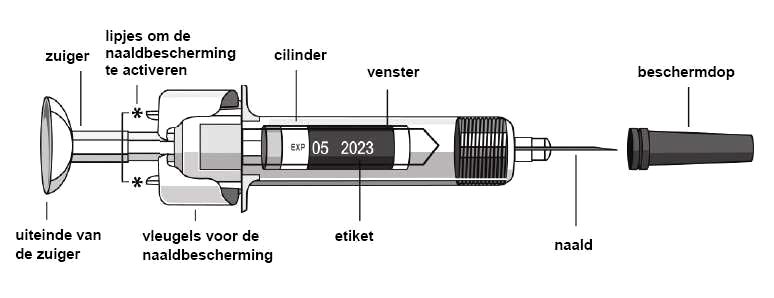
Figure 1 shows what the prefilled syringe looks like.
Check the number of pre-filled syringes and prepare the materials:
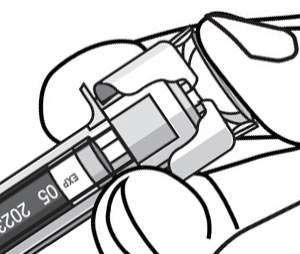
Prepare the pre-filled syringe for use. Remove the pre-filled syringe(s) from the refrigerator. Leave the pre-filled syringe outside the carton for about half an hour. This will allow the liquid to reach a comfortable temperature for injection (room temperature). Do not remove the needle cap while the liquid is still reaching room temperature. Hold the pre-filled syringe by the syringe barrel, with the needle (with the needle cap on) pointing upward. Do not hold the plunger, the plunger tip, the needle guard wings, or the needle cap. Never pull the plunger back. Do not remove the needle cap from the pre-filled syringe until you have been instructed to do so. Do not touch the tabs of the needle guard mechanism (indicated by asterisks in Figure 1) to prevent the needle from being covered prematurely by the needle guard mechanism.
Check the pre-filled syringe(s) to make sure that the number of pre-filled syringes and the strength are correct:
If your dose is 45 mg, you will be given one 45 mg pre-filled syringe of Stelara
If your dose is 90 mg, you will be given two 45 mg pre-filled syringes of Stelara and you will need to give yourself two injections. Choose two different sites for these injections (e.g. one injection in the right thigh and the other injection in the left thigh), and give the injections one after the other.
Check:
- that it is the correct medicine
- that the expiry date has not passed
- that the pre-filled syringe is not damaged
- that the solution in the pre-filled syringe is clear to opalescent (having a pearly sheen) and colourless to pale yellow
- that the solution in the pre-filled syringe is not discoloured or cloudy and does not contain any foreign particles
- that the solution in the pre-filled syringe is not frozen.
Gather together everything you need on a clean surface. These include: disinfectant wipes, a cotton ball or gauze pad, and a sharps container.
Determine and prepare the injection site:
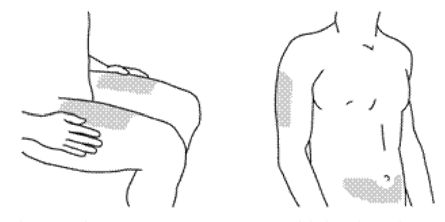
Determine the injection site (see Figure 2).
Stelara is administered as an injection under the skin (subcutaneously).
Good injection sites include the upper thigh or around the abdomen, at least 5 cm from the navel.
If possible, avoid areas of the skin with psoriasis.
If someone is assisting you with the injection, they can also choose the upper arms as an injection site.
Figure 2 *Grey areas are recommended injection sites
Preparing the Injection Site:
Wash your hands thoroughly with soap and warm water.
Wipe the injection site on your skin with an antiseptic wipe.
Do not touch this area again until the injection is given.
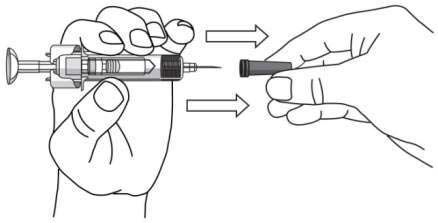
Remove the needle cap (see Figure 3):
Do not remove the needle cap until you are ready to inject the dose.
Pick up the prefilled syringe and hold it by the barrel with one hand.
Pull the needle cap straight off and throw it away. Do not touch the plunger.
You may see some air bubbles in the pre-filled syringe or a drop of liquid at the end of the needle. This is normal and does not need to be removed. Do not touch the needle or allow it to touch any surface. Do not use the pre-filled syringe if it is dropped with the needle cap removed. If this happens, contact your doctor or pharmacist. Inject the dose immediately after removing the needle cap.
Inject the dose:
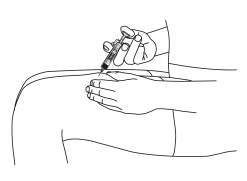
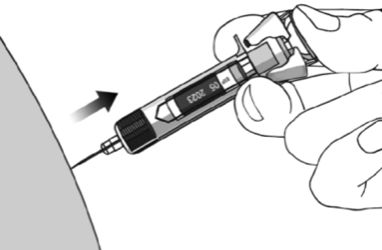
Hold the pre-filled syringe in one hand between your middle and index fingers and place your thumb on the end of the plunger. With your other hand, gently pinch a small area of clean skin between your thumb and index finger. Do not squeeze too hard. Never pull the plunger back. Insert the needle all the way through the skin in one smooth motion (see figure 4).
Inject the entire contents by pushing the plunger until the end of the plunger is completely between the wings of the needle protection mechanism (see figure 5).
Once the plunger is fully depressed, withdraw the needle from the skin while maintaining pressure on the plunger tip. Release the skin (see Figure 6).
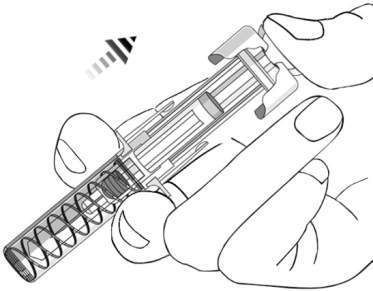
Slowly remove your thumb from the end of the plunger to allow the empty syringe to move up until the entire needle is covered by the needle protection mechanism, as shown in Figure 7:
After the injection:
After the injection, press a disinfectant wipe on the injection site for a few seconds. There may be a small amount of blood or fluid at the injection site. This is normal. You can press a cotton ball or gauze on the injection site and hold it for 10 seconds. Do not rub your skin. You can cover the injection site with a small bandage if needed.
Disposal:
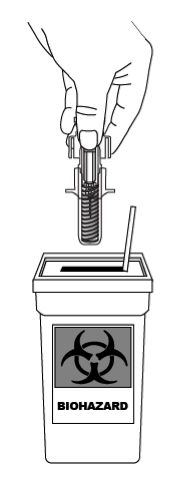
Used syringes should be disposed of in a puncture-resistant container, such as a sharps disposal container (see Figure 8). For your own safety and health and the safety of others, never reuse syringes. Dispose of your sharps disposal container according to local regulations. Disinfectant wipes and other used items can be disposed of in household waste.
|