WHAT IS STAPHYLOCOCCAL SCALDED SKIN SYNDROME?Staphylococcal scalded skin syndrome , abbreviated as SSSS, is a serious skin infection caused by the bacterium Staphylococcus aureus , which can cause the skin to peel off large areas of the body. Superficial blisters develop, resembling the blisters that can develop after a hot water burn. This is also where the name "scalded skin" comes from. Scalded is the English word for burned.
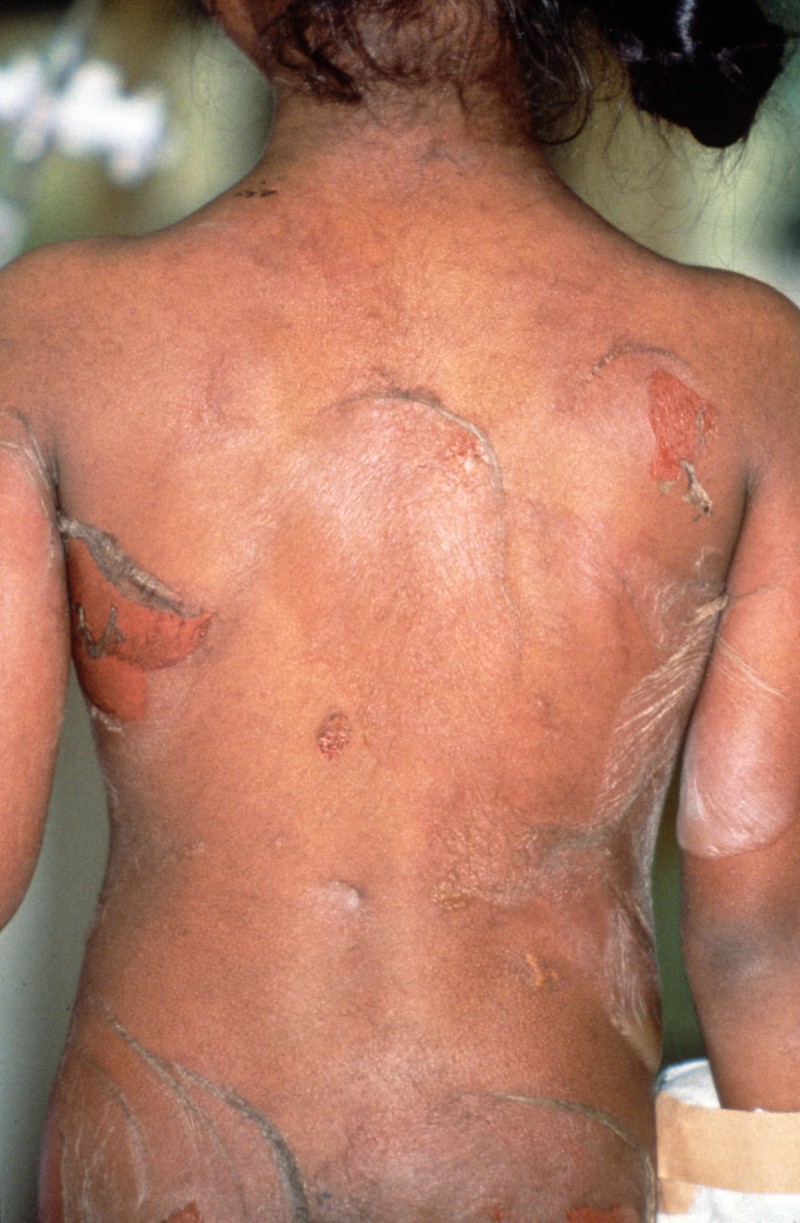
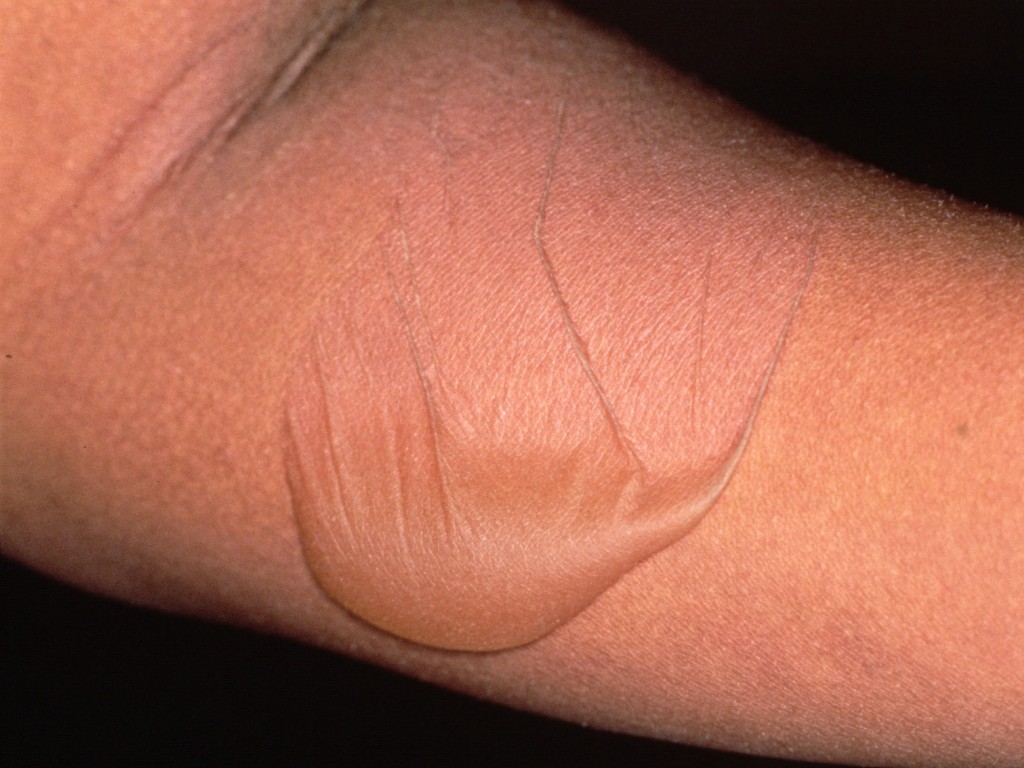
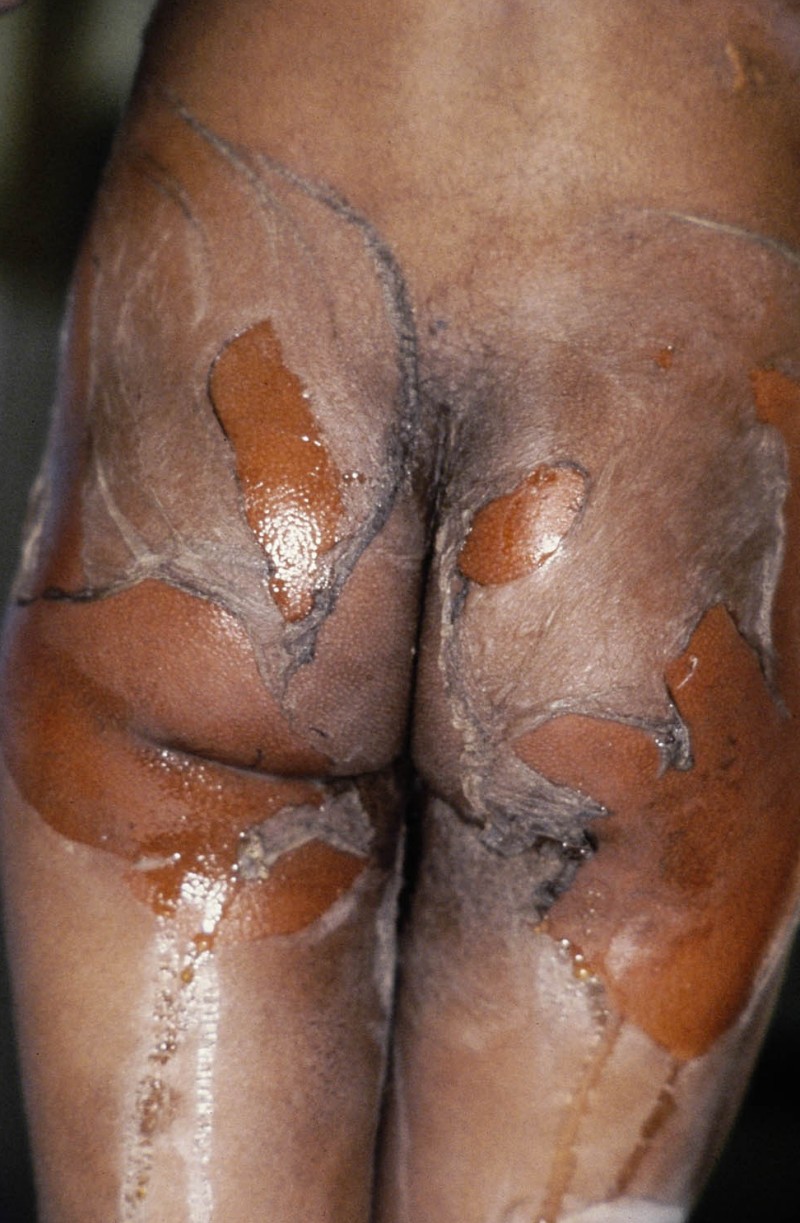
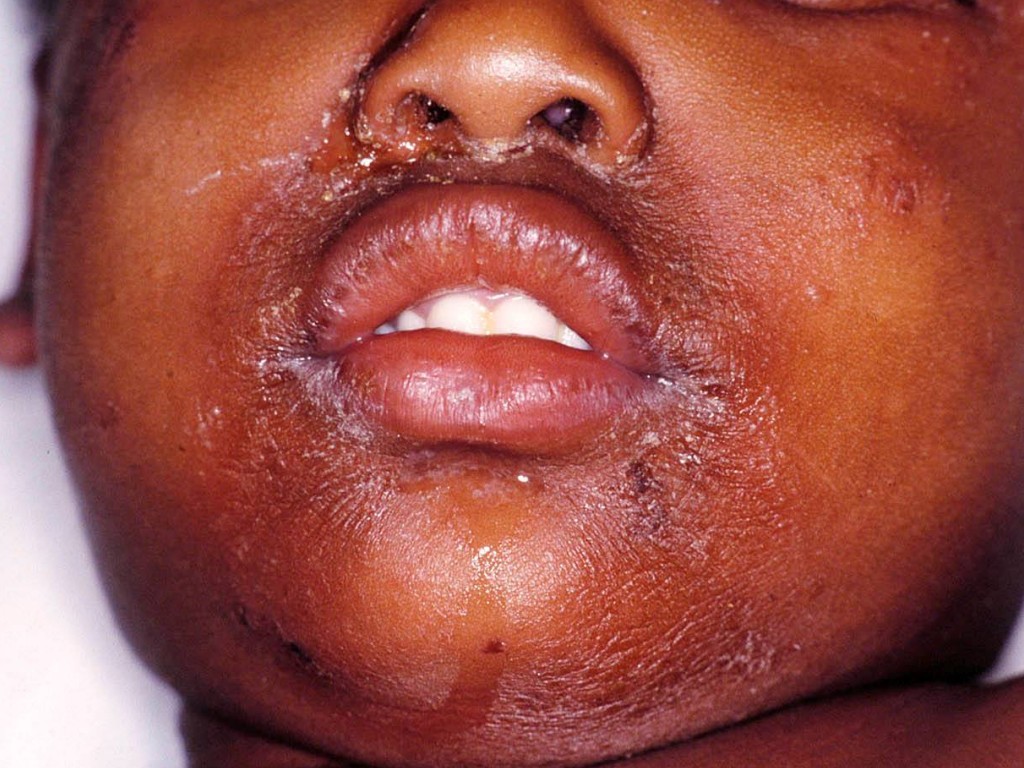
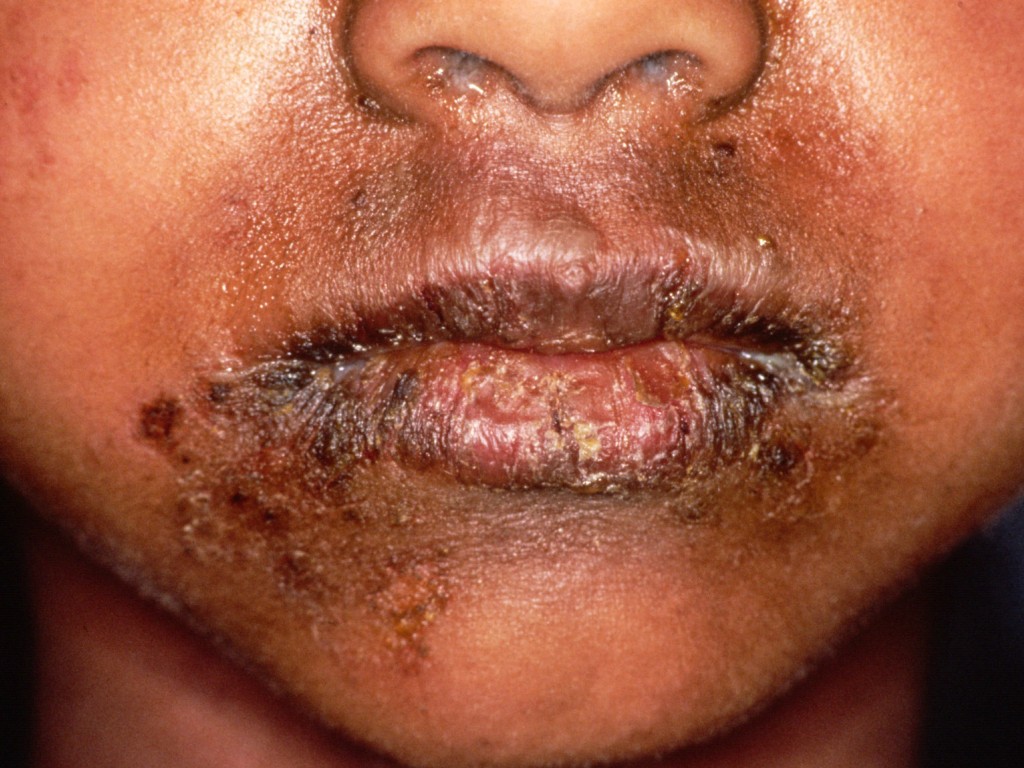
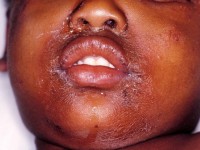
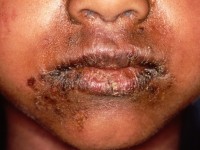
WHAT DOES STAPHYLOCOCCAL SCALDED SKIN SYNDROME LOOK LIKE?SSSS is an infection that usually affects younger children , from newborns to about five years old. It is rare for children over the age of five. In adults and the elderly, it can occur if the immune system is weak, but this is very rare. In children, it usually begins with redness and sometimes crusts and blisters around the mouth and eyes. The redness then spreads over the rest of the body, including the torso, arms and legs, and body folds (armpits and groin). Children may feel flu-like or lethargic and have a mild fever. The skin then becomes painful and begins to peel. Large, flabby, and shallow blisters develop . Where the blisters break, superficial red sores develop, and these areas also leak fluid. The mucous membranes are not affected.
 |
 |
| SSSS |
SSSS |
HOW DOES STAPHYLOCOCCAL SCALDED SKIN SYNDROME DEVELOP?The bacterium that causes SSSS, staphylococcus ( Staphylococcus aureus ), produces a toxin . This toxin spreads through the body via the bloodstream, causing blisters in distant locations. It has been discovered that the toxin causing the blisters is an enzyme that breaks down the bonds between skin cells. The skin cells then no longer adhere properly, causing blisters to form. Not all staphylococci produce this toxin; some varieties do. Young children, in particular, develop SSSS because they are not yet able to break down the toxin and eliminate it from the body through the kidneys. The toxin is only harmful to the skin; it has no effect on internal organs.
Staph is a very common skin bacterium. It is actually a normal inhabitant of the skin, from birth. Most people have staphylococci on their skin without them causing any symptoms. Staphylococci can also settle in the nose (nasal carriage) and in the cleft of the buttocks. Staph is the same bacterium that causes impetigo, an infection with yellowish crusts around the mouth or on the body. Blisters can also form with impetigo.
A staphylococcal infection can occur through contact with someone else who has an active infection. This often happens at school through playing with other children who have impetigo. It can also be contracted through contact with adults who have staphylococci in their noses or who have a boil. An infection can also develop through contamination with one's own staphylococci living on the skin. This occurs primarily when the skin or mucous membrane is damaged, allowing the staphylococci to enter. Mucous membranes can be damaged by a cold (a viral infection). That's why SSSS is often seen in children who have just had a cold. The skin can be damaged by injuries, but also by eczema. With eczema, the skin is flaky and not tightly closed, making it easy for bacteria to enter.HOW IS THE DIAGNOSIS MADE?The diagnosis is based on the clinical picture and its appearance. The combination of superficial, soft blisters and crusts around the mouth in a young child is enough to suggest it. Other skin conditions can also resemble the condition, such as hypersensitivity reactions with blistering. A pathologist can examine a small piece of loose skin, which quickly provides the result. Sometimes a skin biopsy is necessary to rule out other blistering conditions.
It is also common to take cultures from the nose, throat, eyes, ears, and the cleft of the buttocks (the skin around the anus). Taking cultures from the blisters is pointless, as the bacteria are not present there. The bacteria are usually found in the throat, around the mouth, or around the anus, and they cause blisters remotely through the toxins they release. The cultures take a few days. The results are not awaited but treated immediately with antibiotics. Nevertheless, cultures are useful, both to confirm the presence of staphylococci and to determine their sensitivity to the antibiotics prescribed. Blood cultures are also taken in the case of a high fever.HOW IS STAPHYLOCOCCAL SCALDED SKIN SYNDROME TREATED?Hospitalization and intravenous antibiotics are usually necessary. This often involves young children, sometimes newborns, and it's crucial to ensure the antibiotics are properly absorbed. The IV can also be used to replace fluid lost through the blisters. After starting antibiotics, things often improve quickly; by the end of the second day, it's clear that no new blisters are developing and the child is doing well. Occasionally, the bacteria may be resistant to the antibiotics. In that case, the condition doesn't improve quickly, and a different type of antibiotic must be administered.WHAT IS THE PROGNOSIS?If a young child develops blisters, you should go to the hospital quickly, to a dermatologist. The dermatologist can quickly diagnose the condition, after which treatment can begin immediately. The pediatrician will arrange hospitalization, insert the IV, and calculate the correct dosage of antibiotics, often on the same day. With all these measures, the condition will improve quickly. The blisters are superficial and heal within a few days without leaving scars. After a previous infection, it will not happen again; resistance to the bacteria is built up. |