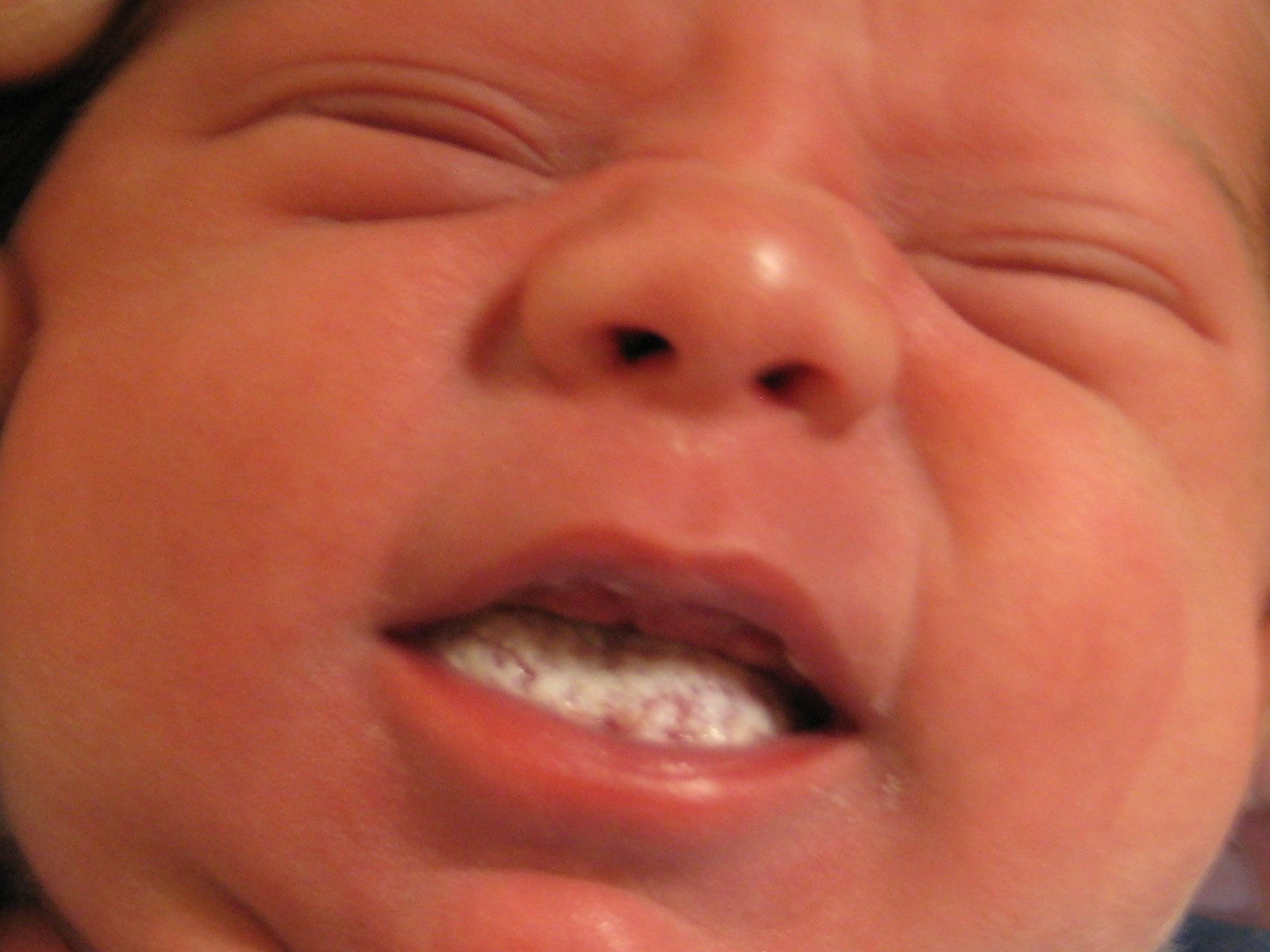
WHAT IS THRUSH?ThrushIs a yeast infection of the oral cavity, caused by the fungus Candida albicans . It occurs primarily in newborns, usually those under six weeks old who are breastfed. The baby usually becomes infected through the mother's nipple. The fungus causes white patches on the baby's tongue and elsewhere in the mouth. It looks like a whitish film, but it's not easily removed. Thrush is harmless and usually clears up on its own; it only needs treatment if it causes symptoms.HOW DOES THE BABY GET INFECTED?Immediately after birth, the baby comes into contact with all kinds of fungi and bacteria, from parents and caregivers, which settle on the skin and in the mouth. This is nothing unusual. The fungus Candida is also nothing unusual; in most parents, it's a normal resident on the skin and mucous membranes, without causing any symptoms.
Newborns can become infected through, for example, pacifiers or nipples where the yeast is present. Breast milk is an ideal breeding ground for Candida because it contains high levels of milk sugars. Candida can settle on the skin around the nipples, which is often constantly moist due to leaking breast milk during and between feedings.WHAT DOES THRUSH LOOK LIKE IN NEWBORNS?Symptoms in the child:
There is a white or whitish-gray coating on the tongue or palate. This coating is also called a "coating," and it's not easily wiped off. Sometimes the oral cavity is also red and irritated. Usually, the child is unaffected and the condition resolves on its own. However, thrush can cause breastfeeding problems. If the oral cavity is too irritated by the infection, the child may become restless, make a clacking sound while feeding, repeatedly release the breast, or even refuse to breastfeed. Sometimes, a persistent diaper rash also occurs.
 |
| Candida tongue |
Photo: James Heilman - Wikimedia (Creative Commons License 3.0 ).
Symptoms in the mother:
If the baby has thrush, the mother may have a yeast infection in the nipples and the surrounding skin. This can cause the following symptoms: Feeding is very sensitive. The nipples burn, can itch, and sometimes flake or crack. The skin of the nipple and areola that comes into contact with the baby's mouth may be pink to red and slightly shiny. In darker skin, the nipple and areola may lighten in color. Mothers often report pins and needles or a stabbing pain in their breast during and after feeding. The symptoms can occur on one or both sides of the nipple. It is also possible for a mother to have a yeast infection but not notice anything.HOW IS THE DIAGNOSIS MADE?The diagnosis is based on the clinical picture, i.e., the appearance. If there is any doubt, a culture can be taken (fungal culture), or a scraping from the tongue or skin can be examined under a microscope to see if it contains fungal filaments.HOW IS THRUSH TREATED?Thrush in babies and candida infections of the breast often resolve on their own and are not necessary. Treatment is necessary if breastfeeding is disrupted due to pain in the mother (sore nipples) or restless feeding in the baby. Treatment consists of hygiene measures and treating both mother and child with antifungal ointments.
Treatment of the child:
The baby is treated by applying an antifungal product to the mouth four times a day, or after each breastfeed. For babies under 4 months, nystatin oral suspension is usually used (1 ml administered four times a day or after each breastfeed, with a maximum of 8 ml per day). For babies 4 months and older, Daktarin (miconazole) oral gel is usually used. Apply after each breastfeed and as needed in between (4 x per day ¼ measuring spoon (= 1.25 ml)). Spread the gel thoroughly over the entire oral cavity with a clean finger; don't use too much, otherwise the baby could choke or the trachea could become blocked.
If the symptoms have disappeared, continue treatment for another week to be on the safe side.
Treatment for the mother:
The fungal breast infection is treated with a local antifungal ointment such as Daktarin (miconazole) . Apply the ointment thinly on and around the nipples after each breastfeed (2-4 x per day). Rinse and dry the nipples thoroughly before breastfeeding. Clean the nipples before breastfeeding, as some ointments have a bitter taste, which will prevent the baby from drinking. For very severe fungal breast infections, antifungal tablets such as Diflucan (fluconazole) can also be used.
Hygiene measures:
Rinse the breasts with clean water and keep them as dry as possible. Air drying also helps. Use clean nursing pads. To keep the nipple skin dry. Nursing pads are soft, absorbent pads that are placed inside the bra and keep the nipples dry. They are available in washable and disposable versions and are available at drugstores or pharmacies. Wash bras, nursing pads, and burp cloths at 60°C (140°F). Wash your hands thoroughly before feeding and after changing diapers. Use clean towels or paper towels. Boil pacifiers, pump parts, and bottles daily. Replace pacifiers weekly. Keep toys that come into the baby's mouth clean. Do not store old expressed milk; it may be contaminated. Avoid damaging the skin of the nipples. This can happen due to incorrect positioning of the baby or exposure to moisture, heat, scalding, nipple formers, and nipple shields (nipple shields).WHAT ARE THE OUTLOOK?Thrush in babies clears up after a few days to weeks and doesn't return. The yeast infection never completely disappears, as Candida is a normal resident of the oral cavity. However, a new balance is established, the coating disappears, and the symptoms subside.THRUSH (CANDIDA INFECTION OF THE ORAL CAVITY) IN ADULTSAdults can also get thrush (an oral candida infection). This usually occurs when the balance is disrupted. Candida infections of the oral cavity in adults often occur when the immune system is weakened (due to immunosuppressive medications, chemotherapy, HIV, or stress), after a course of antibiotics, with diabetes, and during pregnancy and childbirth. Treatment for thrush in adults also includes antifungal medications, such as Daktarin (miconazole) oral gel (keep ½ to 1 scoop (2.5-5 ml) of gel in your mouth four times a day for as long as possible, then swallow). If this doesn't help enough, oral antifungal medications such as itraconazole capsules, Nystatin suspension, or Diflucan (fluconazole) tablets are prescribed. |