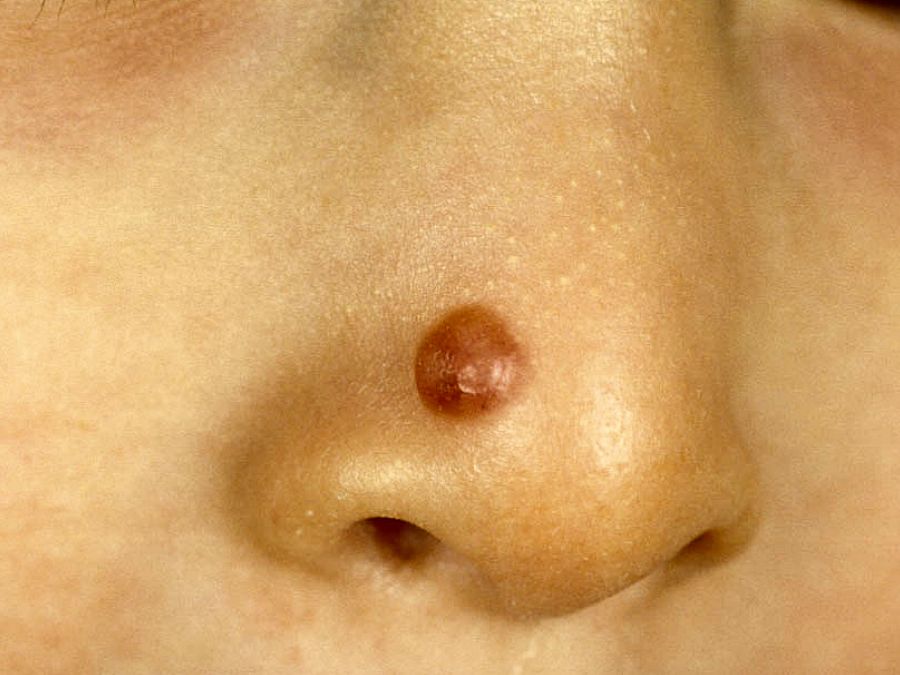
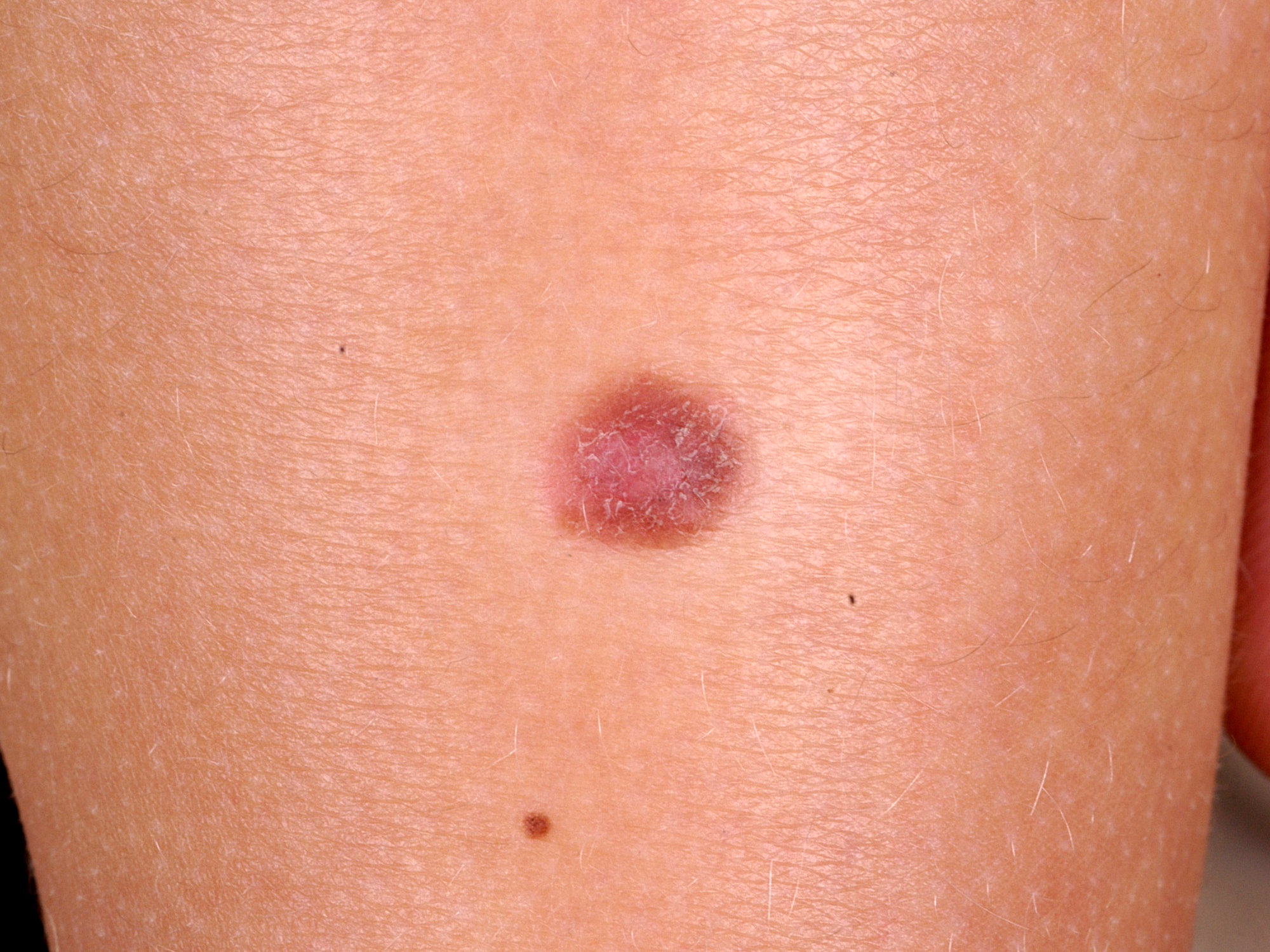
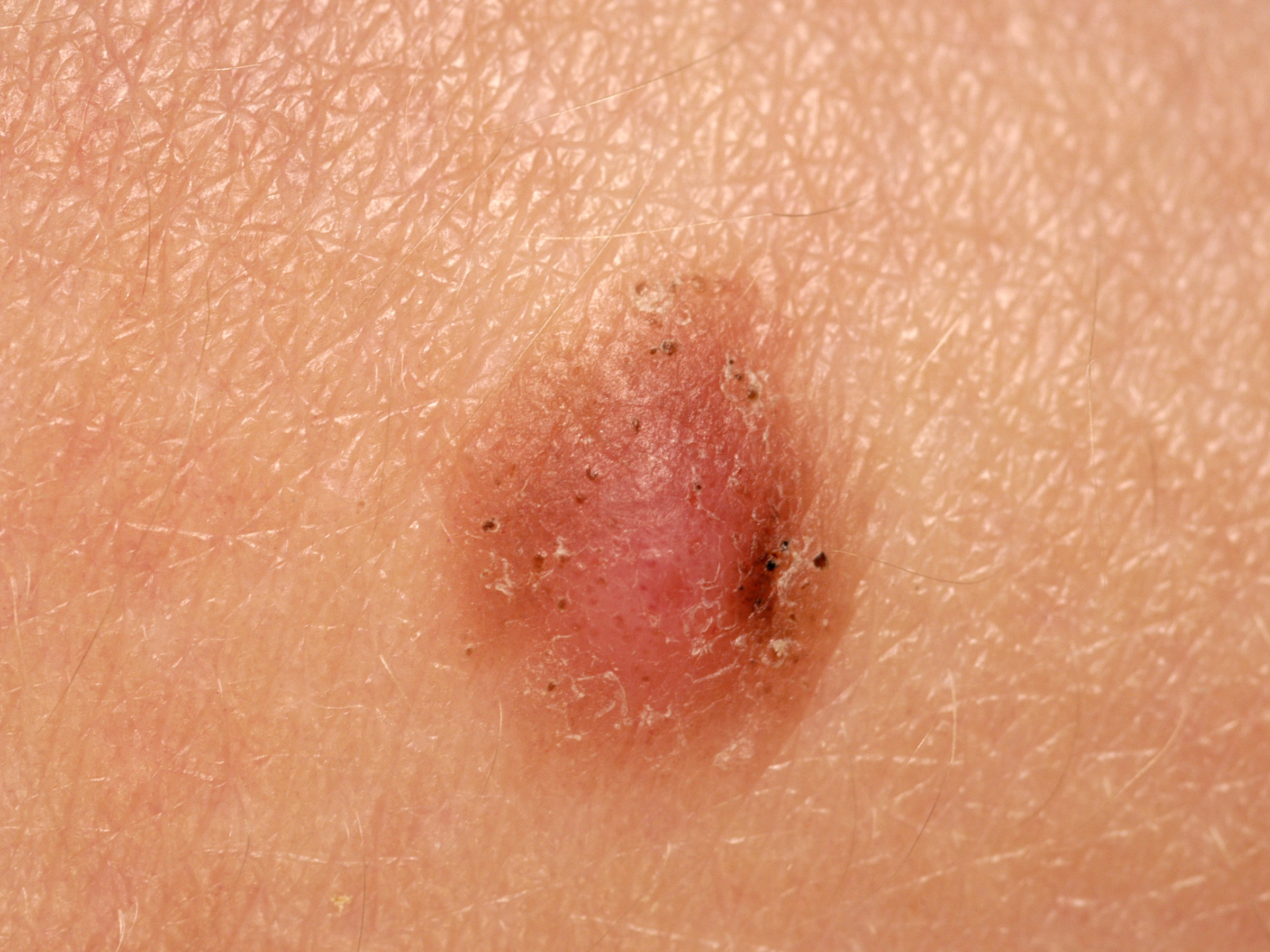
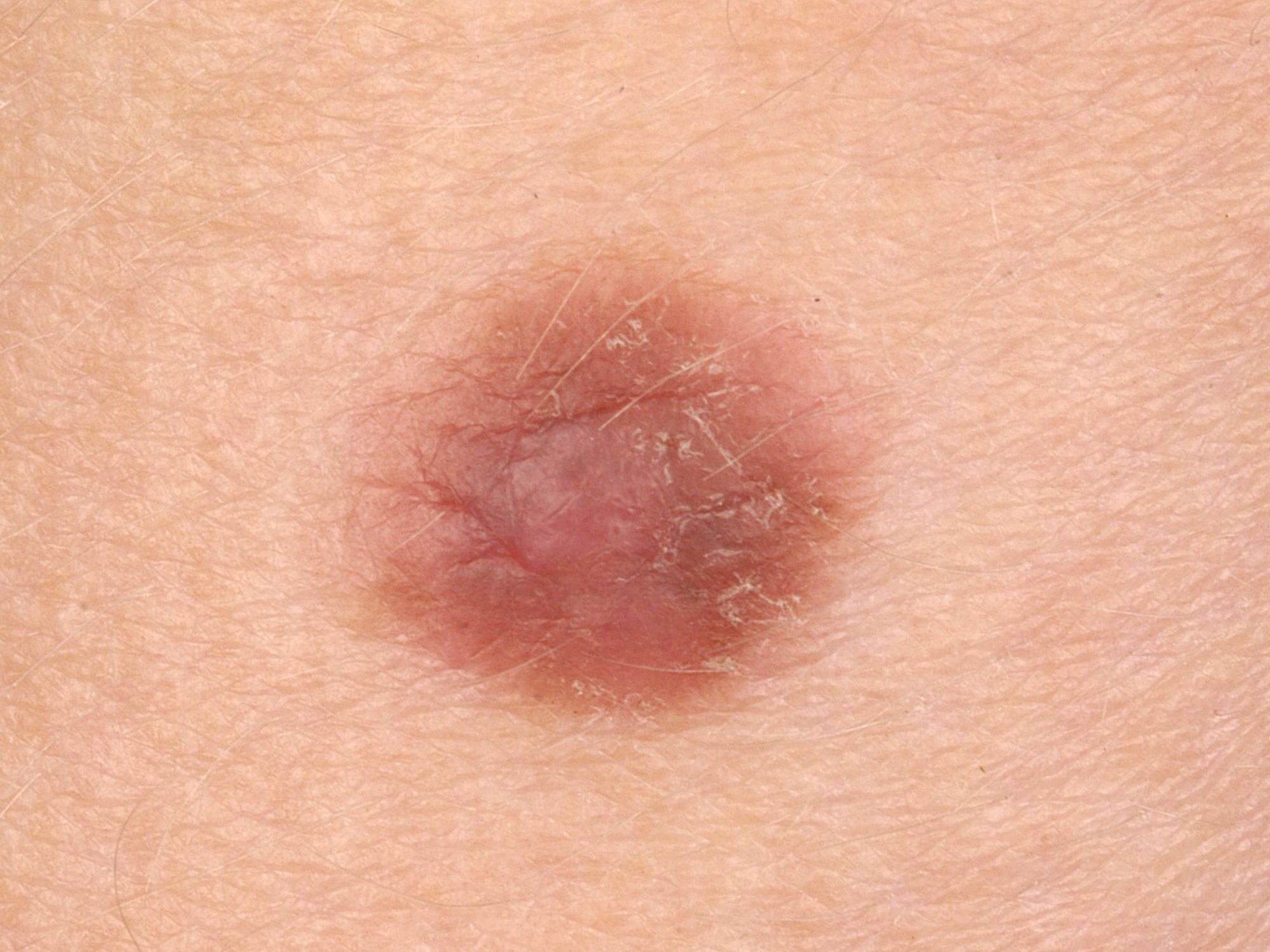
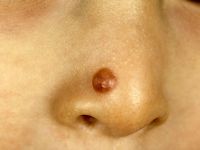
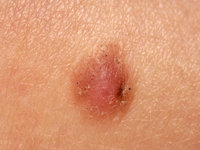
WHAT IS A SPITZ NAEVUS?A Spitz nevus is a mole that develops at a young age, in children and young adults. Approximately 70% of Spitz nevi develop before the age of 20. A Spitz nevus develops quickly, within a few weeks to months, and then remains stable. They can grow to approximately 1-2 cm in size. They are usually pink, red, or reddish-brown spherical moles. They can also be light brown or dark brown. A Spitz nevus is often found on the face or lower legs. A Spitz nevus is a benign mole. However, because they grow quickly, they are often confused with a malignant mole, a melanoma. Spitz nevi are more common in people with fair skin.
 |
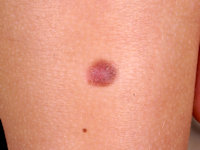 |
| Spitz nevus |
Spitz nevus |
 |
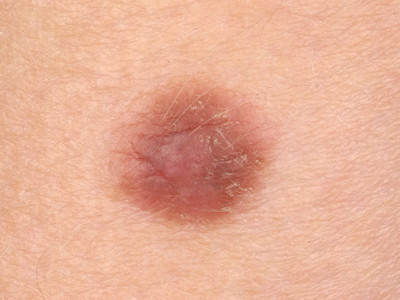 |
| Spitz nevus |
Spitz nevus |
HOW IS THE DIAGNOSIS MADE?The diagnosis can sometimes be made based on the clinical picture, or its appearance. If it grows rapidly, developed at a young age, is on the face or lower legs, and is pinkish-red and spherical, then it is most likely a Spitz nevus. But sometimes it is not so clear, especially with brown or dark brown varieties. In that case, further examination is necessary; the lesion must be removed and examined under a microscope to ensure that it is a benign Spitz nevus and not a malignant melanoma. Even under a microscope, a Spitz nevus can be difficult to distinguish from a melanoma. Sometimes the material must be sent to a group of experts specializing in the evaluation of Spitz nevi.HOW IS A SPITZ NAEVUS TREATED?If a dermatologist clearly determines that the mole is a Spitz nevus, it may be decided to do nothing and wait for the procedure in children. A photo is often taken and a follow-up appointment is scheduled after six months to reassess the mole.
If there is any doubt, the mole should be removed for examination under a microscope. In about half of the cases of pink or reddish-brown Spitz nevi, the decision is made to remove the mole. In 70% of the brown-colored cases, the decision is made to remove the mole.
Removal of a Spitz nevus is performed under local anesthesia. In very young children, it can also be performed under general anesthesia by a (pediatric) plastic surgeon. The mole is excised with a 2-millimeter safety margin around it and then sutured. The material is examined by a pathologist. If the pathologist determines it is a Spitz nevus, the procedure is considered complete. If the pathologist suspects a melanoma, or if it's questionable, the lesion must be removed again with a larger safety margin of one centimeter. In the face, this is sometimes not possible, and a smaller area is removed.WHAT IS THE PROGNOSIS?The prognosis for a Spitz nevus in childhood is good. It is a benign mole. A Spitz nevus can also disappear spontaneously, as the immune system clears the mole. |