WHAT IS A FUNGAL NAIL?
A fungal nail is a thickened, discolored, and crumbly nail caused by a fungal infection growing inside the nail. A thickened, crumbly nail is also called a fungal nail . In most cases, a fungal nail is caused by a fungal infection, but not always. A thickened nail can also be a growth disorder that is not caused by a fungus, but by something else, for example, poor blood vessels, old age, a skin condition such as psoriasis, or simply because of nothing.
Fungal nails are very common. It is estimated that in the Netherlands, 5% of the population has one or more fungal nails. Most fungal nails (98%) are found on the feet; fungal infections of the fingernails are rare. The medical term for a fungal nail is onychomycosis .
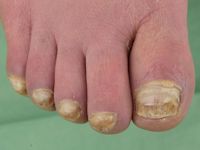 |
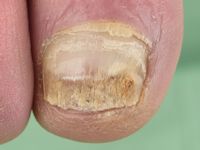 |
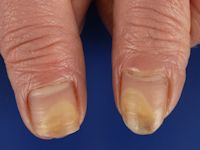 |
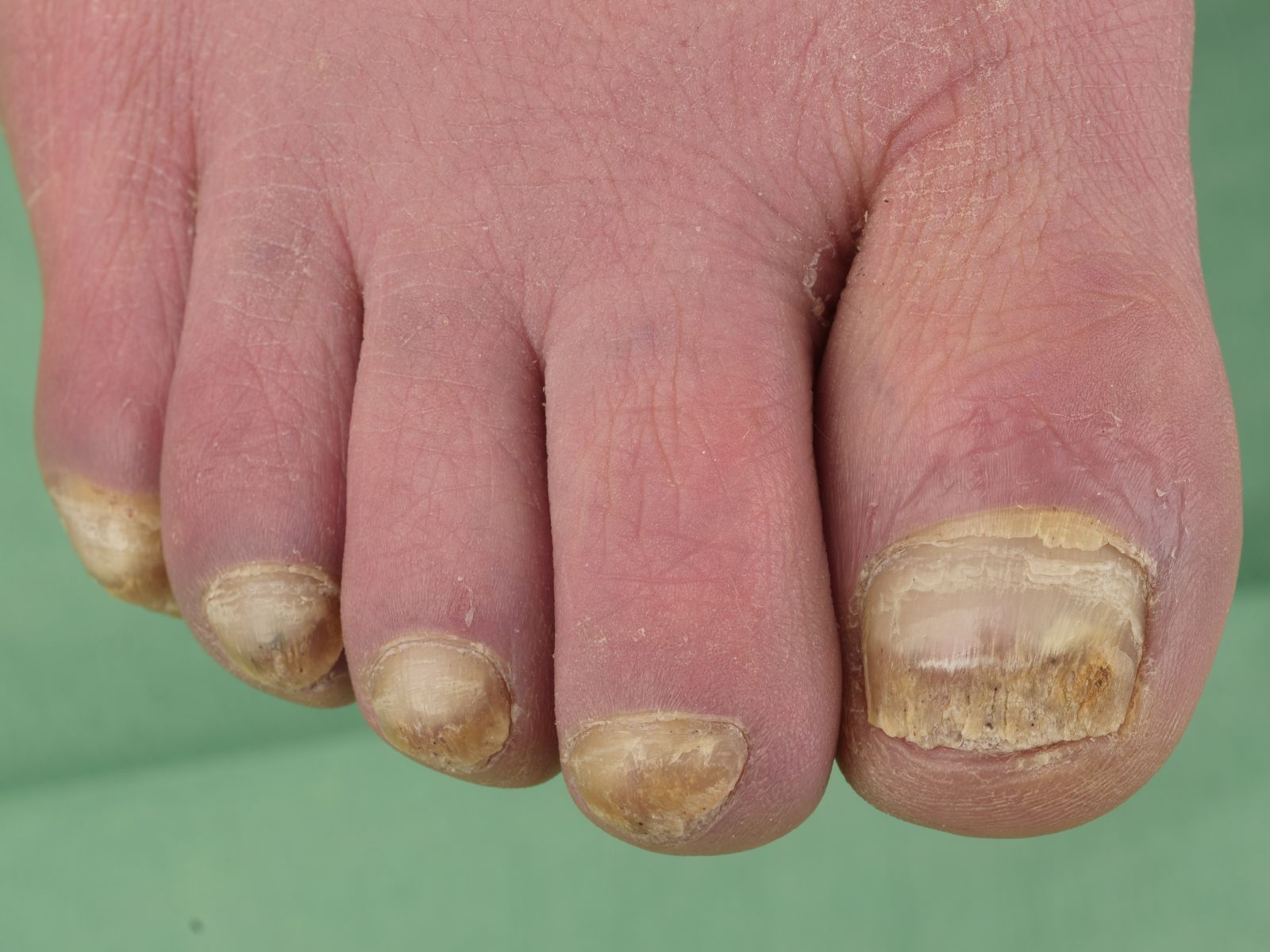
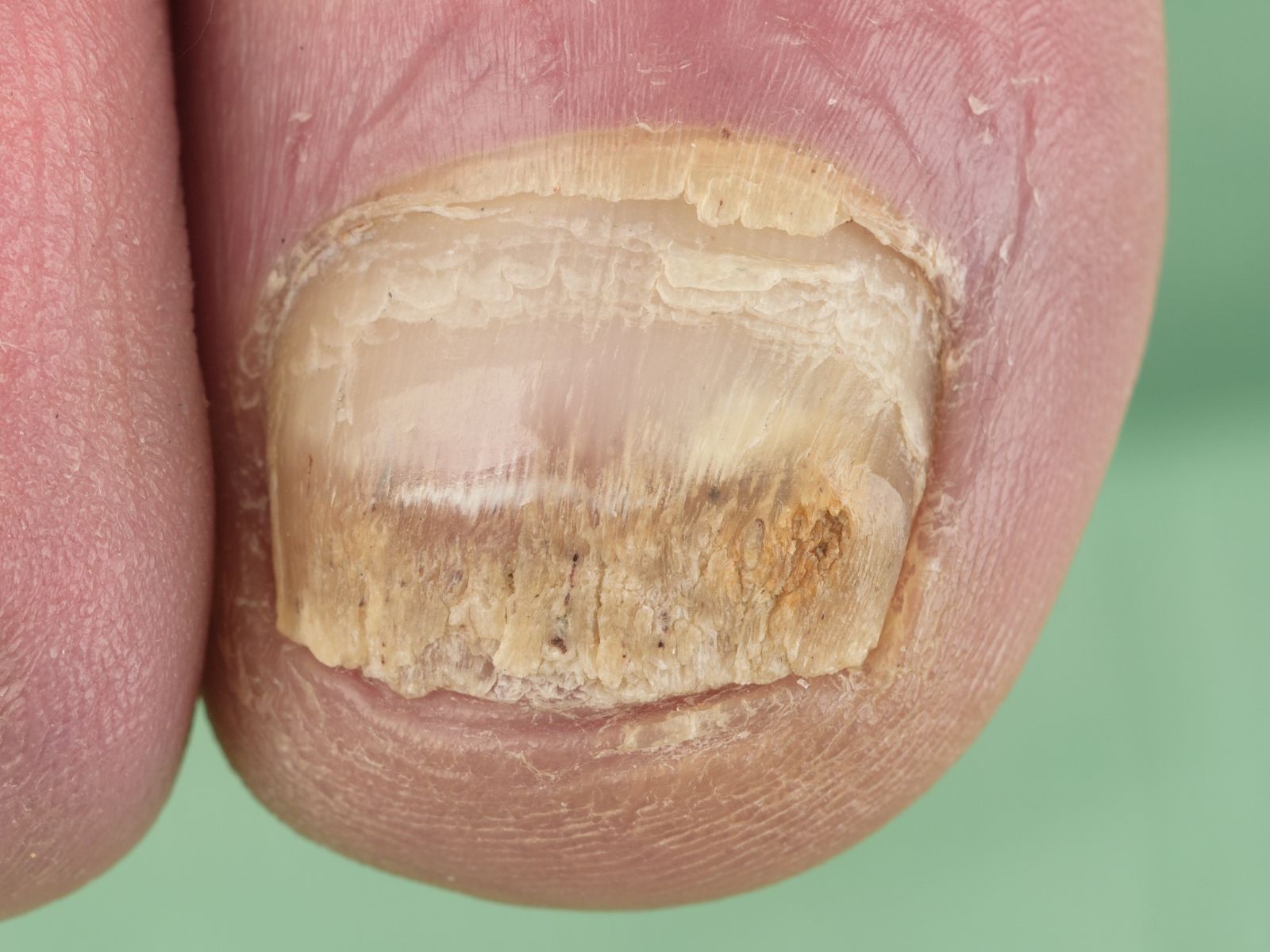
| fungal nails (feet) |
fungal nails (feet) |
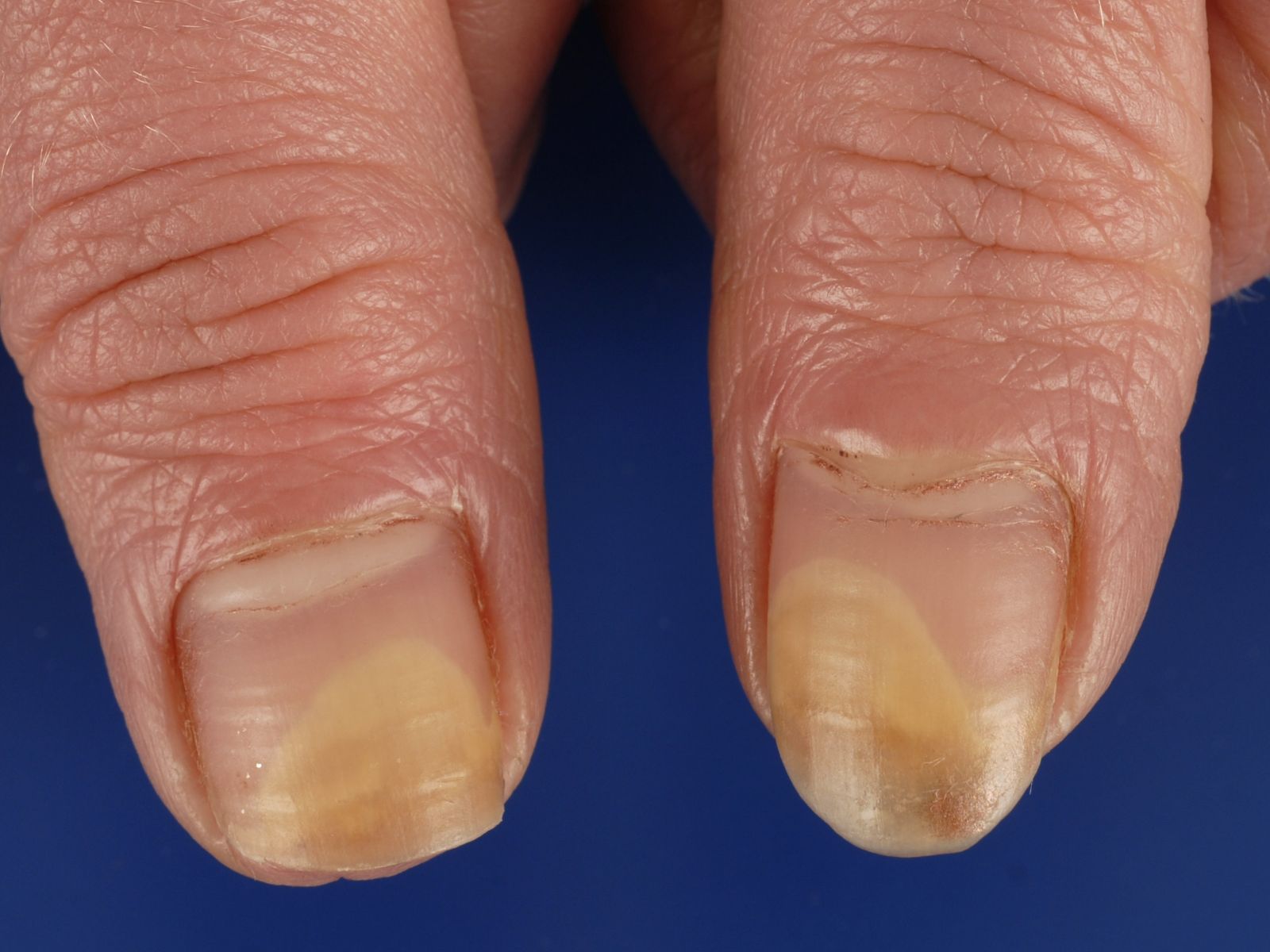
fungal nails (hands) |
WHAT DOES IT LOOK LIKE?Fungal nails are thicker and have a yellowish, greenish, or white color. The nail is fragile and brittle. Cutting it is no longer possible. Sometimes the nail partially or completely detaches. Fungal nails can affect one or several nails, or all nails. Sometimes a fungal skin infection (athlete's foot) is also present. This can appear as cracks and flaking between the toes, or flaking along the edge of the foot.WHAT CAUSES NAIL FUNGUS?Most fungal toenails are caused by a fungus from the dermatophyte group . These fungi usually have names beginning with Trichophyton . Most fungal toenails are caused by the skin fungus Trichophyton rubrum (70% of cases) or by Trichophyton mentagrophytes (20% of cases). The yeast Candida albicans can also cause a fungal toenail. People who frequently come into contact with water with their hands can develop a Candida infection in their handnails.HOW DO YOU GET NAIL FUNGUS?Presumably, the skin first becomes infected with a fungus, and from there, the nails later spread. Fungi are ubiquitous in the environment. They produce fungal spores, which are very small and spread easily. Feet can become infected with a fungus by walking barefoot in locker rooms, showers, sports clubs, swimming pools, saunas, and so on. The fungi can infect both the skin and the nails. Fungal spores can also survive in shoes and then infect the skin.
It's notable that fungal nails occur primarily in the elderly. Older people are approximately 30 times more likely to develop a fungal nail infection than children. This may be because nails grow more slowly with age, making it easier for fungi to grow. People with weakened immune systems (for example, due to prednisone use or HIV infection) and patients with diabetes are also more susceptible to contracting a fungal infection.ARE NAIL FUNGUS CONTAGIOUS?Everyone comes into contact with fungi constantly, but not everyone becomes infected. It also depends on personal resistance to fungi. However, the fungi that cause an infection usually originate from a person (or animal) in your environment. The fungus is found in the skin flakes of people (or animals) with a fungal infection. The skin flakes shed and can thus spread.HOW CAN I PREVENT INFECTION?- Wear flip-flops in areas where many people walk barefoot, such as showers and swimming pools.
- Keep your feet clean and dry, dry thoroughly between your toes, and use dusting powder or talcum powder if necessary.
- Wear clean cotton or wool socks every day and well-ventilated, not too tight shoes.
- If you have a fungal nail: don't file your nails haphazardly, leaving the floor covered in fungus: do it over a sink or in a shower or bath and rinse thoroughly. Think of your family members.HOW IS THE DIAGNOSIS MADE?The diagnosis can be made based on the clinical picture and its appearance. However, it's better to be certain whether it's a fungal nail infection. There are other causes for a thickened, crumbly nail (a fungal nail infection), such as a growth disorder, poor blood circulation, or a skin condition like psoriasis.
It's especially important to know if it's actually a fungus if you plan to treat it with medication (antifungal tablets, antifungals). These antifungal tablets have to be taken for months, and they can have side effects. Therefore, it's important to first confirm that it's a fungal nail infection; otherwise, you'll be taking medication for months for nothing.
There are several methods to determine if a fungus is present in a nail. A scraping can be taken from the nail. This scraping can be softened with a liquid and examined under a microscope. Sometimes, fungal threads can be seen. This test is not very reliable. The nail scraping can also be sent to a laboratory for culturing. This will determine whether it contains a fungus, and also what type of fungus it is. Culturing can take a long time, especially if the fungus grows slowly. Sometimes it takes up to eight weeks for a result to be available. It's also possible to clip a piece of nail and send it to a pathology laboratory. The nail is then cut into thin slices and examined under a microscope. This takes one to two weeks. The pathologist can determine whether there is a fungus, but not which one.SHOULD A NAIL FUNGUS BE TREATED?It's not always necessary to treat a fungal nail. If it doesn't bother you much and it's not cosmetically bothersome, you can also decide not to treat it. Treatment isn't that simple; it often involves months of taking antifungal pills. Sometimes, it's wise to treat the fungus for medical reasons. For example, in the case of diabetes or a weakened immune system, or if the fungal infection causes other problems, such as erysipelas or blistering eczema on the hands or feet (acrovesicular eczema).HOW IS NAIL FUNGUS TREATED?TabletsA fungal nail is treated with antifungal tablets (antifungals). This is most effective. Topically applied products do not penetrate the nail sufficiently. Terbinafine tablets or itraconazole capsules are usually prescribed. Occasionally, fluconazole is used if the other two options are not sufficient.
The treatment is long-lasting, at least 3 months. Sometimes a second course is necessary. Because nails grow slowly, especially toenails, it can take up to a year for the infected part of the nail to grow out completely.
- Terbinafine, 250 mg tablets, 1 tablet once a day for 3 months.
- Itraconazole, 100 mg capsules, 2 capsules once a day for 3 months.
- Fluconazole 150 mg once a week until the infected nail is replaced; usually 3-6 months for fingernails and 6-12 months for toenails.
These medications may have side effects. Read the package insert carefully. Do not take them if you are pregnant or trying to become pregnant, or if you are breastfeeding. Antifungals can increase the effects of some medications (e.g., antidepressants, blood thinners, certain heart medications). You should not take some cholesterol-lowering pills with antifungals. Antifungals carry a small risk of liver problems, such as jaundice.Local resourcesTopical remedies (antifungal creams) are very effective for fungal skin infections, but they don't penetrate the nail well. Use a topical antifungal cream to rub into the skin, especially between your toes.
A new topical product has been introduced in the Netherlands that can still treat fungal nails. This product is called Loceryl (amorolfine 5%). It's a nail polish that should be applied once or twice a week for six months (toenails for 9-12 months). The effect isn't as good as oral remedies, but it is a solution for people who can't or don't want to take tablets.
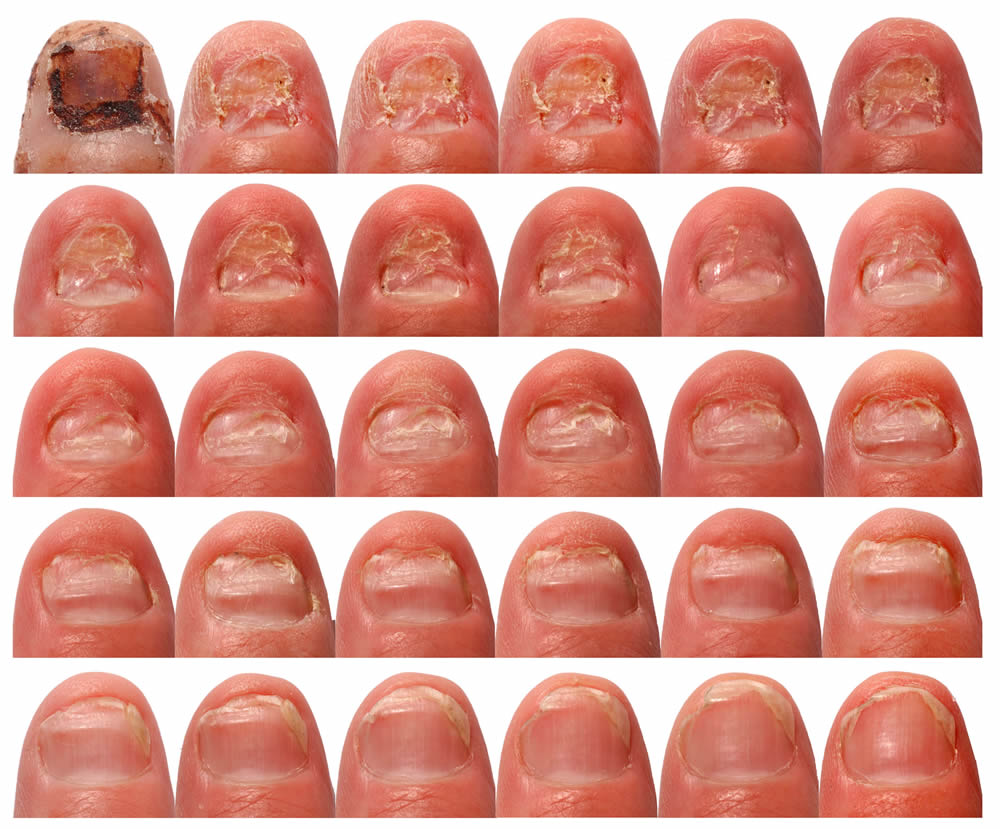
If the treatment is effective, a normal nail should gradually grow back from the bottom up, as shown in the photo below:
WHAT CAN I STILL DO MYSELF?If the nail is deformed or bothersome, you can reshape it with a pumice stone or file. An unsightly discolored nail can be covered with nail polish. If there is a fungal nail infection, there is usually also athlete's foot. This can be treated with an antifungal cream. Make sure you wear dry socks and breathable, dry shoes. You can also dust the inside of your socks and shoes with an antifungal dusting powder. This kills the fungal spores and prevents re-infection after treatment. |