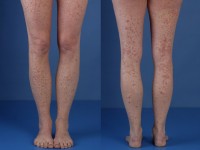
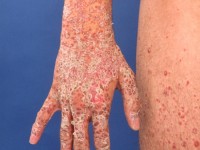
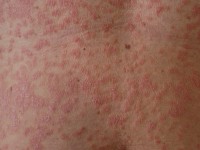
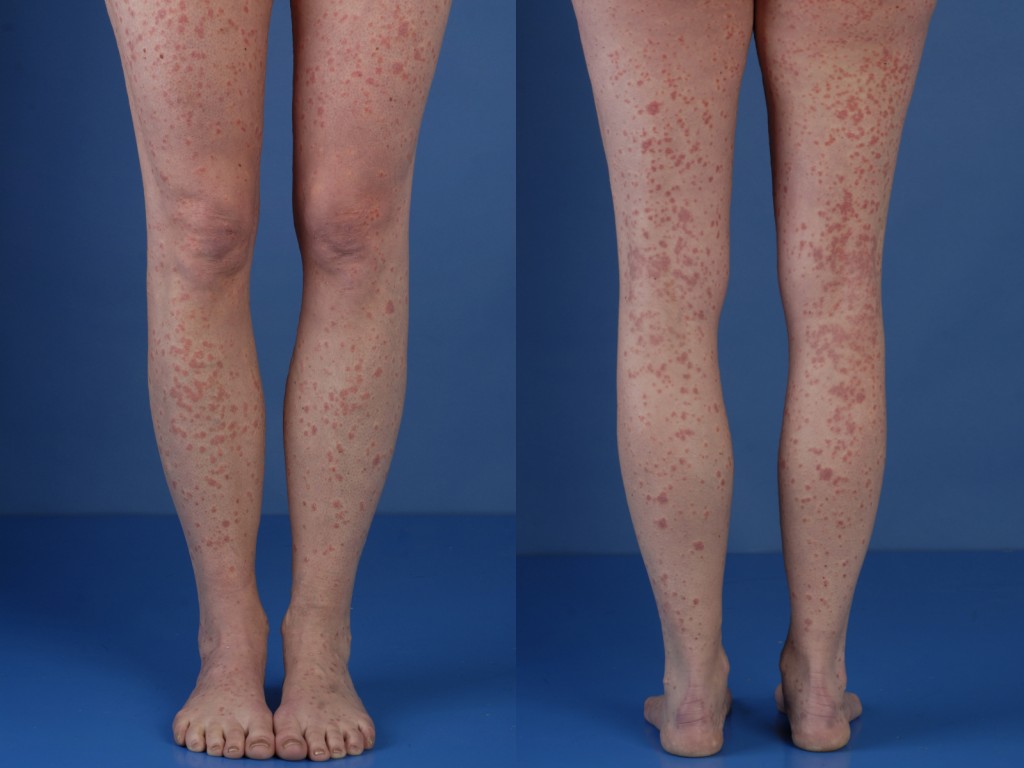
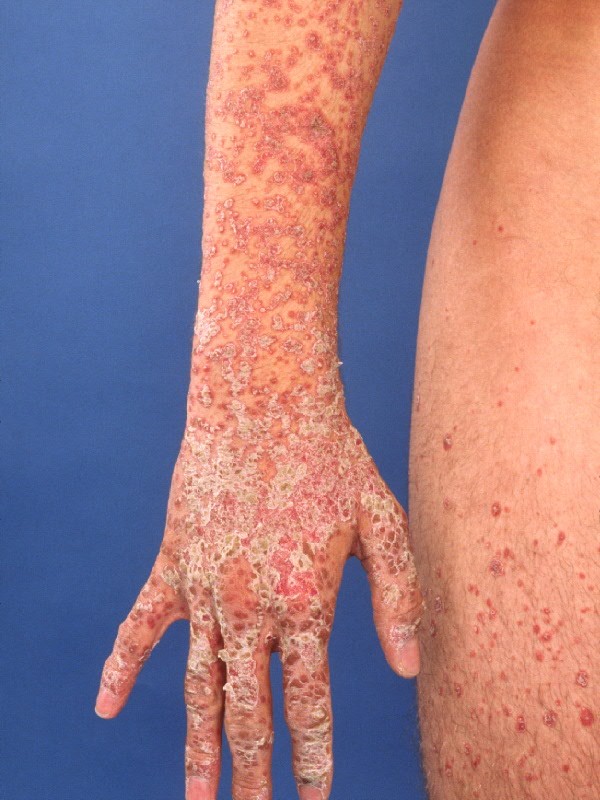
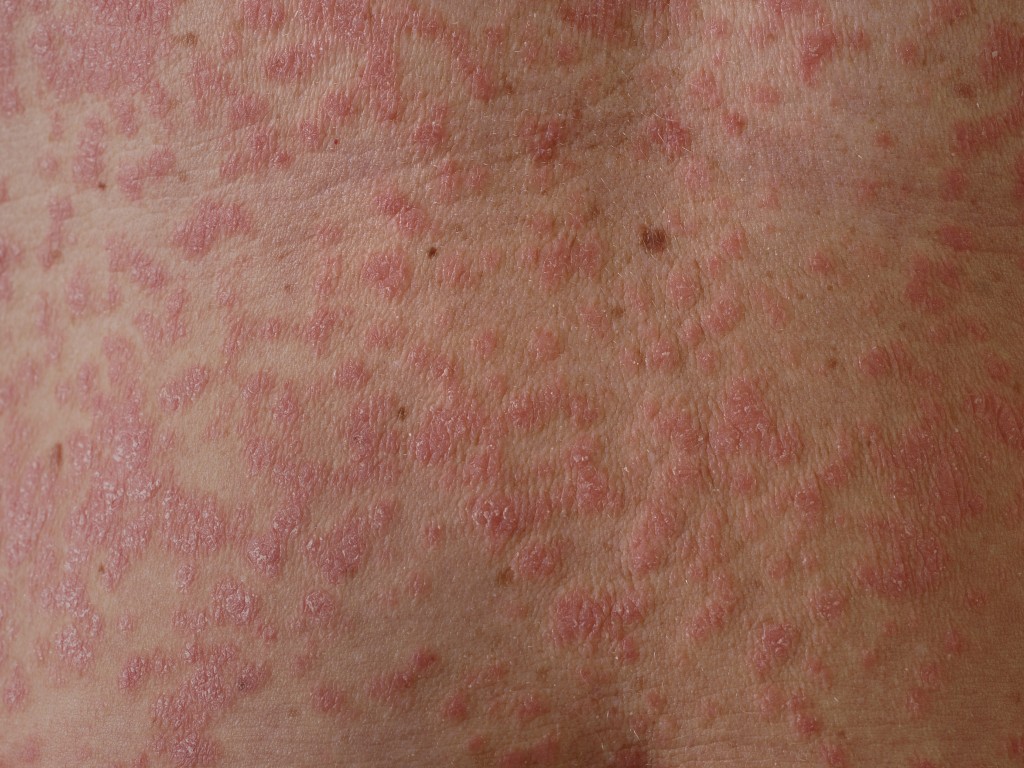
WHAT IS PSORIASIS GUTTATA?Guttate psoriasis(Teardrop-shaped psoriasis) is an acute flare-up of psoriasis. Small (1-10 mm in size) spots or bumps, often with a scaly surface, appear all over the body in a short period of time. It can occur spontaneously or after a period of sore throat. It can be triggered by a bacterial infection (streptococcus). It usually resolves on its own.WHAT DOES IT LOOK LIKE?Small, pinkish-red spots and bumps appear all over the body, but primarily on the trunk. These spots later flake off and are usually itchy. The rash can spread over the entire body, including the face and scalp. The palms of the hands and the soles of the feet are usually not affected.
Other symptoms that can occur with regular psoriasis, such as nail abnormalities and joint pain, are absent in guttate psoriasis.
 |
 |
 |
| guttate psoriasis |
guttate psoriasis |
guttate psoriasis |
WHO CAN GET GUTTATE PSORIASIS?In principle, anyone can get this. It can develop in people who have never had psoriasis before. However, it is more common in people who have a predisposition to developing psoriasis. Usually, someone in the family also has psoriasis. Guttate psoriasis usually develops between the ages of 10 and 40. Some patients who have had a guttate psoriasis flare-up later develop regular psoriasis with larger patches and patches on the well-known predispositions for psoriasis: the elbows and knees. The exact risk of someone with guttate psoriasis later developing regular psoriasis is unknown.WHAT IS THE CAUSE?Guttate psoriasis can be triggered by a throat infection caused by a specific bacterium, streptococcus. These bacteria are also called group A beta-hemolytic streptococci or Streptococcus pyogenes . Apparently, the streptococcal infection is a trigger for the development of psoriasis in people predisposed to guttate psoriasis. Streptococcal infection can cause a rash (similar to a cold sore), and these spots likely develop into small psoriasis patches in people predisposed to psoriasis. Guttate psoriasis can also be triggered by medications (NSAIDs, beta-blockers, antimalarials, etc.).HOW IS THE DIAGNOSIS MADE?The diagnosis is made based on the imaging, which looks quite typical. Sometimes, a skin biopsy is necessary . In people who have had a sore throat, strep can sometimes be cultured from the throat (throat culture), or detected through a blood test for antibodies formed against the bacteria.HOW IS GUTTATE PSORIASIS TREATED?Mild forms can be treated with creams and ointments used for psoriasis, usually topical corticosteroids or vitamin D ointments, or combinations. Moisturizing the skin is also important.
For more extensive forms, light therapy (UVB light) can be initiated.
If streptococci are cultured or confirmed by blood tests, a 10-day course of antibiotics may be prescribed. It is not entirely certain whether treating the streptococcal infection also has a beneficial effect on the course of the psoriasis. Nevertheless, it is common practice to treat a streptococcal infection with antibiotics.
Light therapy with UVB light
WHAT ARE THE OUTLOOK?The outlook is good. The spots often disappear on their own or with treatment. After that, it's no longer necessary to continue treatment. Patients who have had guttate psoriasis may later develop regular psoriasis. The risk of this is unknown. |

![Light therapy (UVB cabinet) for guttate psoriasis (click on photo to enlarge) [source: Waldmann]](../../images/figures/Waldmann-7002.jpg "Light therapy (UVB cabinet) for guttate psoriasis (click on photo to enlarge) [source: Waldmann]")