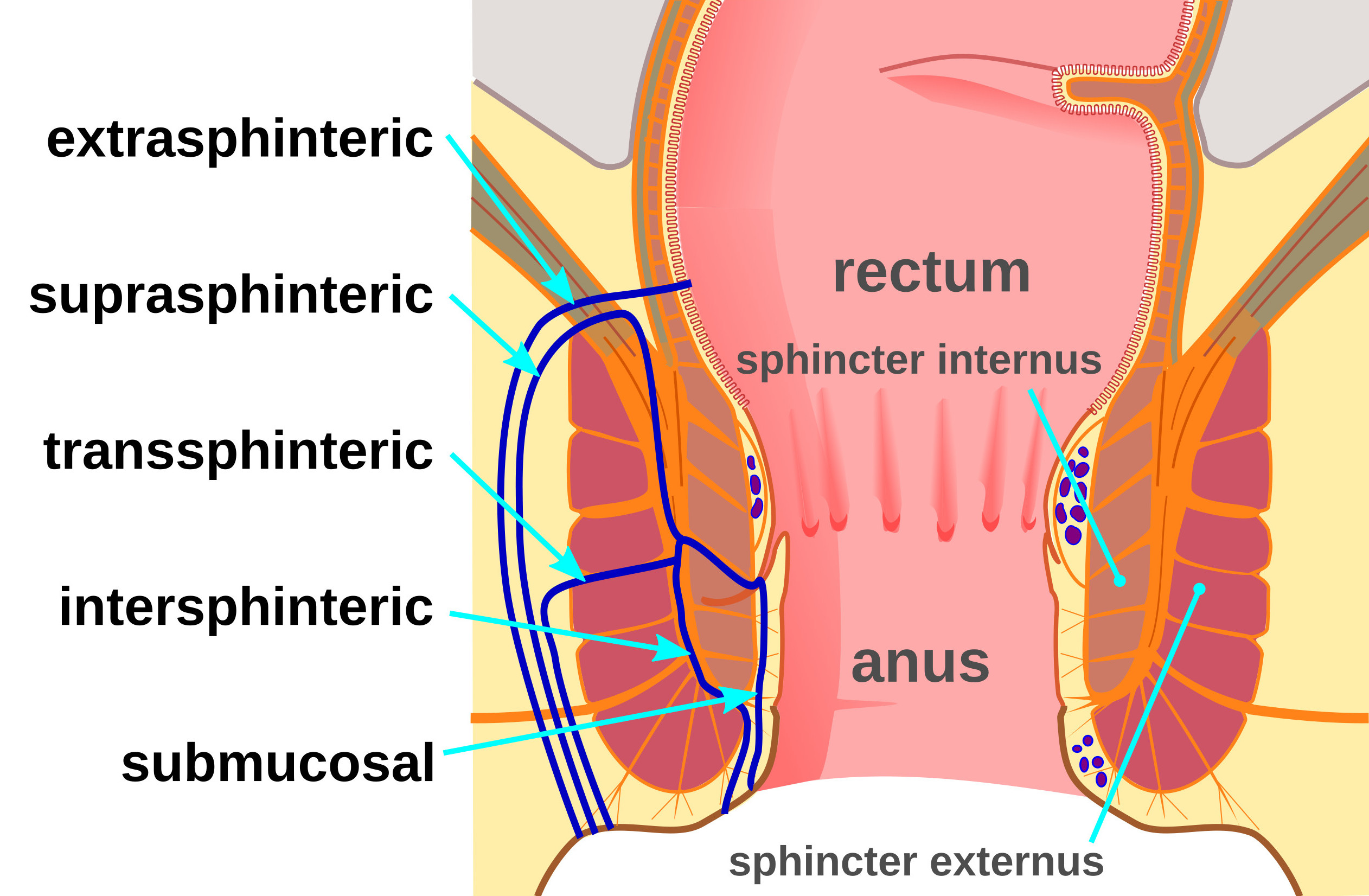
This brochure provides information about anal fistulas and the most common treatment options. Please be aware that your individual situation may differ from what is described.WHAT IS A FISTULA AT THE ANUS?A fistula near the anus (perianal fistula or fistula ani) is a connection between the rectum and the skin, usually a remnant of an inflammation in an anal gland. Such inflammation can spread to the anal sphincter and then to the skin. If the inflammation breaks through the skin, a fistula can later remain. The fistula therefore almost always runs through the lower part of the anal sphincter. The fistula tract can run directly to the rectum, but it can also be very complex (for example, tortuous, possibly with branches, or higher up through the sphincter). Therefore, the location of the external opening does not always directly identify the location of the internal opening.
Why this condition occurs in one person and not in another is unknown. Therefore, it is not due to poor hygiene.
COMPLAINTSA fistula near the anus usually causes contamination: dirt or fluid regularly escapes. Occasionally, an abscess can also develop, which drains through the fistula.DIAGNOSISUsually, the symptoms and findings on examination are clear enough to make a diagnosis. Further examination is therefore usually unnecessary.
Perianal fistulas, which are not connected to the bowel but run from skin to skin, can also be present around the anus. Patients who suffer from this condition may also have fistulas in other locations, for example, fistulas that extend upward from the area around the anus and into the scrotum or labia. Perianal fistulas also occur in patients with Crohn's disease (inflammatory bowel disease), patients with hidradenitis suppurativa (inflammation of the sebaceous glands, often in the armpits, groin, and perianal area), patients with a pilonidal sinus (pilonidal cyst, cyst in the perineal area), and patients with acne conglobata (a severe form of acne with abscesses and cysts).
It is sometimes very difficult to distinguish between all these conditions.TREATMENTThere is essentially only one effective treatment: surgery. This requires a short hospital stay, but for simple fistulas, it can also be done as an outpatient procedure. The anesthesiologist will discuss with you whether the surgery can be performed under a spinal injection or under general anesthesia. The surgery usually takes 45 minutes to an hour.
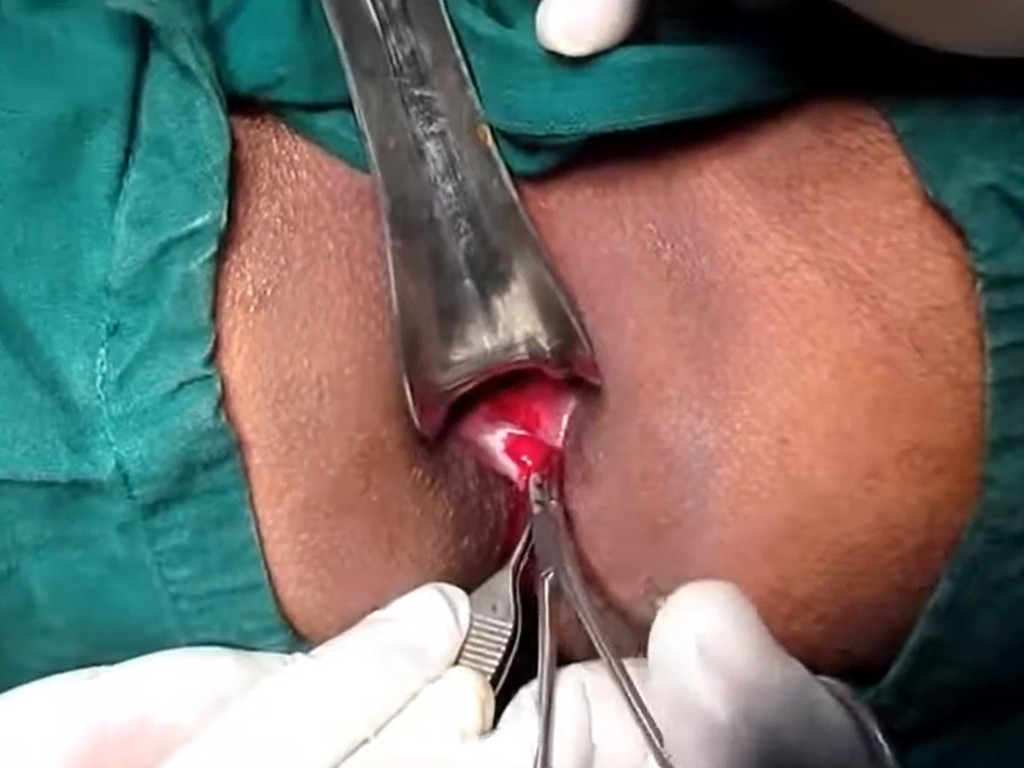
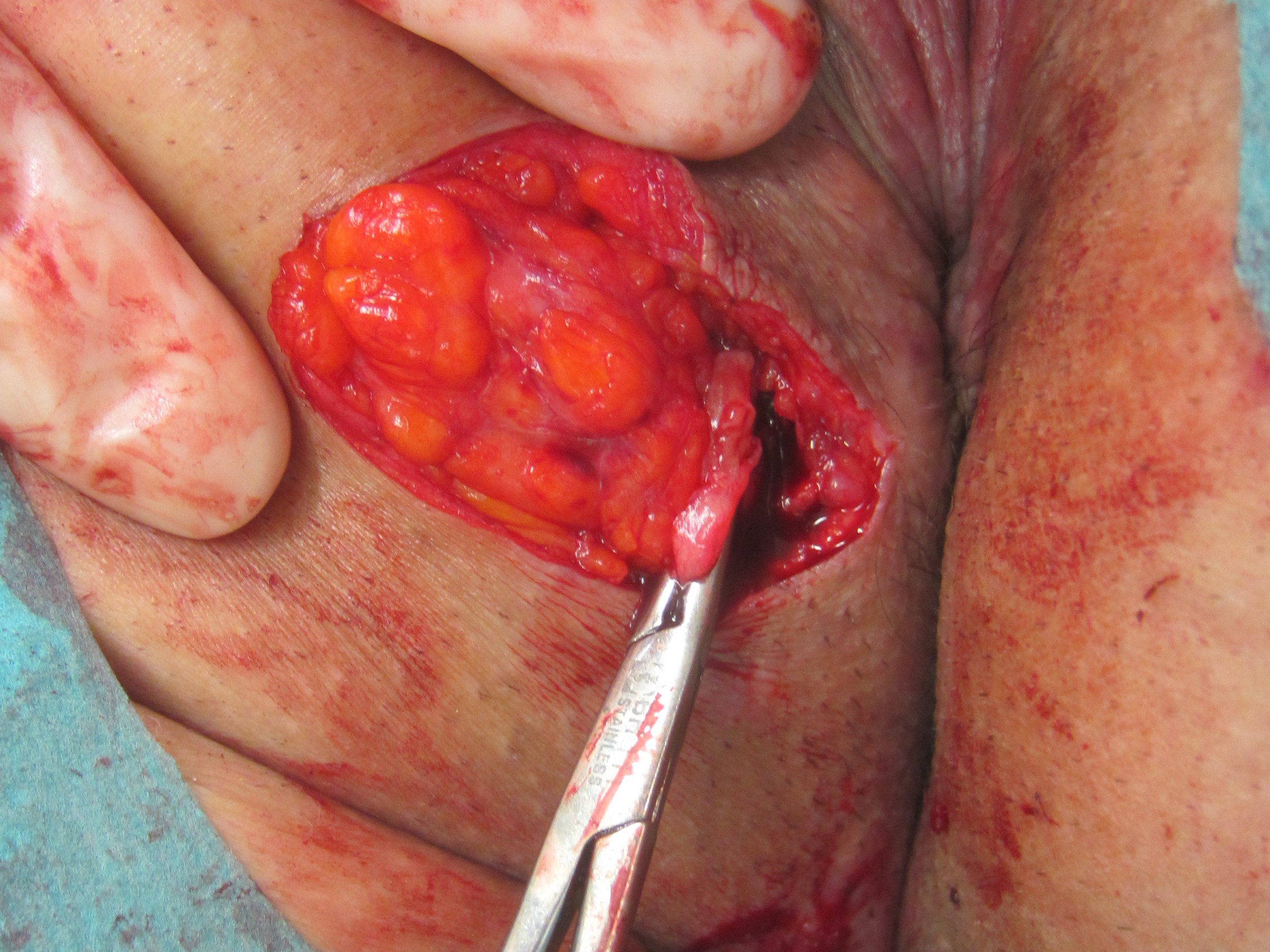
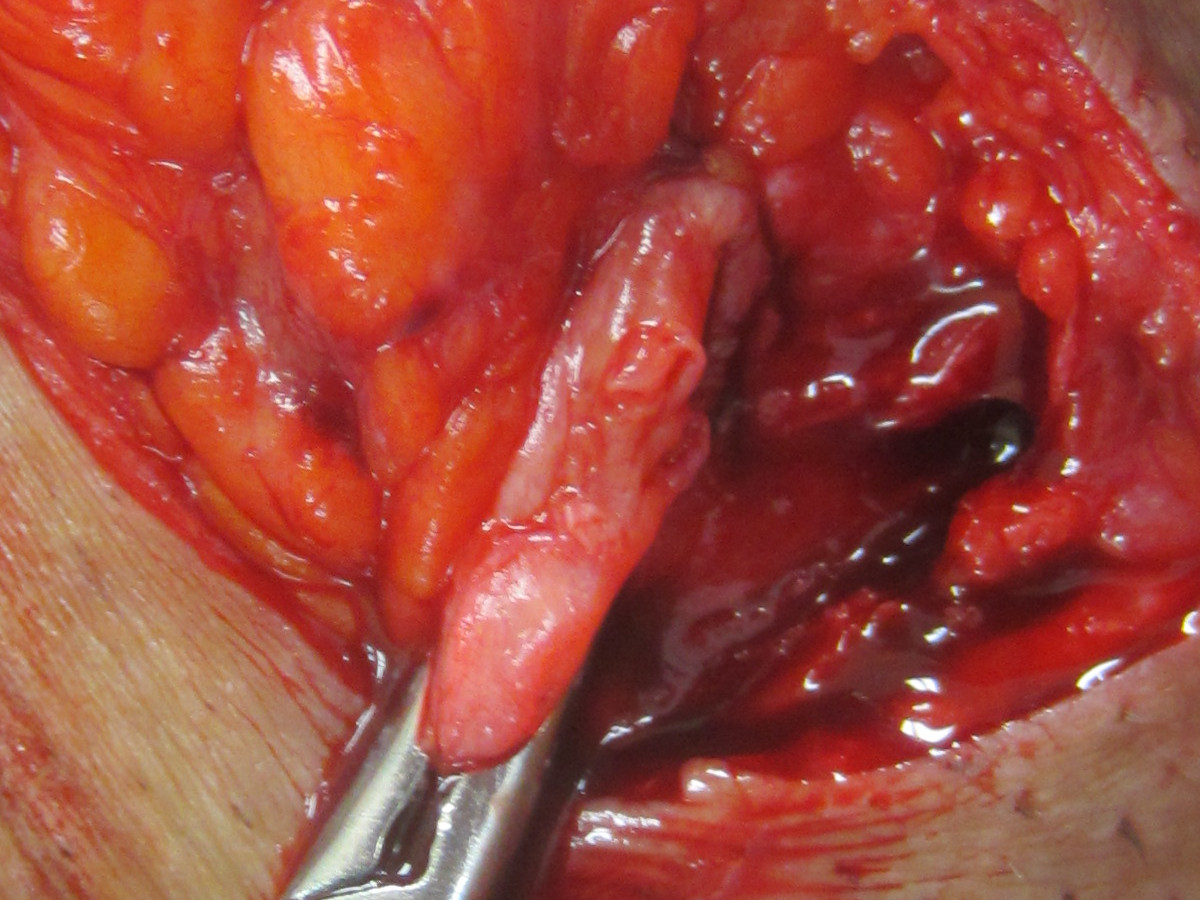
During the surgery, the doctor determines the course of the fistula and completely opens it. If the fistula extends through the lower part of the anal sphincter—which is usually the case—this part of the sphincter is also cut and opened. However, enough sphincter tissue remains to prevent incontinence. The surgical wound is left open and heals spontaneously over a few weeks. For complicated fistulas, a different type of surgery may be necessary. If this is the case, the doctor will discuss the procedure with you.COMPLICATIONSNo surgery is without risks. This surgery also carries the normal risk of complications.
In addition, some specific complications are possible:
- The procedure takes place in an area with many blood vessels (the anus), so some bleeding may occur afterward.
- The risk of wound infection is minimal because the wound is left completely open.
- These procedures involve surgery near or on a part of the anal sphincter. This can have temporary or permanent consequences for continence. Anal continence is defined as the ability to control air (flatulence), fluids (mucus, diarrhea), and feces. Initially, there can certainly be some loss of sphincter control, particularly with flatulence, but possibly also with fluids, especially because the wounds are open. This means that when you feel flatulence or fluids coming on, you have to consciously contract the sphincter, whereas previously this was effortless and almost unconscious. Therefore, you have to become more consciously in control of your continence. This is usually temporary. Unfortunately, in a small number of cases, the loss of this control can be permanent. The loss of some fluid can be particularly bothersome.AFTER THE TREATMENTBecause the wound is left open, you will certainly experience some discomfort and pain after the surgery. For pain, taking a simple painkiller (paracetamol) is usually sufficient. This is available at pharmacies and drugstores, and it is advisable to have these painkillers at home before the surgery.
After the surgery, your stool will need to be kept soft. You will usually receive a prescription for powders or a drink to take home for this.
The wound area around the anus will be covered with gauze, and you will usually receive a prescription for this as well.THE DISMISSALUpon discharge, you will be given an appointment for an outpatient check-up. If special home care (home care or district nursing) is required, this will be arranged through the hospital.
Care at home:
The wound area should be rinsed regularly with a shower, especially after a bowel movement, but also in between. Two to three times a day is usually sufficient. You can also take a sitz bath with some salt water or soap. |