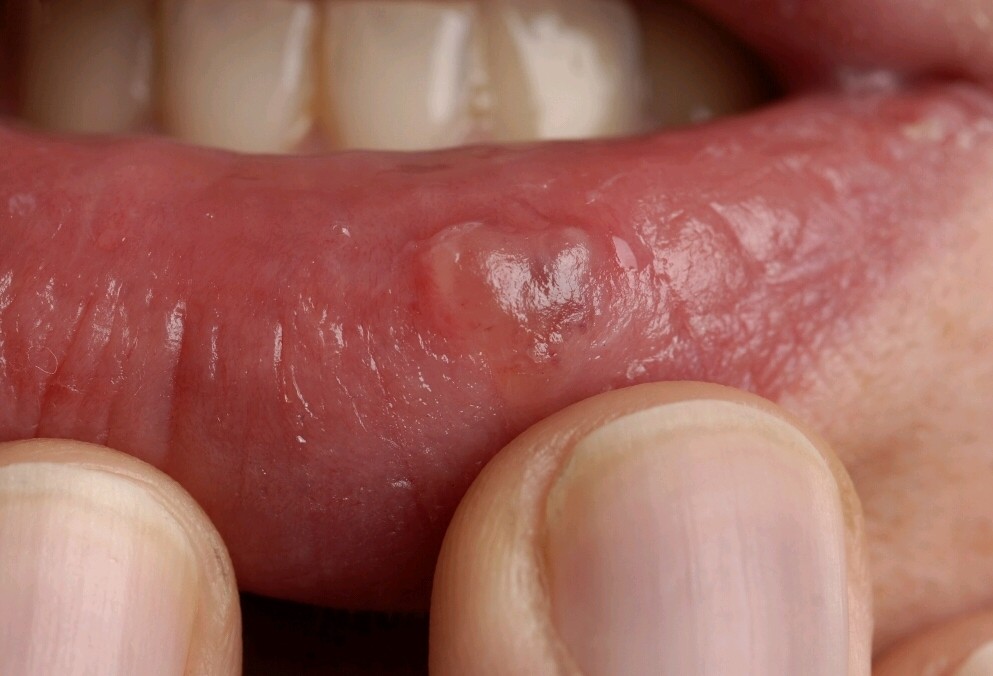
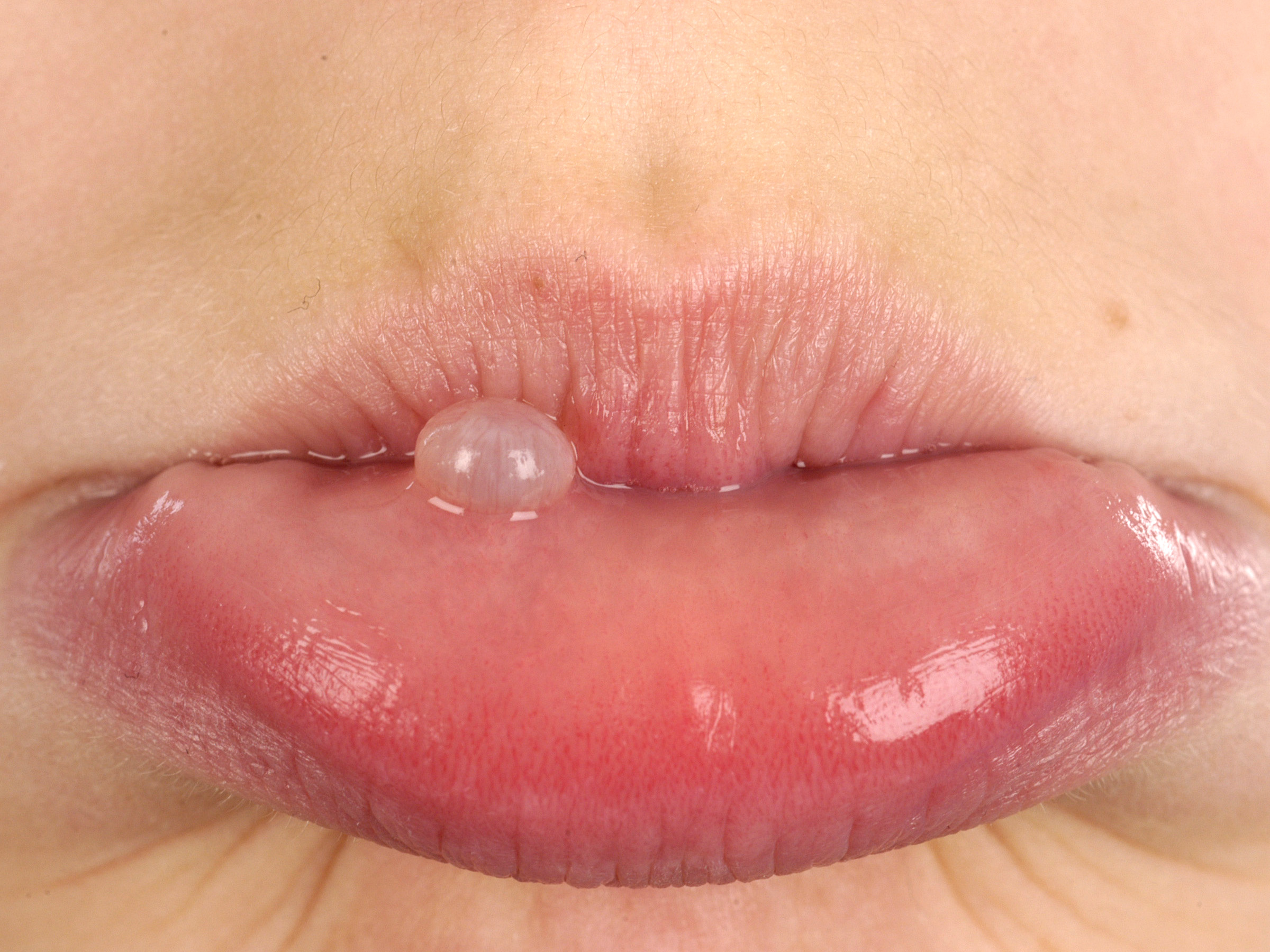
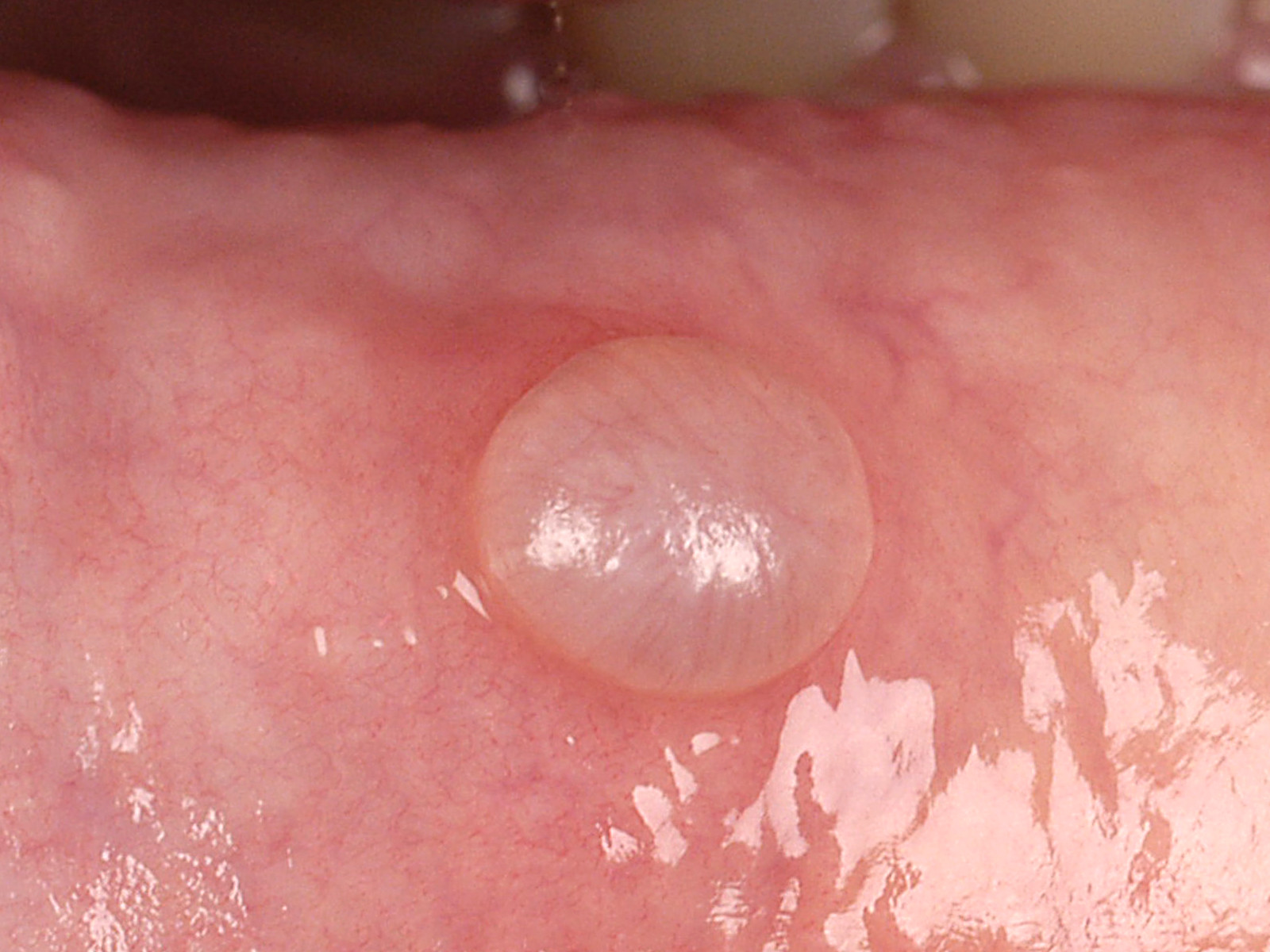
WHAT IS A MUCOCELE?A mucocele, or salivary gland cyst, is a soft lump on the lip caused by a blockage in a salivary gland. They can develop within a short period of time (3 to 6 weeks). It is a benign condition.
 |
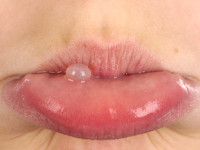 |
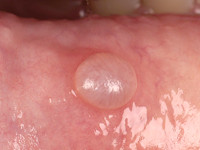 |
| mucocele lower lip |
mucocele lower lip |
mucocele lower lip |
WHAT DOES A MUCOCELE LOOK LIKE?A round, painless bump, usually on the lower lip. Its size varies from a few millimeters to 1.5 cm. It is filled with a mucosal substance (saliva), which may have a bluish tint. If the cyst ruptures, a yellowish or clear, viscous, mucosal substance is released. Sometimes the mucocele is bitten open or breaks open on its own and disappears, but it can also recur. Besides the lower lip, a mucocele can also appear on the floor of the mouth (in which case it is called a ranula), on the underside of the tongue, on the inside of the cheek, and on the palate.HOW DOES A MUCOCELE DEVELOP?Small salivary glands are located throughout the floor of the mouth, including the lower lip. They produce the mucus that keeps the oral cavity moist. The salivary duct can become blocked. Sometimes this occurs spontaneously, for no apparent reason, and sometimes it's caused by damage to the mucous membrane where the duct empties.
On the lip, the salivary duct can become damaged by lip injury, lip biting, peeling skin, or inflammation of the lip caused by a skin condition. Examples of skin conditions that affect the lip include lichen planus, contact dermatitis, drug allergies, and blistering conditions of the oral cavity.HOW IS THE DIAGNOSIS MADE?The diagnosis is based on the clinical picture (the appearance). Sometimes, if the condition is unclear, a biopsy is taken (a small piece of skin removed under local anesthesia for examination). The viscous contents are often released during the biopsy, making it immediately clear that it is a salivary gland cyst.HOW IS A MUCOCELE TREATED?Treatment isn't always necessary; sometimes they disappear on their own.
Another trick is to open the mucocele with a biopsy (a small "apple corer" 2-3 mm in diameter) so the mucocele can drain. After that, some of the mucoceles will disappear on their own.
Mucoceles that don't disappear on their own can be surgically removed. An anesthetic is injected into the lip under and around the cyst. A small incision is then made in the lip. The cyst is peeled out through this small incision. The incision is then closed with a dissolvable suture, or it is left open.
A large mucocele (ranula) from the floor of the mouth is not so easy to remove. This is done under general anesthesia by an oral surgeon or ENT specialist. |