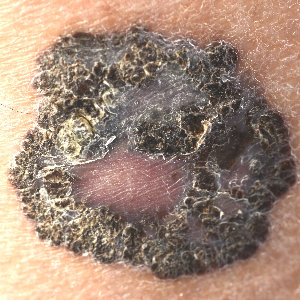
| MOLES,
BIRTHMARKS (NEVUS NAEVOCELLULARIS) |
 |
 WHAT ARE BIRTHMARKS (MOLES, NEVI)? WHAT ARE BIRTHMARKS (MOLES, NEVI)?
Birthmarks (moles) are benign clusters of pigment-producing cells in the skin. They are a normal phenomenon; almost everyone gets multiple birthmarks, an average of about 25 per person.
The official medical term for this benign birthmark is nevus naevocellularis.
In addition to normal,
benign nevi, there are also
dysplastic nevi (atypical nevi) and
malignant nevi (melanomas).
Dysplastic nevi are benign, but can sometimes be precursors to melanoma. A melanoma can develop from a dysplastic
nevus and occasionally even from a normal nevus,
although the chance of a nevus becoming malignant is less than 1 in a million. A melanoma can also develop spontaneously in previously normal skin.
HOW DO NEVI DEVELOP?
A nevus is a harmless disorder in the development of the skin. Occasionally, a
nevus is already visible at birth (known as a congenital
nevus). Most nevi develop between the ages of three and twenty. After the age of forty, the number of
nevi can decrease again.
The number of nevi is determined by hereditary factors and the extent to which the skin is exposed to sunlight during life. Excessive sun exposure in the first 15 years of life is particularly important in the formation of
nevi.
WHAT ARE THE SYMPTOMS?
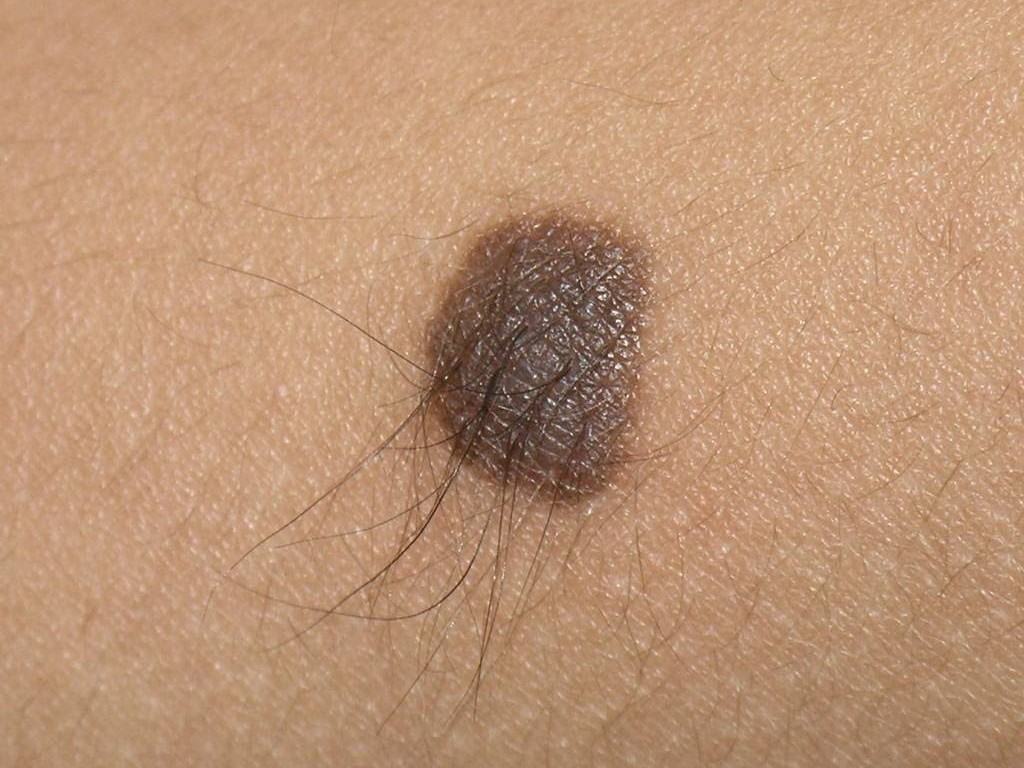
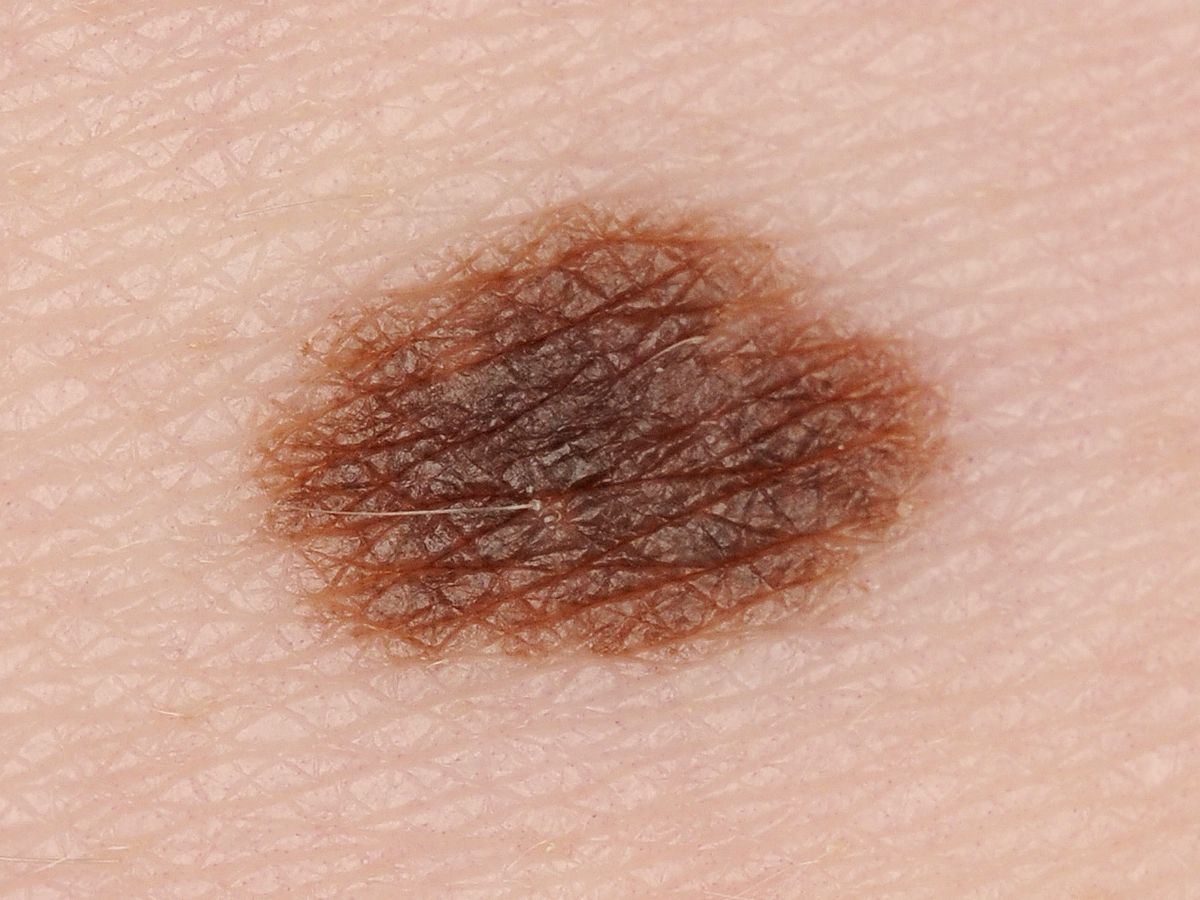
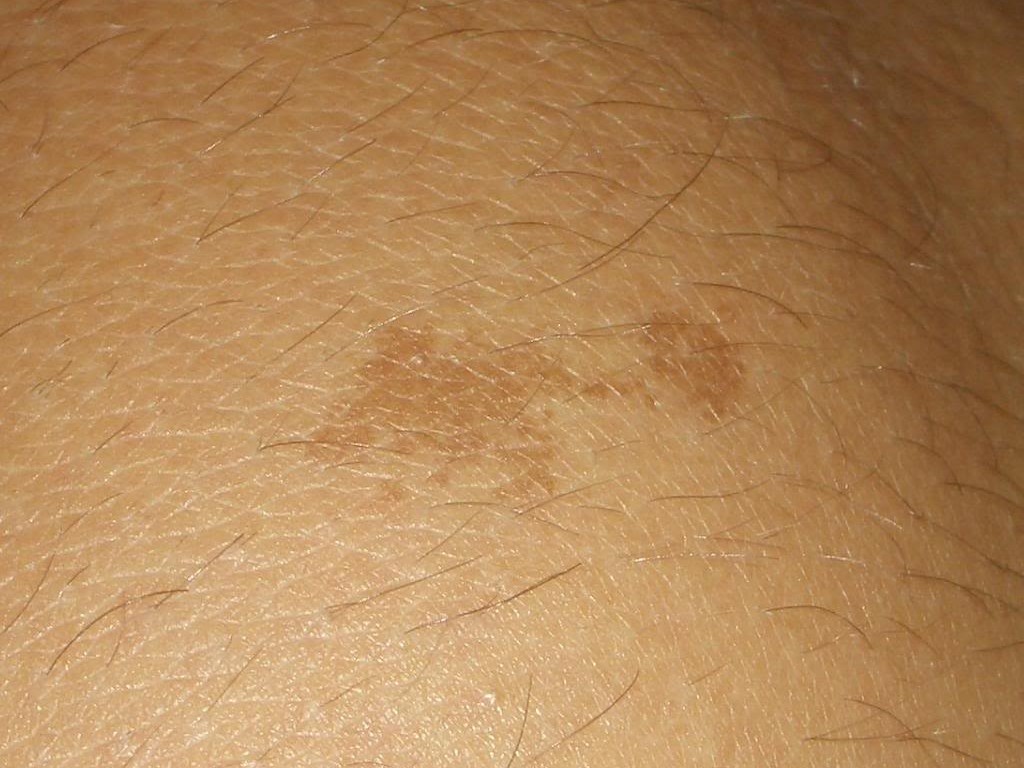
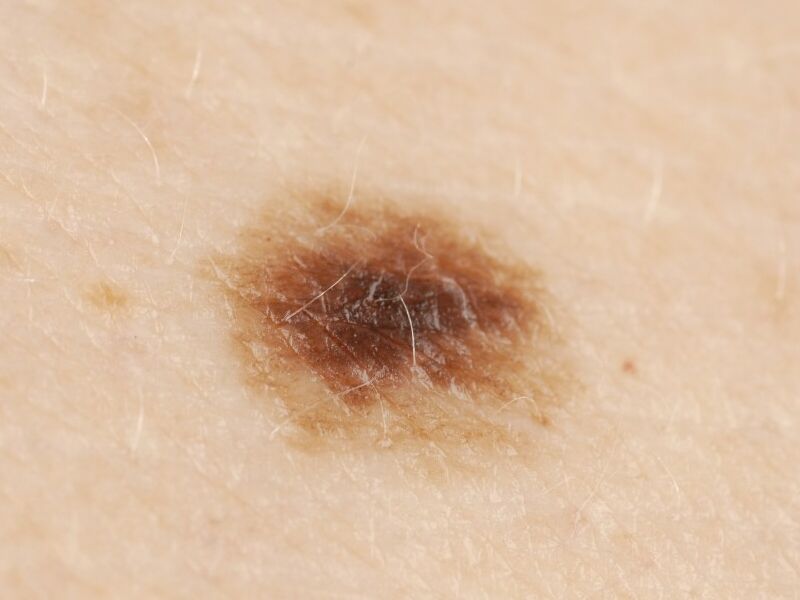
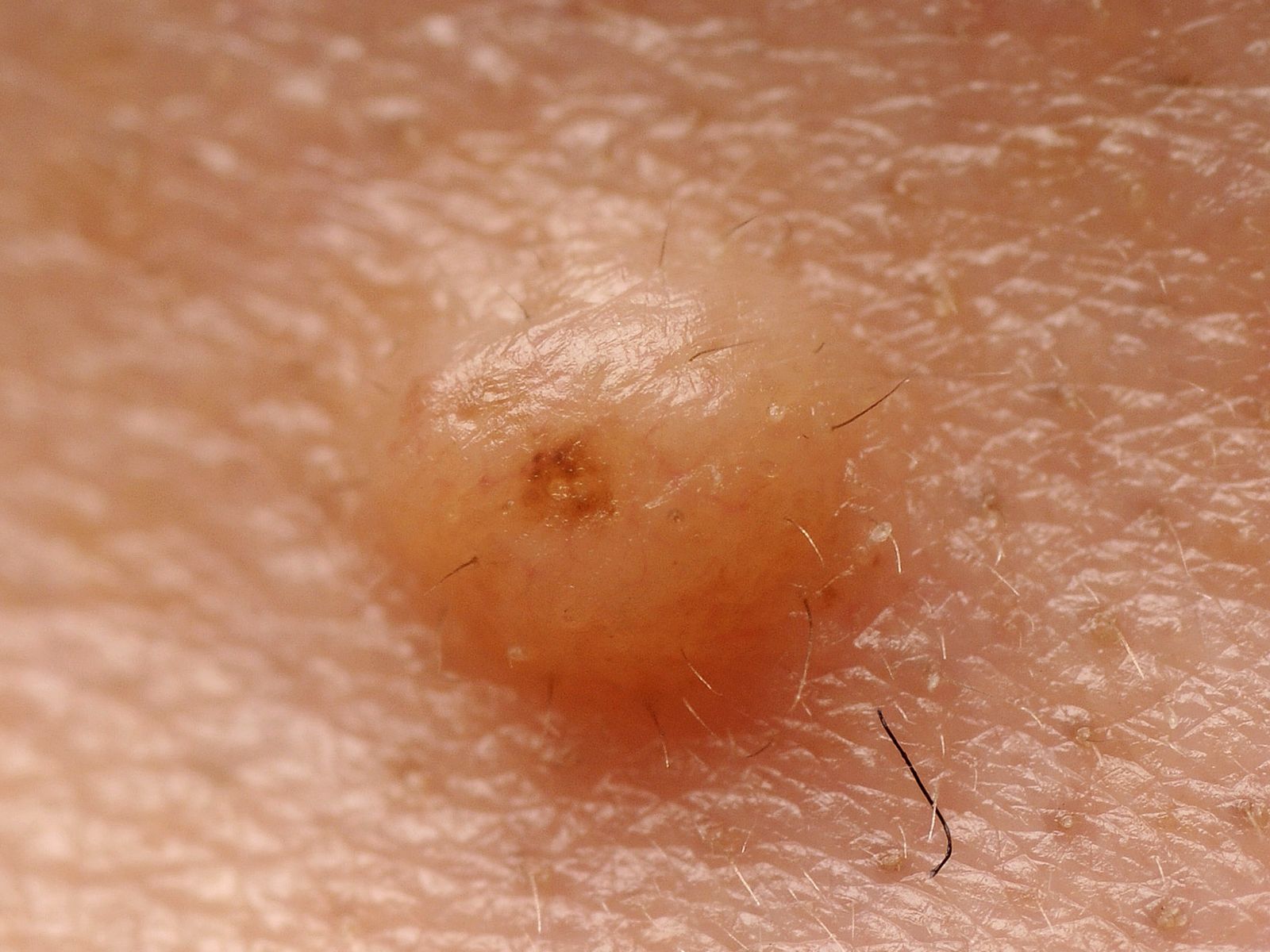
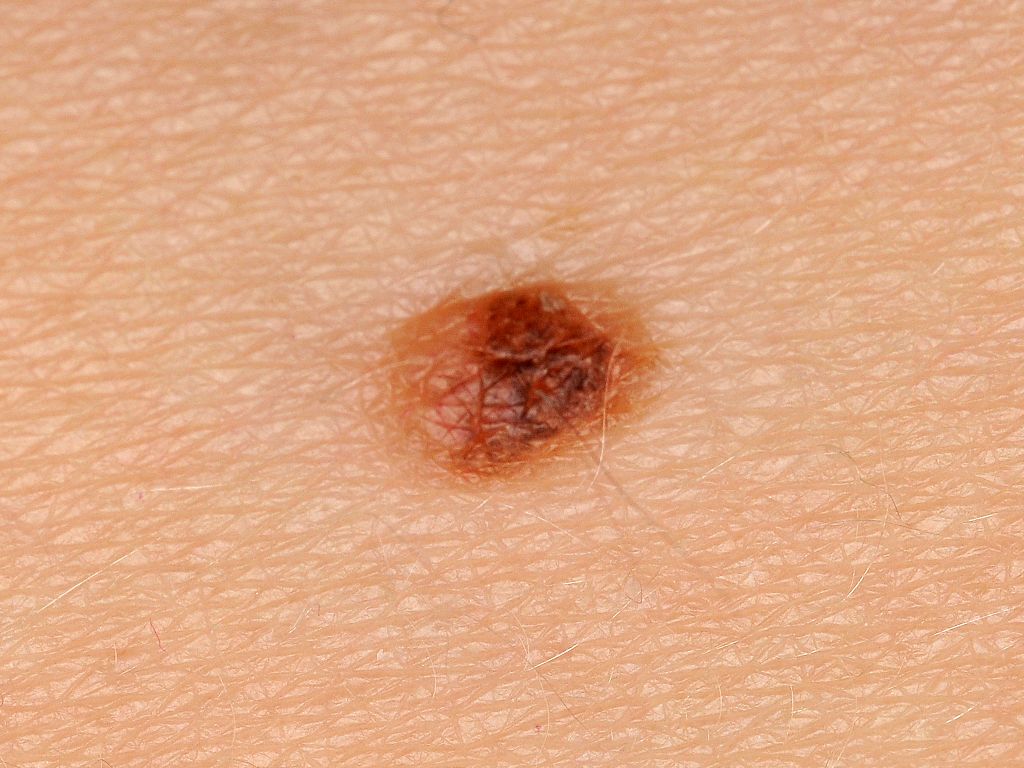
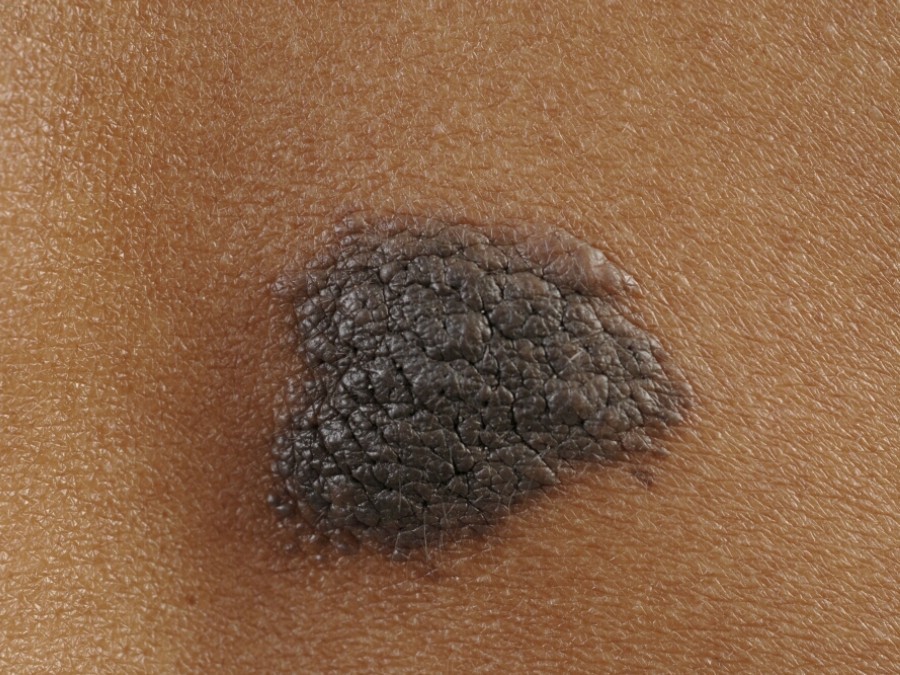
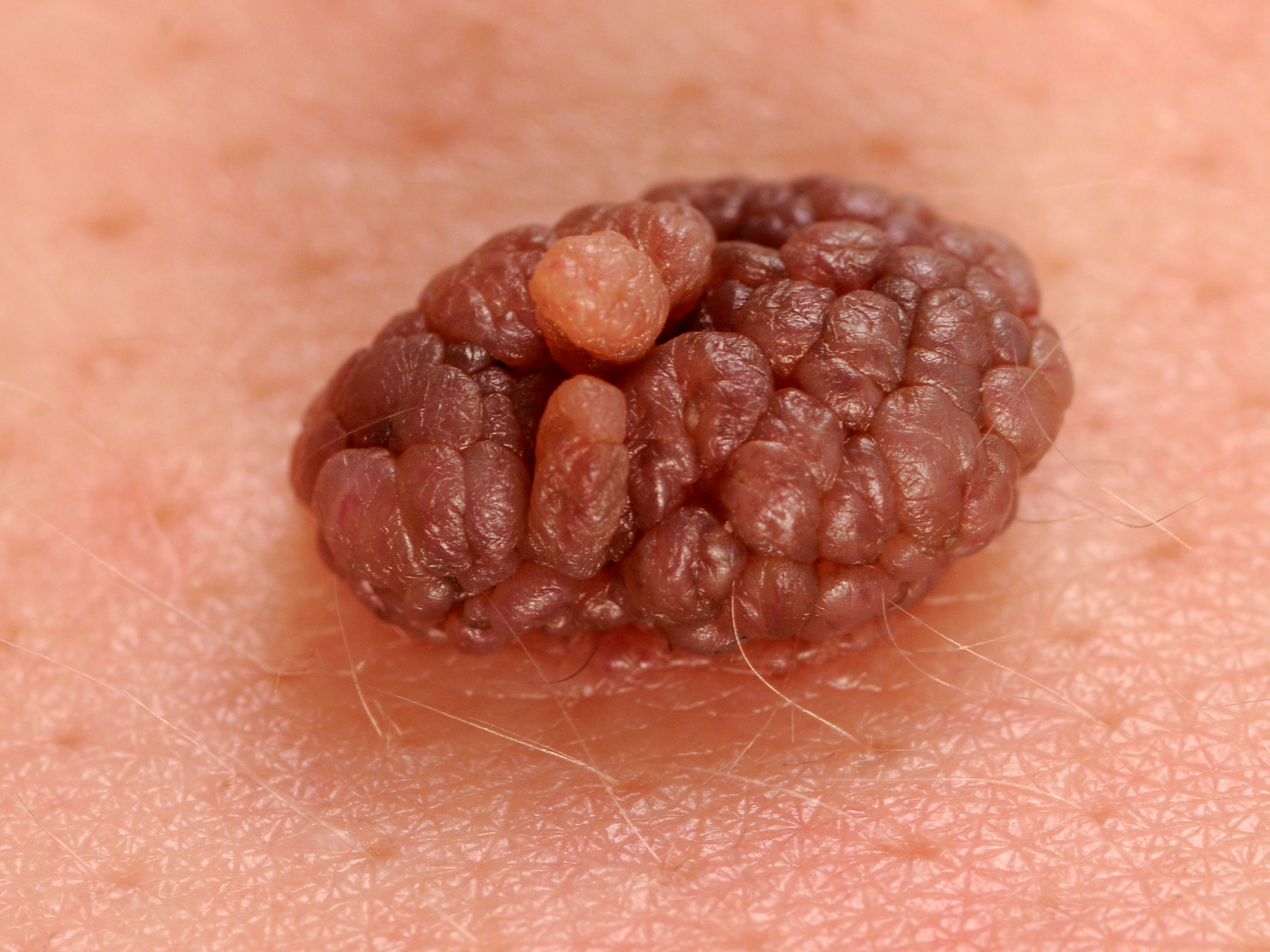
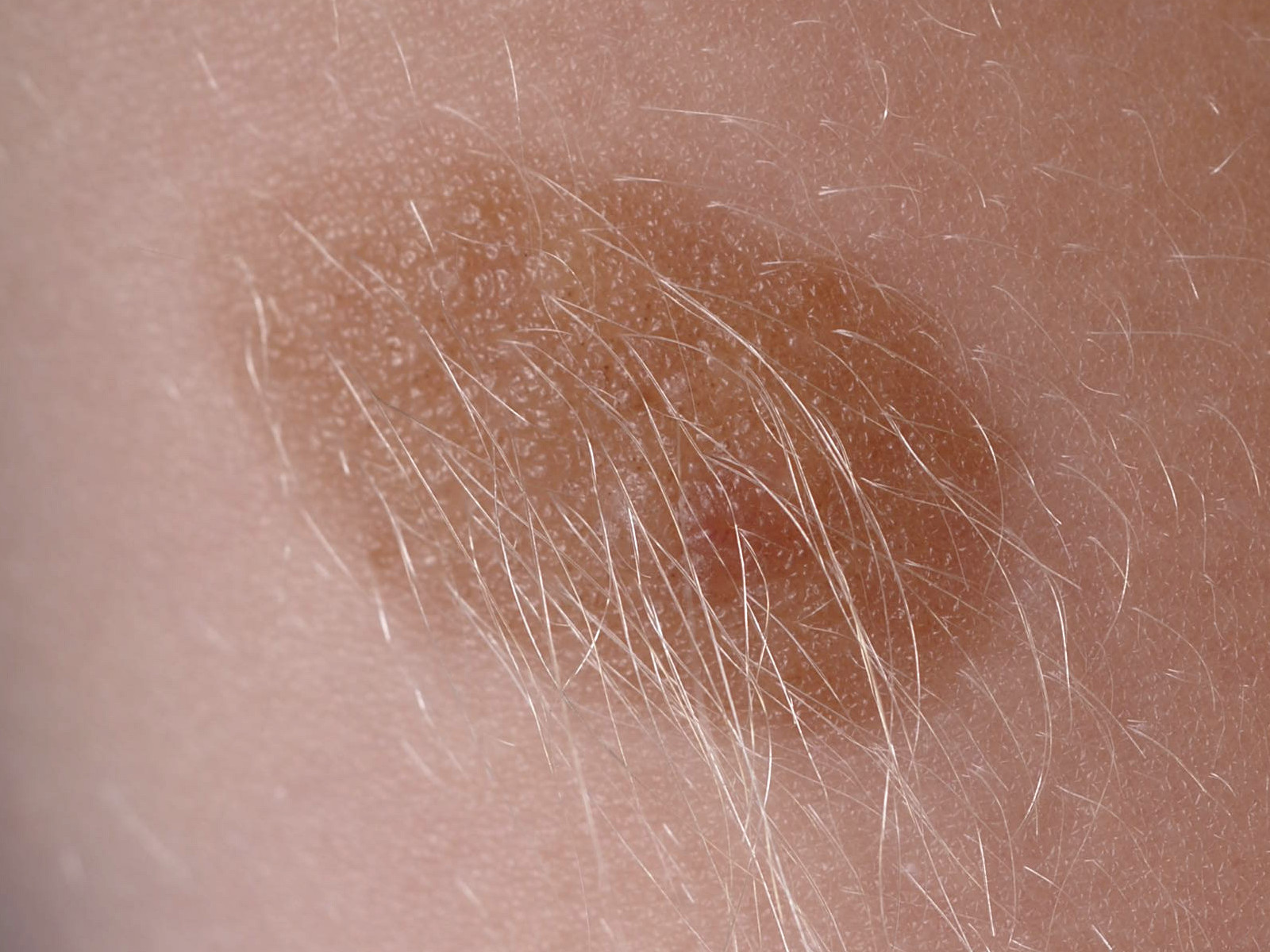
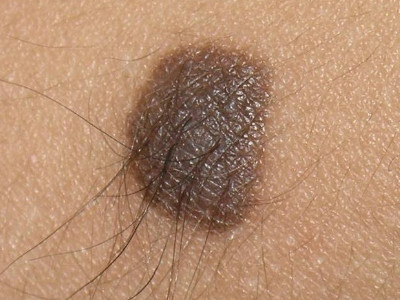
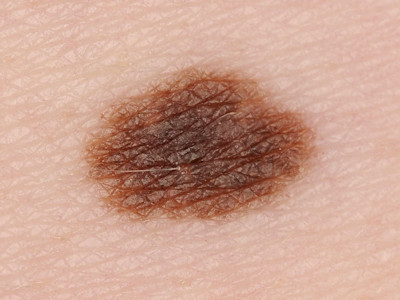
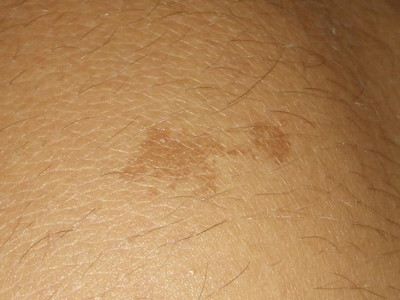
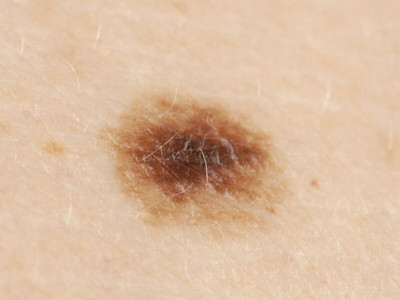
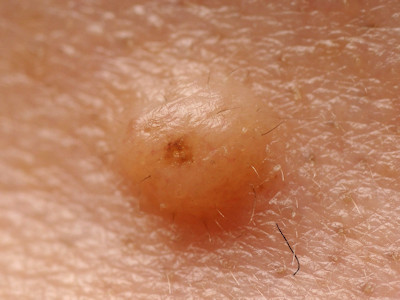
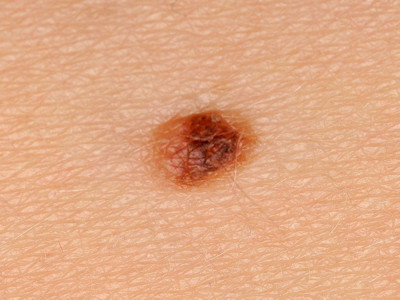
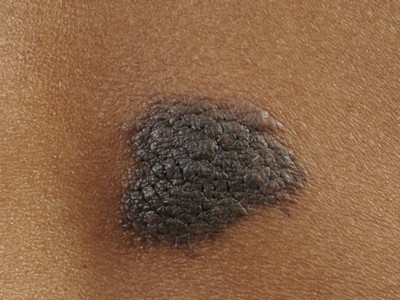
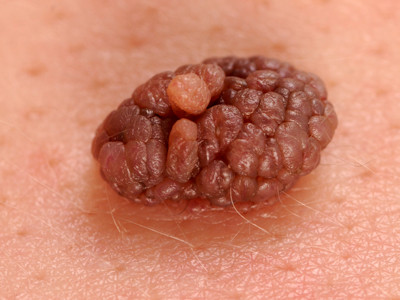
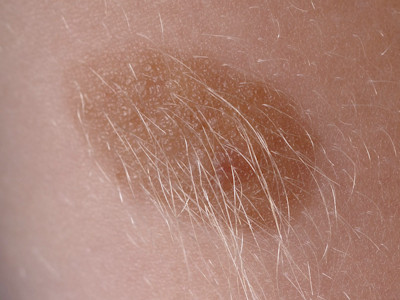
Nevi are visible as brown or black spots, usually flat, but sometimes raised, clearly convex, or bumpy. They can vary considerably in size, shape, and color. Characteristic is that the shape and pigmentation are regular. Below are some different types of
nevi:
 |
 |
 |
|
mole (nevus) |
mole (nevus) |
mole (nevus) |
 |
 |
 |
|
junctional nevus |
dermal nevus |
compound nevus |
 |
 |
 |
|
mole (nevus) |
papillomatous nevus |
congenital nevus |
WHEN SHOULD I BE CONCERNED ABOUT A NEVUS?
Most
nevi are benign, but they can sometimes become
irregular, atypical (meaning: the mole begins to change in the direction of cancer).
An atypical nevus is more irregular in shape and pigmentation (i.e., different shades of brown to black next to each other in the same
nevus) and often also has a reddish discoloration.
An atypical nevus can be recognized by the following changes:
- growing larger
- changing in color or color composition
- changing in shape
- itching, stinging, or pain
- developing scabs
- bleeding
In many cases, these symptoms will be due to harmless changes in the
nevus, but - in such cases - it is always advisable to consult your doctor or dermatologist to determine whether there is a malignant change in the
nevus.
A melanoma is usually larger than a regular
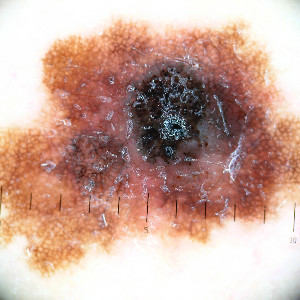
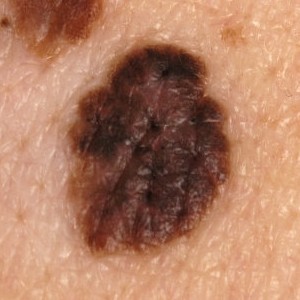
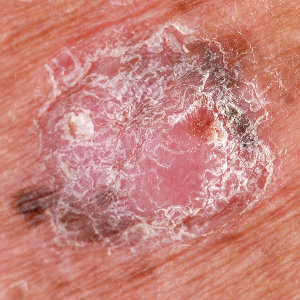
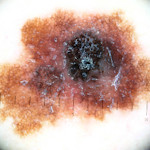
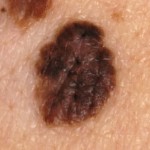
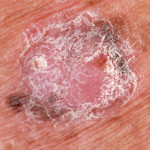
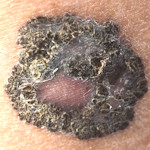
nevus, the shape is irregular and asymmetrical, and the pigmentation is often irregular. Besides brown and black, the colors can be red, purple, blue, gray, white, or a combination of different colors. The photos below show melanomas: they are all non-symmetrical, have all grown recently, and various color changes are present:
 |
 |
|
brown, black, pink-white |
light and dark brown |
 |
 |
|
black, red |
black, white-pink, brown |
For more information
about the difference between a common mole and a
malignant mole, see the
brochure on melanoma.
HOW IS THE DIAGNOSIS MADE?
Based on the external symptoms, an experienced physician can often make a reliable diagnosis of a common
benign mole, or an atypical or malignant mole. A dermatoscope
(a magnifying glass with special lighting) can be helpful in this process.
In cases of doubt or if melanoma is clearly suspected, a microscopic examination will always be necessary to remove any remaining doubt. For the microscopic examination, the mole or melanoma must be removed under local anesthesia.
WHAT IS THE TREATMENT?
A benign nevus is a normal phenomenon and not a pathological/abnormal condition and therefore does not require treatment. Sometimes the patient wishes to have a
nevus removed for cosmetic reasons, or because the
nevus protrudes and keeps breaking off. Removal can be done in several ways. Spherical
nevi are usually cut off at the skin level with a sharp knife (this is called a shave excision), after which the base is cauterized to stop bleeding (electrocoagulation).
Nevi that are somewhat deeper in the skin are cut out in the shape of an oval (excision), after which the wound is sutured. Burning
(elektrocoagulation) or removal with a laser is also possible. If there is even the slightest suspicion of melanoma (malignant mole), the mole will be excised, leaving a border around it, and examined microscopically.
RISK FACTORS AND WHAT CAN YOU DO?
The most important risk factor for developing melanoma is genetic predisposition. The risk increases if more family members have melanoma.
A minor risk factor for developing melanoma is having many (more than 100) normal
nevi or three or more abnormal nevi. People with pale skin, freckles, or blond/red hair also have a slightly increased risk of melanoma. These are all factors that cannot be influenced. The only known risk factor that can be influenced is excessive sunlight exposure.
Sunburn at a young age increases the risk of developing melanoma. It is especially advisable to avoid excessive sunlight exposure, especially in young children. There is also evidence that regular tanning bed use can increase the risk of melanoma.
With melanoma, it is crucial that the lesion is detected at the earliest possible stage. In the early stages, this form of skin cancer is usually highly curable. Later, metastases develop, which pose a significant health risk, often with fatal consequences. It is therefore crucial that you consult a doctor if you notice any changes in a mole, if you discover an unusual mole, or if you experience any symptoms related to a mole.
A small percentage of people have such a high risk of developing melanoma that regular checkups by a dermatologist are advisable. If you have dozens of conspicuous
nevi and/or two or more family members with melanoma, you may fall into this category. In that case, it is advisable to consult your general practitioner.
Congenital nevi can also become malignant in rare cases. The risk depends on the size of these
nevi. For small congenital nevi, the risk is very small.
WHAT IS THE PROSPECT?
Thanks to the attention paid to melanoma over the past few years through various information campaigns and media coverage, this form of skin cancer is being detected at increasingly earlier stages. People with suspicious symptoms are consulting their GP sooner than in the past.
And there are new medications available for treating
patients with melanoma metastases. As a result, the outlook for people with melanoma has improved significantly over the past 30 years. The vast majority of melanoma patients today never experience recurrence of symptoms after removal.
|