WHAT IS A MILIUM?
A milia , also called a milia (plural: milia ), is a small white lump or ball in the skin. It is caused by a blockage in the duct of the sebaceous or sweat glands. A small, spherical lump (a cyst) filled with white flakes develops.
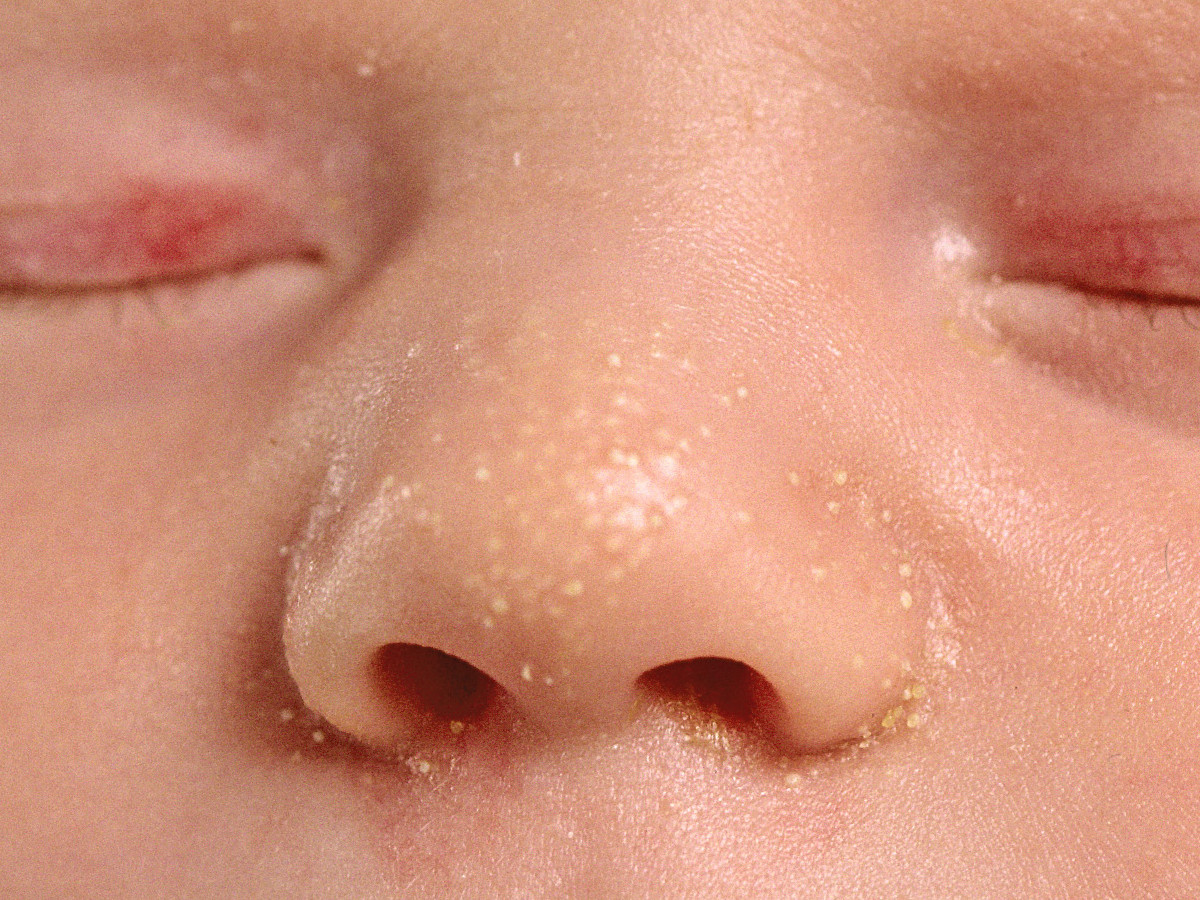
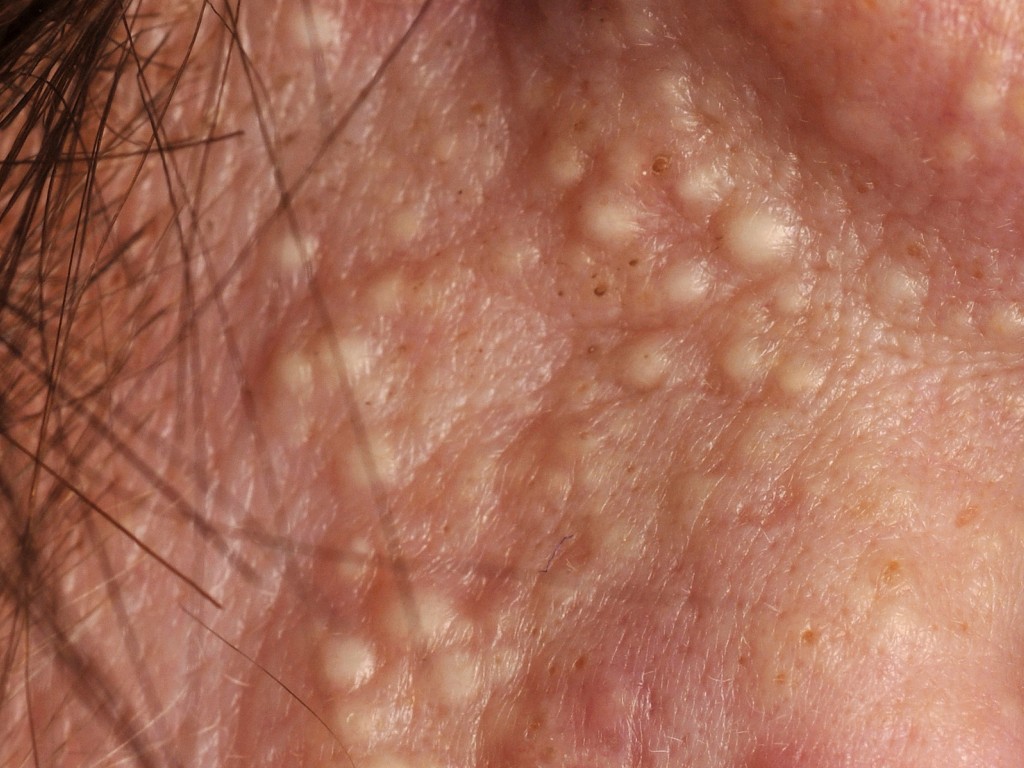
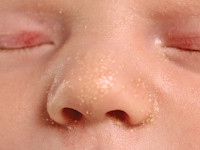
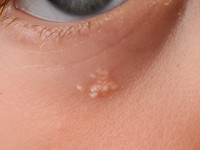
It mainly occurs in newborns, around the nose. In newborns, they disappear on their own within a few weeks. They can also occur in older adults, usually on the face. These often do not disappear on their own, in which case they can easily be removed by a doctor or beautician.
 |
 |
| milia in newborns |
milia in old age |
HOW DO MILIA FORM?
In newborn babies, the hair follicles and sebaceous glands around the nose are sometimes not fully developed and are blocked. The entire nose and surrounding area can be covered in milia. After a few weeks, they open up and disappear on their own.
Milia (milk grains) can develop in older babies if a hair follicle or sweat gland duct becomes blocked.
They can also develop after superficial skin damage. Usually, the sweat glands become blocked. Sweat glands are located deep within the skin and have a very long and thin duct leading to the outside, with a small opening. If the skin is damaged at that location, the duct can become blocked. The duct is lined with skin cells, which constantly renew themselves, forming skin flakes. These skin flakes can no longer escape if the outlet is blocked, and a small lump (a cyst) forms.
Milia can develop after all kinds of skin damage, such as burns, abrasions, or blisters.
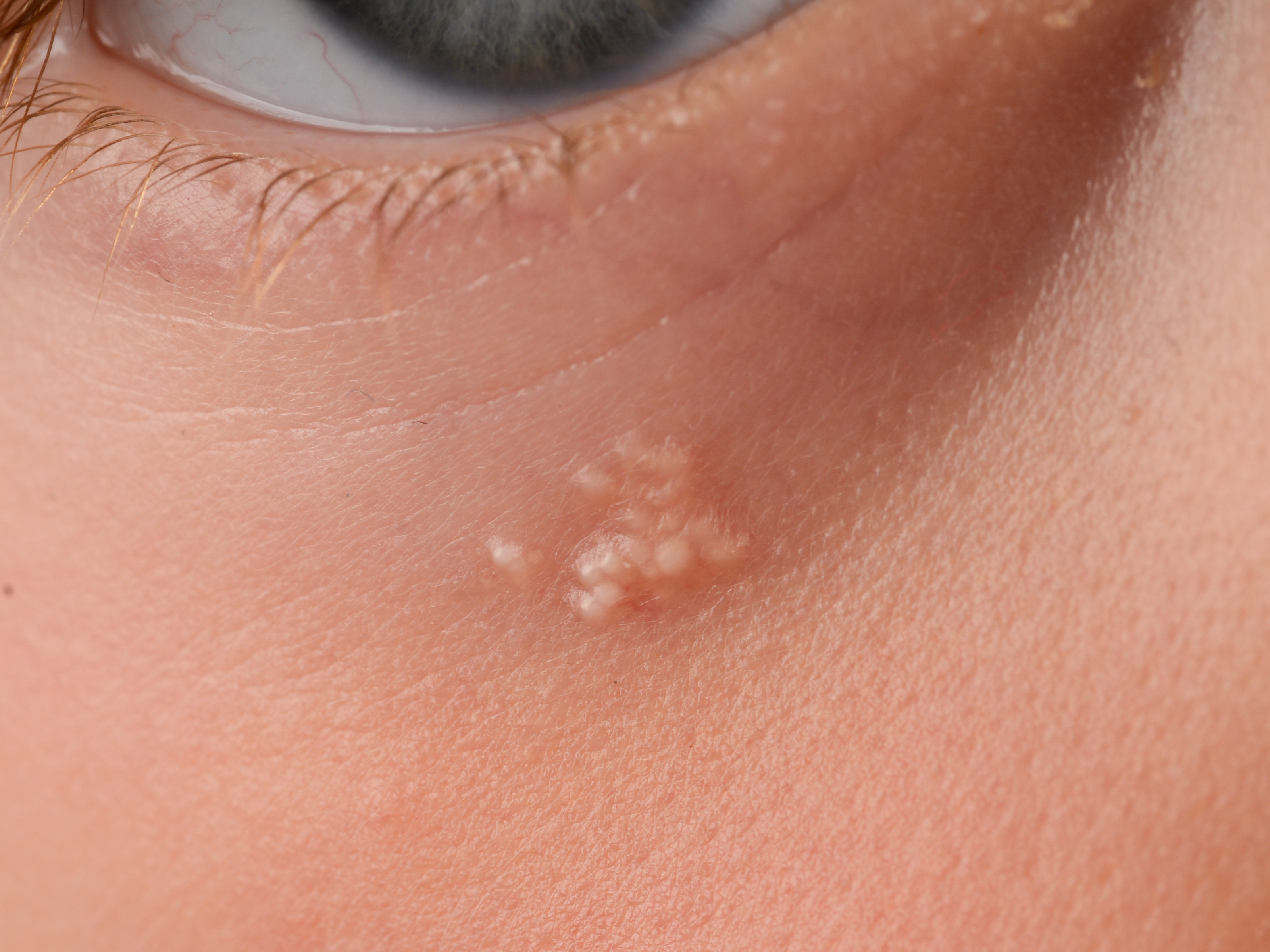
There's also a form where many milia are clustered together. This is called milia en plaque . They usually appear on the eyelids or around or behind the ears.
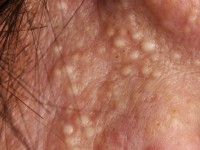 |
| milia and plaque |
HOW IS THE DIAGNOSIS MADE?The diagnosis is based on the clinical picture, i.e., the appearance. If there are a lot of them, and it could be something other than milia, it's sometimes necessary to take a skin biopsy and examine it under a microscope.HOW ARE MILIA TREATED?Milia often disappear on their own. In babies, it takes several weeks to months, and then they are completely gone. Milia that develop later in life can also disappear on their own. If they don't disappear, they can be removed by a doctor or beautician.
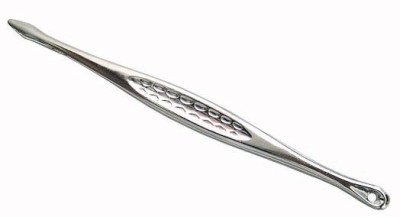
First, the skin is cleaned with an antiseptic solution, such as chlorhexidine in alcohol. Then, a small incision is made over the milia with the tip of a sterile blade or a sharp needle. The contents are then expressed, either by hand or with a paperclip, or with a specially made instrument called a comedone extractor (beauticians or dermatologists have such instruments).
A small incision can be made without anesthesia; if the milia are very large or numerous, a small amount of local anesthetic is sometimes injected first.
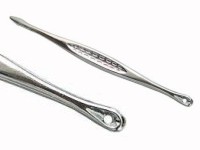 |
| comedone extractor |
Do not squeeze a milia without first making an incision at the top. Cysts have a strong wall. Squeezing often causes significant damage to the surrounding skin, infection, or the milia may burst in the wrong direction, inward instead of outward.
Another technique involves puncturing a milia with an electrically heated needle. This is called electrocoagulation.
For a large number of milia in one area, vitamin A cream (tretinoin cream) is sometimes prescribed, or the entire area is treated with a laser or another technique that removes the top layer of skin.WHAT ARE THE OUTLOOK?Milia are harmless and can be easily removed. They can occasionally reappear in the same spot. |