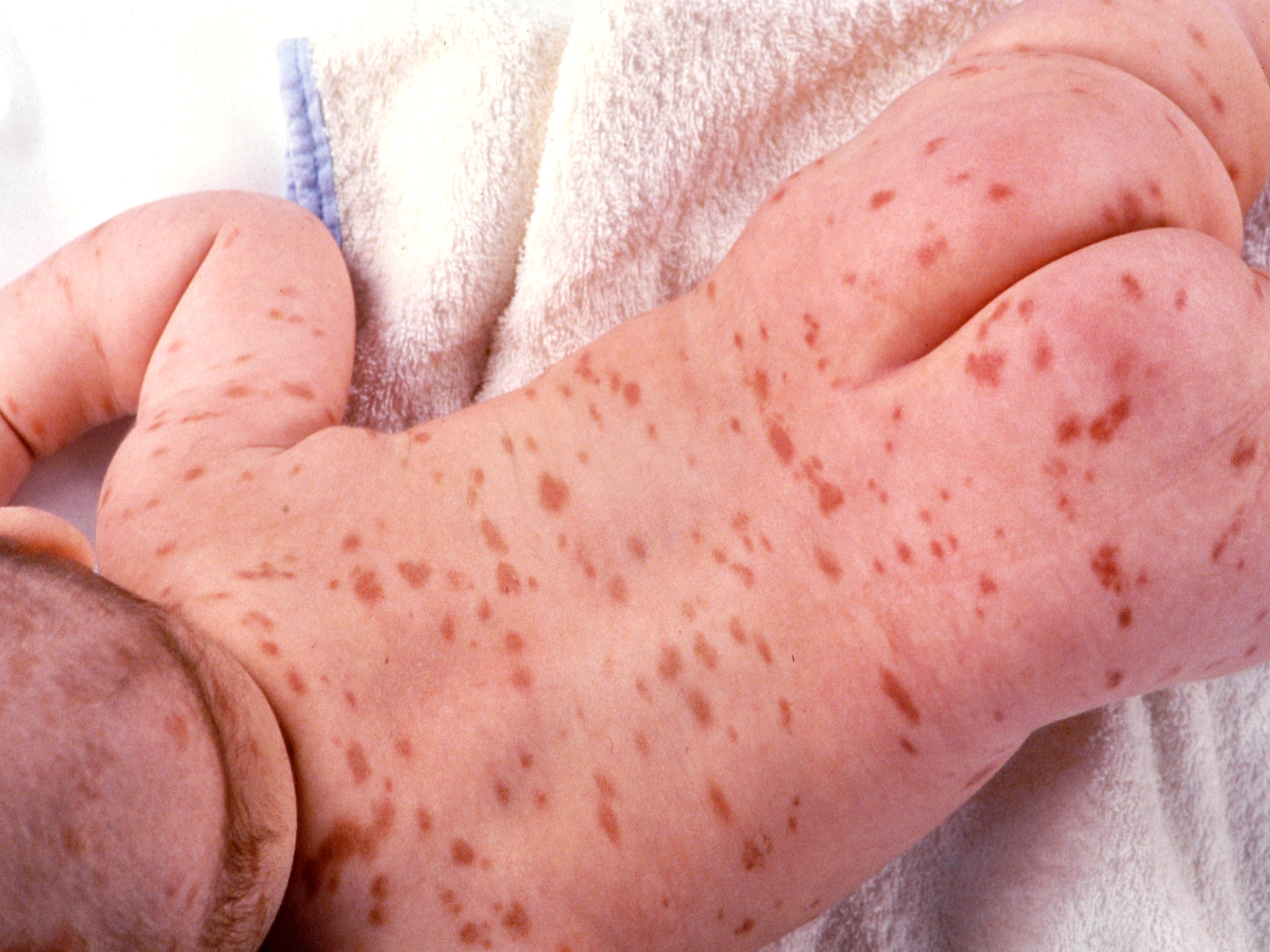
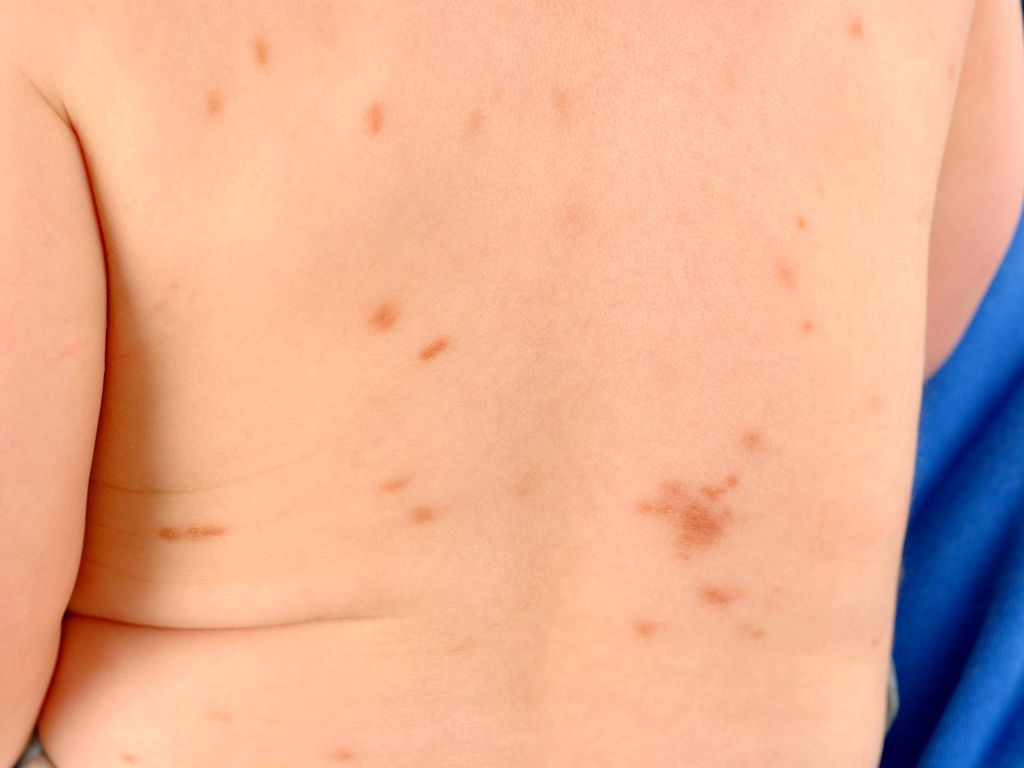
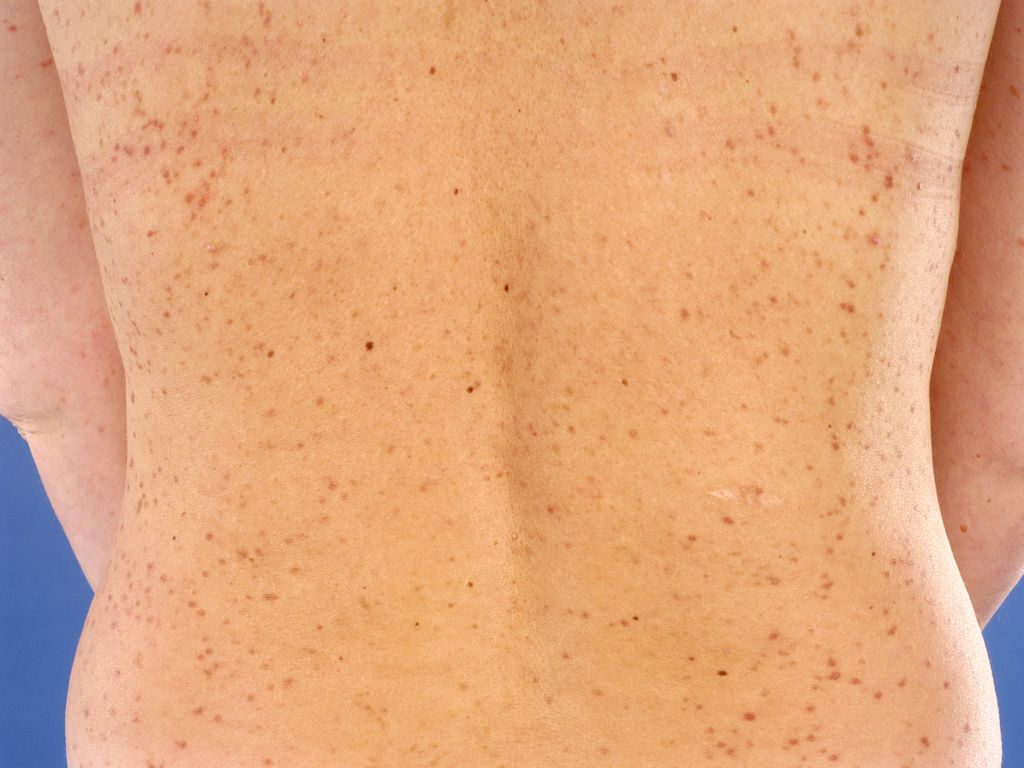
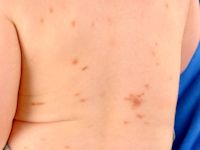
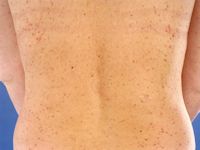
WHAT IS URTICARIA PIGMENTOSA?Urticaria pigmentosais a rare skin condition in which there are too many mast cells in the skin . Another name for it is cutaneous mastocytosis . There are several variants of mastocytosis. In urticaria pigmentosa, the most common variant, small dark brown spots are visible, scattered over the body, especially on the arms and legs. It occurs in both adults and children. In children, there are also variants in which the mast cells accumulate in one spot, forming a large bump (mastocytoma), or are very evenly distributed over the entire skin without visible spots or bumps (diffuse cutaneous mastocytosis). In rare cases, blisters can also develop.
 |
 |
 |
| urticaria pigmentosa |
urticaria pigmentosa |
urticaria pigmentosa |
WHAT ARE MAST CELLS?Mast cells are normally present in the skin and other areas, such as the respiratory tract, lungs, and intestines. Mast cells are part of the human immune system. They are produced in the bone marrow and from there find their way to other organs. The cells are filled with a large number of active substances, the most important of which is histamine. Histamine is also found in nettles and is responsible for the intense itching and itchy bumps that occur after touching a nettle. Mast cells can release their contents into the environment in response to various stimuli (infections, painkillers and other medications, contrast agents, certain foods, hot drinks, spicy foods, alcohol, pressure, vibration, stroking the skin, temperature changes, exercise, insect bites, stress, and medical procedures). The histamine released from the mast cells not only causes itching but also dilates the blood vessels, causing redness and swelling. In the immune system this has a clear useful function: if something is wrong somewhere, an inflammation, or bacteria in the skin or in the lungs, the mast cells release their histamine and open the vessels so that other cells of the immune system can easily get to them.WHAT SYMPTOMS CAN OCCUR WITH TOO MANY MAST CELLS?Problems arise when there are far too many mast cells in the skin (cutaneous mastocytosis) or in other organs (systemic mastocytosis). If the mast cells, due to any stimulus, simultaneously release all their histamine, all the blood vessels open simultaneously. This can cause symptoms such as a feeling of warmth or a red face (hot flashes, flushes). All the blood then flows from the large vessels of the circulatory system to the small vessels of the skin, the intestines, or the lungs. The circulatory system is then temporarily underfilled, causing all sorts of problems. The heart beats faster, palpitations can occur, and the brain can become oxygen-deprived, leading to headaches, dizziness, vertigo, or even fainting. Such an attack is usually short-lived, as the histamine disappears from the bloodstream on its own.
In the skin itself, the release of histamine leads to itching, redness, and swelling. Sometimes this can be triggered by scratching or rubbing the skin (a phenomenon known as Darier's sign). In the intestines, the release of histamine can cause symptoms such as abdominal cramps, heartburn, diarrhea, nausea, vomiting, and even weight loss. Psychological symptoms can also occur, such as mood swings, difficulty concentrating, fatigue, irritability, and instability.Mastocytosis in childrenMastocytosis in children is usually present from birth or the first year of life and resolves spontaneously. It's rare for mast cells to also be present in other organs, such as the bone marrow or liver, and therefore extensive testing isn't necessary. However, a skin biopsy is often taken under local anesthesia to confirm the presence of excess mast cells.Mastocytosis in adults (cutaneous mastocytosis, urticaria pigmentosa)In adults, mastocytosis usually begins after the age of 30 and rarely resolves spontaneously. The increase in mast cells is usually limited to the skin (cutaneous mastocytosis, also called urticaria pigmentosa). To diagnose the condition, a skin biopsy is performed under local anesthesia. Additional blood tests (serum tryptase) are often performed to rule out systemic mastocytosis. If the serum tryptase is significantly elevated, a referral to a hematologist is made for further evaluation.SYSTEMIC MASTOCYTOSISSometimes, too many mast cells are also present in other organs (systemic mastocytosis). Mast cell accumulations can be present in the bone marrow, the marrow of all bones, the liver, spleen, lymph nodes, and gastrointestinal tract. The more mast cells there are in the body, the greater the risk of developing the aforementioned symptoms such as hot flashes, dizziness, and fainting. In addition, specific symptoms associated with an increase in mast cells in various internal organs may occur, such as bone pain, weak bones, and anemia if there is an increase in the bone marrow, and abdominal discomfort, diarrhea, stomach ulcers, and weight loss if there is an increase in the intestines.
If symptoms that could indicate the presence of many mast cells in the body (symptoms such as hot flashes, dizziness, fainting, and gastrointestinal symptoms) occur, further testing is necessary to determine the extent of the mast cell increase. Blood tests can provide an initial assessment of the total number of mast cells in the body.
If there are indeed indications of systemic mastocytosis, further investigation is necessary, such as x-rays or bone scans, ultrasound examination of the liver and spleen, and sometimes even a bone marrow biopsy.
Systemic mastocytosis is not a malignant disease; it involves a benign increase in mast cells, which can, however, have significant consequences. There is a variant in which the mast cell increase is due to a bone marrow malignancy, but this is very rare.
In summary: urticaria pigmentosa is the most common variant of mastocytosis and is limited to the skin. It is a bothersome, but benign, condition. In children, it resolves spontaneously. In adults, it sometimes spreads to internal organs. In such cases, further investigation is necessary.TREATMENT OF MASTOCYTOSISThere are no effective therapies that permanently eliminate mast cells. Therefore, treatment focuses primarily on avoiding all stimuli that can trigger histamine release from the mast cells.
In addition, tablets that counteract the effect of histamine (antihistamines) are prescribed. Various antihistamines are available, which can differ in effectiveness and side effects, and it usually requires some trial and error until the most suitable one is found. There are also medications (sodium cromoglycate) that can prevent histamine release from mast cells.
Aspirin and certain painkillers (NSAIDs, such as ibuprofen) can have a beneficial effect, but in some patients (approximately 5%), these medications actually worsen the symptoms.
The number of mast cells in the skin can be temporarily reduced with topical ointments (corticosteroids) and light therapy (PUVA therapy).
For severe reactions such as fainting, an automatic injection pen (Epipen) with adrenaline is available for emergency use. |