WHAT IS LUPUS ERYTHEMATOSUS?Lupus erythematosus, often abbreviated as LE or SLE (systemic lupus erythematosus), is an autoimmune disease that can affect the skin and various organs. The disease was first described in 1828 by the French dermatologist Biett. LE is also considered a rheumatological disorder. When only the skin is affected, it is called cutaneous LE (cutis = skin). When multiple organs are affected, it is called systemic lupus erythematosus .
Lupus means wolf, a name coined because some areas looked as if they had been eaten by a wolf. While this is not so bad with LE, there used to be another skin disease, caused by tuberculosis of the skin, which could cause significant damage, called lupus vulgaris. LE was somewhat similar, so it was also called lupus, with the addition of erythematosus (reddened) because LE primarily causes red patches.WHAT CAUSES LUPUS ERYTHEMATOSUS?LE occurs primarily in women, almost nine times more often than in men, and usually begins between the ages of 10 and 30. It can develop suddenly. The cause is unknown. However, it is clear that a glitch has occurred in the immune system, because this immune system, which normally only attacks invaders like bacteria and viruses, starts attacking the body's own cells. Antibodies are produced that target parts of cells and their nuclei. This abnormal autoimmune response causes inflammation throughout the body, which causes the symptoms.
There is also a form of LE that is caused by medications. This is called drug-induced lupus erythematosus . Drug-induced LE resolves on its own when the medication that caused it is stopped. Other forms of LE usually do not resolve on their own, but they can be calmed or controlled with medication.Cutaneous lupus erythematosus (CUTANEOUS LUPUS)Cutaneous discoid LE (CDLE)
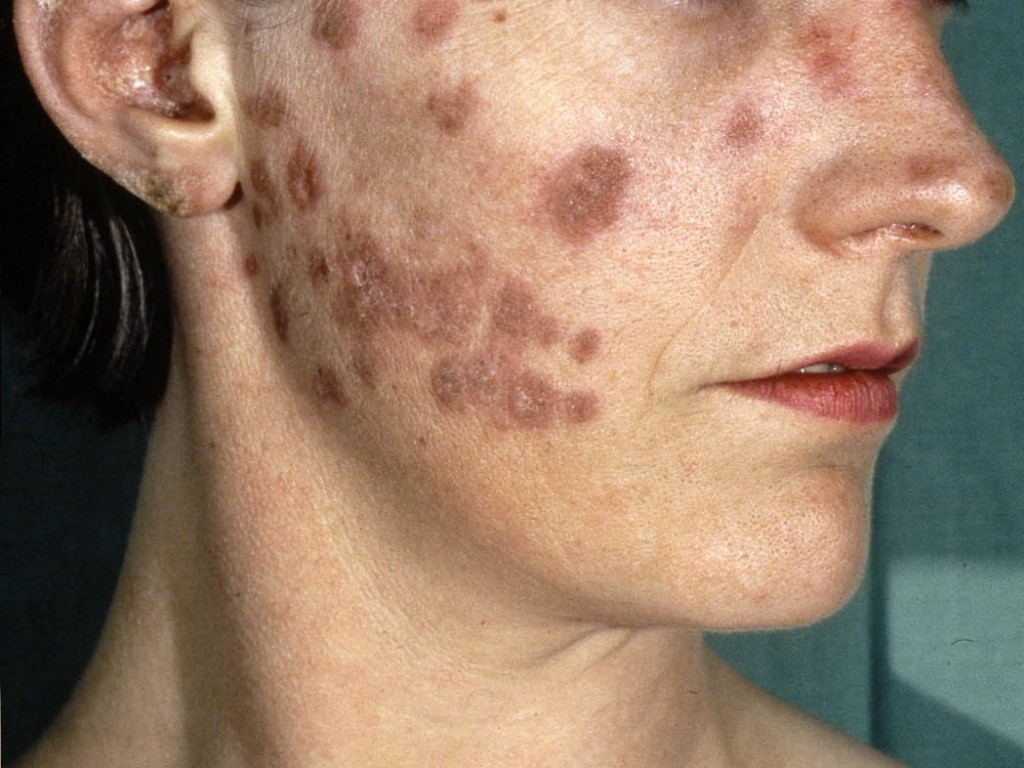
This causes disc-shaped, red, scaly patches to develop, usually on the face. The patches may be partially crusted and can also break, leaving scars or dents in the skin. This skin condition is sensitive to the sun. The skin should be protected with a good sunscreen as part of treatment, which often includes an anti-inflammatory cream (topical corticosteroids) and sometimes Plaquenil tablets. CDLE can occur with systemic lupus erythematosus, but usually does not and occurs as a standalone condition. See also the leaflet about CDLE .
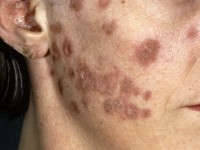 |
| cutaneous discoid LE (CDLE) |
Butterfly rash (malar rash)
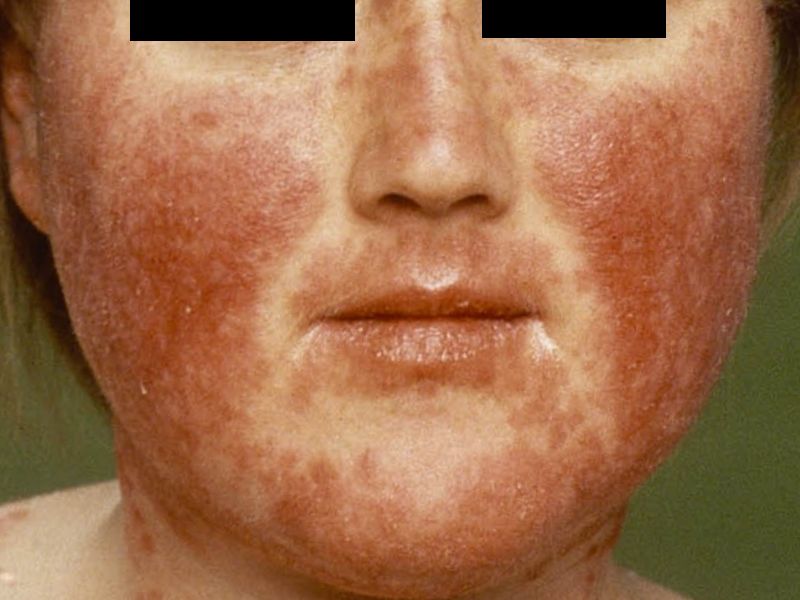
A classic symptom in patients with systemic lupus erythematosus (LE) is a butterfly-shaped rash (malar rash) on the face. This red rash can occur during an acute flare-up of SLE. A butterfly rash is also sensitive to sunlight, and sun exposure can aggravate it. It resolves spontaneously within hours to weeks and does not leave scars.
 |
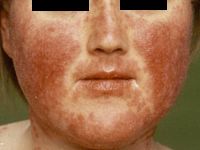 |
| Butterfly erythema |
butterfly-shaped erythema |
Acute cutaneous PE.
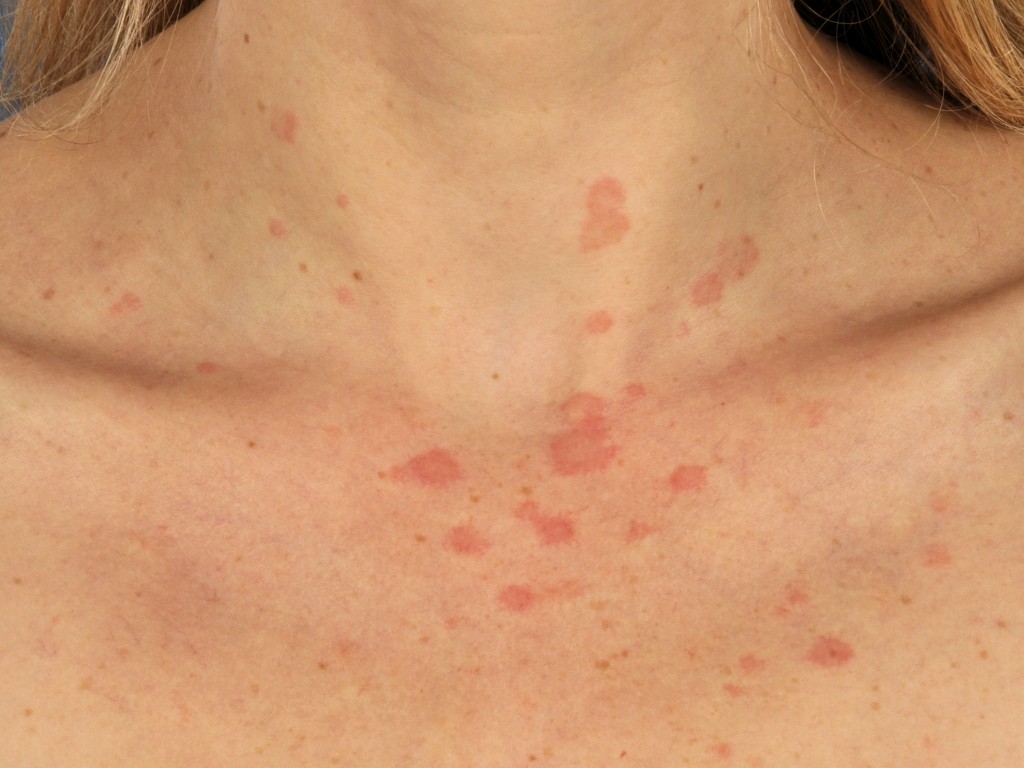
The lesions in acute cutaneous PE develop rapidly and can spread throughout the body. They appear as small or larger red patches, sometimes slightly raised, sometimes slightly scaly. They resolve spontaneously within hours to weeks and do not leave scars. Acute cutaneous PE, like butterfly-shaped erythema, often occurs with systemic PE.
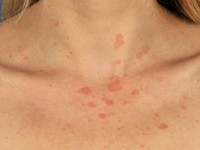 |
| acute cutaneous LE |
Photosensitivity:
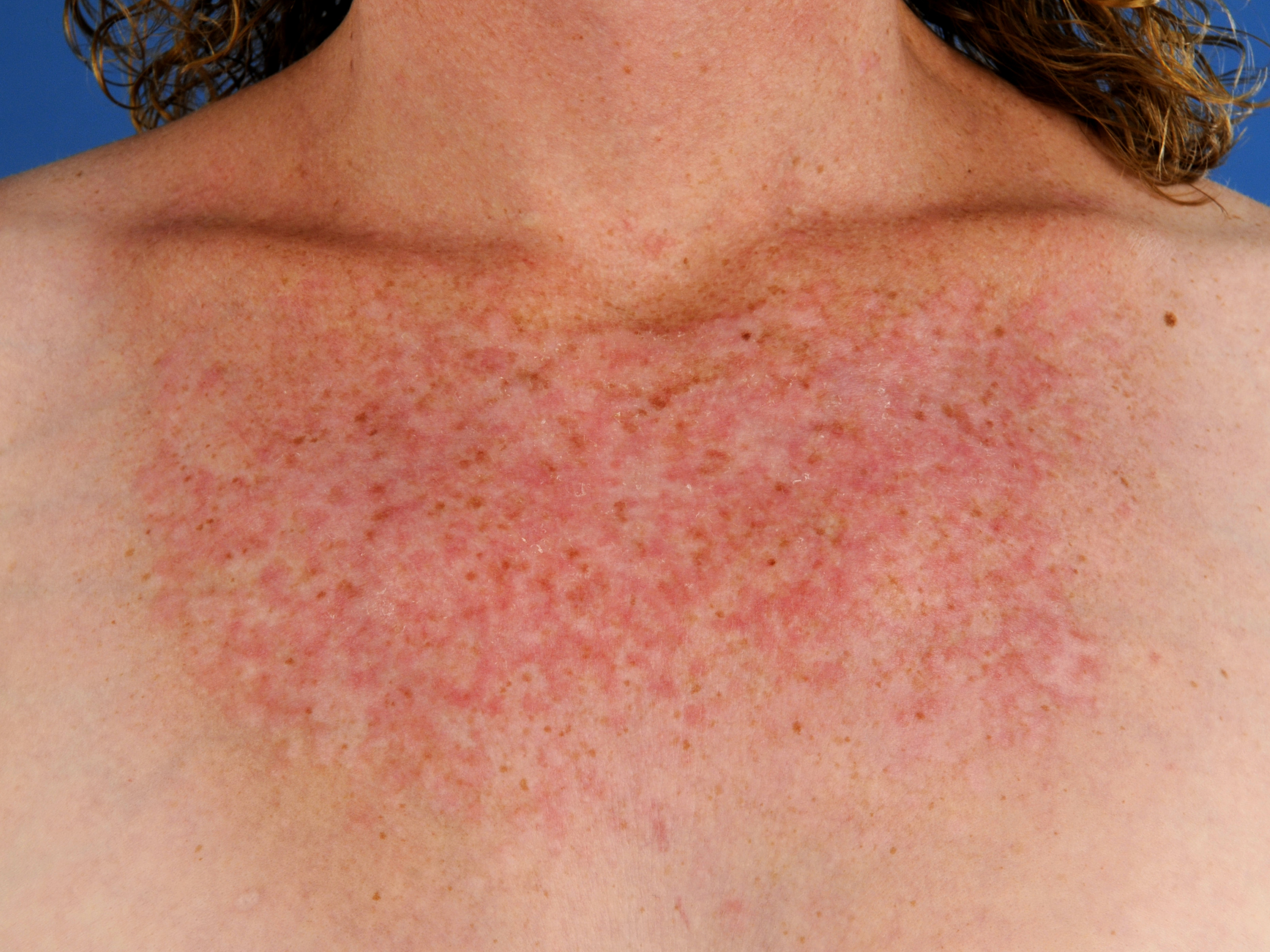
Patients with SLE may develop a rash on sun-exposed skin. Butterfly-shaped erythema is another example of photosensitivity. However, SLE patients can develop a red rash anywhere that has been exposed to the sun.
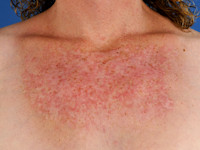 |
| light sensitivity |
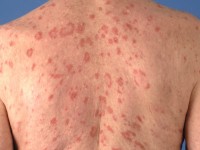
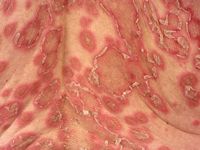
Subacute LE.
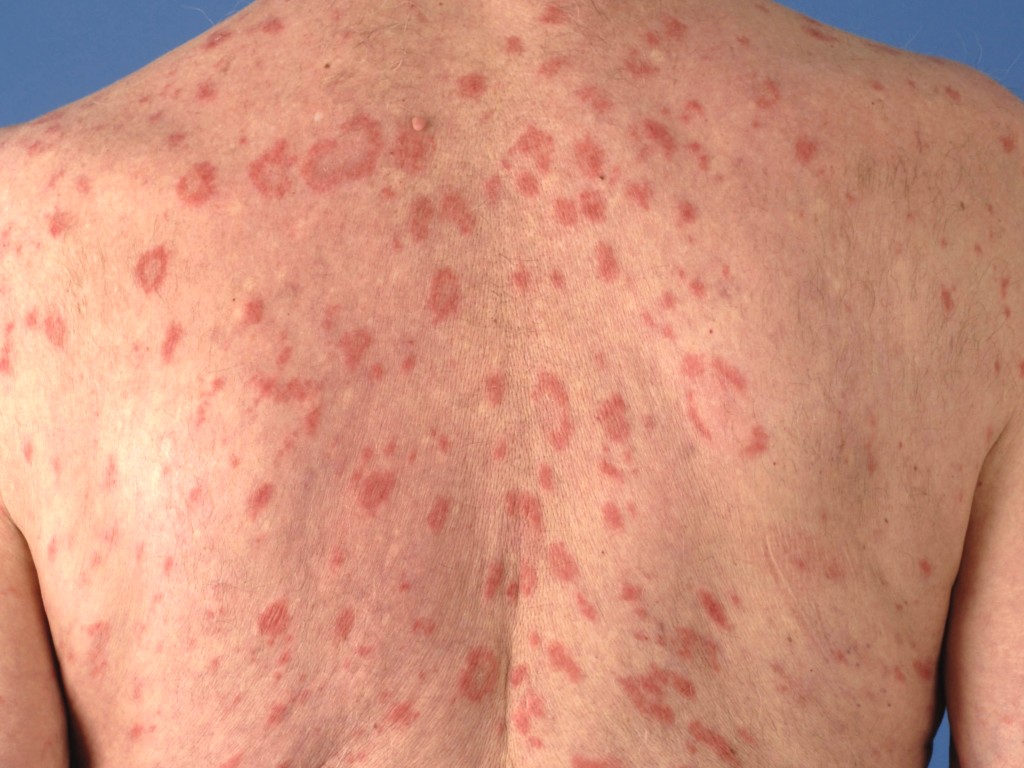
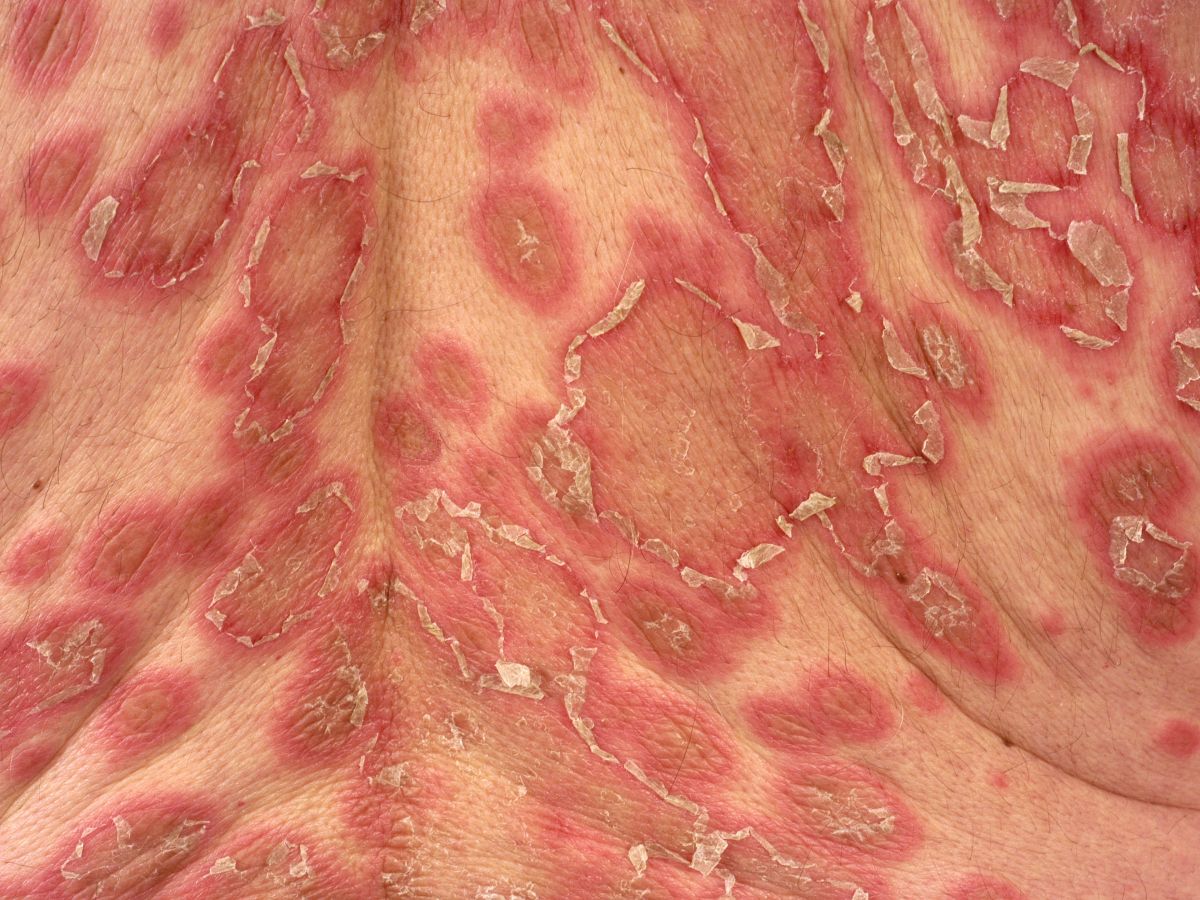
A subacute LE is characterized by numerous round or ring-shaped, red, and scaly patches. These patches can resemble psoriasis. It develops gradually and fades slowly, often only after treatment. It is seen in patients with SLE, including those who have not yet been diagnosed but already have the condition.
 |
 |
| subacute cutaneous LE |
subacute cutaneous LE |
SYSTEMIC LUPUS ERYTHEMATOSUS (SLE)Systemic LESLE can have a wide range of symptoms because many organs are involved. The severity also varies greatly. It can range from vague fatigue and listlessness to terminal illness with joint pain and kidney damage.
Common symptoms of SLE include:
- skin abnormalities
- hypersensitivity to sunlight
- general malaise (fatigue, listlessness)
- fever (sometimes low, sometimes high)
- joint pain and joint inflammation
- worsening kidney function, inflammation and kidney damage
- neurological symptoms
- heart and lung abnormalities (inflammation of the pericardium, pleurisy)
- ulcers (aphthous ulcers) in the mouth, throat and nasal cavities
- blood clots (thrombosis)
- dry eyes (Sjögren's syndrome)
- Raynaud's phenomenon (circulatory problems in the fingertips with white, blue and red discolorations)
- weight loss
HOW IS THE DIAGNOSIS MADE?
The diagnosis of lupus is based on the patient's signs and symptoms and confirmed organ damage and/or blood abnormalities. If SLE is suspected, various tests are performed to confirm or rule it out, ranging from blood tests to an ECG. SLE can be characterized by abnormalities in the blood, such as an elevated erythrocyte sedimentation rate (ESR) indicating inflammation, anemia, a low white blood cell count, a low platelet count, and the typical antibodies found in SLE, which target components of the cell or the nucleus. For example, antibodies targeting the DNA in the nucleus (anti-double-stranded DNA, anti-ds-DNA) may be present in the blood of SLE patients.
ACR criteria (ARA criteria)
The American College of Rheumatology has developed a list of criteria that can be used to diagnose SLE. Officially, SLE is diagnosed if at least 4 of the 11 criteria below are or have been present in the patient simultaneously or consecutively. They do not all have to be present at the same time. The list does not have to be applied rigidly: there are patients who meet only 3 criteria, but for whom everything points to having SLE or developing it.
| 1. |
|
Butterfly-shaped rash on face |
| 2. |
|
Discoid skin lesions |
| 3. |
|
Hypersensitivity to sunlight (unusual rash of sun-exposed skin) |
| 4. |
|
Ulcers in mouth or nose |
| 5. |
|
Inflammation of two or more joints (arthritis) |
| 6. |
|
Inflammation of the pericardium (pericarditis) or the pleura (pleuritis) |
| 7. |
|
Kidney abnormalities: more than 0.5 grams of protein in the urine per day and/or the presence of cell cylinders in the urine |
| 8. |
|
Neurological abnormalities: seizures (epilepsy) or psychosis |
| 9. |
|
Abnormalities in the blood count: anemia due to increased breakdown of red blood cells; deficiency of white blood cells; deficiency of platelets |
| 10. |
|
Positive antinuclear factor (ANF) |
| 11. |
|
Presence of certain antibodies in the blood (e.g. anti-dsDNA or anti-Sm antibodies;
antiphospholipid antibodies (a false-positive syphilis test); anticardiolipin antibodies; lupus anticoagulant) |
WHO CAN GET LUPUS ERYTHEMATOSUS?Approximately 1 in 4,000 people in the Netherlands suffer from lupus erythematosus. The disease is nine times more common in women than in men. It can occur at any age, but usually begins at a younger age (under 45). In women, it occurs primarily during their reproductive years. Young children under 5 usually do not develop it, but newborns can develop it temporarily because antibodies can reach the baby through the placenta.HOW IS SLE TREATED?Treatment for PE is not aimed at curing the disease, but at suppressing its symptoms. Anti-inflammatory drugs and painkillers are used for this purpose. Commonly used medications include:
- painkillers: paracetamol and codeine
- nonsteroidal anti-inflammatory drugs (NSAIDs): ibuprofen, diclofenac
- antimalarials: Plaquenil (hydroxychloroquine)
- corticosteroids: prednisone or prednisolone
- other immunosuppressants: methotrexate and ciclosporin
- cytotoxic agents: Imuran (azathioprine) and Endoxan (cyclophosphamide)
- antibiotics
- antihypertensives
- blood thinners: Marcoumar or SintromWHAT ARE THE OUTLOOK?The course of the disease is highly variable. Some patients experience more symptoms than others, and the progression is also unpredictable. Active periods usually alternate with quiet periods. It's also possible for the disease to begin with a severe flare-up but then remain quiescent.WHAT CAN I STILL DO MYSELF?Avoid sunlight:
Avoid excessive exposure to sunlight. Sunlight (UV light) is a major trigger and aggravating factor in SLE and also in cutaneous discoid LE (CDLE). Sunlight can worsen not only skin lesions but also internal conditions. Not all SLE patients are hypersensitive to sunlight, but most are. Use sunscreens with a high protection factor.
Lifestyle:
Try to maintain a healthy lifestyle. Get enough rest and sleep, don't smoke and avoid excessive alcohol consumption, avoid anxiety and tension, and eat healthily. Diet does not cause or worsen LE, but strive for a healthy and varied diet. Sometimes a diet is prescribed, for example, in cases of kidney damage or high blood pressure.LUPUS ERYTHEMATOSUS IN PREGNANCYSLE patients can become pregnant normally. There is only a slightly increased risk of complications such as miscarriage or premature delivery. The chance that the child will also develop SLE is small. Some antibodies can, however, reach the baby through the placenta and cause problems, resulting in a small risk of the child developing neonatal lupus or heart problems. For planned pregnancies, it is advisable to wait until the SLE has subsided. During pregnancy, SLE can flare up due to hormonal changes. Proper supervision by a rheumatologist and gynecologist is essential. Blood pressure and kidney function must be closely monitored. Furthermore, various medications for SLE should not be administered during pregnancy. |