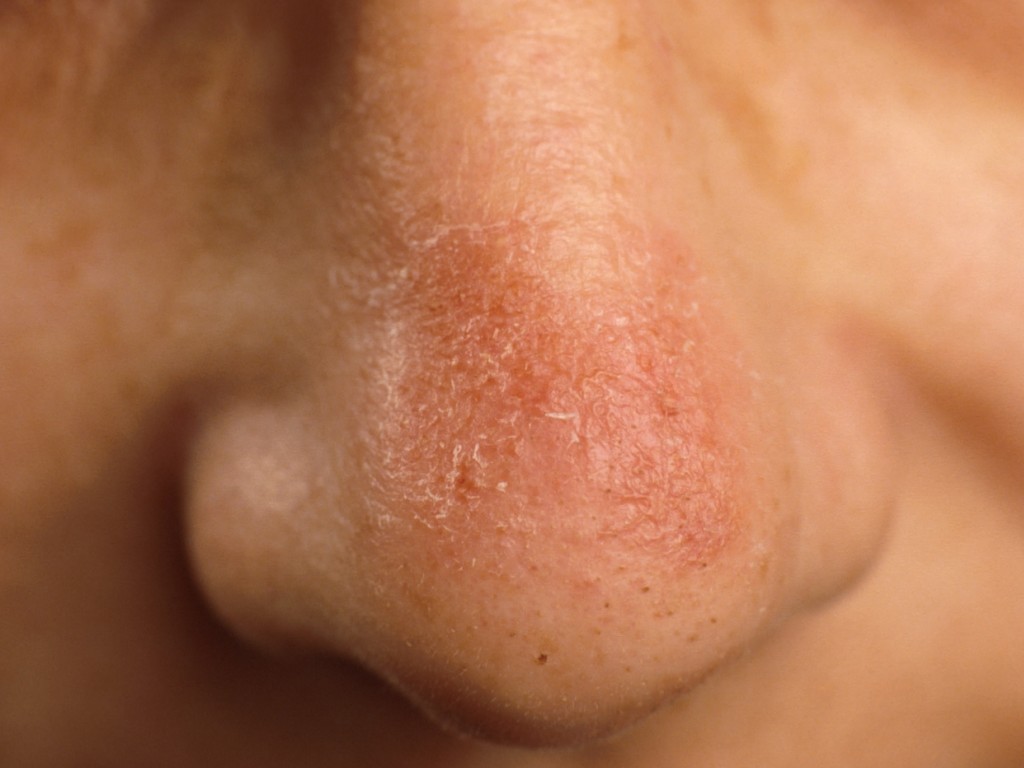
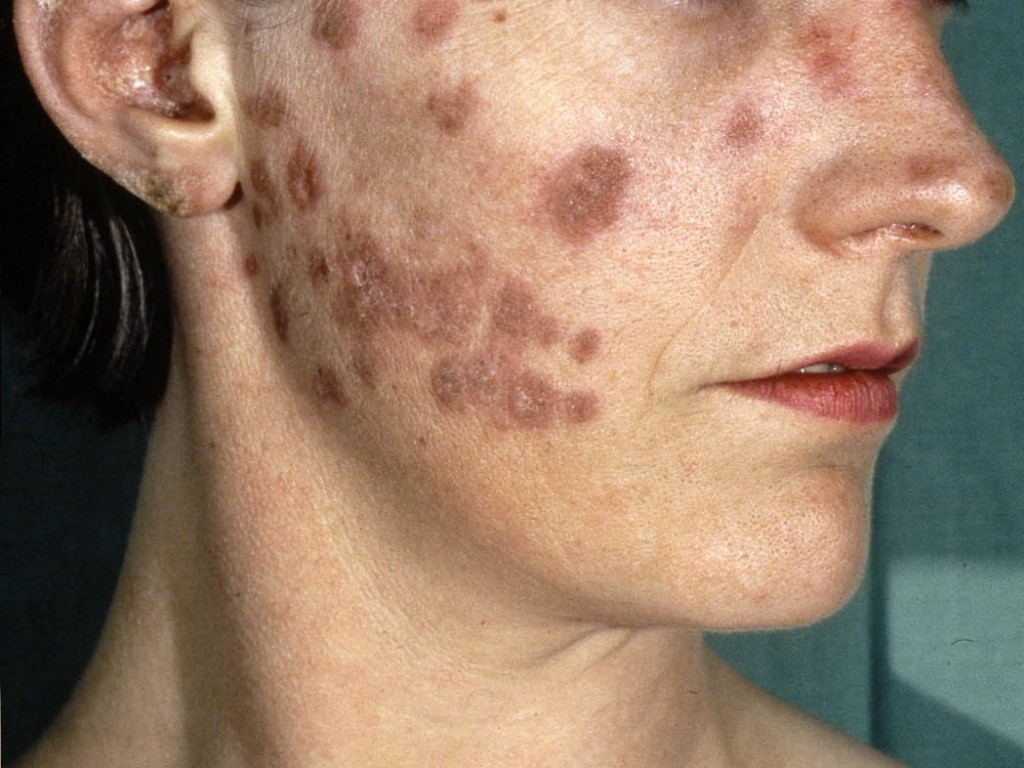
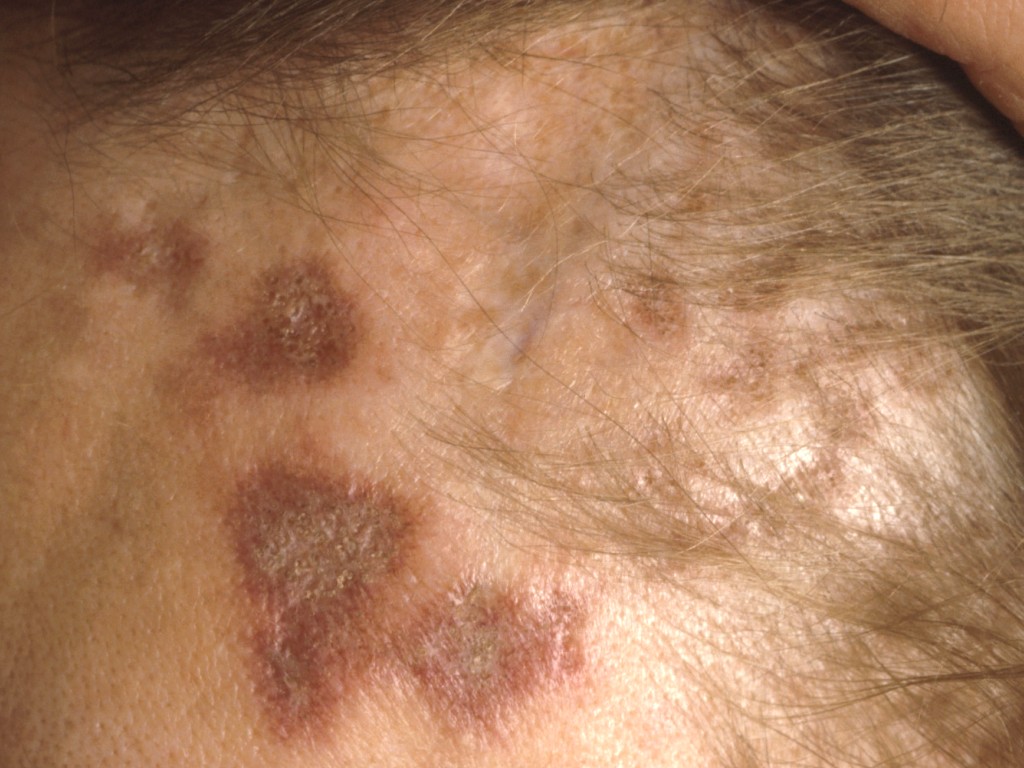
WHAT DOES CDLE MEAN?CDLE is the abbreviation for the medical term chronic discoid lupus erythematosus. CDLE causes red, scaly patches to appear on the skin, often in sun-exposed areas, such as the face. It usually develops between the ages of 20 and 45 and is more common in women than men. It is considered an autoimmune disease: a glitch in the immune system causes antibodies to form against the skin. These antibodies cause inflammation.
The term CDLE is descriptive. It is called "chronic" because it is a persistent inflammation of the skin; "discoid" (saucer-shaped) because the patches are often round; "lupus" (wolf) because the patches can be corrosive, meaning the inflammation can damage the skin (dents, irregularities, scarring); and "erythematosus" (red) because the patches are red.
WHAT CAUSES CDLE?CDLE is a relatively rare condition, the exact cause of which is unknown. It is therefore difficult to explain this skin disease to patients, as there are no simple answers to obvious questions such as: what causes it, how can it be cured, what is the progression over time, is it hereditary, and so on.
With CDLE, the skin is inflamed locally due to LE antibodies in the skin or bloodstream that target the body's own tissue. Antibodies are normally produced to neutralize foreign material such as bacteria and viruses. If they target the body's own tissue, in this case the skin, it is called an autoimmune disease. Why this occurs in some people is unknown. There appears to be a partial predisposition, which is hereditary. With CDLE, certain factors can trigger or worsen the skin condition. The most important is sunlight. Some medications, infections, pregnancy, and possibly stress can also trigger CDLE.
CDLE patches are usually found on the face, in areas exposed to sunlight. It can also sit on the hairy head and cause bald patches there.HOW IS THE DIAGNOSIS MADE?Usually, it's necessary to remove one or two small skin fragments ( biopsies ) under local anesthesia to confirm the diagnosis through special microscopic examination. This can, of course, leave small scars (healing is very good on the face, by the way), but the examination is essential because other skin inflammations can appear identical on the outside, while the treatment is completely different.
Sometimes, blood tests are performed for general abnormalities (anemia, inflammation, liver and kidney function) or for antibodies that can be found in lupus erythematosus. For CDLE alone, blood tests aren't strictly necessary. If there are additional symptoms, such as joint pain, then blood tests are advisable.
Often, patients with CDLE don't have LE antibodies in their blood; conversely, many people with LE antibodies in their blood experience no symptoms. Finding LE antibodies in the blood doesn't necessarily mean that the disease has spread beyond the skin to the rest of the body. Patients with CDLE may later develop inflammation in other tissues (e.g., kidneys, joints). This is called systemic lupus erythematosus (SLE). However, this is rare, estimated to occur in approximately 5% of cases.HOW IS CDLE TREATED?Often, the first step is a combination of a good sunscreen and a strong anti-inflammatory corticosteroid cream.
You must consistently protect your skin from sunlight by applying a sunscreen with a high SPF (above 15) to all exposed areas before leaving the house.
Apply the anti-inflammatory corticosteroid cream directly to the affected areas once or twice a day. These are usually quite strong creams. The instructions for these creams sometimes contain warnings, such as that you should not use it for too long, not on the face, or around the eyes, and that it can cause thinning of the skin. You can completely ignore these warnings in the case of CDLE. With CDLE, you can use the creams indefinitely, including around the eyes, and for an extended period, because the damage caused by the inflammation if left untreated is far greater than any potential side effects of the creams. CDLE can leave deep scars that will not heal. Always try to apply the cream only to the affected areas and not to spread it to the surrounding healthy skin.
If local treatment is insufficient to sufficiently inhibit the inflammation, medications such as Plaquenil (hydroxychloroquine) are prescribed. In severe cases, prednisone, methotrexate, or thalidomide are also prescribed. These are stronger medications that require regular blood tests. Plaquenil is an antimalarial, but it also has an anti-inflammatory effect on CDLE. Usually, one or two 200 mg tablets per day are sufficient, in combination with good sun protection and a topical corticosteroid. If three or more tablets are prescribed for a prolonged period, regular monitoring by an ophthalmologist is necessary.
If scars have developed on the face, professional cosmetic camouflage can be a solution. A skin therapist will then create special makeup that exactly matches the normal skin color. |