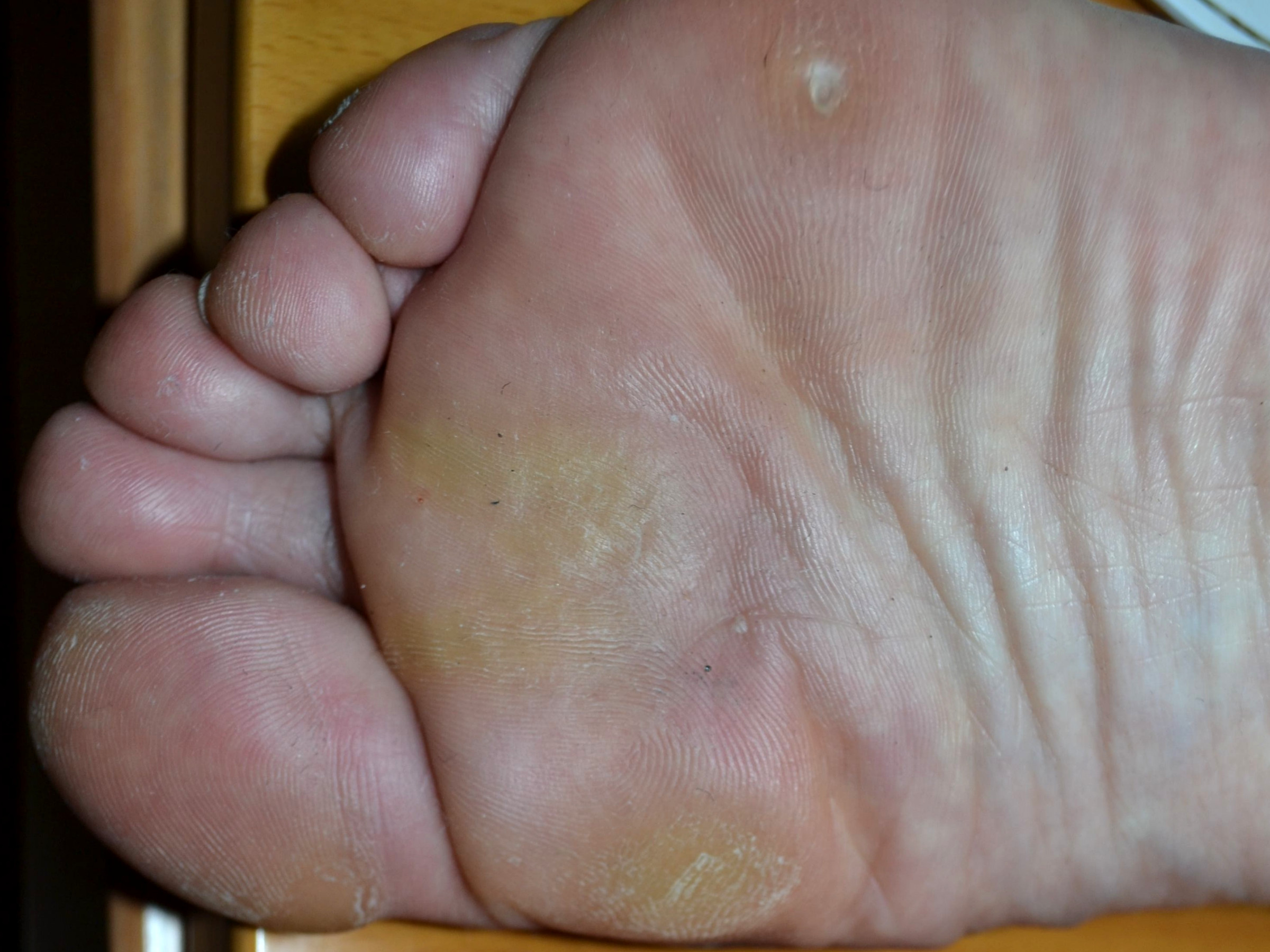
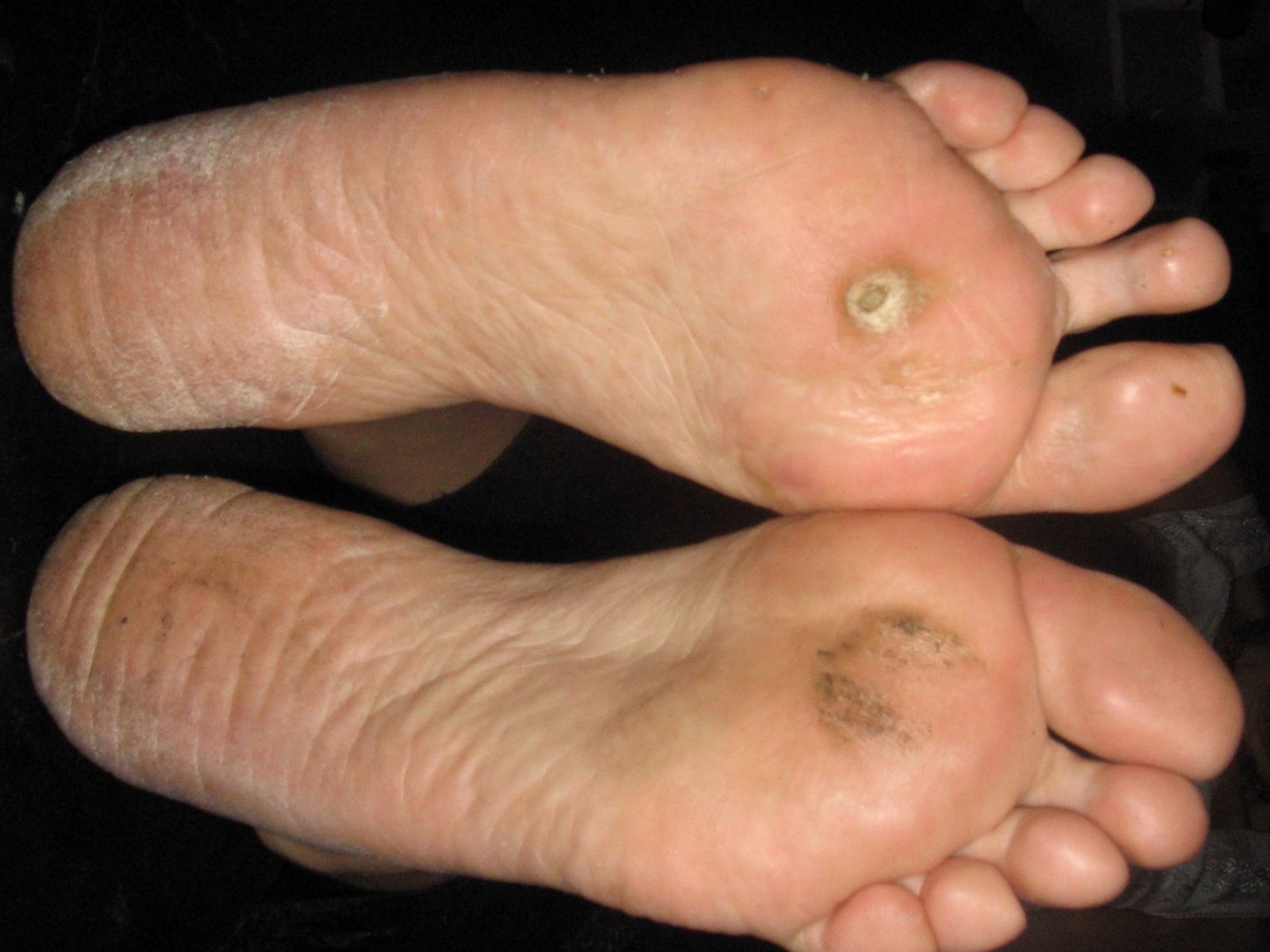
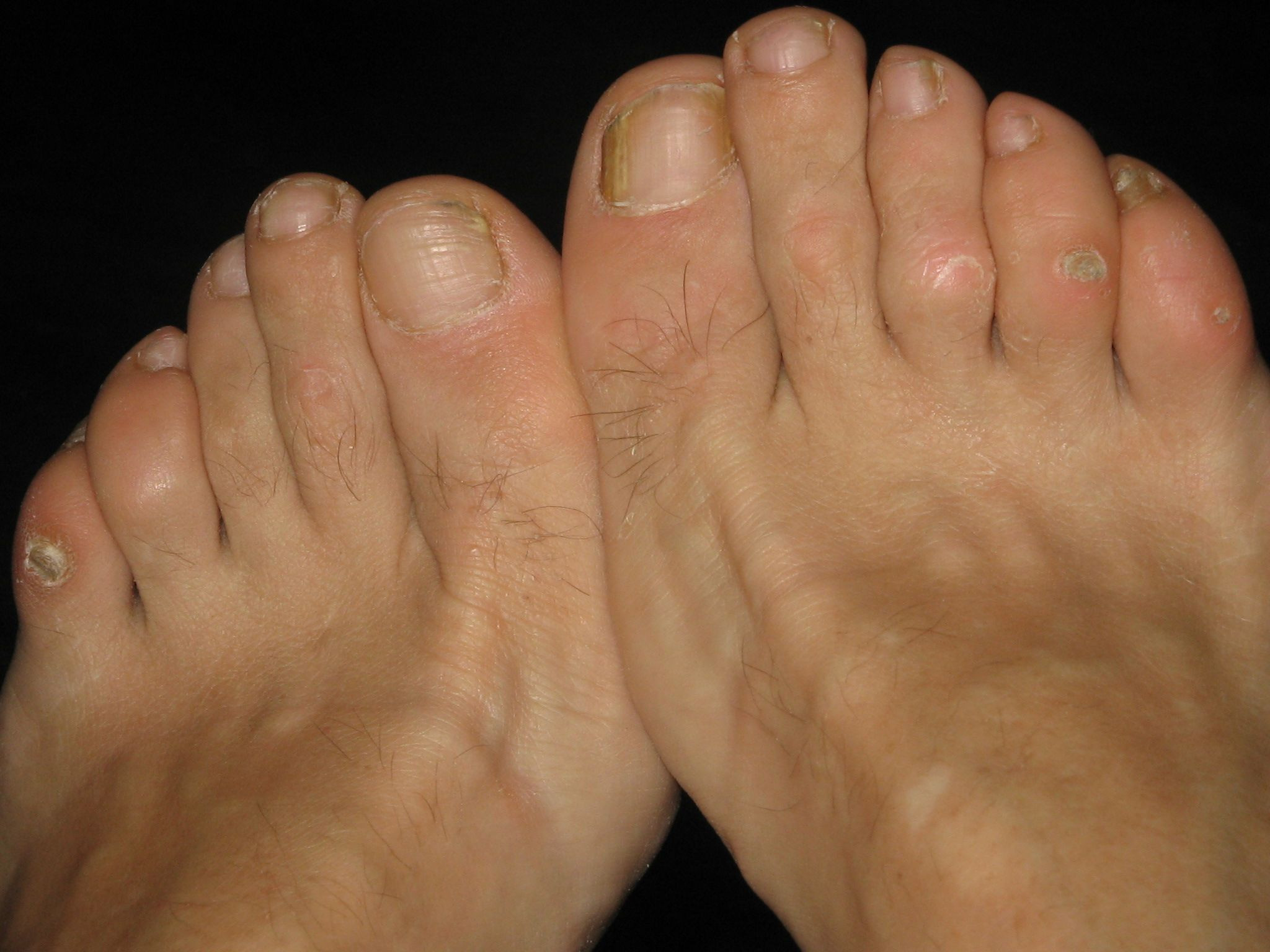
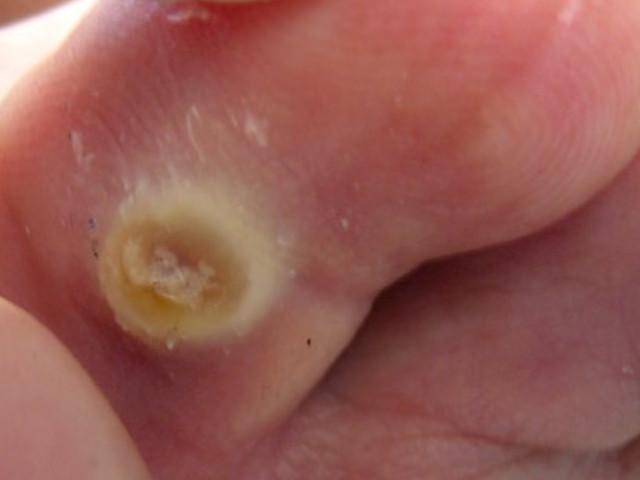
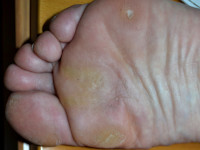
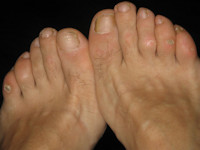
WHAT ARE CORNS?Corns, also called calluses, are painful calluses (corns) under the foot or on or between the toes. A corn develops due to increased callus formation in an area where the skin is exposed to pressure. The growing callus burrows into the flesh (sometimes in a pointed form), causing pain. The medical term for a corn is clavus.WHAT DOES IT LOOK LIKE?Corns are round, thickened calluses located at a pressure point. This can be under the sole of the foot, especially at the front, or on the toes where shoes pinch, or on the sides of the toes, or between the toes. Corns between the toes can be softened.
 |
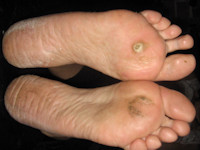 |
| corn (clavus) |
corn (clavus) |
 |
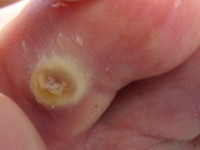 |
| corn (clavus) |
corn (clavus) |
Photos: Węgrowski and Marionette1 - Wikimedia (Creative Commons License 4.0 / 3.0 ).
HOW DO CORNS DEVELOP?The main causes are poorly fitting footwear (too narrow, high heels). In addition, toe misalignments (hammer toe, hallux valgus) or bone spurs (exostoses) can cause corns.
A hammer toe or inward-turned toe (hallux valgus) can also cause a painful callus to develop over the protruding joint, called a bunion.HOW IS THE DIAGNOSIS MADE?Corns are easy to recognize. The diagnosis is made based on the imaging. Sometimes it can be difficult to tell the difference between a corn and a plantar wart. The difference is that a corn is located on a pressure point, while a wart can be located anywhere. By cutting away some callus, the difference becomes clear: with a wart, small black dots become visible, while with a corn, a horny kernel appears.
Other conditions that resemble a corn include pressure points in patients with diabetes or other patients with impaired sensation in the feet, a bunion (a pressure point on a bony prominence of the big toe), and a (hereditary) keratinization disorder of the sole of the foot. If a hole or pus appears when cutting away the callus, one should be aware of an ulcer at a pressure point. Sometimes there is an opening to an underlying infection in the skin or bone. In that case, an X-ray may be necessary.HOW IS A CORN TREATED?Relieving pressure.
The most important measure to prevent a corn is to ensure there is no pressure on it.
This means wearing shoes that are roomy enough. High heels and pointed shoes are not a good idea with corns. Corns can disappear by covering them with a soft corn plaster or a ring-shaped corn plaster to relieve the pressure. For corns between the toes, gauze or other soft material can be placed between the toes. All these materials are available at drugstores, supermarkets, or pharmacies.
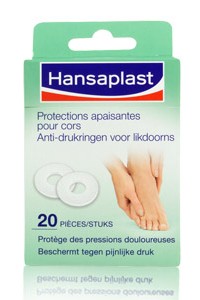 |
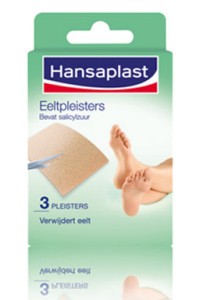 |
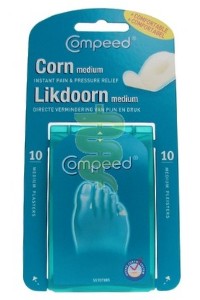 |
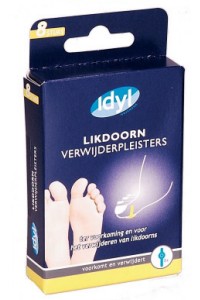 |
| anti-pressure rings |
callus softening plasters |
corn plaster |
corn plaster |
Removing a corn:
A corn can be softened with an ointment containing salicylic acid, which thins the stratum corneum. There are also special corn plasters (salicylic plasters) that soften the skin.
Stubborn corns can be removed by scraping away the stratum corneum with a blade and finally cutting out the callus with a blade. This can be painful.
If a corn doesn't disappear with simple measures such as better footwear, corn plasters, etc., it's best to visit a certified podiatrist. General practitioners sometimes do this, as do dermatologists. However, a podiatrist is the best person to do this. They have the experience and equipment to properly treat corns.WHERE CAN I FIND A PEDICURE?Ask your GP if he or she knows a reliable address, or look on the internet:
www.provoet.nl
www.pedicure.nl |