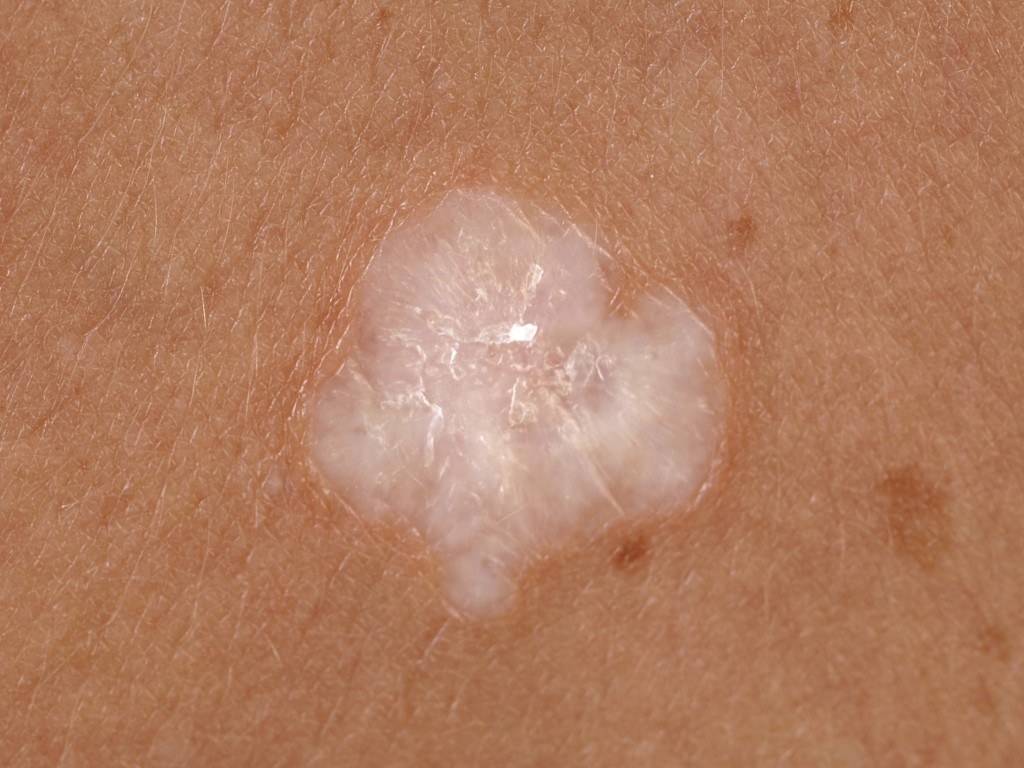
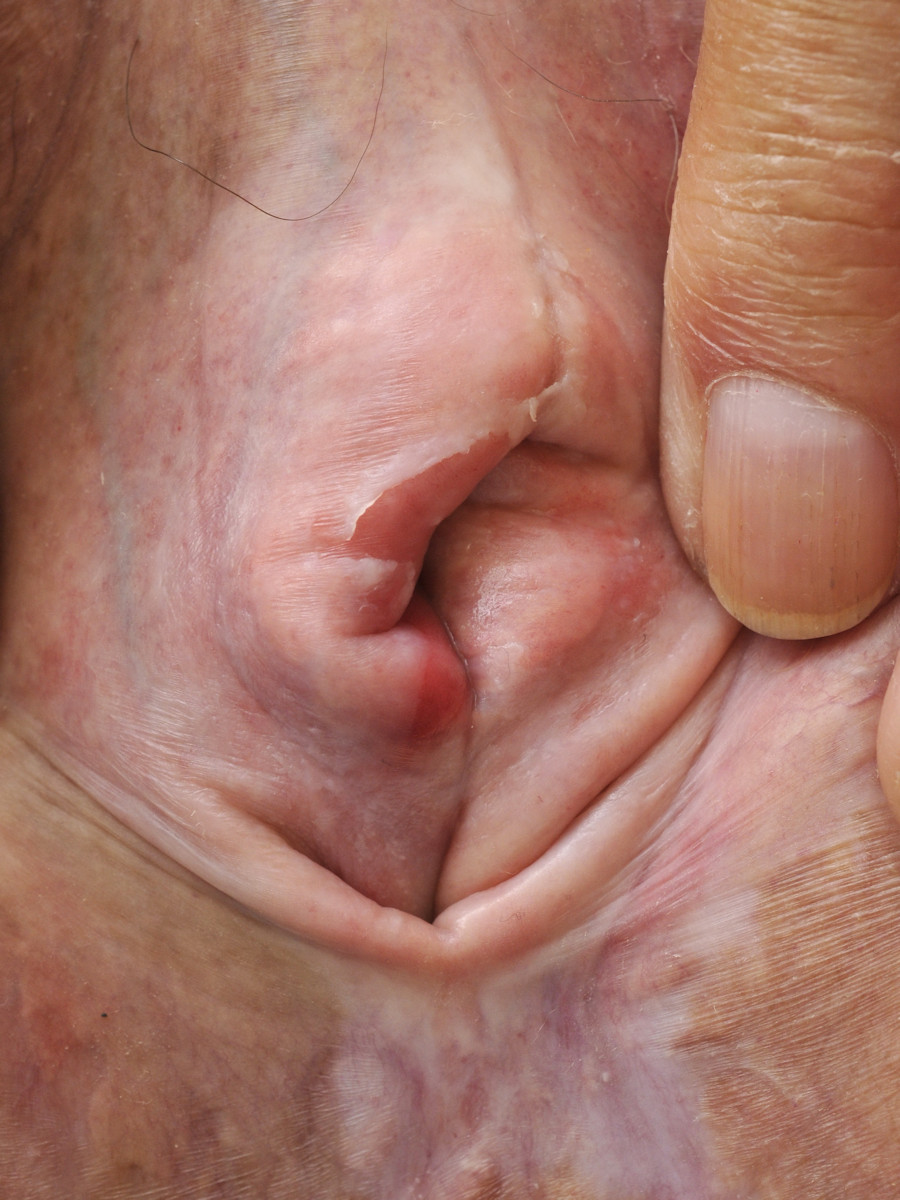
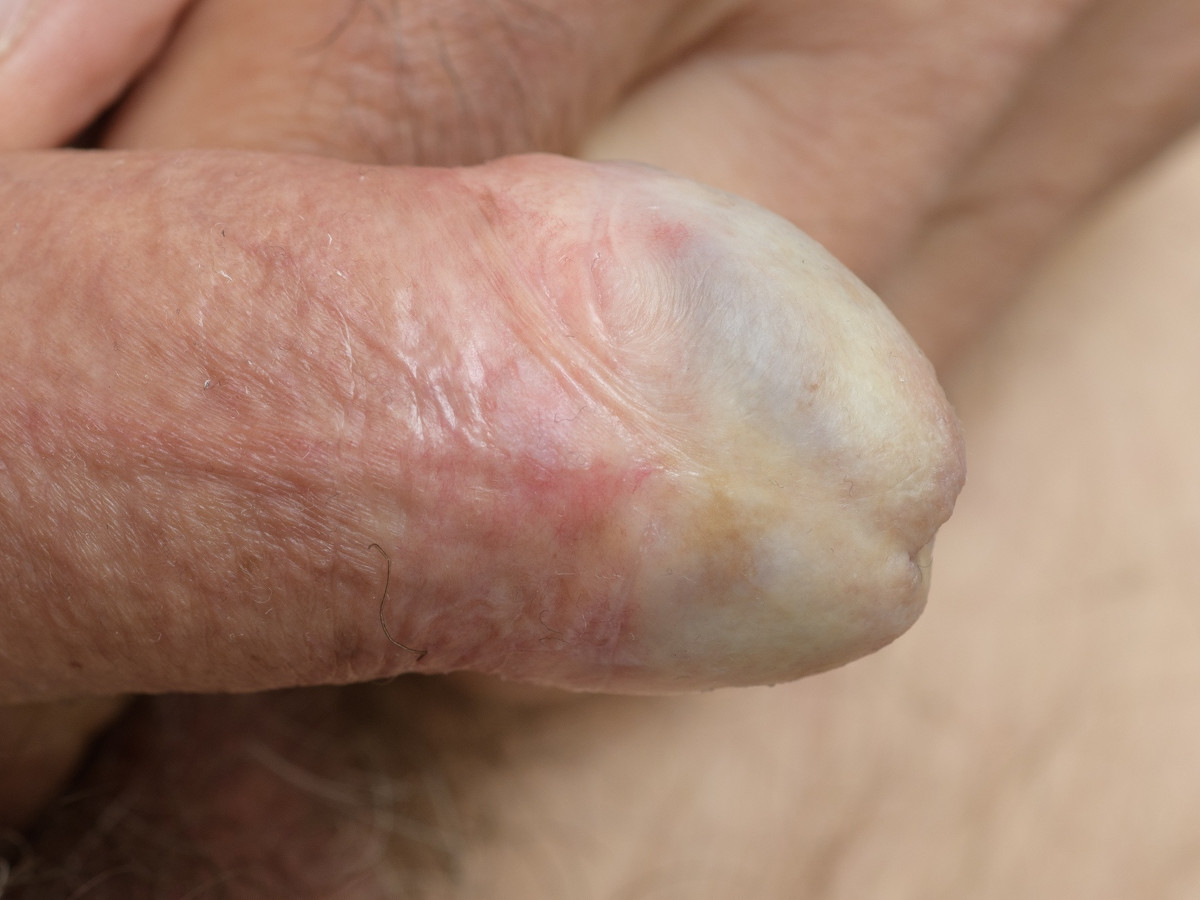
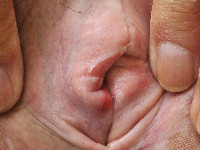
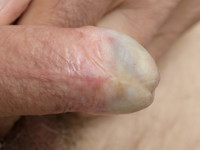
WHAT IS LICHEN SCLEROSUS?Lichen sclerosus are small white spots that spontaneously appear on the genitals. Lichen means " spot, " and sclerosus means " hardened ." The skin at the site of the lichen sclerosus feels abnormally supple; it loses its elasticity. Excess connective tissue forms, resembling a scar. The skin can break, and wounds and ulcers can develop. Lichen sclerosus is most common in women, on the labia. It can develop at a young age. Men can also have it, usually on the penis, the glans, or the foreskin. In rare cases, it can also occur elsewhere on the skin. It is a benign condition. The cause is unknown. It is not contagious.
 |
 |
 |
| lichen sclerosus trunk |
lichen sclerosus vagina |
lichen sclerosus penis |
WHO GETS LICHEN SCLEROSUS?Lichen sclerosus is most common in women (six times more common than in men) and usually begins between the ages of 45 and 60. About 15% of women develop it at a young age. It is also sometimes seen in adult men. It is not hereditary.HOW DOES LICHEN SCLEROSUS DEVELOP?The cause is unknown. There are theories that the hardening of the skin is preceded by inflammation. This inflammation could be caused by a bacterial or viral infection, or by an autoimmune disease. A hormonal factor also appears to play a role, as it occurs primarily in women and usually begins around menopause. In young girls, the condition often improves after puberty or even disappears completely.WHAT ARE THE PHENOMENA?Lichen sclerosus presents as sharply defined white, sometimes shiny (mother-of-pearl-like) patches, primarily on the labia and the skin around the anus in women and the penis and foreskin in men. In 20% of cases, patches also appear elsewhere on the body, particularly on the upper body and around the navel. Patches outside the genital area usually do not cause any symptoms. In the mouth, it appears as bluish-white patches on the inside of the cheek, palate, and tongue, often unnoticed.
In women, itching and pain are the most common symptoms in the genital area. Rubbing and scratching in the area around the labia and anus can cause superficial wounds, which in turn can cause some bleeding. Loss of elasticity causes scarring of the skin, which can fuse the labia and clitoris together, making sexual intercourse painful. The vaginal opening can also become narrowed, and painful fissures can develop in the vaginal wall.
In men, narrowing of the foreskin due to scarring and repeated infections of the glans penis (glans) are the most common complaints, along with itching and a painful erection. Cracks can also develop on the foreskin or penis. The scrotum (scrotum) and the area around the anus are rarely affected.
In young girls, lichen sclerosus is often asymptomatic. Symptoms generally include itching and a burning sensation at the site of the skin lesions. Other symptoms include vaginal discharge, painful bowel movements, and painful urination. Abnormal hair growth on the inside of the labia is also sometimes observed, which disappears when the condition heals. The vaginal sores are sometimes wrongly associated with sexual abuse.HOW IS THE DIAGNOSIS MADE?Most forms of lichen sclerosus are easy for a dermatologist to recognize. Sometimes, a tissue sample needs to be taken under local anesthesia (a biopsy) for microscopic examination. No additional testing, such as blood tests, is required.WHAT IS THE TREATMENT?Abnormalities in children (especially young girls)In young girls, itching and pain on the outer labia and the area around the anus are the most common problems. Both can be relieved by using corticosteroid creams or ointments.Abnormalities in adult womenItching is the most common complaint. Spontaneous pain and pain during intercourse, whether or not due to skin adhesions, are also common. Initially, creams or ointments containing strong corticosteroids will be prescribed. These will quickly reduce the pain and itching symptoms and also reduce the risk of scarring and skin adhesions. After this, depending on the symptoms, one can switch to a weaker and/or less frequent use of corticosteroid ointments or creams. The use of estrogen-containing creams sometimes results in an improvement in symptoms. In severe cases, tablets can be used. This condition, when it develops in adult women, does not resolve spontaneously. A patient must continue using the ointments or creams for the rest of her life, applying them as frequently as possible to suppress the symptoms. However, sometimes there is a period of absence of symptoms, during which time no ointment is required.Abnormalities in adult malesA narrowing of the foreskin is best remedied by circumcision. Itching and pain can best be suppressed with corticosteroid ointments or creams applied at an effective frequency. This makes it possible to remain symptom-free for a long time.Abnormalities elsewhere on the bodySkin lesions elsewhere on the body caused by lichen sclerosus do not respond well to treatment. If the skin feels tight, a moisturizing cream can also provide relief.WHAT CAN YOU STILL DO YOURSELF?Anyone with lichen sclerosus is advised to be gentle with their skin and damage it as little as possible. New lichen sclerosus lesions can develop in damaged skin. So, try not to scratch if it itches; use the cream.WHAT ARE THE OUTLOOK?Lichen sclerosus that develops in childhood has a much better prognosis than lichen sclerosus that develops in adulthood. In about two-thirds of childhood cases, the abnormalities disappear during puberty. In adults, the condition is chronic.
In rare cases, skin cancer develops in the affected area. The chance of this is very small. However, given this risk, it is advisable to have the affected area inspected by your general practitioner, dermatologist, or gynecologist if you notice any changes such as sores, bumps, thickened areas, or spreading. If you wish, an annual checkup can also be scheduled to assess the affected area.EMOTIONAL AND PSYCHIC ASPECTSPatients, especially women, often suffer from symptoms for a long time without consulting their doctor. This often happens out of embarrassment. Sometimes the condition is not recognized or is recognized too late. Lichen sclerosus of the vulva can cause severe itching and pain, which can disrupt daily life. The shape of the vagina can change due to adhesions. Sex can sometimes be painful. Relationships are under pressure. Having to undergo regular checkups is unpleasant, and the possibility of developing skin cancer causes anxiety. All in all, this is an unpleasant condition that is also difficult to treat.
For some patients, it can be helpful to connect with other patients who have the condition. There is a patient association ( www.lsnederland.nl ). |