| LICHEN PLANOPILARIS |
 |
 WHAT IS LICHEN PLANOPILARIS? WHAT IS LICHEN PLANOPILARIS?
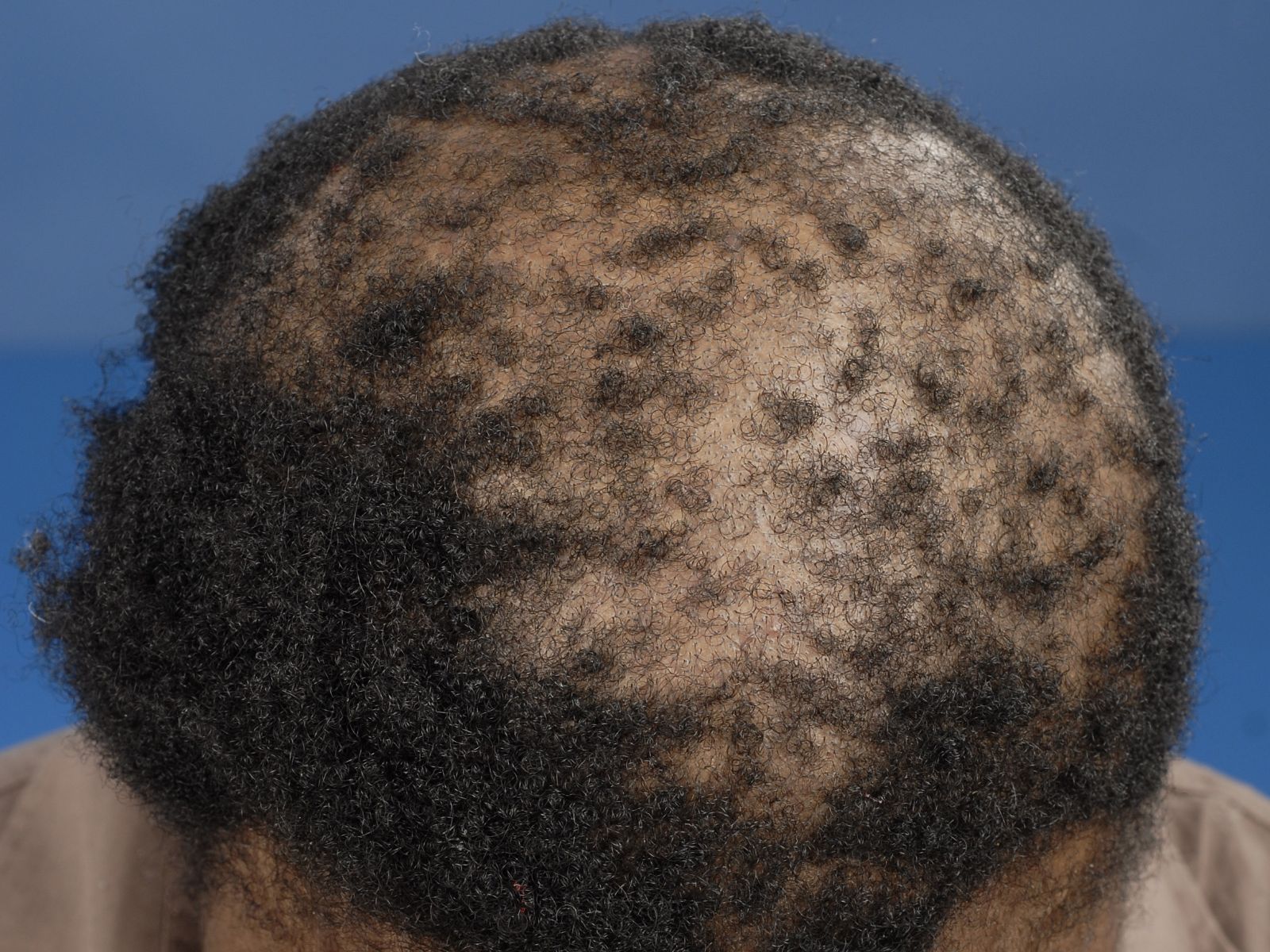
Lichen planopilaris is a disease of the hair, mainly affecting the hair on the head, but the eyebrows can also be affected. An inflammatory reaction occurs around the hair follicles, damaging them and causing the hair to fall out. This inflammatory reaction ultimately leads to the loss of all hair follicles, leaving only scar tissue behind. The hair does not grow back. It mainly occurs in women aged 40-60 years and is less common in men.
WHAT IS THE CAUSE OF LICHEN PLANOPILARIS?
The cause is unknown. However, it is clear that there is an abnormal reaction of the immune system. Cells of the immune system attack the hair follicles for no apparent reason and eventually destroy them completely. Often, the inflammatory reaction is not limited to the hair follicles, but also causes skin abnormalities, mucous membrane abnormalities, and nail abnormalities. This is called
lichen planus.
WHAT ARE THE SYMPTOMS?
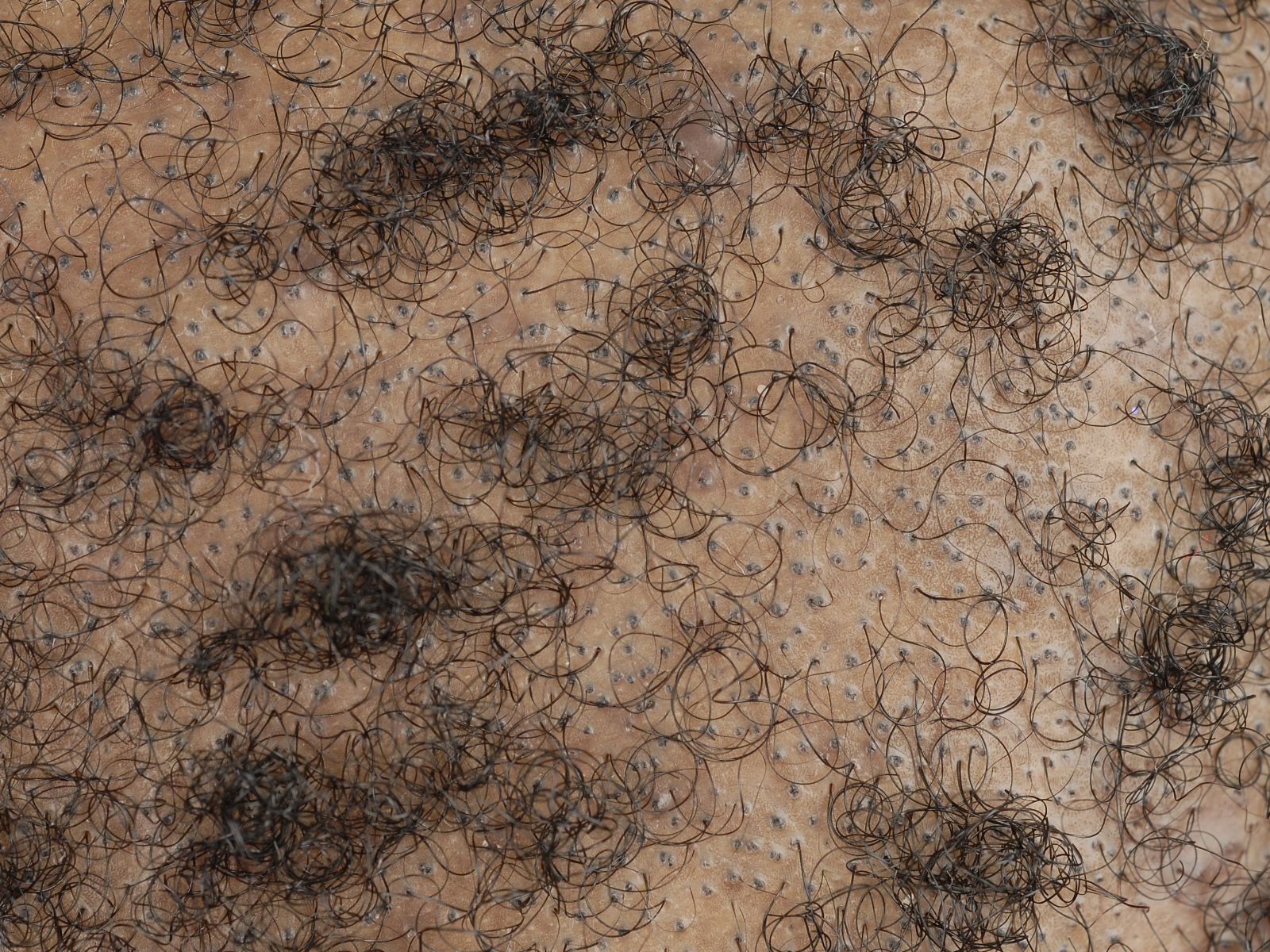
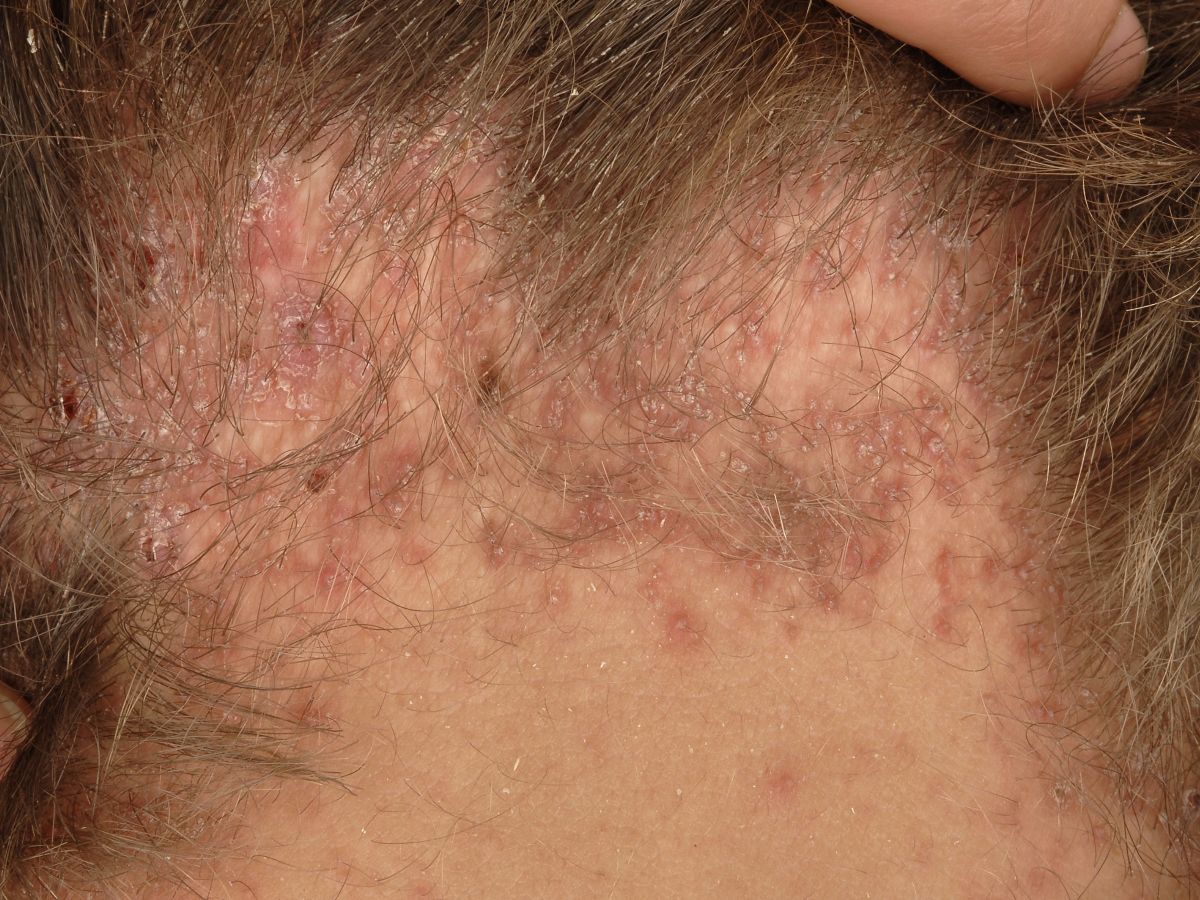
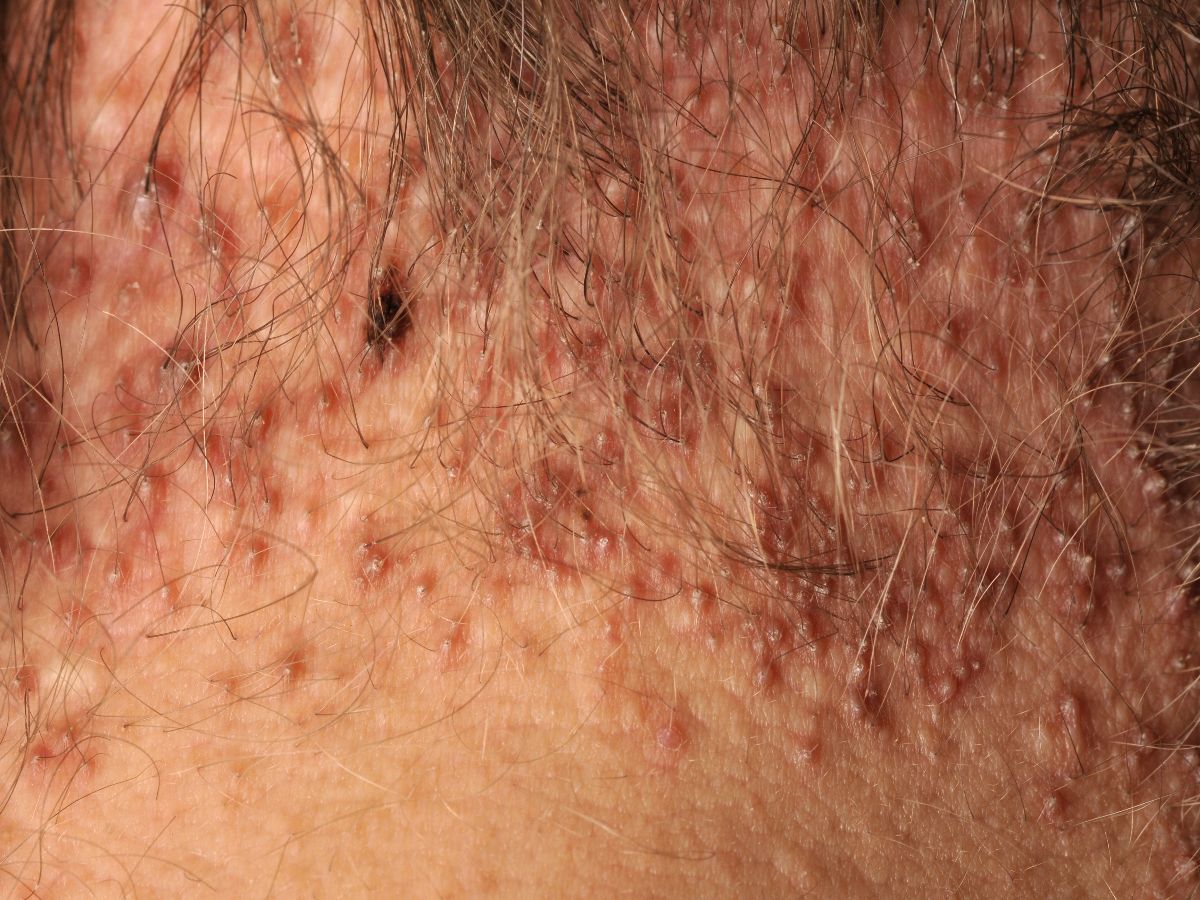
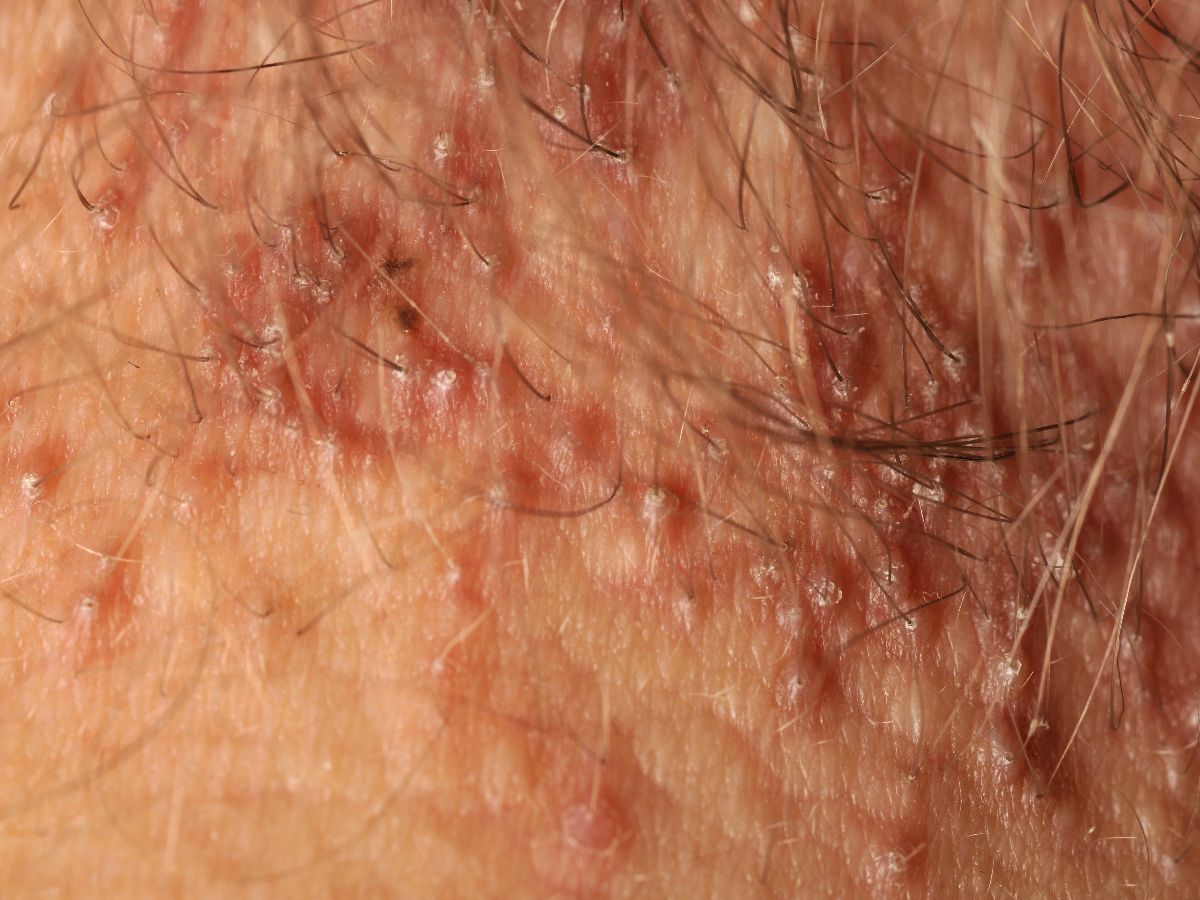
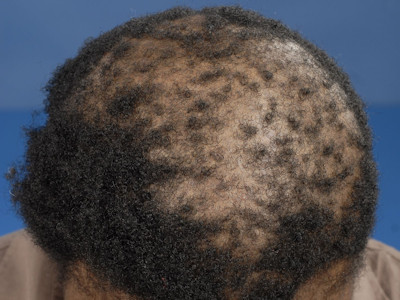
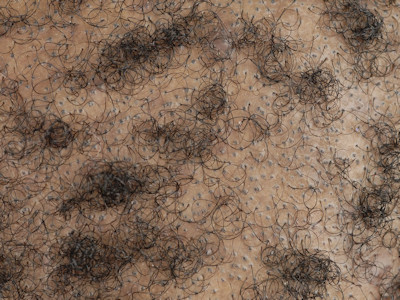
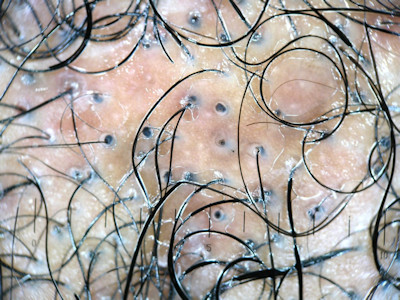
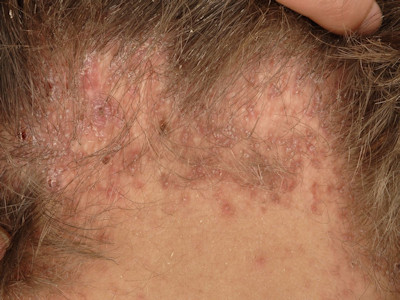
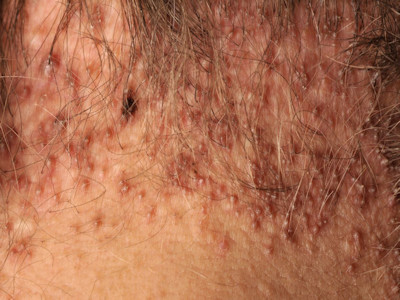
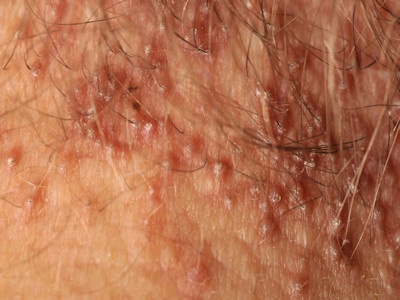
Gradually, more and more bald patches appear on the scalp. It often starts in the middle of the top of the head and spreads to the edges. But in principle, it can occur anywhere on the scalp. The eyebrows can also fall out, often starting at the outer edges. During the active phase of the disease, the affected areas may itch or feel burning. Small reddish-brown bumps and flakes may also be seen around the hairs. In a later stage, scarring of the hair follicles occurs. Eventually, completely bald patches develop, in which no hair follicle openings can be seen. Sometimes a few hairs remain. The speed at which this process progresses varies from person to person, and its course is unpredictable.
 |
 |
 |
| lichen
planopilaris |
lichen
planopilaris |
lichen
planopilaris |
 |
 |
 |
| lichen
planopilaris |
lichen
planopilaris |
lichen
planopilaris |
Approximately 20-50% of patients also have
lichen planus of the skin (red or reddish-brown raised bumps, especially around the wrists), or of the mucous membranes (white, net-like streaky abnormalities in the oral cavity), or nail abnormalities (thickening, grooves, cracks, nail loss).
There is also a variant of lichen planopilaris in which only the front hairline recedes. This variant is called
frontal fibrosing alopecia. Frontal fibrosing alopecia progresses slowly. It often starts with the loss of the eyebrows. At some point, it becomes apparent that the hair along the front hairline has fallen out, because a strip of skin appears that is lighter in color and shows no signs of sun damage. Sometimes there is still a single hair in this area, which is called a "lonely hair." For more information see
frontal
fibrosing alopecia.
HOW IS THE DIAGNOSIS MADE?
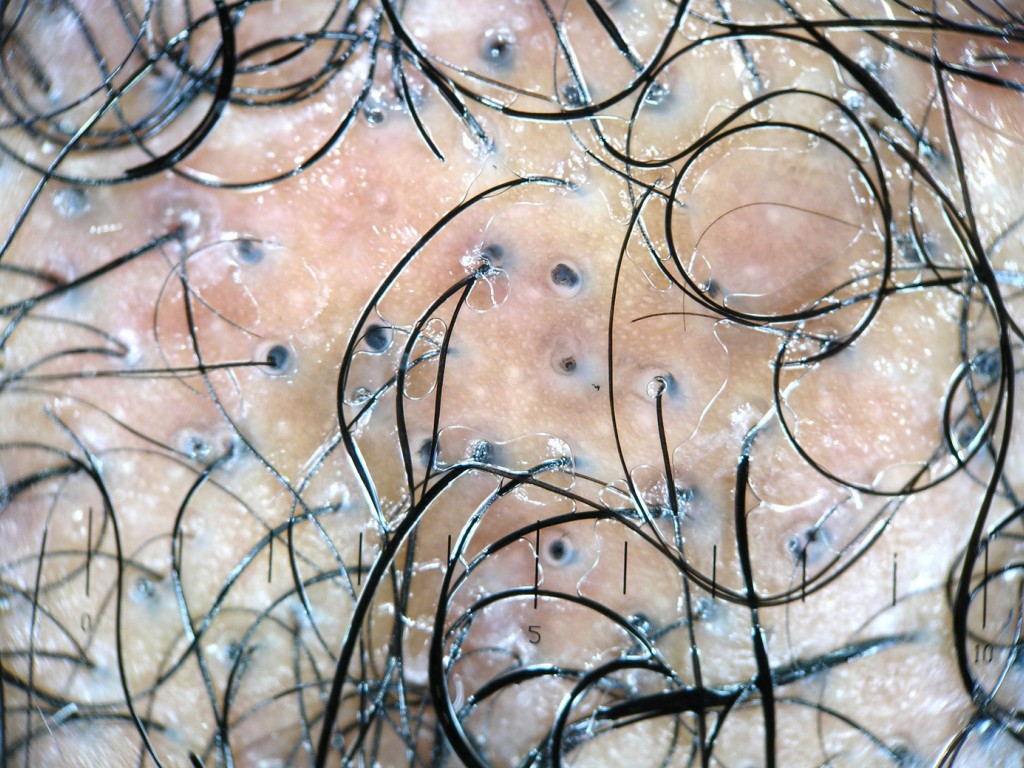
The diagnosis is made based on the clinical picture, on how it looks. The dermatologist can usually make the diagnosis by carefully examining the skin around the hair follicles with a dermatoscope, a magnifying glass with special lighting. If the picture is not entirely clear, it may be necessary to take a
skin biopsy, in which a small piece of skin is removed under local anesthesia and sent to the pathology laboratory.
HOW CAN LICHEN PLANOPILARIS BE TREATED?
Lichen planopilaris is difficult to treat. Once hair follicles have been lost and scarring has occurred, this is irreversible. However, if treatment is started at an early stage, there is still a chance of hair regrowth. Treatments are aimed at preventing or slowing down further hair loss and reducing itching and burning. Lichen planopilaris is treated with
anti-inflammatory drugs. These can be lotions or creams applied to the scalp (local therapy), but they can also be tablets or capsules that must be taken orally (systemic therapy). Local and systemic treatments can also be combined.
Local therapy
Treatment usually starts with local corticosteroid lotions for the scalp, such as Topicorte lotion, Betnelan lotion, Diprosone lotion, Elocon lotion, Locoid scalp lotion, Dermovate lotion, Clarelux foam, or Clobex shampoo. An alternative is tacrolimus ointment or pimecrolimus cream. These products do not contain corticosteroids, but they are slightly less potent and the base is not as suitable for the scalp. There are pharmacies in the Netherlands that can make tacrolimus lotion, but it is not covered by insurance.
Systemic therapy
If local treatment is not effective enough, or if the condition is spreading rapidly, systemic anti-inflammatory therapy in the form of tablets or capsules can also be used. The most commonly used drugs for lichen planopilaris are hydroxychloroquine (Plaquenil), methotrexate, and ciclosporin. Sometimes mycophenolate mofetil, acitretin, or anti-inflammatory antibiotics such as doxycycline and minocycline are also used. Prednisone is also effective, but is not suitable for long-term use due to its side effects.
WHAT IS THE OUTLOOK?
Lichen planopilaris is a difficult-to-treat hair condition with a variable course. Hair loss can be stabilized or slowed down with anti-inflammatory medication. It can also spontaneously subside over time. Unfortunately, it can always come back. In areas where scarring has occurred, new hair growth will not return.
WHAT CAN YOU DO YOURSELF?
There is nothing you can do yourself to influence the course of lichen planopilaris. If large bald patches have developed, one option is to purchase a wig or hairpiece. Whether this is covered by your health insurance depends on your health insurance policy and the package you have taken out. Authorization is often required, which your dermatologist can fill out for you.
PATIENT ASSOCIATION
There is a patient association for people with lichen planus:
www.lichenplanus.nl. You can also contact them with questions about lichen planopilaris.
|