| KERATOACANTHOMA |
 |
 WHAT IS A KERATOACANTHOMA? WHAT IS A KERATOACANTHOMA?
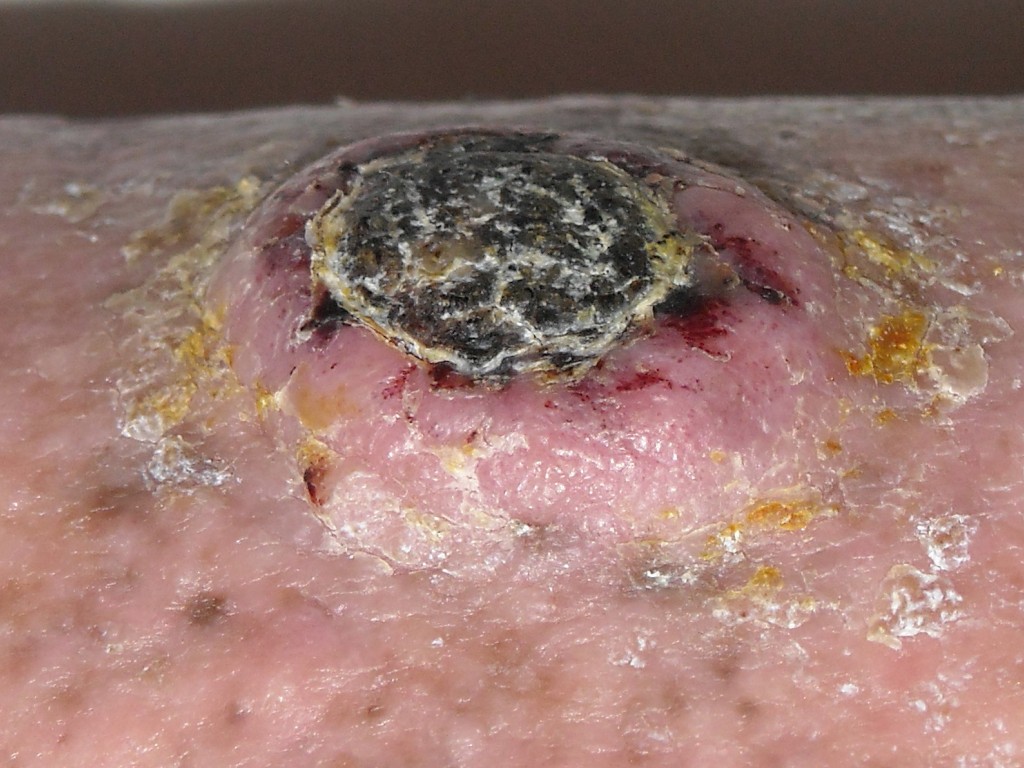
A keratoacanthoma is a dome-shaped skin tumor that develops quickly and can grow to several centimeters. The word "tumor" sounds serious and malignant, but it is simply the Latin medical term for "a swelling." A tumor can be malignant or benign. Opinions differ on whether a keratoacanthoma should be considered benign or malignant. Some consider a keratoacanthoma to be a benign tumor that closely resembles a
squamous cell
carcinoma (which is a malignant skin tumor). Others consider it a variant of squamous cell carcinoma, but a milder form, that does not behave malignantly (i.e., it does not grow deeply or spread throughout the body).
Despite its rapid growth, you do not need to worry if you are diagnosed with a keratoacanthoma. If the experts can't agree on whether it should be called benign or malignant, you already know it's not very dangerous. And there is an effective treatment: removing the keratoacanthoma. This can be done by cutting out the area with a margin of a few millimeters, forming an oval, and then suturing it. It can also be done with a simple technique where, after local anesthesia, the lump is scraped off the skin with a spoon-shaped instrument (curettage), after which the base is electrically cauterized (electrocoagulation) if necessary.
 |
 |
|
keratoacanthoma |
keratoacanthoma |
HOW DOES A KERATOACANTHOMA DEVELOP?
Keratoacanthomas develop from hair follicle cells. Regarding the name, acanthoma refers to a swelling originating from the skin or parts of it (such as hair follicles). The suffix "kerato-" refers to the large amount of keratin (keratinous material) usually seen in the center of a keratoacanthomas. A keratoacanthoma develops when skin cells suddenly start dividing and multiplying much faster than normal. The exact cause is unknown. It is thought that DNA damage caused by sunlight plays a role. Keratoacanthomas primarily develop in areas frequently exposed to sunlight, such as the face, ears, arms, and hands. But they can also develop on the torso, in areas with little sun
exposure. Keratoacanthomas typically develop in older adults (60+).
WHAT ARE THE SYMPTOMS?
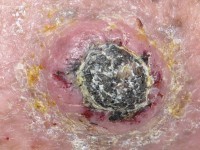
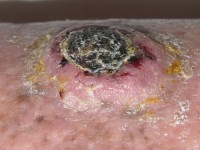
Over the course of several weeks (rapidly growing), a round,
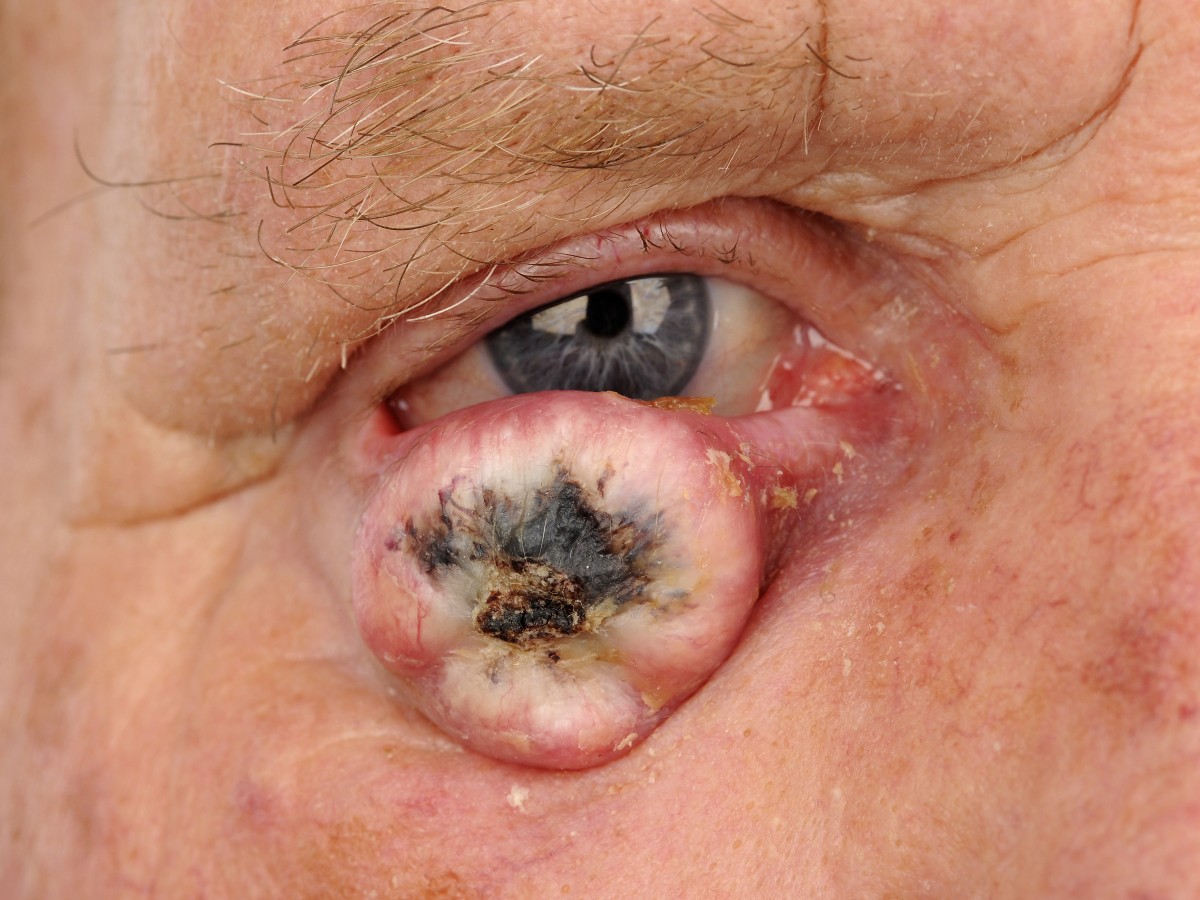
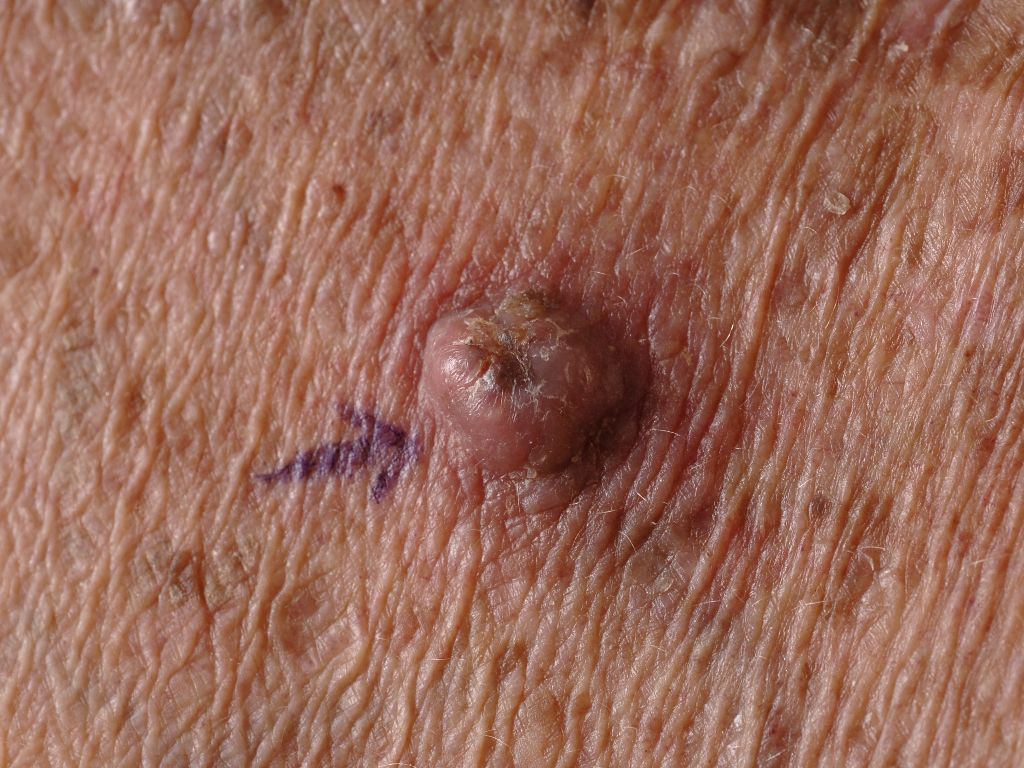
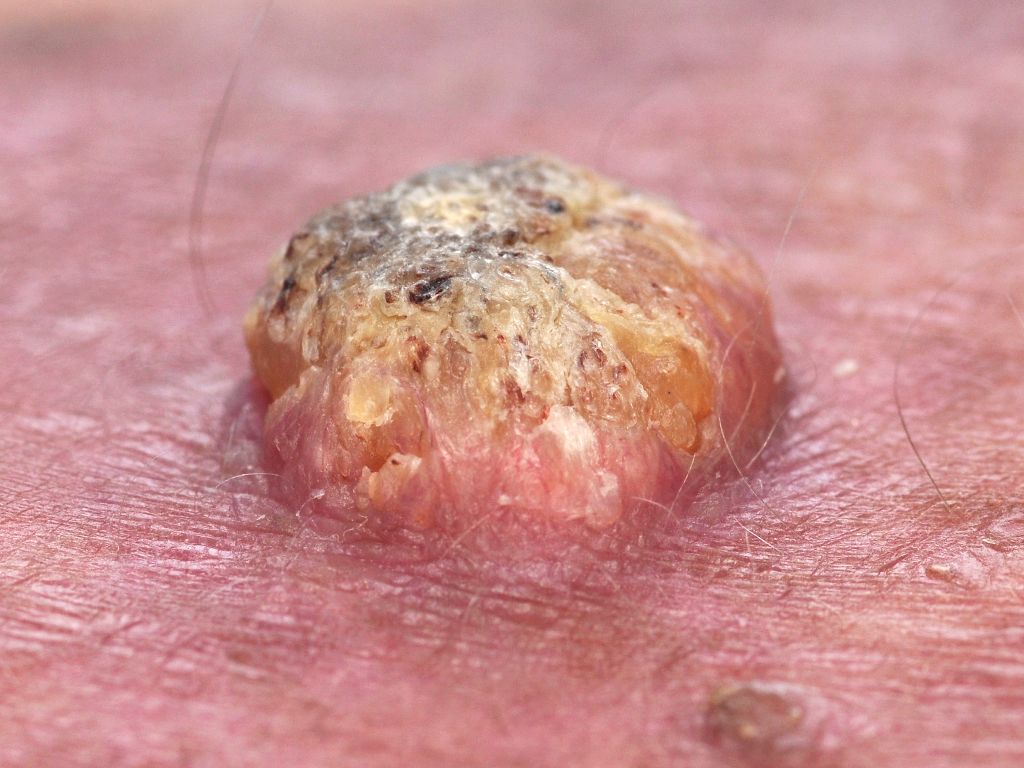
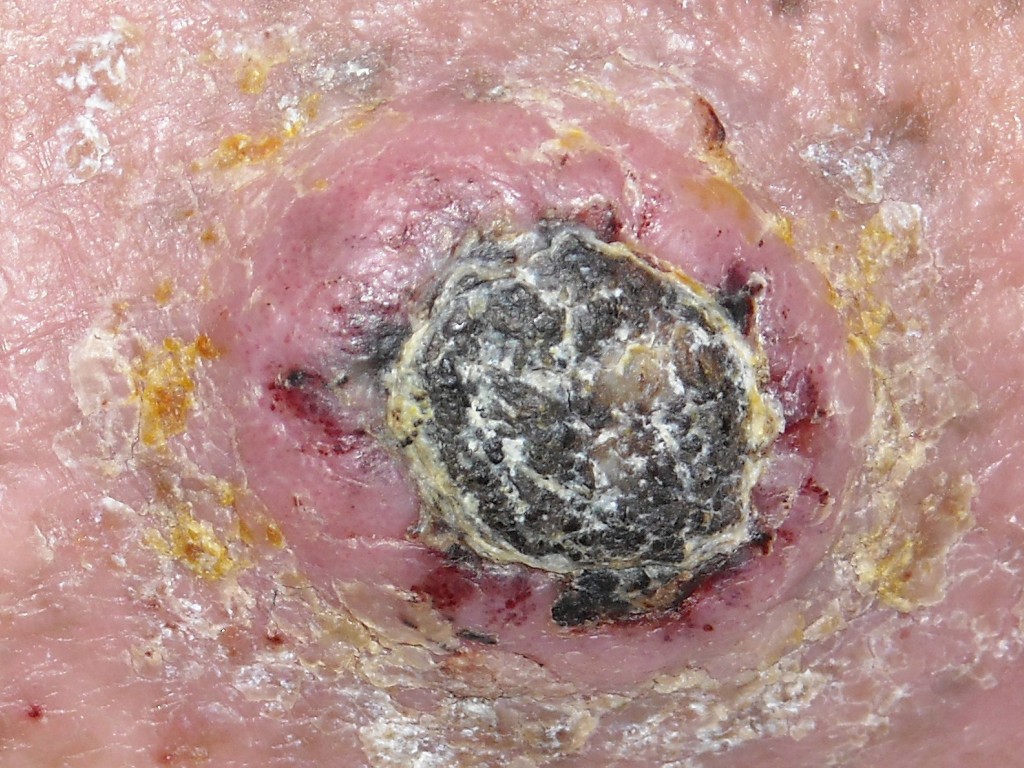
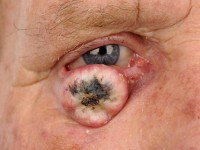
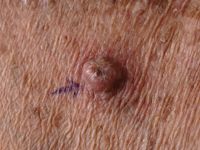
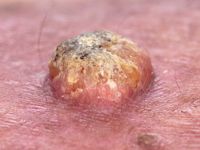
dome-shaped skin-colored or pinkish-red tumor develops on the skin. The tumor can grow to a diameter of several centimeters. A characteristic feature is the presence of a central keratin-filled
crater. A keratoacanthoma does not cause pain or itching, and does not bleed (unless scratched). A keratoacanthoma can develop anywhere on the skin, but is more commonly seen in sun-exposed areas, such as the face or hands. Sometimes multiple keratoacanthomas can develop simultaneously, or in quick succession. This is seen in patients with compromised immune systems (for example, patients with a donor kidney) and in certain hereditary diseases.
If left untreated, most keratoacanthomas disappear on their own over time (within a few months). The keratoacanthoma gradually shrinks. Sometimes it disintegrates or partially detaches. Eventually, it disappears completely, but after spontaneous healing, a scar remains. Usually, this does not happen because the
keratoacanthomas are removed by a dermatologist.
 |
 |
 |
|
keratoacanthoma |
keratoacanthoma |
keratoacanthoma |
HOW IS THE DIAGNOSIS MADE?
The dermatologist can diagnose the condition based on its rapid growth and appearance (spherical, lying on top of the skin, with a
keratin plug, painless). If necessary, a skin biopsy
is taken and sent to the pathology laboratory for microscopic examination. However, it is not easy for the pathologist to distinguish between a keratoacanthoma and a milder form of squamous cell carcinoma. The diagnosis is often: "keratoacanthoma, but squamous cell carcinoma cannot be completely ruled out." The diagnosis is then left to the dermatologist's discretion.
WHAT IS THE TREATMENT?
Curettage and coagulation
The simplest treatment for a keratoacanthoma is
scraping it off (curettage) under local anesthesia,
followed by electrical cauterization of the base.
The tissue of a keratoacanthoma is not very hard and
lies largely on top of the skin. Therefore, it is
relatively easy to scrape off. Then, the base is
cauterized with an electrocoagulation device. This
stops minor bleeding. In addition, the heat also
destroys the bottom layer of cells in the
keratoacanthoma, preventing regrowth. After this
procedure, a superficial wound (sometimes a small
dent) with a scab remains. This heals in a few weeks, leaving an
acceptable scar.
Excision
The other method is surgical removal: excision followed by suturing. Because keratoacanthomas can be very large, with a base of 2-3 centimeters, excision is not always the most attractive or practical solution. This also depends on the location. For example,
for a large keratoacanthoma on the tip of the nose
excision is not the first choice because of the damage it causes to the nose. The choice between excision or scraping is primarily determined by whether
the tumor looks like a harmless keratoacanthoma, or a squamous cell carcinoma.
With both methods, the removed material is sent for pathological examination. If this reveals that it is a squamous cell carcinoma, with many abnormal cells, it may be necessary to operate again, wider and deeper.
WHAT IS THE PROGNOSIS?
The prognosis is good. If the keratoacanthoma is completely removed, it will not recur. If a small piece remains, it can still be removed. Furthermore, keratoacanthomas are eventually eliminated by the body itself.
|