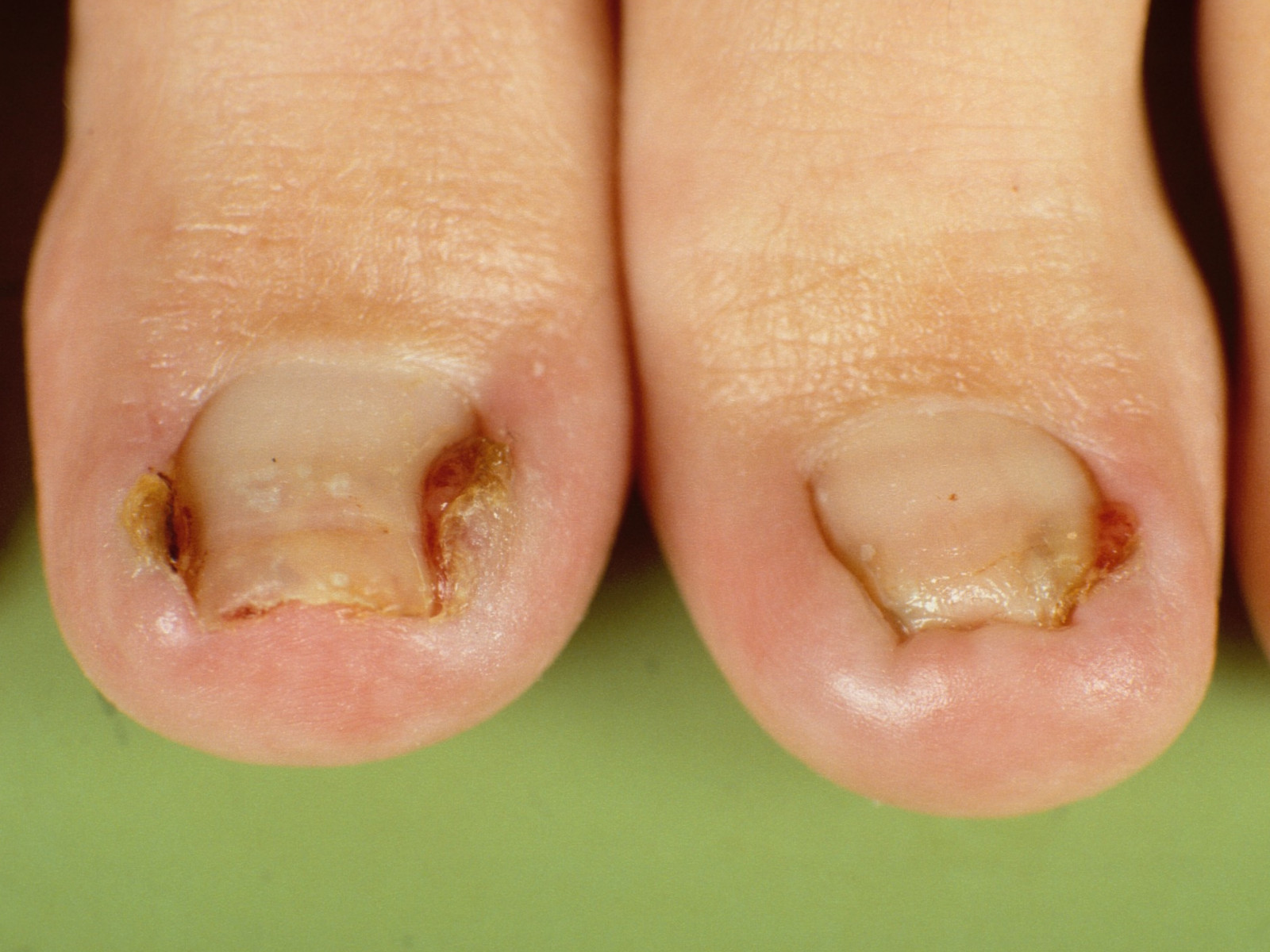
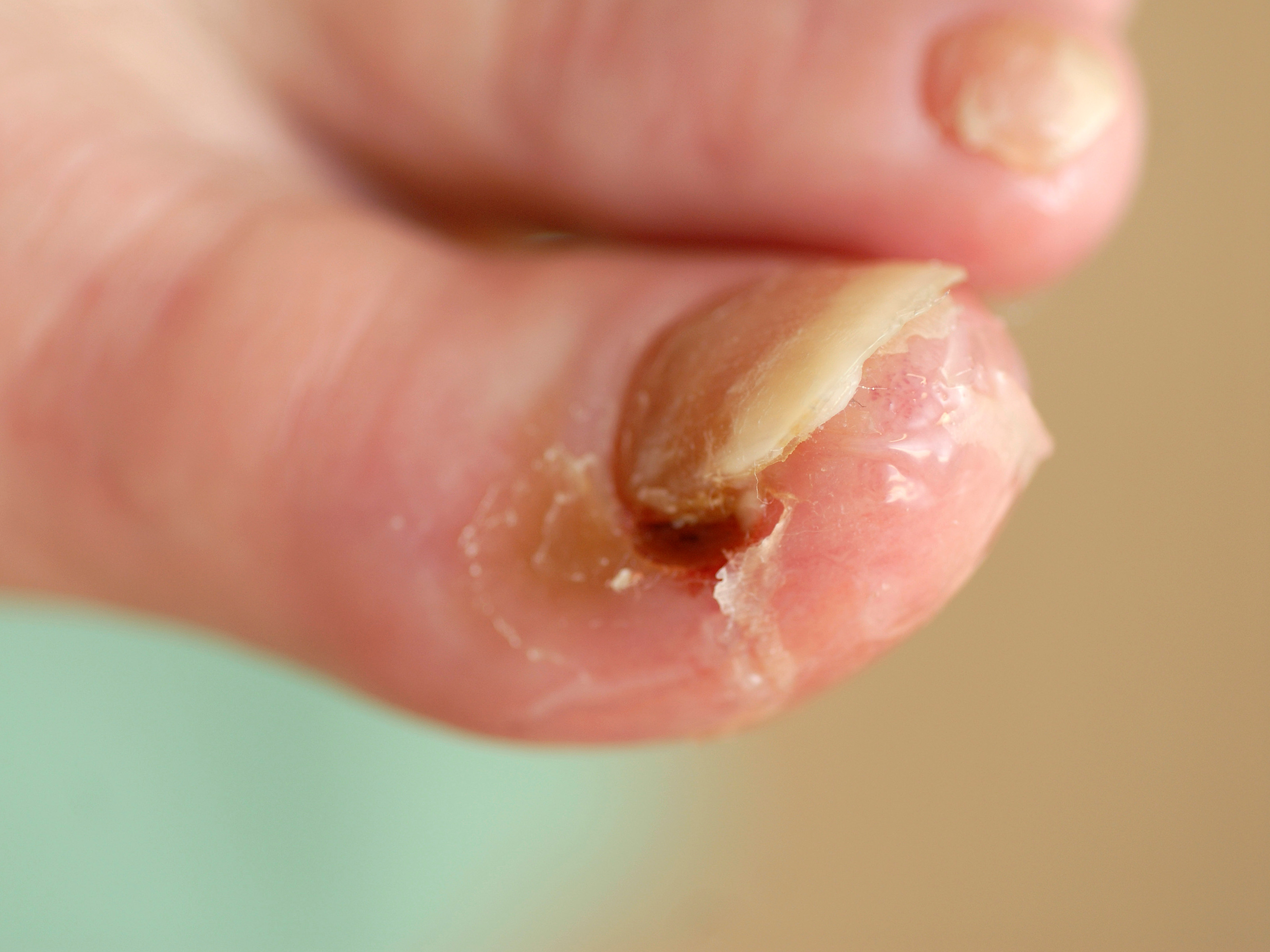
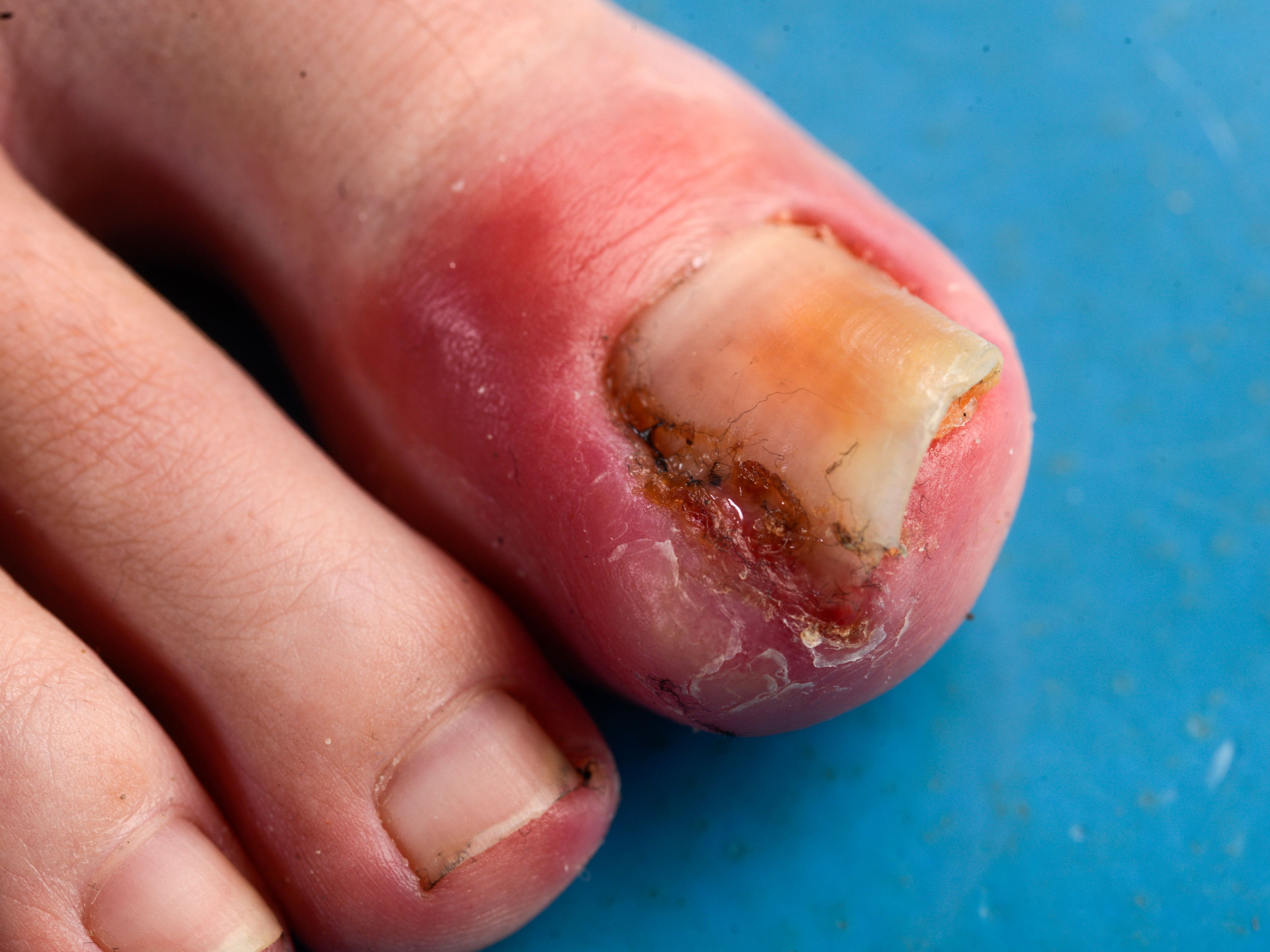
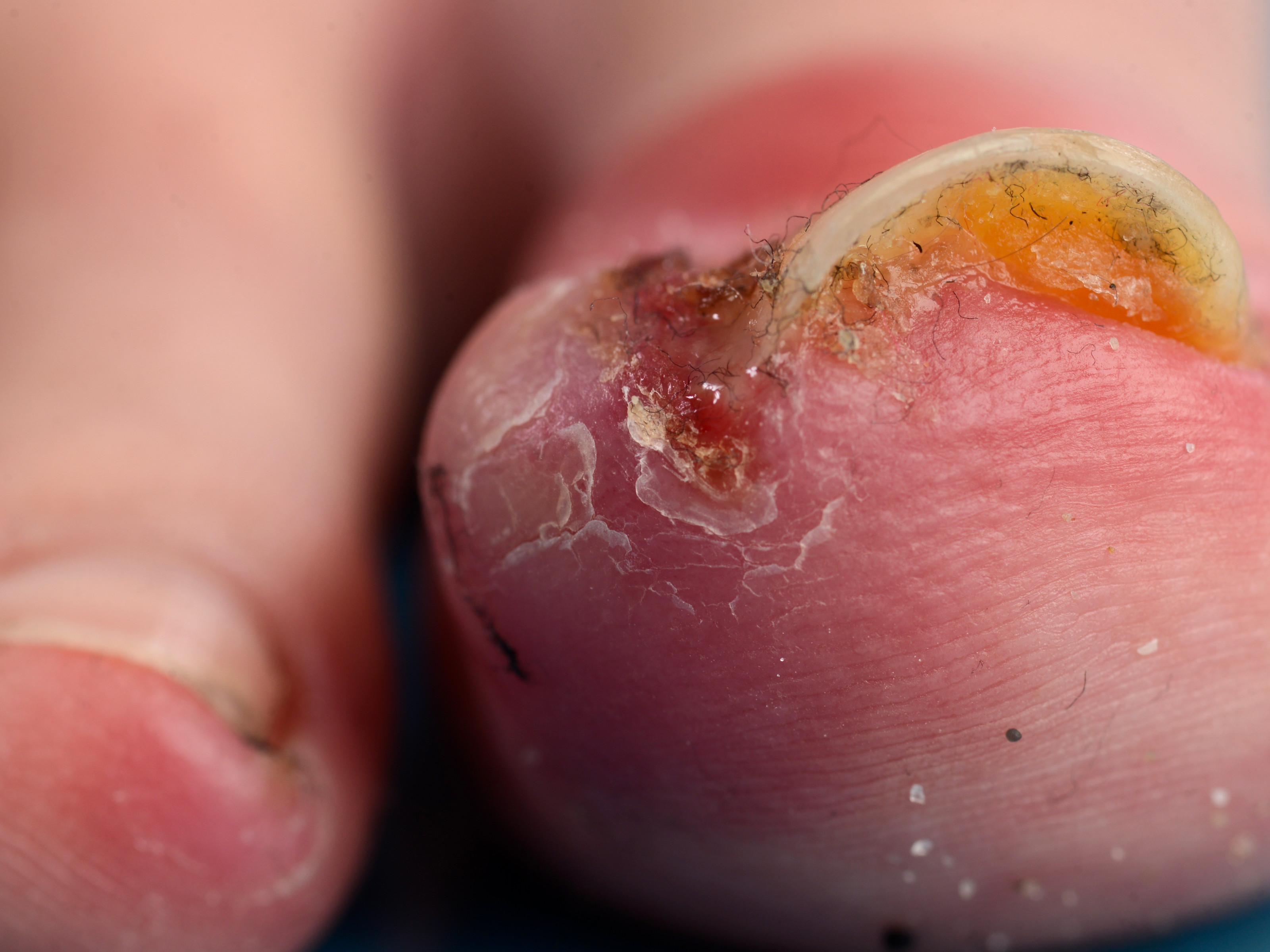
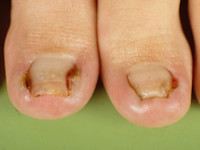
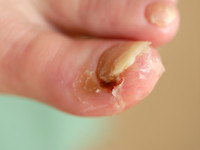
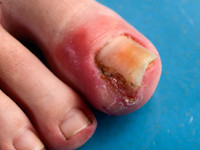
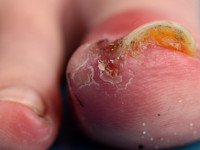
INTRODUCTIONHere you'll find a general overview of the symptoms of an ingrown toenail and the most common treatment options. It's important to remember that when diagnosing a condition, the situation can be different for everyone.WHAT IS AN INGROWN TOENAIL AND HOW DOES IT OCCUR?An ingrown toenail usually occurs on the big toe. The inner or outer edge of the nail has grown into the skin, causing irritation, pain, or inflammation. The exact cause of ingrown toenails is unknown. It may be due to footwear (too tight, too narrow), the toe's shape (slightly tilted, causing the edge of the nail to press too hard into the skin when walking), or cutting the nail too short at the corners.
 |
 |
| ingrown toenail |
ingrown toenail |
 |
 |
| ingrown toenail |
ingrown toenail |
IS FURTHER INVESTIGATION NECESSARY?Usually, no further examination is necessary. Occasionally, depending on the findings, the doctor may order an X-ray of the toe.WHAT ARE THE TREATMENT OPTIONS?There are several treatment options, depending on the severity of the ingrown nail.
- When the nail edge is slightly ingrown or at risk of becoming ingrown and causing irritation, simple measures are often sufficient. The nail edge can be raised slightly by sliding a cotton ball under the nail and/or regularly massaging the skin downward.
- When the ingrown is more severe and causes pain, inflammation with or without thickening of the skin and protruding flesh (hypergranulation), then narrowing the nail edge is often indicated. Such narrowing can be achieved by clipping away the nail edge. The nail will then grow back later. Once the inflammation has subsided, the simple measures mentioned above can be used to prevent recurrence of ingrown toenails.
- The nail can also be permanently narrowed by not only clipping away the nail edge but also by narrowing the nail root. That piece of nail root can be cut or scraped away, or destroyed with an etching fluid (phenol).
Sometimes, depending on the doctor's findings, it may be necessary to remove all or part of the nail.
These toenail surgeries are performed on an outpatient basis under local anesthesia using two injections at the base of the toe. Your doctor will discuss with you which treatment seems best for your situation.POSSIBLE COMPLICATIONSNo procedure is without the risk of complications. However, postoperative bleeding and infections are rare with these surgeries. Recurrence can also occur: the nail grows back in despite attempts to narrow the nail root. The problem then returns.AFTER SURGICAL TREATMENTYou may experience some pain after the surgical procedure. Depending on the nature of the procedure, the pain will be mild or moderate. This discomfort can usually be managed with mild painkillers. Elevating your toe can also relieve the pain. Depending on the pain, normal walking will usually be possible again after a few (two to five) days. |