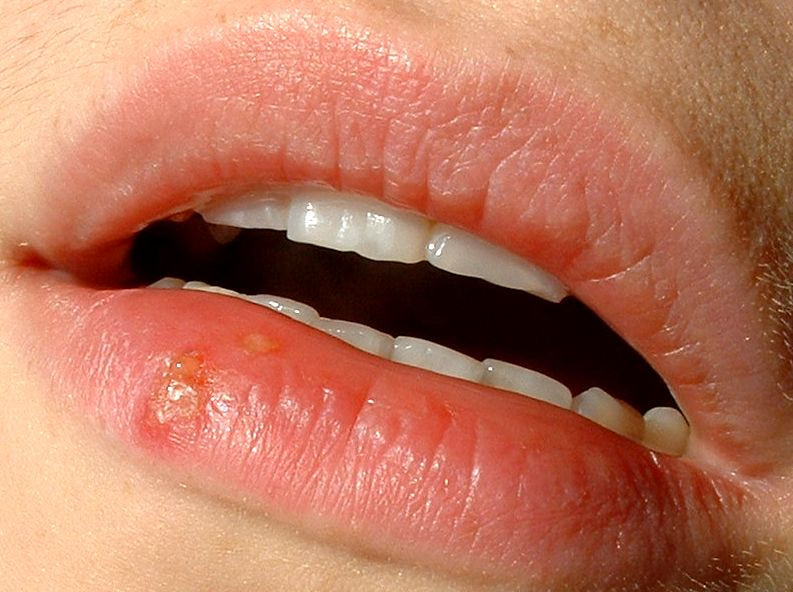
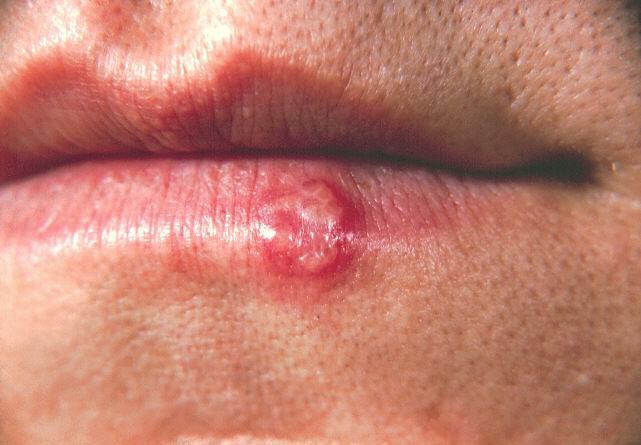
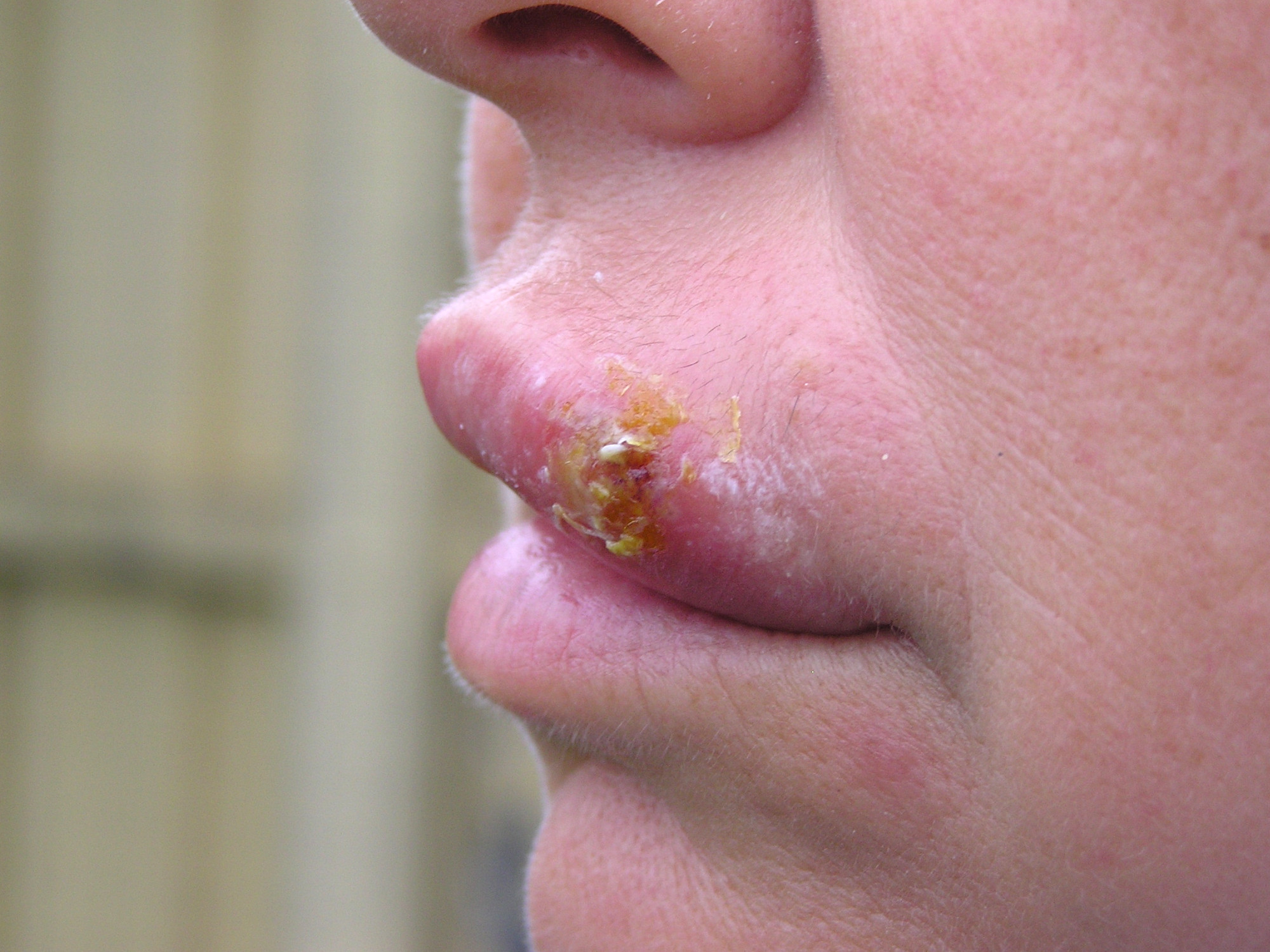
WHAT IS IT?Herpes is a disease caused by the herpes simplex virus (HSV). This is one of the most common viruses in humans and occurs worldwide. There are two types of the herpes simplex virus: type 1, usually responsible for herpes infections of the face and lips, and type 2, usually causing herpes infections around the genitals. Both virus types can infect any area of the skin and adjacent mucous membranes, so infections with HSV type 1, for example, also occur "below the belt."HOW DOES IT COME ABOUT?When the body becomes infected with HSV, it's called a primary infection. A primary HSV infection usually goes unnoticed. The infection only causes mild symptoms in about ten percent of patients. In only one percent of those affected, the infection is accompanied by more serious symptoms. The virus enters the body through the mucous membranes or skin. It usually takes three to nine days for symptoms to appear. The virus multiplies in the infected skin or mucous membrane and spreads to the lymph nodes near the site of the infection, which can temporarily enlarge and become painful. An inflammation develops at the site of the infection, often with blisters that quickly turn into cloudy pustules and eventually dry into scabs, which eventually fall off without scarring. On the mucous membranes, the blisters quickly rupture, forming superficial ulcers that eventually disappear without scarring. Most people become infected with HSV at a young age. Primary HSV infections are usually less severe in children than in adults. Its severity increases with age.
The most common clinical picture of a primary HSV infection is inflammation of the gums, tongue, buccal mucosa, and lips. This can range from a few mucosal ulcers to extensive inflammation of the oral mucosa. Sometimes the infection also spreads via the blood to the rest of the body, accompanied by general symptoms such as fever. The latter is particularly common in patients with compromised immune systems.
 |
 |
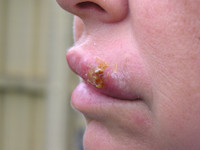 |
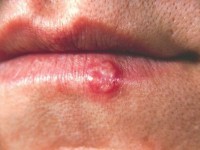
| herpes simplex labialis (HSV-1) |
herpes simplex labialis (HSV-1) |
herpes simplex labialis (HSV-1) |
Photos: Metju12, CDC Atlanta, and Ben Tillman - Wikimedia (Creative Commons License 1.0 / 2.0 ).
A unique feature of an HSV infection is that the virus remains in the body for life. In the early stages of the primary infection, the virus penetrates local nerve endings and travels via the infected nerves to the associated ganglia. There, the virus remains in a latent (dormant) form for life. It can multiply again at any time and potentially cause symptoms.HOW DOES CONTAMINATION OCCUR?The virus has a short lifespan outside the human body. Transmission occurs primarily through direct contact with the virus. Transmission occurs through direct skin or mucous membrane contact (kissing, sexual contact), but sometimes also via certain objects. The virus can also be transmitted through fingertip contact with herpes rashes (cold sores, herpes ulcers, or crusted, dried blisters). This can potentially spread the herpes infection to other parts of the body.WHAT ARE THE PHENOMENA?Although herpes usually occurs in the mouth or genital area, virtually any skin area on the body can be infected.
Herpes around the lips (cold sores)
The most common form of recurring HSV infection is herpes around the lips (also called cold sores). The course of herpes labialis is often very mild, but sometimes the attacks are severe and cause a very disfiguring appearance. Some patients experience symptoms monthly, while others only experience herpes a few times in their entire life.
Herpes around the genitals and anus
Primary herpes around the genitals and anus usually has a more severe course than a recurrent herpes infection in these areas, although it is possible for a primary infection to be asymptomatic.
During the primary or initial attack of herpes around the genitals, the cervix in women and the urethra in men are affected more often than during recurrent infections. When herpes first appears around the genitals and anus and the clinical symptoms are severe enough, this is considered a primary infection or an initial flare-up. Only blood tests can determine whether a previous herpes infection has occurred around the genitals or anus.
It is important to know that during herpes flare-ups, the genitals or anus are highly contagious, making the infection easily transmitted through sexual contact. The herpes virus can still be shed even when the patient no longer has any symptoms of the infection. This asymptomatic viral shedding most frequently occurs during the first three months after a primary herpes infection, especially with HSV type 2.
Herpes on other areas of the body:
Herpes on the finger can be contracted through self-contamination from a herpes infection elsewhere on the body, or through direct contact with a patient with active herpes. This form of herpes is primarily contracted by doctors, nurses, and dentists. Herpes on the buttocks is common.
A common precursor to a recurring infection at this site is pain in the lower back and deep in the pelvis one to a few days before the skin lesions appear. Primary herpes of the buttocks is unusual. Intensive skin contact during sports, such as wrestling or rugby, can sometimes lead to primary herpes in unusual locations on the body.
Herpes in eczema
Patients with eczema, in the event of a primary or recurrent herpes infection, are at risk of spreading the herpes to the affected skin areas, which may also involve the unaffected skin areas.
Herpes of the eye:
In eye infections with the herpes simplex virus, the cornea is usually involved in addition to the conjunctiva. Symptoms are nonspecific and may include an irritated, red, and watery eye with a feeling of having something in the eye; inability to tolerate light; and blurred vision. Usually, there is superficial corneal damage, which can be detected during ophthalmological examination with a lamp. Sometimes, damage to cells deeper within the cornea can cause a small wound, which, if healed, can lead to permanent corneal damage due to the formation of scar tissue.
Herpes in newborns:
If the mother suffers from an active herpes infection around the genitals shortly before or during delivery, there is a risk that the child will be infected with the herpes virus during birth and become ill. If the mother, who has a history of recurrent herpes around the genitals, does not demonstrably shed the virus, the risk of infection for the child is negligible. Most herpes infections in newborns occur only in the first few weeks of life when the baby comes into contact with someone who has herpes. This could include the father or a maternity nurse. Approximately half of newborns infected with HSV develop skin lesions. In addition, the eyes, mouth, brain, and internal organs can be affected by the infection. Untreated, a herpes infection in newborns often leads to permanent, serious residual abnormalities or death.
Herpes of the brain:
In rare cases, particularly in patients with weakened immune systems, the HSV infection spreads to the brain; this can occur in principle in any patient. Thirty percent of cases involve a primary infection, but it usually affects patients, particularly middle-aged patients, with recurrent infections. Herpes simplex encephalitis is a rapidly developing and severe condition that can be accompanied by headaches, psychiatric behavioral changes, difficulty swallowing, seizures, hemiplegia, and coma. Without antiviral treatment, it will be fatal in a significant number of cases.HOW IS THE DIAGNOSIS MADE?The diagnosis of an HSV infection of the skin and mucous membranes is usually made based on the clinical picture. However, in a large number of cases of herpes around the genitals, the clinical picture is unclear. Laboratory testing can support a diagnosis based on the clinical picture or detect a herpes infection. Microscopic examination of scrapings from skin or mucous membrane wounds can produce a characteristic picture of a herpes infection. A herpes infection of the cervix can also be detected by microscopic examination of a Pap smear. Viral culture is the most reliable method for detecting a herpes virus infection. Blood tests can detect antibodies to HSV, which can subsequently confirm an infection.WHAT IS THE BEST TREATMENT?There is currently no effective treatment for herpes, in the sense that it can kill the virus or prevent recurrent infections. However, medications are available to reduce the symptoms and consequences of the infection. Uncomplicated HSV infections generally require no treatment. For cold sores, several antiviral creams are available at drugstores or pharmacies. Because the effectiveness of these topical creams is currently considered limited, they are no longer available by prescription and are not reimbursed. For severe infections, antiviral tablets, such as valacyclovir (Zelitrex), famciclovir (Famvir), or acyclovir, can be prescribed. This is only effective if the medication is administered early, within 4-5 days of the first onset of symptoms. Any skin lesions (blisters, sores) can be dried with zinc oil. Painkillers (paracetamol) may sometimes be necessary. In cases of regularly recurring HSV infections, people with many symptoms can be given maintenance treatment with an antiviral drug for a longer period of time, which reduces the number and duration of regularly recurring HSV infections.WHAT CAN YOU STILL DO?How can self-contamination be prevented?
Never touch herpes with your fingers, so don't pick at scabs either. When applying cream or ointment to herpes, preferably use a cotton swab. When applying or removing cosmetics from your face, avoid all contact with the herpes. Don't use lipstick as long as herpes is present on your lips. When washing, avoid contact between herpes and a washcloth or towel. Wash your hands immediately after contact with herpes.
How can spreading the virus to others be prevented?
If you have a cold sore on your lips, keep toiletries, eating utensils, and drinking utensils strictly for private use; make sure no one else uses them, and wash them thoroughly immediately after use. Avoid direct contact with the lips of others; for example, avoid kissing. In the case of herpes around the genitals, you should refrain from sexual contact until all lesions have completely healed.
Prevention is better than cure. Herpes around the genitals is usually not a serious sexually transmitted disease, but it is an unpleasant one. Using a condom reduces the risk of infection.
How can herpes in newborns be prevented?
Any infection in a newborn can be serious because their defense mechanisms against bacteria and viruses are not yet fully developed. The consequences of an HSV infection in a newborn can be very serious. Therefore, if a newborn has a cold sore on their lips, you should not kiss it.
It is important that a pregnant woman informs her midwife or doctor if she or her partner has ever had herpes around the genitals. A cesarean section may be necessary to prevent herpes in newborns. Men with recurrent herpes around the genitals should use condoms during sexual intercourse with their pregnant partner.WHAT ARE THE OUTLOOK?Once infected with the herpes virus, people carry it for life. Most people experience no symptoms at all. Some experience occasional reactivation. In a very small group, this happens so frequently and severely that it becomes truly distressing. Over time, however, even these people experience fewer attacks in severity and frequency. Various stimuli, including fever, sunlight, menstruation, or stress, can reactivate the virus, after which it travels from the nerve ganglia via the nerve to previously infected skin or mucous membranes. An inflammation characteristic of HSV infection can then occur here. |