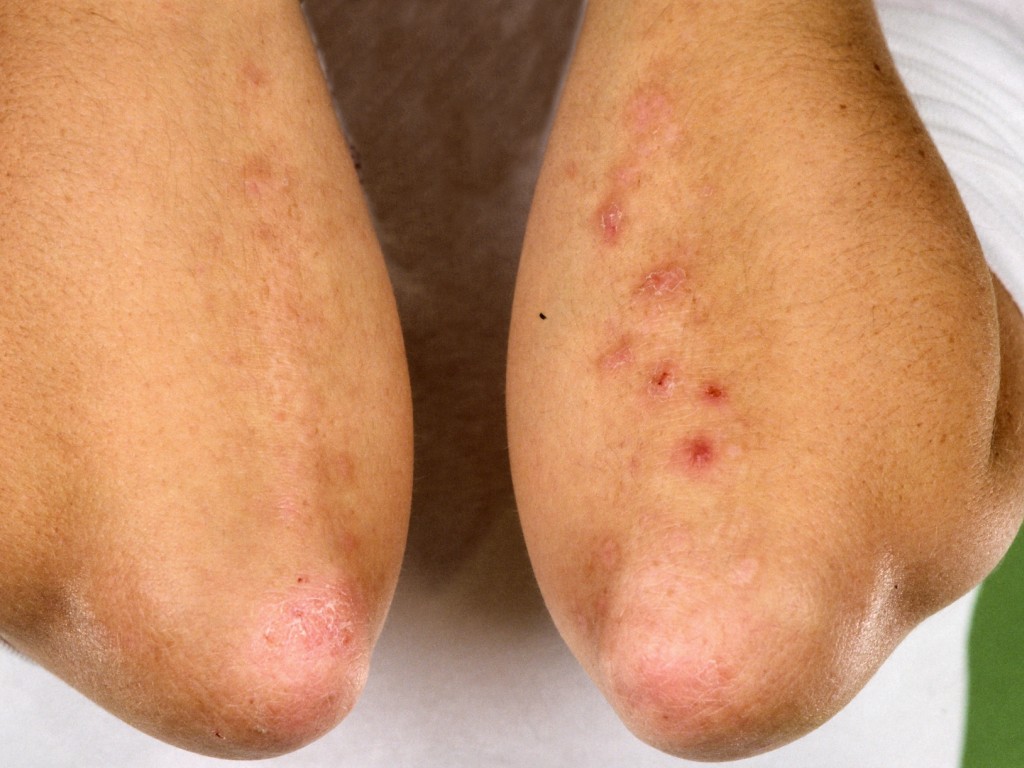
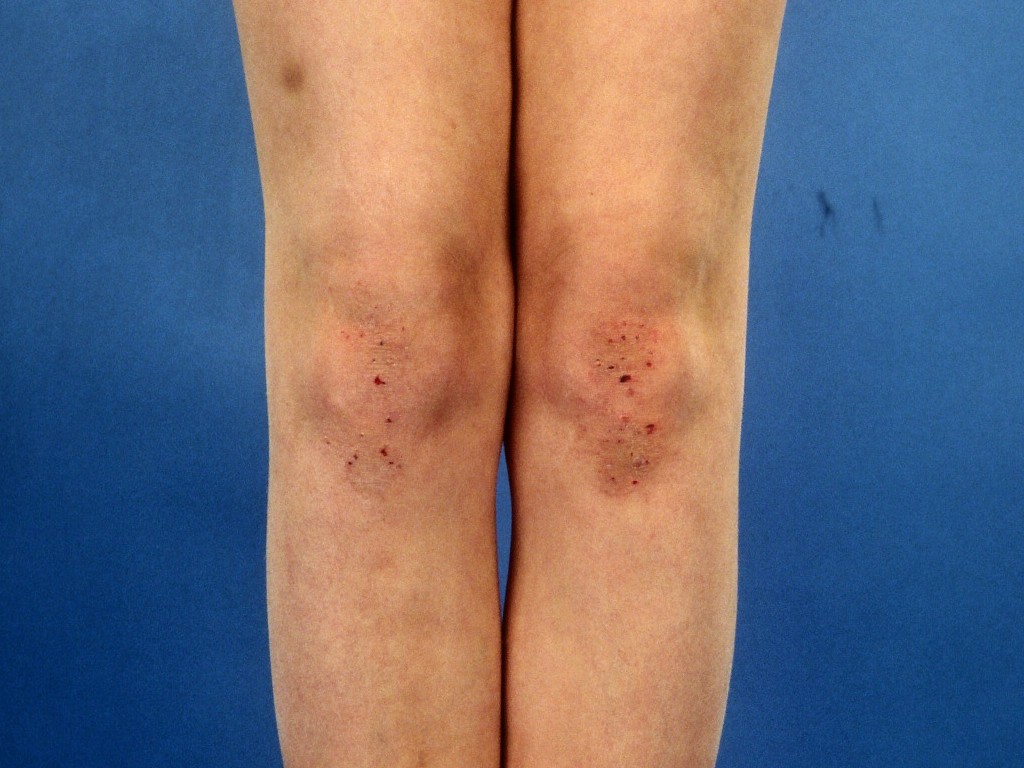
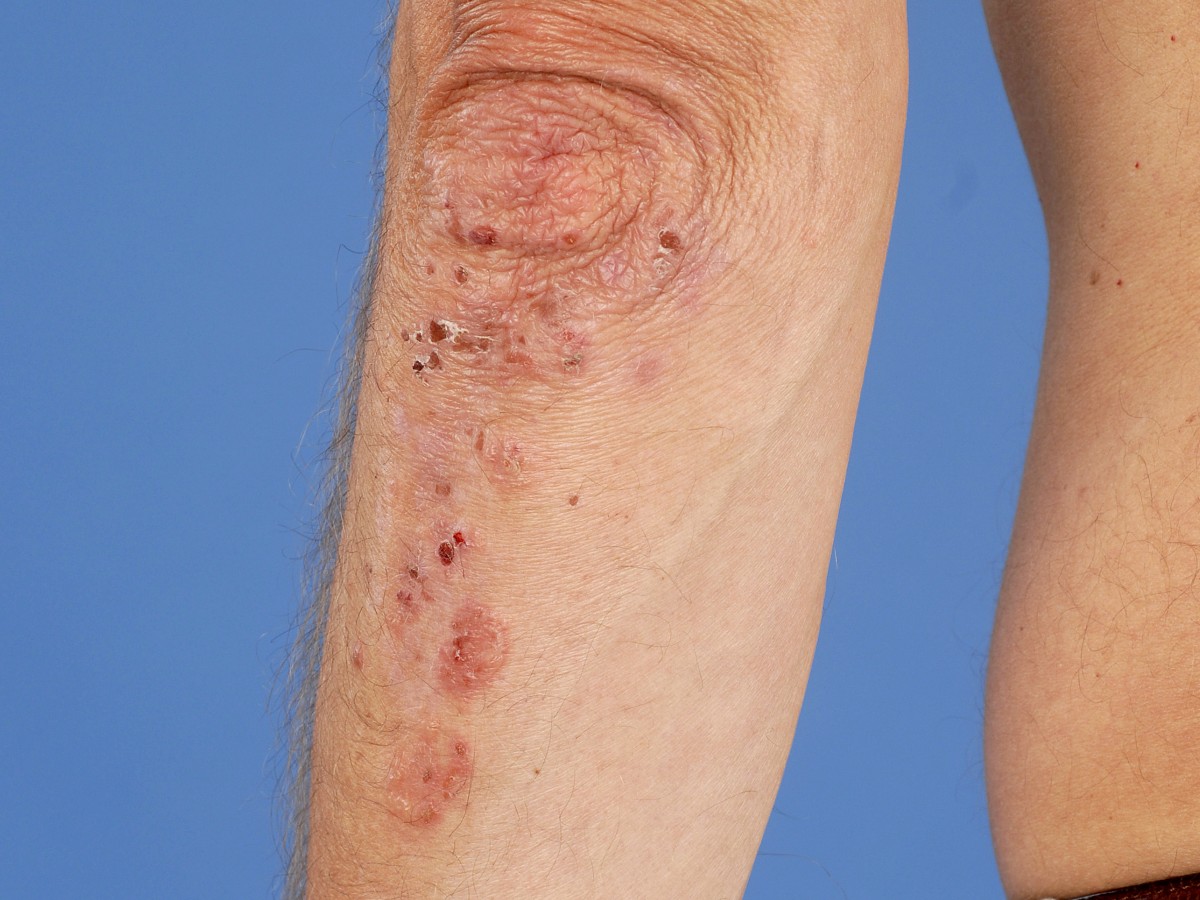
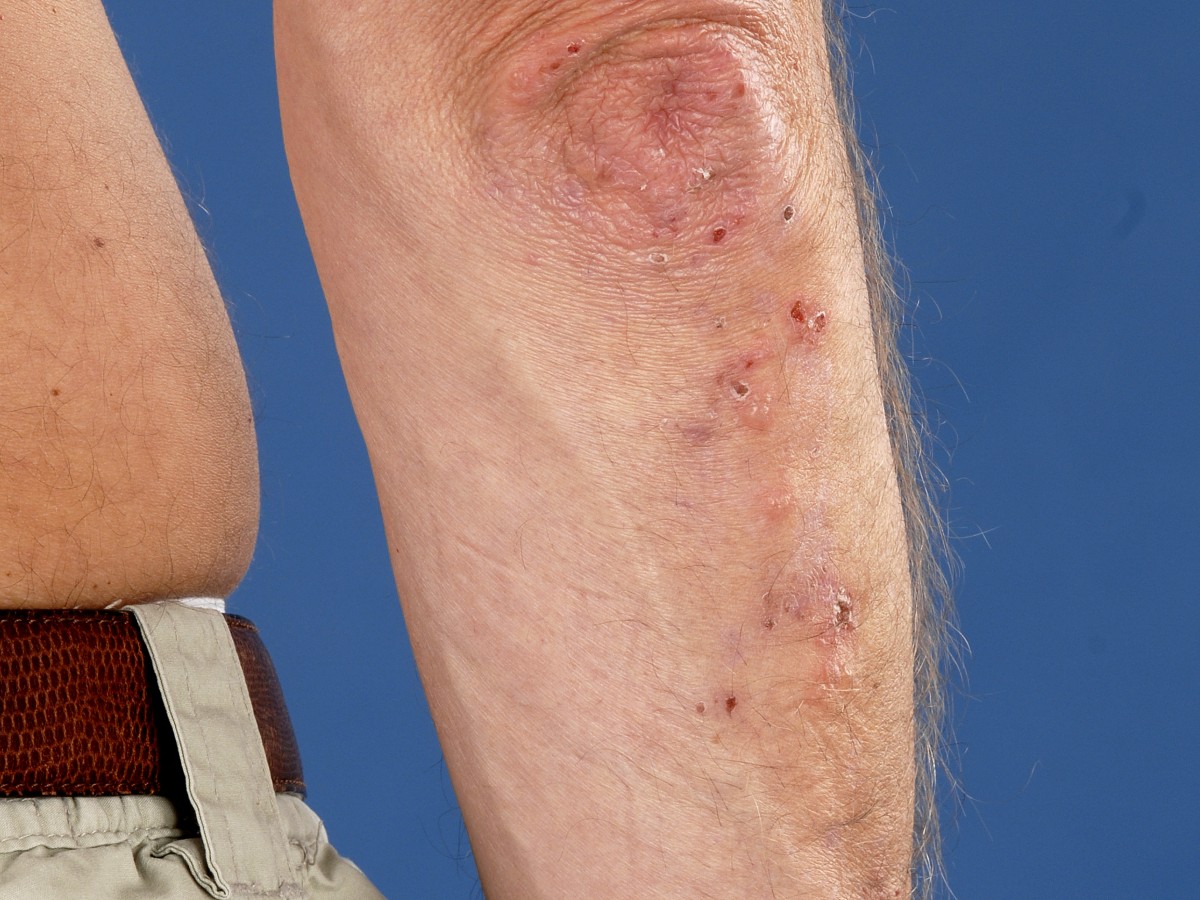
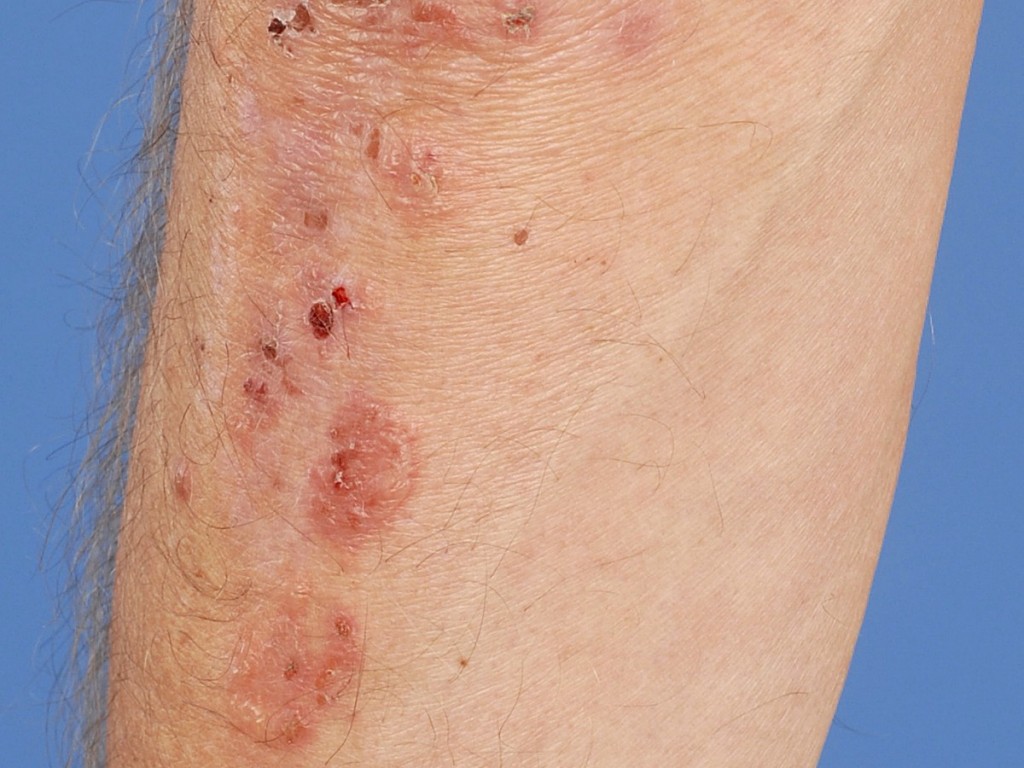
WHAT IS DERMATITIS HERPETIFORMIS?Dermatitis herpetiformisis an intensely itchy skin condition characterized by blisters and bumps, often clustered on the elbows or knees. It can occur simultaneously with celiac disease ( gluten allergy ). Following a gluten-free diet improves both the skin conditions and the intestinal symptoms. Dermatitis herpetiformis is also called Duhring's disease , after the physician who first described it. Dermatitis means inflamed skin, and herpetiformis means it resembles herpes (due to the clusters of blisters that can develop).
 |
 |
 |
| dermatitis herpetiformis |
dermatitis herpetiformis |
dermatitis herpetiformis |
 |
 |
 |
| dermatitis herpetiformis |
dermatitis herpetiformis |
dermatitis herpetiformis |
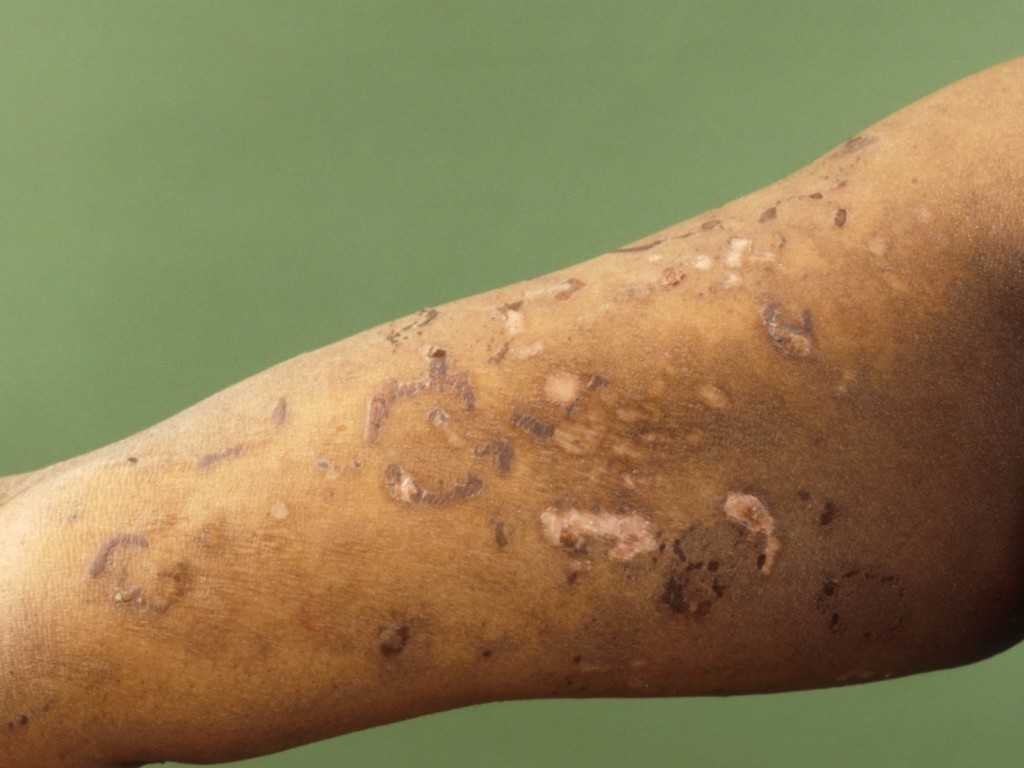
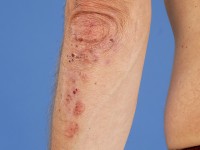
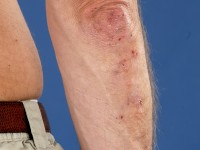
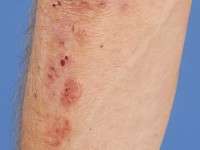
WHAT DOES DERMATITIS HERPETIFORMIS LOOK LIKE?Classically, one sees clusters of clear blisters and red bumps and spots on the forearms near the elbows, or on the knees. It can also occur on the shoulders, lower back, buttocks, or scalp. Because it is intensely itchy, the areas are often scratched, resulting in sores, scabs, and scratched-open itchy bumps. As a result, blisters are often no longer visible during a visit to the dermatologist, making it more difficult to diagnose the condition.
In addition, patients often (unknowingly) have a gluten sensitivity. This is also called celiac disease or gluten-sensitive jejunal villous atrophy . Approximately 10% of patients with dermatitis herpetiformis experience intestinal complaints, and in approximately 25%, nutrient absorption through the intestinal wall is impaired. Further intestinal examination reveals that jejunal villous atrophy is observed in 70-90% of patients.HOW DOES DERMATITIS HERPETIFORMIS DEVELOP?The exact cause is unknown. It appears to be an autoimmune disease, a malfunction of the body's own immune system. The immune system begins producing antibodies (Immunoglublin type A) that target gluten in food. However, these IgA antibodies also attach to skin components. This causes an inflammatory reaction, resulting in itching and blistering.
Gluten is a protein found in grains such as wheat, oats, rye, barley, and spelt. In people with gluten allergy (celiac disease), damage to the lining of the small intestine occurs when they eat foods containing gluten. This damage destroys the intestinal mucosa, a process called villous atrophy (the lining of the intestines consists of long extensions called villi). Due to the damage to the intestinal mucosa, nutrients are not properly absorbed, and symptoms such as diarrhea, intestinal cramps, constipation, fatigue, and growth disorders develop.
Besides gluten, some patients also appear to have a sensitivity to iodine in certain foods. Excessive iodine intake can worsen symptoms. Iodine is found in salt, among other things.WHO CAN GET DERMATITIS HERPETIFORMIS?The condition is rare, affecting approximately 1 in 10,000 people. Men are twice as likely to have it as women. It usually begins before the age of 40. It can also occur in children (ages 2-7), but this is rare. It is primarily seen in Europeans. It can run in families; sometimes a family member has celiac disease.HOW IS THE DIAGNOSIS MADE?Dermatitis herpetiformis is a rare skin disease, and the diagnosis can be difficult. The combination of itching and lesions around the elbows is a clue, but there are numerous other itchy skin lesions that resemble it. The diagnosis can be confirmed by taking two small skin biopsies. Under the microscope, a special staining technique reveals the deposits of antibodies (immunoglobulin type A) in the skin. These IgA antibodies are found both in the skin and in the intestines and are the cause of the symptoms. They can also be detected in the blood.
If celiac disease is suspected, the patient is often referred to a gastroenterologist (gastroenterologist). They can examine the intestines by inserting an endoscope and take a biopsy of the intestinal villi (the inner lining of the intestine). Jejunal villous atrophy is visible in this biopsy, confirming the diagnosis.
Dermatitis herpetiformis can occur with other autoimmune diseases such as thyroid disease, rheumatoid arthritis, systemic lupus erythematosus, vitiligo, diabetes mellitus, dermatomyositis, and myasthenia gravis.HOW IS DERMATITIS HERPETIFORMIS TREATED?Patients with dermatitis herpetiformis benefit from following a gluten-free diet . This is the same diet that celiac disease patients must follow. The skin lesions can disappear completely with this. Antibodies in the blood also decrease when a gluten-free diet is followed correctly. A gluten-free diet is difficult to maintain because many foods contain gluten. A dietitian can help with adherence to the diet.
Following a diet does provide improvement in the long term, but it doesn't work quickly enough. Therefore, dermatitis herpetiformis is also treated with medication. The most effective medication is dapsone (diaminodiphenylsulfone, DDS). Initially, 100 or 200 mg of dapsone is given daily. This quickly relieves the itching, often within 1-2 days. As the condition improves, the amount of dapsone is gradually reduced to the lowest dose that still provides relief. This can be half a tablet (50 mg) or a quarter (25 mg). Sometimes this needs to be taken for years. If the gluten-free diet is followed properly, less or no dapsone is needed. An iodine-reduced diet can also help.
Dapsone can have side effects, such as anemia or allergic reactions. The most common side effect is anemia. Dapsone can destroy red blood cells. Some people are more sensitive to this than others. Some people lack an enzyme (G6PD deficiency), which means they can quickly develop anemia when using dapsone. This can be determined beforehand with a blood test.
If dapsone is intolerant, other medications such as sulfasalazine (salazosulfapyridine) can be prescribed.
In addition to tablets, topical treatment with corticosteroid ointment or cream can also be used.WHAT IS THE PROGNOSIS?Dermatitis herpetiformis is an annoying condition due to its itching, but not dangerous to your health. The skin condition can persist for a long time, often for years or even a lifetime. Symptoms can be managed with the measures mentioned above, but the gluten allergy will not disappear. It usually flares up and down, with periods of worsening alternating with periods of improvement. Life expectancy is normal. |